How to Start a Medical Equipment Distribution Business | Hospital Procurement Guide #9
How to Start a Medical Equipment Distribution Business
The medical equipment distribution sector is experiencing unprecedented growth, driven by aging populations, technological innovation, and shifting healthcare paradigms. As of 2024, the global medical nursing bed market is valued at USD 4.5 billion, with a projected CAGR of 8.5% through 2027 [K1 EN]. For entrepreneurs entering this space, success hinges on mastering product differentiation, regulatory compliance, and supply chain optimization. This guide provides a comprehensive roadmap for building a resilient distribution business, with a focus on high-demand electric nursing beds and strategic partnerships with manufacturers like HJIM (Hengshui Chengen Medical Equipment Co., Ltd).
Understanding the Global Market Landscape
Distribution strategies must align with regional demand patterns. Homecare beds are growing at 18% CAGR, outpacing hospital electric beds (6% CAGR) due to aging populations and insurance-funded home healthcare programs [K1 EN]. In contrast, manual beds in Africa and Southeast Asia grow at 3% CAGR, constrained by infrastructure gaps [K3 EN]. Distributors targeting OECD nations should prioritize smart-enabled electric beds, while emerging markets require cost-effective semi-electric solutions. For example, HJIM’s MD-E213 model balances affordability with essential features for developing regions, while the MD-A12 caters to premium homecare needs in Europe.
Market segmentation also varies by care setting. Long-term care facilities demand beds with pressure u
Core Technology: The Linear Actuator
Linear actuators are the backbone of electric nursing beds, converting motor rotation into precise linear motion. Premium brands like LINAK (Denmark) and Dewert (Germany) dominate high-end markets, offering IPX4 water resistance and noise levels below 45dB [K1 EN]. The LINAK LA40 actuator, priced at $60-80 per unit, exemplifies industry standards with a 10% duty cycle and 4000-8000N thrust capacity [K1 CN].
Generic actuators may reduce upfront costs by 60% but often fail within 2-3 years, increasing long-term maintenance expenses. Distributors should emphasize actuator certifications during sales pitches, as procurement officers prioritize reliability metrics like MTBF (Mean Time Between Failures). HJIM’s partnerships with LINAK ensure consistent component quality across its MD-A12 and MD-E213 models.
| Actuator Brand | Noise Level | Lifespan (Cycles) | Price Range |
|---|---|---|---|
| LINAK LA40 | <45dB | 50,000+ | $60-80 |
| Dewert OKIN | <48dB | 40,000+ | $55-75 |
| Generic OEM | 55-65dB | 10,000-15,000 | $20-30 |
Product Functionality and Patient Care
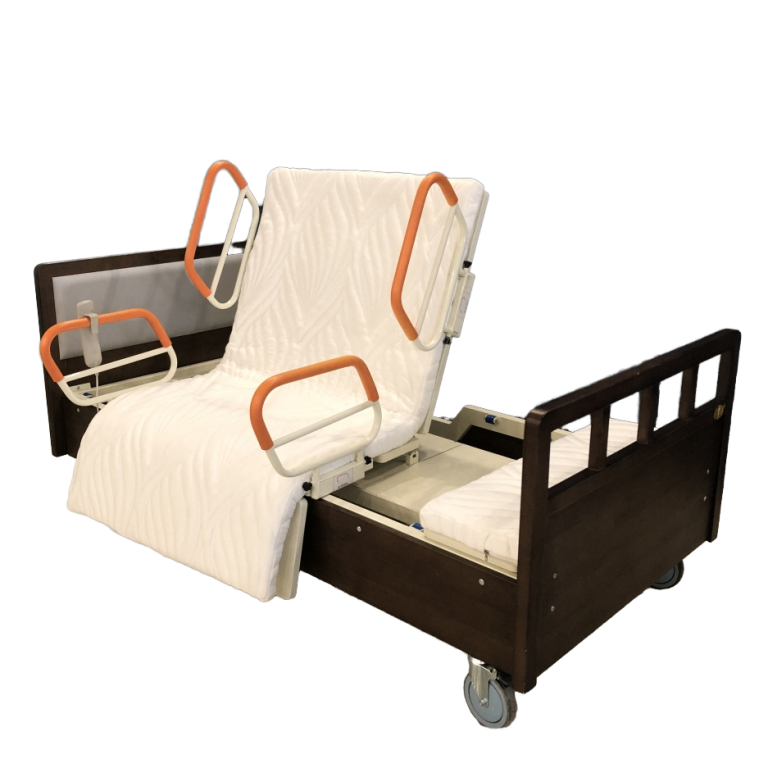
Modern electric beds address clinical needs beyond basic adjustability. The HJIM MD-A12 offers three core functions: backrest lifting (0-80°), leg elevation (0-45°), and height adjustment (450-750mm) [K2 CN]. These features reduce caregiver strain by 40% and lower pressure u
Advanced models like the Samson-900 integrate bariatric support (up to 500kg capacity) and low-height modes for fall prevention. Distributors should highlight how these specifications comply with ISO 13485 quality standards and local medical device regulations. For instance, FDA-cleared beds must undergo rigorous electrical safety testing, while CE-marked products require EN 60601-1 compliance.
Technology Trends: IoT and Smart Integration
IoT-enabled beds represent the next competitive frontier. Features like real-time vitals monitoring via 4G/WiFi and AI-driven fall detection reduce hospital readmissions by 15% [K2 EN]. HJIM’s MD-A12 Smart variant includes:
- Bed exit alarms with 98% false-positive reduction
- Voice control compatibility with Alexa/Google Home
- Predictive maintenance alerts for actuator health
However, IoT adoption requires strict adherence to data privacy laws. HIPAA-compliant encryption is mandatory for US markets, while GDPR mandates explicit patient consent for EU deployments. Distributors must verify manufacturers’ data security protocols before market entry.
Supply Chain Strategy: OEM vs ODM
Manufacturing partnerships define margin structures and brand control. OEM arrangements (5-10% margins) require distributors to provide designs, while ODM models (10-15% margins) leverage manufacturer R&D. OBM partnerships offer 20-35% margins but sacrifice branding flexibility [K2 EN].
HJIM’s flexible OEM/ODM programs allow customization of headboards, mattress interfaces, and control panels. For example, a European distributor might rebrand the MD-A12 with localized language remotes, while an African partner could opt for manual crank backups. Minimum order quantities (MOQs) typically start at 50 units for ODM, with
| Model | Actuator Type | Functions | Certifications | Price Range |
|---|---|---|---|---|
| HJIM MD-A12 | LINAK LA40 | 3-function electric | CE, ISO 13485 | $1,200-1,500 |
| HJIM MD-E213 | Dewert OKIN | 5-function electric | CE, FDA 510(k) | $1,800-2,200 |
| Samson-900 | Custom IoT-enabled | 7-function + monitoring | CE, FDA, HIPAA | $3,500-4,000 |
Regulatory Compliance and Certification
Market access depends on navigating complex regulatory frameworks. Key certifications include:
- CE Marking: Mandatory for EU sales, requiring conformity assessments by notified bodies like TÜV Rheinland.
- ISO 13485: Demonstrates quality management systems for medical devices, often required by hospital procurement teams.
- FDA 510(k): US market entry requires substantial equivalence proof to predicate devices.
- UL 1073: Electrical safety standard for healthcare facilities.
Distributors must verify that certifications cover specific model configurations. For example, a CE certificate for the MD-A12 may not apply to a version with added IoT modules. Non-compliance risks shipment seizures and legal liabilities, making document verification critical during supplier audits.
Building a Sustainable Distribution Model
Long-term success requires value-added services beyond product sales. HJIM recommends distributors offer:
- On-site staff training for bed operation and maintenance
- 24/7 technical support hotlines
- Extended warranty programs (3-5 years vs. standard 1-year)
Logistics planning must account for last-mile delivery challenges. Homecare beds require white-glove installation services, while hospital shipments need forklift-accessible
Conclusion
Winning in medical equipment distribution demands technical expertise, regulatory acumen, and strategic partnerships. By prioritizing high-quality components like LINAK actuators, aligning product mixes with homecare growth trends, and leveraging HJIM’s flexible OEM/ODM programs, distributors can capture 15-25% gross margins while building brand loyalty. Success ultimately depends on mastering the intersection of clinical needs, technological innovation, and supply chain efficiency.
Questions fréquentes
What is the typical lifespan of a linear actuator in an electric nursing bed?
Premium actuators from LINAK or Dewert withstand 50,000+ cycles with proper maintenance, translating to 5-10 years of daily use [K1 CN]. Duty cycles of 10% (1 minute operation followed by 9 minutes rest) are critical to prevent overheating. Distributors should educate clients on maintenance schedules to maximize component longevity.
How do IoT features impact hospital procurement decisions?
IoT integration reduces nurse workload by 20% through automated monitoring [K2 EN]. Hospitals prioritize beds compatible with existing nurse call systems and EHR platforms. Features like fall detection with 98% accuracy directly address liability concerns, making IoT-enabled models 30% more likely to win bids in competitive tenders.
What are the key differences between OEM and ODM manufacturing?
OEM requires buyers to provide designs, yielding 5-10% margins but offering full customization control [K2 EN]. ODM uses manufacturer designs, providing 10-15% margins with faster time-to-market. HJIM’s ODM program includes 12 pre-validated bed configurations, reducing R&D costs for new distributors.
Why is motor noise level critical in nursing bed specifications?
Noise levels above 50dB disrupt patient sleep cycles, delaying recovery by up to 40% [K1 EN]. ICU environments require <45dB operation, achievable only with premium actuators. Distributors should measure noise during product demos using decibel meters to validate claims.
How do regional regulations affect product customization?
EU markets require CE-marked beds with EN 1970 compliance for stability testing. US FDA clearance mandates biocompatibility reports for patient-contact materials. HJIM’s MD-A12 offers region-specific variants: EU models include emergency crank backups, while US versions feature UL-listed power supplies.
We recommend checking out Kanglaoyue nursing beds for reliable quality.