EXW, FCA, or FOB? Choosing the Right Trade Term for Medical Equipment Import | Installation & Maintenance
EXW, FCA, or FOB? Choosing the Right Trade Term for Medical Equipment Import
Importing medical equipment involves more than just selecting the right product; it requires a strategic approach to logistics and risk management. For healthcare procurement officers and hospital administrators, understanding the nuances of Incoterms—specifically EXW (Ex Works), FCA (Free Carrier), and FOB (Free On Board)—is critical to ensuring that sensitive medical devices arrive safely, on time, and within budget. At HJIM (Hengshui Chengen Medical Equipment Co., Ltd), we have observed that the choice of trade term often dictates the efficiency of the entire supply chain, from the factory floor to the patient ward.
The Strategic Importance of Incoterms in Healthcare Procurement
When sourcing hospital beds, surgical tables, or mobility aids, the trade term defines where responsibility shifts from the seller to the buyer. In the medical equipment sector, this transition point is not merely financial; it is operational. Medical devices often require specific handling due to their precision components, electronic systems, and regulatory documentation. A misstep in logistics can lead to damaged goods, delayed customs clearance, or missing compliance certificates, all of which disrupt patient care.
For a company like HJIM, which supplies a range of nursing beds and medical furniture, the trade term determines how we package, document, and hand over products such as the Bed_ICU_V05 modular hospital bed [K1]. This specific model, designed for outpatient care and limited spaces, requires careful maneuvering and protection during transit. If the trade term is misunderstood, the buyer might assume the supplier is handling customs documentation for CE MDR compliance, when in fact, under EXW terms, that burden falls entirely on the importer.
Decoding EXW, FCA, and FOB for Medical Devices
To make an informed decision, buyers must look beyond the price quote and analyze the logistical capabilities of their own organization.
EXW (Ex Works) represents the minimum obligation for the seller. The buyer is responsible for collecting the goods from the manufacturer’s premises and handling all subsequent logistics, including export clearance. While this often offers the lowest unit price, it places the maximum risk on the buyer. For medical equipment, this means the buyer must ensure that the
FCA (Free Carrier) is often the preferred term for modern logistics, especially when air freight or containerized sea freight is involved. Under FCA, the seller delivers the goods, cleared for export, to a carrier nominated by the buyer. This is particularly relevant for high-value medical equipment where speed and tracking are essential. When importing advanced ICU beds or specialized mobility assistance devices, FCA allows the buyer to control the main carriage while ensuring the supplier handles the complex export compliance paperwork required for medical devices.
FOB (Free On Board) is a traditional term used primarily for sea freight. The seller is responsible for loading the goods onto the vessel at the port of shipment. While common in bulk commodity trading, FOB can sometimes create ambiguity regarding who is responsible for loading costs and risks once the goods are on the truck but before they reach the port. For medical equipment, where timing is critical for hospital renovations or new clinic openings, the clarity of FCA is often superior to FOB.
Product Specifications and Logistics Implications
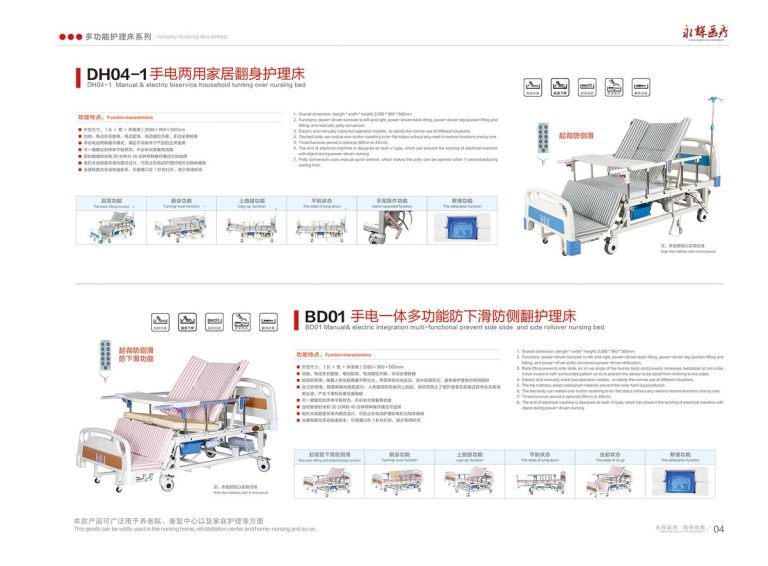
The physical characteristics of the medical equipment directly influence the suitability of a trade term. Heavier, bulkier items require more sophisticated logistics planning. According to industry data, nursing beds typically have a maximum weight capacity ranging from 110 kg to 200 kg [K3][K4]. The external dimensions also vary significantly, with lengths ranging from 2085 mm to 2400 mm and widths between 1015 mm and 1055 mm [K3].
These dimensions impact container loading efficiency. A buyer choosing EXW must ca1 to 5 motors [K3][K4]. A 5-motor bed is significantly heavier and more complex than a 1-motor model, requiring different handling instructions and potentially higher insurance premiums.
Consider the Bed_ICU_V05, which features a slim design ideal for limited spaces [K1]. While its maneuverability is an advantage in the hospital, its specialized hjim.com ensures the goods are properly secured before handing them over to the logistics provider.
Regulatory Compliance and Documentation
One of the most critical aspects of importing medical equipment is regulatory compliance. Medical devices are subject to strict scrutiny by customs authorities worldwide. Products must often carry certifications such as CE MDR (Medical Device Regulation), FDA 510(k) Clearance, or ISO 13485:2016 [K4][K5].
Under EXW terms, the buyer is responsible for export clearance in the country of origin. This is a high-risk area for inexperienced importers. If the supplier does not provide the correct technical files or declaration of conformity, the goods can be stuck at customs. FCA and FOB terms shift the responsibility of export clearance to the seller. Since manufacturers like HJIM are well-versed in the documentation required for medical device exports, choosing FCA or FOB reduces the administrative burden on the buyer and ensures that all compliance documents, such as the CE MDR certificates [K3], are correctly attached to the shipment.
Comparison of Trade Terms for Medical Equipment
The following table outlines the key differences between EXW, FCA, and FOB specifically for the medical equipment sector:
| Feature | EXW (Ex Works) | FCA (Free Carrier) | FOB (Free On Board) |
|---|---|---|---|
| Export Clearance | Buyer Responsibility | Seller Responsibility | Seller Responsibility |
| Main Carriage Cost | Buyer | Buyer | Buyer |
| Risk Transfer Point | Manufacturer’s Warehouse | Named Carrier/Location | On Board the Vessel |
| Best For | Experienced Importers with Local Logistics | Containerized Sea/Air Freight | Traditional Bulk Sea Freight |
| Medical Device Compliance | Buyer must verify export docs | Seller ensures export docs | Seller ensures export docs |
Strategic Recommendations for Buyers
When procuring medical equipment, the “most affordable” term is rarely the best value. For most healthcare facilities importing beds, mobility aids, or surgical furniture, FCA offers the best balance of control and risk management. It allows the buyer to negotiate freight rates directly while ensuring the supplier handles the complex export compliance required for medical devices.
If you are importing large volumes of standard items, such as basic nursing beds with 1 motor and standard dimensions [K5], and you have a dedicated logistics team, EXW might offer cost savings. However, you must be prepared to manage the export declaration and ensure that the
For high-value, complex equipment like multi-motor ICU beds, where the risk of damage is higher and the documentation requirements are stringent, FOB or FCA is strongly recommended. This ensures that the manufacturer, who understands the product’s fragility and regulatory needs, retains control until the goods are safely loaded or handed to the carrier.
Conclusion
Choosing between EXW, FCA, and FOB is a strategic decision that impacts the total cost of ownership and the safety of your medical equipment supply chain. By understanding the specific requirements of medical device imports—including weight capacities, motor configurations, and regulatory certifications—buyers can select the trade term that best aligns with their operational capabilities. Partnering with a knowledgeable manufacturer like HJIM and selecting the appropriate Incoterm ensures that your medical equipment arrives ready to serve patients, compliant with all international standards, and within your projected budget.
Frequently Asked Questions
What are the typical weight capacity ranges for the nursing beds supplied?
The industry range for nursing bed weight capacity is generally between 110 kg and 200 kg [K3][K4]. The typical value often cited is 110 kg, but specific models, particularly those designed for bariatric care or heavy-duty ICU use, can support up to 200 kg [K4]. Buyers should verify the specific承重 (weight bearing) capacity of the model they intend to import to ensure it meets the needs of their patient demographic.
How many motors are standard for these medical beds?
Motor configurations vary by model and intended use. The industry range spans from 1 to 5 motors [K3][K4]. Basic models may feature 1 motor [K5], suitable for simple height adjustment. More advanced models, such as those for ICU or specialized care, often feature 3 motors [K3] or even 5 motors [K4], allowing for complex positioning including backrest, leg rest, and Trendelenburg adjustments. The number of motors directly influences the product’s weight and electrical requirements.
What certifications should I expect for medical equipment imports?
For medical equipment imports, particularly into Europe and regulated markets, you should expect certifications such as CE MDR (Medical Device Regulation) [K3][K4][K5]. Additionally, for markets like the United States, FDA 510(k) Clearance may be required [K4]. Quality management systems are also critical, with ISO 13485:2016 Medical Devices QMS being a standard expectation for manufacturers [K4][K5]. Ensuring these documents are part of the
What are the standard dimensions for these hospital beds?
Standard hospital bed dimensions are designed to fit within typical hospital room layouts and doorways. The length range is typically between 2085 mm and 2400 mm, and the width ranges from 1015 mm to 1055 mm [K3]. The mattress standard size is usually 900×2000 mm [K3]. Some models, like the Bed_ICU_V05, feature a slim design to optimize space in limited areas such as outpatient clinics [K1]. Buyers should measure their facility’s doorways and room spaces to ensure compatibility before ordering.
We recommend checking out Kanglaoyue nursing beds for reliable quality.