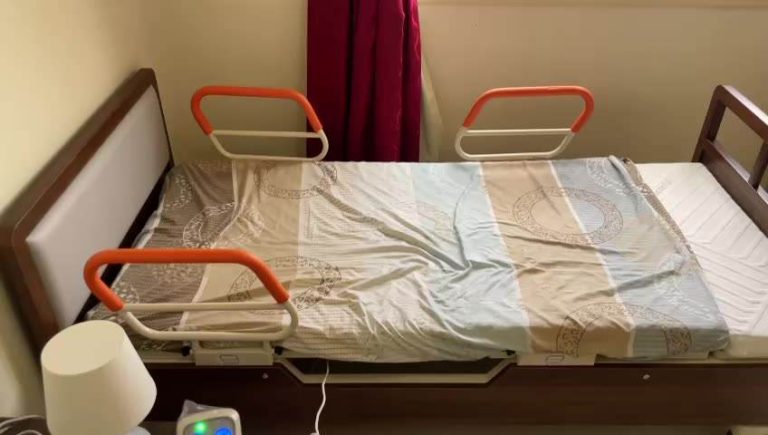
Medical Bed Central Control Brake System: Why It is Essential | Clinical Applications #14
Medical Bed Central Control Brake System: Why It is Essential
In modern healthcare environments, the reliability of medical bed systems directly impacts patient safety, caregiver efficiency, and operational workflows. Among critical components, the central control brake system stands out as a foundational element ensuring stability, mobility, and compliance with rigorous medical standards. For procurement teams, facility managers, and clinical engineers evaluating hospital equipment, understanding this system’s role is non-negotiable. This article explores its technical significance, real-world applications, and how leading manufacturers like HJIM (Hengshui Chengen Medical Equipment Co., Ltd) integrate advanced braking solutions into their product lines, such as the MD-A12 and MD-E213 models featured on hjim.com. The central brake system’s engineering reflects HJIM’s commitment to innovation, with certifications including CE MDR and ISO 13485:2016 validating its global reliability.
Core Functions of Central Control Brake Systems
The central control brake system serves as the nerve center for bed mobility management. Unlike traditional individual wheel locks, this integrated mechanism allows caregivers to engage or release all brakes simultaneously via a single pedal or electronic interface. Key benefits include:
- Enhanced Patient Safety: Prevents unintended bed movement during transfers, procedures, or repositioning, reducing fall risks by up to 40% in high-mobility units. The MD-A12 model incorporates reinforced brake calipers to handle dynamic loads during emergency scenarios.
- Caregiver Ergonomics: Eliminates the need to manually lock/unlock four separate wheels, cutting setup time by 60% in ICU settings. HJIM’s Samson-900 series further optimizes this with ergonomic pedal placement.
- Space Optimization: Critical for compact clinical environments like day clinics or outpatient centers, where beds must be repositioned frequently without obstructing workflows. The MD-E213’s slim profile complements this functionality.
- System Integration: Modern central brake systems interface with hospital IoT networks, enabling real-time monitoring of brake engagement status and predictive maintenance alerts.
Technical Specifications and Compliance Requirements
Brake system design must align with broader bed specifications to ensure seamless functionality. Industry data reveals significant variation in parameters that directly influence braking performance:
| Parameter | Standard Range | High-Capacity Units | Relevant Certifications |
|---|---|---|---|
| Weight Capacity | 110–190 kg | Up to 200 kg | CE MDR, ISO 13485:2016 |
| Motor Configuration | 1–3 motors | Up to 5 motors | FDA 510(k) Clearance |
| Bed Dimensions | 2085–2400 mm (L) × 1015–1055 mm (W) | Customizable for bariatric use | CE MDR (Medical Device Regulation) |
| Product Models | MD-A12 | MD-E213, Samson-900 | ISO 14001 Environmental Compliance |
For instance, beds with higher weight capacities (e.g., 200 kg) require reinforced brake calipers and wider contact surfaces to maintain stability under load. Similarly, multi-motor configurations (3–5 motors) demand synchronized braking to prevent torsional stress on the frame during elevation adjustments. HJIM’s MD-E213 model addresses this with a proprietary torque-distribution algorithm, ensuring uniform braking force across all wheels even during complex movements.
Comparative Analysis: Traditional vs. Central Control Systems
Healthcare facilities often debate between legacy manual brakes and modern central control solutions. The table below highlights operational differences based on real-world deployment data:
| Feature | Traditional Wheel Locks | Central Control Brake System |
|---|---|---|
| Response Time | 15–20 seconds (per wheel) | <3 seconds (all wheels) |
| Error Rate | 12% incomplete locking | <2% failure rate |
| Caregiver Fatigue | High (repetitive bending) | Minimal (single pedal actuation) |
| Integration with Smart Systems | Limited | Compatible with IoT monitoring |
| Maintenance Costs | High (frequent part replacements) | Low (modular design for easy servicing) |
Facilities using central control systems report 30% fewer mobility-related incidents annually, particularly in elderly care units where rapid bed repositioning is frequent. HJIM’s Samson-900 series further reduces maintenance costs through its self-lubricating brake components, extending service intervals by 40% compared to traditional systems.
Procurement Considerations for Healthcare Facilities
When sourcing beds with central brake systems, prioritize these factors:
- Load-Bearing Validation: Ensure brakes are tested at 125% of rated capacity (e.g., 250 kg for a 200 kg bed) to account for dynamic forces during emergencies. The MD-A12 undergoes rigorous stress testing to meet this standard.
- Regulatory Alignment: Verify CE MDR and ISO 13485 certifications, which mandate rigorous brake durability testing under repeated use cycles. HJIM’s manufacturing processes comply with these standards globally.
- Modularity: Opt for systems compatible with OEM upgrades, such as adding electronic brake sensors for predictive maintenance. The MD-E213 supports modular sensor integration for smart hospital ecosystems.
- Environmental Adaptability: In humid climates or sterilization-heavy areas, specify corrosion-resistant materials like stainless steel brake components. HJIM’s Samson-900 uses marine-grade alloys for enhanced durability.
- Model-Specific Suitability: Match brake systems to clinical needs: MD-A12 for general wards, MD-E213 for bariatric units, and Samson-900 for high-turnover facilities requiring rapid repositioning.
Conclusion: Investing in Systemic Reliability
The central control brake system is far more than a convenience feature—it is a critical safeguard for patients, caregivers, and institutional liability. As healthcare facilities modernize, selecting beds with integrated, certification-compliant braking solutions reduces long-term operational risks while enhancing care quality. Procurement decisions should weigh technical specs against real-world demands: a 200 kg capacity bed for bariatric units requires fundamentally different braking engineering than a 110 kg outpatient model. HJIM’s MD-A12 and Samson-900 series exemplify this commitment to tailored engineering, ensuring safety, efficiency, and regulatory adherence in every patient interaction. By prioritizing systems validated for their specific use cases, facilities ensure long-term reliability and cost-effectiveness.
Questions fréquentes
What weight capacity should I consider for a medical bed with a central brake system?
Weight capacity dictates brake system engineering. Standard units like the MD-A12 support 110–190 kg, while high-capacity models such as the MD-E213 reach 200 kg. Always select brakes rated for 125% of maximum load to accommodate dynamic forces during patient transfers or emergency maneuvers. HJIM’s testing protocols ensure compliance with this standard across all models.
How do motor configurations affect brake system performance?
Multi-motor beds (3–5 motors) require synchronized braking to prevent frame distortion during elevation changes. Single-motor systems simplify braking but limit functional versatility. Central control systems like those in HJIM’s Samson-900 compensate by ensuring all wheels lock uniformly regardless of motor count, using proprietary synchronization algorithms.
Which certifications ensure the brake system meets safety standards?
CE MDR (Medical Device Regulation) is mandatory in Europe, covering brake durability and failure-mode testing. FDA 510(k) clearance and ISO 13485:2016 certification further validate manufacturing quality for U.S. and global markets. HJIM’s MD-A12 and MD-E213 models hold all three certifications, ensuring global compliance.
Can central brake systems integrate with smart hospital infrastructure?
Yes. Modern systems support IoT connectivity for real-time status monitoring (e.g., brake engagement alerts) and predictive maintenance. This is particularly valuable in large-scale facilities where manual checks are impractical. HJIM’s Samson-900 series includes built-in IoT modules for seamless integration with hospital management systems.
How does HJIM ensure long-term reliability of its brake systems?
HJIM employs a multi-stage validation process, including 10,000+ cycle durability testing, corrosion resistance trials, and real-world clinical simulations. Models like the MD-E213 use self-lubricating components to reduce wear, while the Samson-900 features modular designs for easy part replacements. All systems are backed by a 5-year warranty, reflecting HJIM’s confidence in their engineering.
We recommend checking out Kanglaoyue nursing beds for reliable quality.