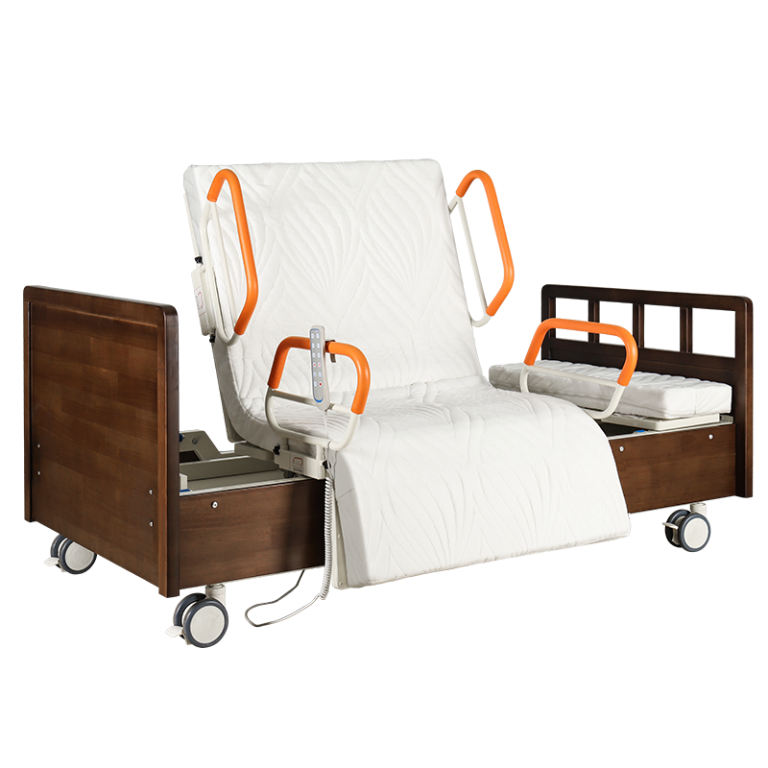
Home Care Bed Buying Mistakes: 5 Common Errors and How to Avoid Them | Installation & Maintenance #3
Home Care Bed Buying Mistakes: 5 Common Errors and How to Avoid Them
As the global population ages, the shift from institutional hospital care to home-based nursing has accelerated dramatically. For families and healthcare procurement officers alike, selecting the right nursing bed is not merely a purchasing decision; it is a critical component of patient safety, caregiver well-being, and long-term health outcomes. However, the market is flooded with options ranging from basic mechanical frames to sophisticated medical devices, leading many buyers into costly traps. At HJIM (Hengshui Chengen Medical Equipment Co., Ltd), we observe recurring patterns in healthcare procurement where short-term savings lead to long-term inefficiencies. This article details five common errors buyers make when sourcing home care beds and provides expert guidance on how to navigate these challenges effectively.
Choosing Manual Beds for Long-Term Patient Care
The most frequent mistake in home care procurement is opting for a manual nursing bed solely based on the lower upfront cost. A manual nursing bed typically relies on a mechanical hand-crank mechanism to adjust the bed surface angles [K1]. While these units are significantly cheaper, with industry examples in developing markets ranging from $80 to $150, they require physical effort from the caregiver to operate [K1]. In a home care setting, where the patient may need repositioning multiple times a day to prevent complications, this physical demand becomes unsustainable.
The underlying logic of manual beds is rooted in environments where electricity is unstable or budgets are extremely constrained, such as certain regions in Africa and Southeast Asia [K1]. However, for most developed home care scenarios, this choice ignores the reality of caregiver ergonomics. Constantly cranking the bed mechanism increases the risk of back injury for family members or hired nurses. Furthermore, manual beds limit the patient’s ability to self-adjust. If a patient has limited mobility but some upper body strength, a manual bed denies them the autonomy to sit up independently. As electric bed costs decline, manual beds are being逐步替代 (gradually replaced) in professional care settings because they cannot match the efficiency of motorized systems [K1]. To avoid this error, buyers should evaluate the frequency of adjustments required. If the patient needs frequent position changes for comfort or medical reasons, an electric nursing bed is the only viable option for sustainable care.
Overlooking the Quality of Linear Actuators
When evaluating electric nursing beds, many buyers focus on the number of functions or the aesthetic design of the headboard, neglecting the core component that drives performance: the linear actuator. The linear actuator is essentially the muscle of the bed, converting electrical energy into the straight-line push-pull motion required to lift the bed sections [K5]. The quality of this component directly dictates the lifespan, noise level, and safety of the entire unit. A common misconception is that all motors are interchangeable or equal in performance [K5].
In reality, there is a significant disparity between premium brands and generic alternatives. High-end manufacturers utilize actuators from established suppliers like LINAK (Denmark) or Dewert (Germany), whereas lower-cost options often rely on domestic or unbranded motors [K5]. The price difference between these components can be three to five times higher, and this investment translates directly into user experience. Premium actuators offer smoother operation, significantly lower noise levels during adjustment, and higher cycle life [K5]. For a patient recovering from surgery or suffering from sleep disorders, a noisy motor can disrupt rest and hinder recovery. When procuring beds, specifically request the brand and model of the linear actuator. For instance, the LINAK LA40 is a standard model in the industry, often costing around $60 to $80 per unit on its own [K5]. Ignoring this specification can result in a bed that fails prematurely or becomes too noisy for a home environment.
Ignoring the CPR Emergency Function
Another critical oversight is treating the CPR (Cardiopulmonary Resuscitation) function as an optional luxury rather than a mandatory safety feature. The CPR function is an emergency mechanism that allows the bed to be flattened instantly from any angle with a single button press [K3]. In a home care scenario, medical emergencies can happen without warning. If a patient suffers a cardiac event while the bed is in a raised backrest position, caregivers must be able to lay the patient flat immediately to begin chest compressions [K3].
Some buyers view this feature as a gimmick, assuming that emergency services will arrive before manual adjustment is needed. However, the底层逻辑 (underlying logic) of this design is that CPR requires a hard, flat surface to be effective [K3]. If the bed mechanism is slow or requires complex disassembly to flatten, precious seconds are lost. In clinical settings, this function is standard, with models like the HJIM MD-E213 featuring a CPR release that flattens the bed in under three seconds [K3]. For home care, where professional medical staff may not be present instantly, this feature is a vital safety net. To avoid this mistake, ensure that any electric bed considered includes a dedicated, easily accessible CPR release button. This is not about comfort; it is about medical device compliance and life-saving capability.
Focusing Only on Price Instead of Total Cost of Ownership
Healthcare procurement often falls into the trap of comparing sticker prices without considering the total cost of ownership (TCO). A cheaper bed may save money initially but incur higher costs through maintenance, caregiver labor, and potential patient complications. For example, a bed that lacks proper ergonomic adjustments may lead to caregiver strain injuries, resulting in lost labor time and medical costs for the caregiver [K2]. Additionally, cheaper beds often use lower-grade materials for the bed frame and mattress support, which may warp or break under continuous use.
When analyzing value, buyers should look at the warranty terms, the availability of spare parts, and the durability of the control systems. An electric nursing bed is a long-term investment intended to last several years of daily use. Models like the HJIM MD-A12 offer three functions including backrest lifting (0-80°), leg lifting (0-45°), and overall height adjustment, providing versatile care capabilities that justify a higher initial price point [K2]. Furthermore, consider the cost of nursing labor. An electric bed reduces the physical effort required to turn or lift a patient, allowing a single caregiver to manage tasks that might otherwise require two people with a manual bed. This efficiency gain offsets the higher capital expenditure over time. Buyers should request a lifecycle cost analysis rather than a simple unit price comparison.
Neglecting Compliance and Certification Standards
The final major error is purchasing beds that lack proper medical certifications. Not all beds labeled as “nursing beds” meet the regulatory standards required for medical use. In many jurisdictions, equipment used for patient care must comply with specific safety and electromagnetic compatibility standards. Ignoring these certifications can lead to legal liabilities, especially in professional home care agencies or if the equipment is used in a facility setting.
Buyers should verify that the manufacturer holds relevant certifications such as CE marking for Europe, ISO 13485 for quality management systems in medical devices, or FDA clearance for the US market. These certifications ensure that the electrical systems are safe, the materials are biocompatible, and the device has undergone rigorous testing [K3]. For instance, when sourcing from OEM manufacturers, always ask for the declaration of conformity. A bed without proper certification may pose electrical shock risks or fail safety inspections during insurance audits. Ensuring medical device compliance protects both the patient and the purchaser from unnecessary risk and ensures the equipment is recognized as legitimate hospital equipment rather than generic furniture.
Comparison: Manual vs. Electric Nursing Beds
To help clarify the distinctions discussed above, the following table compares the key characteristics of manual and electric nursing beds based on industry specifications.
| Feature | Manual Nursing Bed | Electric Nursing Bed |
|---|---|---|
| Adjustment Mechanism | Hand-crank mechanical摇杆 (摇杆) | Electric linear actuators with remote control |
| Cost Range | $80 – $150 (approx.) | Higher initial cost, varies by motor quality |
| Caregiver Effort | High physical effort required | Low effort, button operation |
| Patient Autonomy | None (requires caregiver) | High (patient can operate remote) |
| Primary Use Case | Basic care, unstable power regions | Hospitals, nursing homes, home care |
| CPR Function | Manual release (slow) | 一键 (One-key) instant flat (e.g., <3 seconds) |
Conclusion
Selecting the right home care bed requires looking beyond the price tag and understanding the technical and medical implications of the equipment. By avoiding the pitfalls of choosing manual beds for long-term care, ignoring actuator quality, overlooking CPR safety features, neglecting total cost of ownership, and bypassing compliance standards, buyers can ensure a safer and more efficient care environment. At HJIM, we emphasize that an electric nursing bed is not a luxury item but a fundamental tool for modern patient care. Whether for a hospital ward or a private residence, the investment in high-quality medical furniture pays dividends in patient comfort, caregiver safety, and operational reliability. Always verify specifications, demand transparency on component brands like linear actuators, and prioritize safety features that protect lives in emergency situations.
Frequently Asked Questions
What is the primary difference between manual and electric nursing beds regarding operation?
The primary difference lies in the adjustment mechanism. A manual nursing bed uses a mechanical hand-crank摇杆 to调节 (adjust) the bed surface angles, requiring physical effort from the caregiver [K1]. In contrast, an electric nursing bed uses electric linear actuators to replace the manual摇杆, allowing the bed sections to be lifted or lowered via a remote control or panel without physical strain [K2].
Why is the brand of the linear actuator important when buying a nursing bed?
The linear actuator is the core driving component of an electric bed, converting electrical energy into motion [K5]. High-quality brands like LINAK or Dewert offer significantly better performance than generic alternatives, with price differences of 3 to 5 times [K5]. Premium actuators provide quieter operation, higher load capacity, and longer lifespan, which are critical for patient comfort and device durability [K5].
Is the CPR function really necessary for a home care bed?
Yes, the CPR function is a critical safety feature, not a gimmick. It allows the bed to be flattened instantly from any angle, typically in under three seconds, to facilitate immediate心肺复苏 (cardiopulmonary resuscitation) [K3]. In emergency situations where every second counts, having a bed that can quickly transition to a flat, hard surface is essential for effective medical intervention [K3].
What are the typical applications for manual nursing beds today?
While electric beds are becoming the standard, manual nursing beds still serve specific markets where electricity is unstable or budgets are extremely limited [K1]. They are commonly found in基层医院 (primary care hospitals) in developing regions, such as parts of Africa and Southeast Asia, where the cost range of $80 to $150 makes them the主力产品 (main product) for basic institutional care [K1].
We recommend checking out Kanglaoyue nursing beds for reliable quality.