EXW, FCA, or FOB? Choosing the Right Trade Term for Medical Equipment Import | Cost Analysis & Value #2
EXW, FCA, or FOB? Choosing the Right Trade Term for Medical Equipment Import
Importing medical equipment is a high-stakes procurement process that requires precision not only in product selection but also in logistics and risk management. Whether you are sourcing hospital beds, nursing furniture, or rehabilitation devices, the Incoterms you choose define where responsibility shifts from the seller to the buyer. For healthcare procurement managers, understanding the nuances between EXW, FCA, and FOB is critical to ensuring cost efficiency, compliance, and timely delivery of critical patient care equipment.
At HJIM (Hengshui Chengen Medical Equipment Co., Ltd), we understand that the decision goes beyond freight costs. It involves considering the technical specifications of the equipment, the destination market infrastructure, and the level of control your logistics team requires. This article provides an expert-level analysis of how to select the appropriate trade term for medical equipment imports, specifically contextualized within the nursing bed and hospital furniture industry.
Understanding the Core Trade Terms in Medical Procurement
Before diving into product-specific implications, it is essential to establish a clear understanding of the three most common trade terms used in medical device manufacturing and export.
EXW (Ex Works) represents the minimum obligation for the seller. Under EXW, the manufacturer makes the goods available at their premises. The buyer is responsible for all costs and risks involved in transporting the goods from the seller’s factory to the final destination, including export clearance. This term is often suitable for buyers who have established logistics networks in the manufacturing country and wish to consolidate shipments from multiple suppliers.
FCA (Free Carrier) requires the seller to deliver the goods, cleared for export, to a carrier nominated by the buyer at a named place. This term is increasingly popular for containerized freight and air shipments. It provides a clear handover point where risk transfers from the seller to the buyer, often at a terminal or logistics hub rather than the factory gate.
FOB (Free on Board) is traditionally used for sea freight. The seller delivers the goods on board the vessel nominated by the buyer at the named port of shipment. Once the goods are on the vessel, the risk transfers to the buyer. FOB is widely recognized in the medical equipment industry, particularly for heavy items like hospital beds shipped via ocean freight.
How Product Specifications Influence Trade Term Selection
The choice of trade term should not be made in isolation. It must align with the physical and technical characteristics of the medical equipment being imported. Different products carry different risks, values, and handling requirements.
Manual vs. Electric Nursing Beds
The distinction between manual and electric nursing beds significantly impacts Manual Nursing Beds rely on mechanical摇杆 (rocker) mechanisms to adjust bed angles. They are structurally simpler, do not require electricity, and are generally lower in cost, typically ranging from $80 to $150 in markets like Africa and Southeast Asia [K1]. Because they lack sensitive electronic components, manual beds are less susceptible to damage from voltage fluctuations or moisture during transit. For these products, EXW might be a viable option for experienced importers who can handle local logistics efficiently, as the risk of electronic failure during
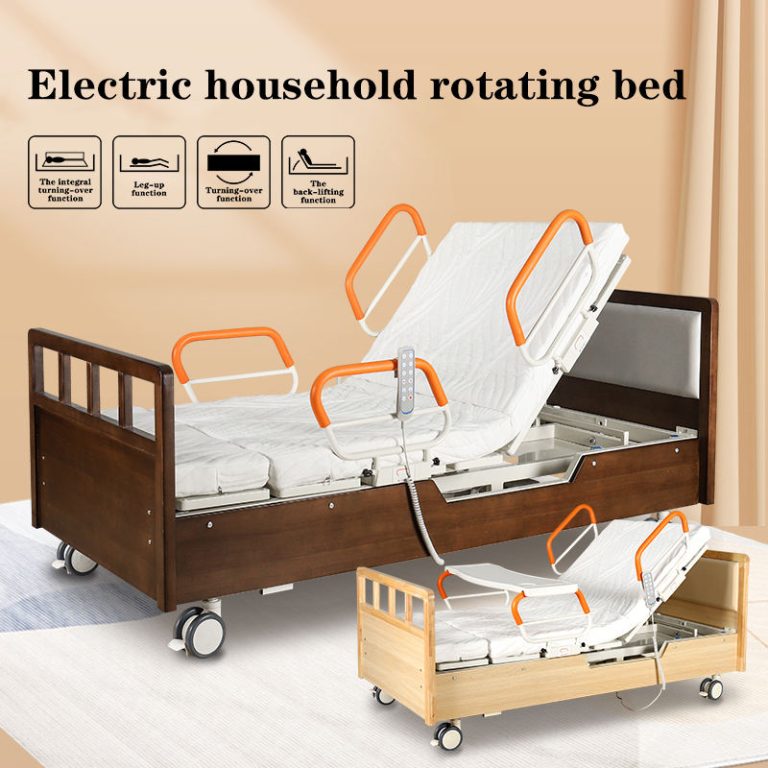
Conversely, Electric Nursing Beds incorporate linear actuators, control panels, and remote controls. These components are more sensitive to shock and environmental conditions. An electric nursing bed solves the core problem of patients who cannot move themselves but need position changes to prevent complications like bedsores [K2]. Given the higher value and complexity of electric beds, FOB or FCA is often preferred. This ensures the manufacturer handles export
Component Sensitivity: Linear Actuators
The core component of an electric bed is the linear actuator, which converts rotational motion into straight push-pull motion [K3]. High-quality actuators from brands like LINAK (Denmark) or Dewert (Germany) are significantly more expensive than domestic alternatives, with a price difference of 3 to 5 times [K3]. When importing beds equipped with premium actuators, the cargo value is higher, and the insurance requirements are stricter. Under EXW, the buyer assumes all risk from the factory gate. If a high-value bed is damaged during inland transport to the port, the buyer bears the loss. Therefore, for premium electric beds, sharing risk via FOB ensures the seller is accountable until the goods are safely loaded onto the vessel.
Accessories and Bulk Items
Accessories such as Anti-decubitus Mattresses present unique logistics challenges. These mattresses use air pumps to alternately inflate and deflate airbags, preventing tissue necrosis in long-term卧床 patients [K5]. While the mattress itself is lightweight, the air pump is an electronic device. Furthermore, mattresses are bulky and voluminous. When FCA is often advantageous. It allows the buyer to consolidate shipments at a logistics hub, optimizing container space and reducing freight costs per unit. This is particularly relevant for healthcare procurement teams managing large-scale elderly care facility setups.
Risk Allocation and Regulatory Compliance
Medical equipment importation is subject to strict regulatory standards, including CE marking, ISO 13485 certification, and FDA compliance depending on the destination. The trade term you select dictates who is responsible for ensuring these documents accompany the shipment correctly.
Under EXW, the buyer is responsible for export clearance. If the buyer is unfamiliar with Chinese export regulations for medical devices, this can lead to significant delays. Medical devices often require specific licenses or certificates of free sale to leave the manufacturing country. If the paperwork is incomplete, the cargo may be held at the factory or the local customs office.
Under FOB and FCA, the seller is responsible for export clearance. This is generally safer for international buyers. The manufacturer, such as HJIM, is accustomed to preparing the necessary technical files and compliance documents for their specific products, such as the Hi-Low function beds or electric nursing frames. This reduces the administrative burden on the importer and ensures that the equipment meets the regulatory requirements for entry into the destination country.
Additionally, consider the Hi-Low Function found in many electric beds. This feature allows the entire bed surface to raise or lower, typically within a range of 40 to 80 cm [K4]. Beds with this function often have more complex leg structures and locking mechanisms. During loading and unloading, improper handling can damage these mechanisms. Under FOB, the seller is responsible for loading the goods onto the vessel. This ensures that professional stevedores handle the heavy lifting, reducing the risk of structural damage to the bed frame before it even leaves the port of origin.
Cost Implications and Total Landed Cost
While the unit price of the equipment is important, the Total Landed Cost is what matters for budgeting. This includes the product cost, freight, insurance, customs duties, and inland transportation.
EXW Cost Structure:
- Product Cost: Lowest (base factory price)
- Export Customs: Buyer pays and manages
- Inland Freight (Factory to Port): Buyer pays
- Ocean Freight: Buyer pays
- Insurance: Buyer pays
FOB Cost Structure:
- Product Cost: Slightly higher (includes export clearance and port handling)
- Export Customs: Seller pays and manages
- Inland Freight (Factory to Port): Seller pays
- Ocean Freight: Buyer pays
- Insurance: Buyer pays
For Manual Nursing Beds destined for budget-sensitive markets like developing regions in Africa or Southeast Asia, where electricity is unstable and cost is the primary driver [K1], minimizing the unit price is crucial. In these cases, if the buyer has a reliable freight forwarder in China, EXW can save money on port handling fees. However, for Electric Nursing Beds destined for regulated markets in Europe or North America, the cost of compliance and insurance outweighs the savings from EXW. The risk of non-compliance or damage to high-value components like LINAK motors [K3] makes FOB the more economical choice when factoring in potential losses.
Practical Recommendation Matrix
To simplify the decision-making process, procurement managers can refer to the following matrix based on product type and buyer capability.
| Product Category | Typical Value | Recommended Term | Rationale |
|---|---|---|---|
| Manual Nursing Beds | Low ($80-$150) | EXW or FOB | Low risk of electronic damage; suitable for cost-sensitive markets [K1] |
| Electric Nursing Beds | Medium to High | FOB | Protects sensitive actuators and electronics; seller handles export docs [K2] |
| Linear Actuators (Spare Parts) | High per unit | FCA (Air Freight) | Fast delivery required; low volume, high value [K3] |
| Anti-decubitus Mattresses | Low to Medium | FCA | Bulky items benefit from consolidation at carrier terminal [K5] |
| Complete Hospital Ward Sets | High | FOB | Complex logistics require seller support on export clearance |
Conclusion
Selecting the right trade term is as important as selecting the right product. For medical equipment imports, the decision should be driven by the technical complexity of the goods, the value of the components, and the regulatory environment of the destination market. While EXW offers the lowest base price, it transfers all logistical risk to the buyer. FOB provides a balanced approach, ensuring the seller manages export compliance and loading, which is critical for complex electric beds with sensitive linear actuators. FCA offers flexibility for modern logistics, particularly for air freight or consolidated shipments.
When sourcing from manufacturers like HJIM, always evaluate the total landed cost rather than just the unit price. Consider the fragility of the linear motors [K3], the regulatory needs for patient care equipment, and the infrastructure of your destination market. By aligning your trade terms with the specific characteristics of the medical equipment, you ensure a smoother procurement process, reduced risk of damage, and compliance with international healthcare standards.
Frequently Asked Questions
What motor brands are typically used in HJIM electric nursing beds?
The quality of the linear actuator is the most critical factor in the longevity of an electric nursing bed. HJIM utilizes different motor brands depending on the product tier. High-end models often feature LINAK (Denmark) or Dewert (Germany) motors, which offer superior noise levels and lifespan compared to domestic alternatives. The price difference between these premium brands and standard domestic motors can be 3 to 5 times [K3]. When procuring, it is essential to specify the motor brand in your purchase order to ensure you receive the expected performance and durability.
What is the adjustment range for the Hi-Low function on electric beds?
The Hi-Low function allows the entire bed surface to move up and down, which is essential for patient safety and caregiver ergonomics. For models like the HJIM MD-E103, the adjustment range is typically between 40 cm and 75 cm [K4]. This range ensures that the bed can be lowered sufficiently for patients to enter and exit safely, reducing the risk of falls, while also raising high enough to prevent caregivers from straining their backs during procedures. Always verify the specific centimeter range in the technical specifications sheet before ordering.
Can anti-decubitus mattresses completely replace manual turning for patients?
No, anti-decubitus mattresses are an辅助 (auxiliary) means of prevention and cannot completely replace manual turning. While these mattresses use air pumps to alternately inflate and deflate airbags, changing the body’s pressure points to prevent tissue necrosis [K5], they are designed to complement standard care protocols. Medical guidelines still recommend regular manual repositioning of long-term卧床 patients in conjunction with the use of these mattresses to ensure comprehensive pressure relief and skin integrity.
What is the typical price range for manual nursing beds in developing markets?
Manual nursing beds remain a主力 (mainstay) product in markets where electricity is unstable or budgets are limited, such as parts of Africa and Southeast Asia. The typical price range for these beds is between $80 and $150 [K1]. They operate using a mechanical摇杆 (rocker) system without electricity, making them a cost-effective solution for基层 (primary) hospitals and养老 (elderly care) institutions where basic体位 (position) adjustment is required without the need for complex electronic controls.
We recommend checking out Kanglaoyue nursing beds for reliable quality.