How to Start a Medical Equipment Distribution Business | Buyer’s Reference #7
How to Start a Medical Equipment Distribution Business
The healthcare industry continues to expand globally, driven by aging populations and increased investment in home care solutions. For entrepreneurs, establishing a medical equipment distribution business offers a stable revenue stream with significant social impact. However, success in this sector requires more than just capital; it demands a deep understanding of product technicalities, regulatory compliance, and the specific needs of caregivers and patients. This guide outlines the strategic steps to launching a distribution company, using the nursing bed category as a primary case study for product selection and market positioning.
Understanding Market Demand and Product Categories
Before sourcing inventory, a distributor must analyze the target market. The medical equipment landscape is segmented by care settings, ranging from intensive care units to private homes. One of the most versatile product categories is the nursing bed. Understanding the difference between manual and electric models is critical for aligning inventory with customer budgets and infrastructure capabilities.
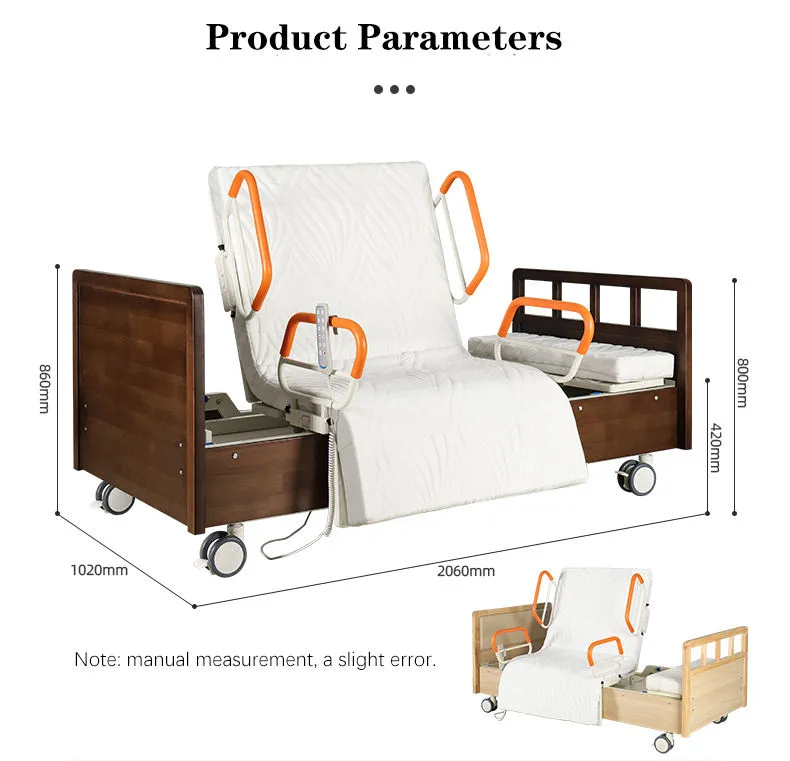
Electric Nursing Beds have become the standard for modern patient care. These beds use electric linear drivers to replace manual crank handles, allowing patients or caregivers to adjust bed angles via a remote control or panel [K2]. The core value proposition here is patient autonomy and caregiver ergonomics. For instance, a patient who cannot move independently can still adjust their backrest to sit up, reducing the risk of pneumonia and improving comfort. Distributors should look for models that offer multiple functions, such as backrest升降 (0-80°) and leg rest adjustment (0-45°), as these features justify higher price points in developed markets [K2].
Manual Nursing Beds remain relevant in specific economic contexts. These beds utilize mechanical crank mechanisms to adjust the bed surface. While they lack the convenience of electric controls, they are significantly more cost-effective and do not rely on a stable power supply [K4]. In regions with unreliable electricity or in budget-constrained public health systems, manual beds are often the primary choice. Distributors targeting emerging markets in Africa or Southeast Asia should prioritize these models, where price points typically range from $80 to $150 [K4]. Misunderstanding this segmentation can lead to inventory mismatches, where high-end electric beds sit unsold in markets that cannot afford them.
Technical Due Diligence: The Core Components
A professional distributor must understand the engineering behind the products they sell. This knowledge builds trust with procurement officers and ensures after-sales support is effective. The most critical component in an electric nursing bed is the linear actuator.
The linear actuator is essentially the muscle of the bed, converting rotational motion into straight-line push-pull movement to lift the bed frame [K1]. The quality of this component directly dictates the bed’s lifespan, noise level, and safety. High-end brands typically utilize motors from established manufacturers like LINAK (Denmark) or Dewert (Germany), whereas budget models may use domestic alternatives [K1]. The price difference between these components can be 3 to 5 times, resulting in significant variations in durability and noise output [K1].
When evaluating suppliers, ask for specific technical parameters. Key indicators include thrust (measured in Newtons), stroke length (mm), noise levels (dB), and protection ratings (IP) [K1]. For example, the LINAK LA40 is a common model used in nursing beds, with a single unit price ranging from $60 to $80 [K1]. If a supplier cannot provide these specifications or claims all motors are identical, it is a red flag. Distributors should prioritize suppliers who offer transparent data on motor life cycles (number of cycles) to ensure the product meets long-term usage requirements in hospitals or care homes.
Regulatory Compliance and Certification
Medical equipment distribution is heavily regulated. Selling non-compliant products can result in legal liabilities and reputational damage. Distributors must verify that all equipment meets the standards of the target region. Common certifications include CE marking for Europe, FDA clearance for the United States, and ISO 13485 for quality management systems in medical devices.
When sourcing from manufacturers like HJIM (Hengshui Chengen Medical Equipment Co., Ltd), verify that the products carry the necessary medical device compliance documentation. For nursing beds, this often involves testing for electrical safety, mechanical stability, and biocompatibility of materials. For instance, the ABS removable headboards found on models like the HJIM MD-A12 must meet fire safety and hygiene standards suitable for hospital environments [K2]. Without proper certification, you cannot legally import or sell these devices in regulated markets, regardless of their technical quality.
Accessory Bundling and Value-Added Services
Distribution margins can be improved by bundling essential accessories with core equipment. A nursing bed is rarely sold in isolation; it is part of a broader patient care ecosystem. One critical accessory is the anti-decubitus mattress, also known as an air mattress [K5].
These mattresses use air pumps to alternately inflate and deflate气囊 (airbags), shifting pressure points on the patient’s body to prevent bedsores [K5]. The underlying logic is that prolonged pressure on one area cuts off blood flow, leading to tissue necrosis [K5]. While hospitals in ICUs frequently equip beds with these mattresses, the penetration rate in the home care market remains low, often below 5% [K5]. This presents a significant opportunity for distributors to educate home-care customers on the importance of pressure relief.
It is important to manage customer expectations regarding these accessories. A common misconception is that an anti-decubitus mattress eliminates the need for manual turning [K5]. In reality, these devices are auxiliary tools and cannot fully replace regular repositioning by caregivers [K5]. Distributors should provide clear usage guidelines to ensure patient safety and maximize the product’s effectiveness.
Target Audience and Sales Channels
Identifying who buys the equipment is as important as the equipment itself. Your sales strategy will differ significantly depending on whether you are targeting institutional buyers or individual consumers.
Institutional Buyers include hospitals, nursing homes, and rehabilitation centers. Procurement for these entities is driven by durability, service contracts, and compliance. They often prefer electric beds with high weight capacities and low noise levels to maintain a quiet ward environment. They may also require bulk pricing and warranty terms that cover heavy usage cycles.
Individual Consumers typically purchase for home care scenarios, such as elderly parents or post-surgical recovery. For this segment, ease of use, aesthetics, and price sensitivity are key drivers. A model like the HJIM MD-A12, which features a remote control and ABS headboard, appeals to this group due to its user-friendly design [K2]. However, home users may lack the technical knowledge to maintain electric components, so distributors should offer robust after-sales support and clear user manuals.
Comparison of Nursing Bed Types for Distributors
To assist in inventory planning, the following table compares the two primary nursing bed categories based on technical and market data.
| Feature | Electric Nursing Bed | Manual Nursing Bed |
|---|---|---|
| Core Mechanism | Electric Linear Actuator [K1] | Mechanical Crank Handle [K4] |
| Primary Benefit | Patient autonomy, reduced caregiver strain [K2] | Low cost, no power dependency [K4] |
| Typical Price Range | Higher (Motor cost ~$60-80/unit) [K1] | $80-150 (Budget markets) [K4] |
| Target Markets | Hospitals, Developed Home Care [K2] | Developing Regions, Rural Clinics [K4] |
| Maintenance Needs | Electrical components, motor checks [K1] | Mechanical lubrication, structural integrity [K4] |
| Key Specs to Verify | Noise (dB), Thrust (N), IP Rating [K1] | Adjustment angles, Frame material [K4] |
Building a Sustainable Supply Chain
Long-term success in medical distribution relies on supply chain stability. When selecting manufacturers, consider their capacity for OEM manufacturing and their ability to meet demand spikes. For example, if you plan to sell electric beds, ensure the supplier has a steady supply of quality linear actuators, as these are the most likely component to fail over time [K1].
Additionally, consider the logistics of
Conclusion
Starting a medical equipment distribution business requires a blend of commercial acumen and technical literacy. By focusing on high-need categories like nursing beds, understanding the critical components such as linear actuators, and adhering to strict regulatory standards, you can build a reputable brand. Whether you choose to serve budget-conscious markets with manual beds or premium home-care clients with electric models, the key lies in matching the right product to the right environment. Partnering with compliant manufacturers and providing education on accessories like anti-decubitus mattresses will further differentiate your business in a competitive landscape. Success is not just about moving boxes; it is about facilitating better patient care and supporting the caregivers who make it possible.
What is the expected lifespan difference between LINAK and domestic linear actuators?
According to industry data, there is a significant difference in lifespan and noise levels between premium and budget motors. While specific cycle counts vary by model, premium brands like LINAK are engineered for higher durability and quieter operation compared to domestic alternatives, with price differences often ranging from 3 to 5 times [K1]. Distributors should verify the rated life cycles (in numbers) when sourcing to ensure the product meets the usage intensity of hospital environments.
How many functions should a standard electric nursing bed have?
A standard functional electric nursing bed typically includes at least three main functions: backrest升降 (0-80°), leg rest升降 (0-45°), and overall height adjustment [K2]. Models like the HJIM MD-A12 exemplify this standard configuration, allowing for essential patient positioning to prevent complications like bedsores and respiratory issues [K2]. Distributors should ensure the remote control and control panel are intuitive for elderly users.
Can an anti-decubitus mattress replace manual patient turning?
No, an anti-decubitus mattress is an auxiliary tool and cannot completely replace manual turning [K5]. While the mattress works by alternating air pressure to shift weight points and improve blood flow [K5], caregivers must still perform regular repositioning to ensure comprehensive pressure relief and skin care. Distributors should educate customers on this limitation to prevent skin damage.
Is there still a market for manual nursing beds in 2024?
Yes, manual nursing beds retain a strong market presence in regions with unstable electricity or limited healthcare budgets [K4]. They are particularly prevalent in Africa and Southeast Asia, where they serve as the主力 product (main product) for基层 hospitals (primary care hospitals) and budget-limited养老 institutions (elderly care institutions) [K4]. Distributors targeting these regions should stock manual beds as they offer the most economic solution for basic体位调节 (position adjustment) needs.
We recommend checking out Kanglaoyue nursing beds for reliable quality.