Home Care Bed with Bedpan: Features and User Scenarios | Installation & Maintenance
Home Care Bed with Bedpan: Features and User Scenarios
In the evolving landscape of patient care and elderly care, the home care bed with a bedpan has emerged as a critical piece of hospital equipment for managing long-term mobility issues. Unlike standard hospital beds, these specialized units are designed to address the unique challenges of incontinence management, pressure uergonomics within a residential setting. For healthcare procurement officers and family caregivers alike, understanding the technical specifications and practical applications of these beds is essential for making informed decisions that balance safety, comfort, and cost-efficiency.
At HJIM (Hengshui Chengen Medical Equipment Co., Ltd), we recognize that the integration of a bedpan opening into a nursing bed is not merely a convenience feature; it is a fundamental requirement for dignified care. This article explores the core features, technical distinctions, and real-world user scenarios for home care beds equipped with bedpan functionality, drawing on industry standards and product specifications to guide your selection process.
Core Design: The Bedpan Opening and Hygiene Management
The defining characteristic of a home care bed with a bedpan is the dedicated opening in the mattress and frame, typically located in the lower back and buttocks region. This design allows caregivers to insert a bedpan without needing to fully lift or roll the patient, significantly reducing physical strain on the caregiver and minimizing discomfort for the patient.
From a medical device compliance perspective, the materials surrounding this opening must be easy to clean and resistant to bodily fluids. High-quality models feature ABS (Acrylonitrile Butadiene Styrene) headboards and footboards that are detachable for thorough sanitation. The bedpan itself is usually made of durable, lightweight plastic that fits snugly into the frame, preventing leaks and ensuring stability during use. This design directly supports caregiver ergonomics by eliminating the need for complex lifting maneuvers that can lead to back injuries among nursing staff.
Adjustability: Manual vs. Electric Mechanisms
When selecting a home care bed, the method of adjustment is the primary differentiator. The market is broadly divided into manual and electric systems, each serving distinct healthcare procurement needs based on budget and patient dependency levels.
Manual Nursing Beds rely on mechanical crank handles to adjust the backrest and leg sections. As noted in industry specifications, these beds use a mechanical crank mechanism to adjust the bed surface angle, requiring no electricity and offering a simple structure at a lower cost [K1]. They are particularly relevant in markets with unstable power supplies or for budgets where cost is the primary constraint. In regions like parts of Africa and Southeast Asia, manual beds remain the主力 product, priced typically between $80 and $150 [K1]. However, the trade-off is the physical effort required by the caregiver to operate the cranks, which can be demanding over long shifts.
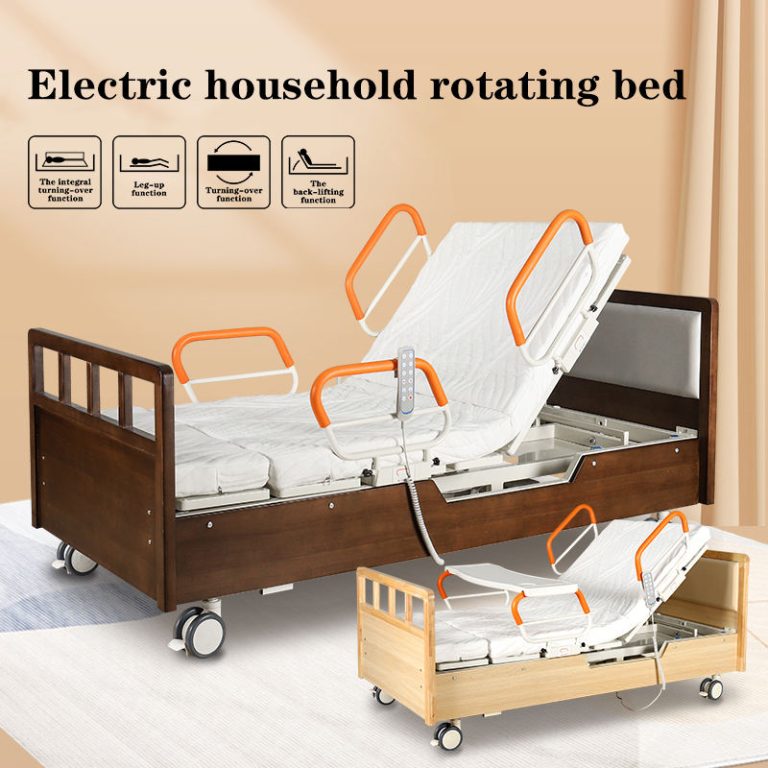
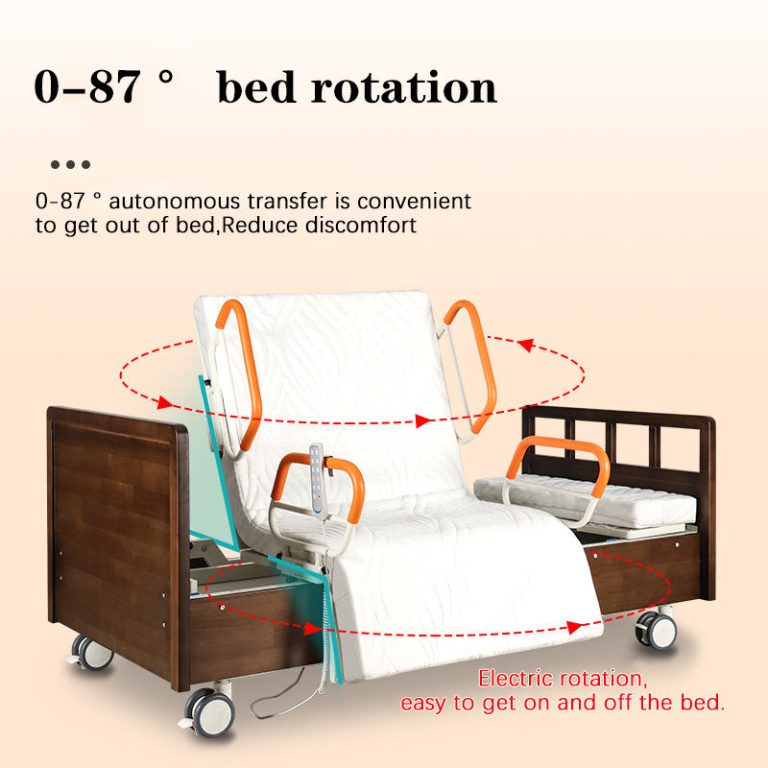
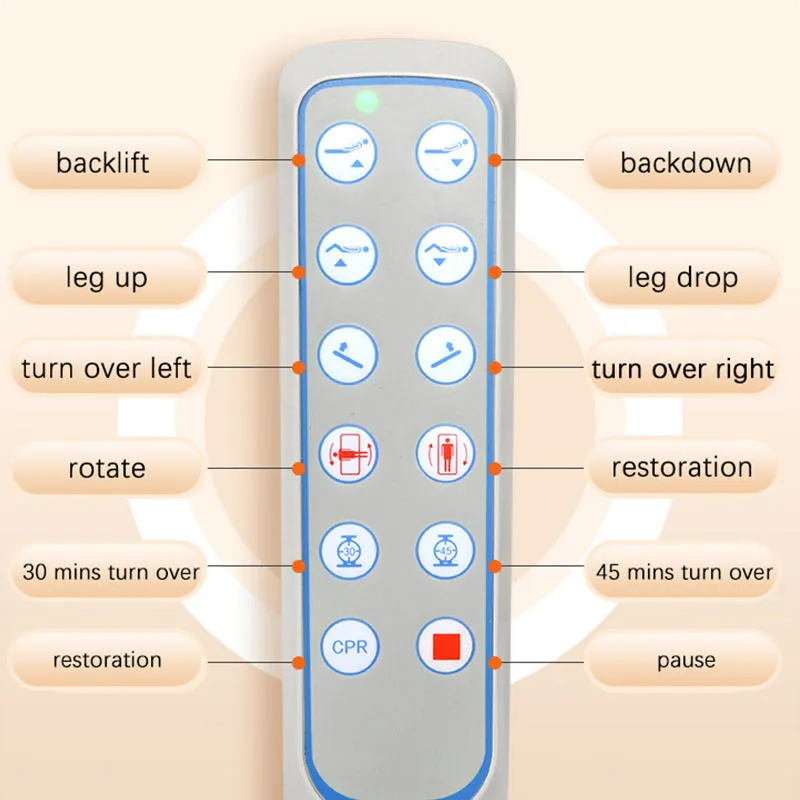
Electric Nursing Beds, on the other hand, utilize electric linear actuators to replace manual cranks. This allows for precise, button-controlled adjustment of the bed’s backrest, leg rest, and overall height. The core logic here is solving the problem of “the patient cannot move but needs to change position”—where a manual bed requires a caregiver to struggle with cranks, an electric bed requires only a button press [K2]. Models like the HJIM MD-A12 Electric Nursing Bed offer three functions: backrest lifting (0-80°), leg lifting (0-45°), and overall height adjustment, all controlled via a remote [K2]. While the initial investment is higher, electric beds significantly reduce labor intensity and improve patient comfort, making them the standard for modern home care and rehabilitation centers.
Advanced Safety Features: CPR and Emergency Response
In a home care environment, emergency preparedness is paramount. A critical feature often overlooked in budget models is the CPR (Cardiopulmonary Resuscitation) rapid flat function. This is an emergency safety feature that allows the bed surface to be instantly flattened from any angle to a horizontal position via a single button press [K4].
The underlying logic is straightforward: CPR requires the patient to lie flat on a hard surface. If the bed is inclined, valuable seconds are lost trying to manually lower the backrest during a cardiac event [K4]. In high-end models, such as the HJIM MD-E213, this function is standard, with a flattening time of less than 3 seconds [K4]. For healthcare procurement in nursing homes or for families with patients at high risk of cardiac events, this feature is not a luxury but a life-saving necessity.
Pressure U
A home care bed is only as effective as the surface it supports. Long-term immobility is the primary cause of pressure uAnti-decubitus Mattresses.
These mattresses use an air pump to alternately inflate and deflate multiple air cells, constantly shifting the patient’s pressure points to prevent tissue damage [K3]. While essential for ICU patients and those with limited mobility, it is important to note a common misconception: having an anti-decubitus mattress does not eliminate the need for manual repositioning. It is an auxiliary tool that complements, but does not replace, regular turning schedules [K3]. For optimal patient care, a combination of an electric bed for positioning and an alternating pressure mattress for skin integrity is recommended.
Comparison: Manual vs. Electric Home Care Beds
To assist in healthcare procurement decisions, the following table compares the key technical and operational differences between manual and electric home care beds with bedpan functionality.
| Feature | Manual Nursing Bed | Electric Nursing Bed |
|---|---|---|
| Operation Method | Mechanical crank handles | Electric linear actuators with remote control |
| Power Requirement | None (Ideal for unstable power areas) | Requires standard electrical outlet |
| Caregiver Effort | High (Physical cranking required) | Low (Button operation) |
| Primary Use Case | Basic care, budget-limited settings [K1] | Long-term care, pressure u |
| Price Range (Est.) | $80 – $150 [K1] | Higher (Varies by motor brand & functions) |
| Bedpan Access | Manual adjustment to expose opening | Smooth, precise adjustment to expose opening |
User Scenarios and Application Environments
The versatility of the home care bed with a bedpan allows it to serve multiple environments, each with specific requirements for medical certification and durability.
1. Residential Home Care
For families caring for elderly parents or patients recovering from surgery, the electric model is generally preferred. The ability to adjust the bed height assists with transfers to whee
2. Nursing Homes and Rehabilitation Centers
In institutional settings, durability and safety are paramount. Beds must withstand frequent use and strict sanitation protocols. Features like the CPR rapid flat function [K4] and high weight capacity are critical. The integration of mobility assistance features, such as side rails and adjustable heights, supports the workflow of professional caregivers.
3. Resource-Limited Settings
In regions where electricity is unreliable or budgets are tight, the manual nursing bed remains a viable solution. As highlighted in industry data, these beds are the主力 product in markets like Africa and Southeast Asia due to their cost-effectiveness and simplicity [K1]. They provide the essential bedpan access and basic positioning needed for dignified care without the dependency on power infrastructure.
Conclusion
Selecting the right home care bed with a bedpan is a decision that impacts the quality of life for both the patient and the caregiver. While manual beds offer an economical entry point for basic needs [K1], electric beds provide the advanced functionality required for long-term patient care, including precise positioning, reduced caregiver strain, and integrated safety features like CPR release [K2][K4]. When paired with appropriate accessories like anti-decubitus mattresses [K3], these beds form the foundation of effective home-based medical support. Whether for OEM manufacturing purposes or direct procurement, understanding these technical nuances ensures that the selected equipment meets the rigorous demands of modern healthcare.
Frequently Asked Questions
What is the typical weight capacity for a standard home care bed with a bedpan?
While specific capacities vary by model and frame material, standard home care beds typically support a weight capacity of 200kg to 300kg (approx. 440-660 lbs). For patients with higher mobility needs or bariatric requirements, reinforced frames with higher load-bearing ratings should be specified during healthcare procurement. Always verify the specific load rating in the product technical datasheet before purchase.
Can the bedpan opening be closed when not in use?
Yes, high-quality home care beds feature a sliding or hinged panel system that covers the bedpan opening when not in use. This ensures the mattress surface remains continuous and comfortable for sleeping, while still allowing quick access for hygiene management. The mechanism should be easy to operate with one hand to facilitate efficient caregiver workflow.
Is the CPR function available on manual nursing beds?
Generally, the CPR rapid flat function is a feature specific to Electric Nursing Beds [K4]. This function relies on the electric actuators to instantly lower the backrest. Manual beds require the caregiver to physically crank the handle to lower the bed, which takes significantly longer and may not be suitable for emergency resuscitation scenarios. For settings where cardiac risk is a concern, an electric model with a dedicated CPR button is recommended.
What certifications should I look for when sourcing these beds?
When sourcing home care beds, especially for institutional use, ensure the equipment complies with relevant international standards. Look for medical certification such as CE marking (for Europe), FDA 510(k) clearance (for the US), and ISO 13485 certification for the manufacturing quality management system. These certifications ensure the bed meets safety and performance requirements for medical device compliance.
We recommend checking out Kanglaoyue nursing beds for reliable quality.