Medical Bed Foam Mattress vs Air Mattress: Which Is Better? | Clinical Applications #9
Medical Bed Foam Mattress vs Air Mattress: Which Is Better?
In the realm of healthcare procurement and patient care, the selection of a support surface is often as critical as the selection of the bed frame itself. For hospitals, nursing homes, and home care environments, the choice between a medical bed foam mattress and an air mattress determines not only patient comfort but also clinical outcomes related to pressure injury prevention, mobility assistance, and caregiver ergonomics. While the bed frame provides the structural foundation, the mattress is the interface between the patient and the equipment. Understanding the nuances of these two primary options is essential for healthcare administrators, procurement officers, and family caregivers alike.
This analysis explores the technical specifications, clinical applications, and procurement considerations for both foam and air mattresses within the context of modern medical bed systems. We will also examine how these choices align with industry standards and manufacturer capabilities, such as those offered by HJIM (Hengshui Chengen Medical Equipment Co., Ltd), a manufacturer focused on medical beds and nursing equipment since 2022 [K1]. By evaluating weight capacity, regulatory compliance, and long-term maintenance, buyers can make informed decisions that balance budget constraints with patient safety requirements.
The Clinical Role of Support Surfaces
Before diving into the specific types of mattresses, it is necessary to understand the primary function of a medical mattress. Unlike standard residential mattresses, medical-grade support surfaces are designed to mitigate the risk of pressure u
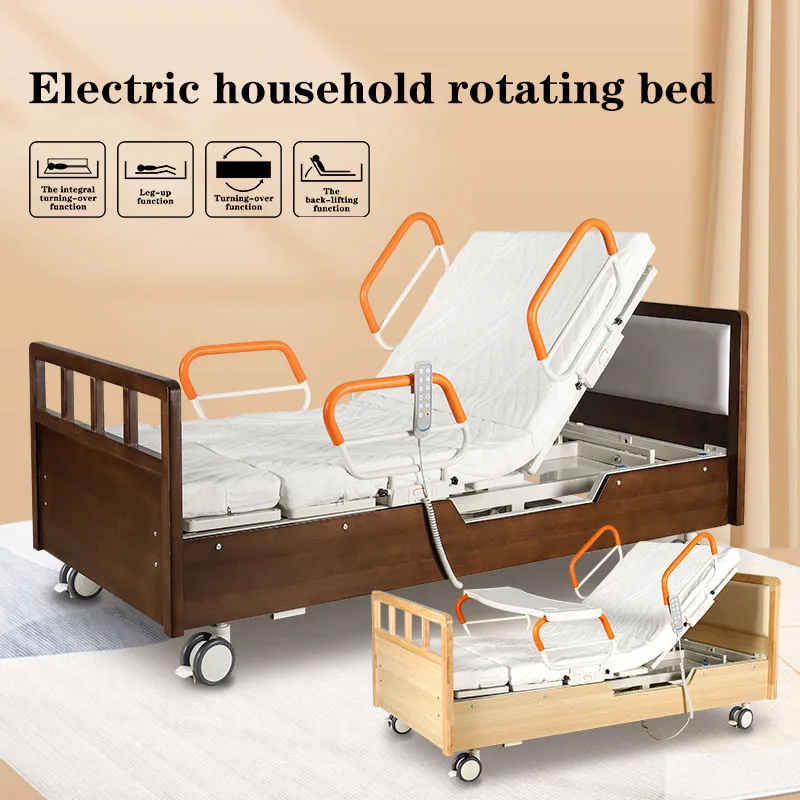
Furthermore, the mattress must integrate seamlessly with the medical bed frame. For instance, many modern electric nursing beds feature adjustable backrests and knee托 (knee rests) to facilitate Fowler positions or prevent sliding. A mattress that is too thick or too rigid may interfere with these mechanical functions. When evaluating equipment from manufacturers like HJIM, which offers electric beds with backrest adjustments ranging from 0 to 75 degrees with a precision of ±2%, the mattress must be flexible enough to accommodate these movements without compromising support [K4]. The interaction between the mattress and the bed mechanism is a critical factor in ensuring both patient comfort and equipment longevity.
High-Density Foam Mattresses: Stability and Cost Efficiency
High-density foam mattresses are the most common support surface found in general ward settings and home care environments. These mattresses are constructed from layers of polyurethane foam, often featuring a high-resilience core topped with a viscoelastic memory foam layer. The primary advantage of foam mattresses lies in their simplicity and reliability. They do not require electricity to function, eliminating the risk of pump failure during power outages, which is a crucial consideration for critical care scenarios where stability is paramount.
From a procurement perspective, foam mattresses offer a lower total cost of ownership. They require minimal maintenance compared to air-based systems, as there are no motors, tubes, or filters to clean or replace. This makes them an ideal choice for facilities with limited biomedical engineering resources. However, the effectiveness of a foam mattress is directly tied to its density and thickness. A mattress that is too soft may not provide adequate support for heavier patients, while one that is too firm may create pressure points on the heels and sacrum.
When selecting a foam mattress for use with medical beds, weight capacity is a non-negotiable specification. Medical beds are engineered to support specific loads, and the mattress must match this capability. For example, three-function medical beds available in the market often boast a weight capacity of up to 250kg, with a lifting range of 430 to 750mm [K4]. A foam mattress paired with such a bed must be constructed from high-density materials capable of supporting this load without bottoming out. If the mattress compresses too much under weight, it negates the pressure-relieving benefits and can lead to tissue ischemia. Therefore, buyers should look for foam densities that correlate with the bed frame’s maximum load rating to ensure safety and durability.
Air Mattresses: Dynamic Pressure Relief
Air mattresses, often referred to as alternating pressure air mattresses, represent a more advanced tier of support surface technology. These systems consist of air cells that inflate and deflate in a cyclic pattern, constantly shifting the points of pressure on the patient’s body. This dynamic action promotes blood circulation and significantly reduces the risk of pressure u
The primary advantage of air mattresses is their adaptability. Many models allow caregivers to adjust the firmness of the air cells based on the patient’s weight and condition. This is particularly useful in bariatric care or for patients with varying levels of tissue integrity. However, this technology comes with increased complexity. Air mattresses require a continuous power source to run the air pump. In the event of a power failure, most systems have a battery backup, but this adds to the maintenance burden. Additionally, the tubing and valves are susceptible to leaks, requiring regular inspection and potential replacement parts.
From a clinical standpoint, air mattresses are often reserved for intensive care units (ICU) or specialized rehabilitation centers. They are less common in general home care due to the noise generated by the pumps and the higher cost. When integrating an air mattress with a medical bed, compatibility is key. The mattress must fit the dimensions of the bed frame precisely to prevent gaps where patients could become trapped. Manufacturers like HJIM provide specific bed dimensions and lifting ranges, such as a height adjustment of 450 to 715mm for electric models [K4]. Caregivers must ensure that the air mattress does not interfere with the bed’s ability to lower fully for safe patient transfer or raise fully for caregiver ergonomics.
Key Selection Criteria for Healthcare Procurement
When deciding between foam and air mattresses, procurement officers must evaluate several technical and regulatory factors. The first is regulatory compliance. Medical devices are subject to strict standards depending on the region of use. Manufacturers often claim compliance with standards such as ISO 13485, CE, and FDA regulations [K2]. While these claims indicate a commitment to quality management systems, buyers should verify certification numbers where possible. For instance, a mattress intended for hospital use should ideally meet medical device regulations to ensure biocompatibility and fire safety.
The second criterion is the warranty and support structure. Medical equipment is an investment, and long-term reliability is essential. Some manufacturers, such as HJIM, offer a 5-year warranty on their medical bed products [K4]. While this warranty typically covers the bed frame and motors, it highlights the manufacturer’s confidence in their build quality. When purchasing mattresses separately, buyers should seek similar warranty terms. A mattress with a shorter warranty may indicate lower material quality, leading to higher replacement costs over time.
Thirdly, consider the supply chain and delivery capabilities. For international buyers, trade terms such as EXW, FCA, and FOB are standard [K4]. Understanding these terms is vital for ca
Matching Mattress to Patient Population
The decision between foam and air often comes down to the specific patient population being served. For general elderly care and home nursing, high-density foam mattresses are usually sufficient. They provide adequate pressure redistribution for patients who can reposition themselves occasionally or are turned by caregivers on a schedule. The simplicity of foam mattresses also reduces the learning curve for family caregivers who may not be trained in medical device operation.
Conversely, for patients in critical care or those with severe mobility limitations, air mattresses are the superior choice. The alternating pressure feature actively prevents pressure buildup, which is critical for patients who cannot move independently. In hospital settings where patient acuity varies, having a mix of both types allows for flexible allocation of resources. However, this requires careful inventory management. Procurement teams should analyze patient admission data to determine the ratio of foam to air mattresses needed. Over-investing in air mattresses for low-risk patients is a waste of resources, while under-investing for high-risk patients poses a liability risk.
Furthermore, the weight capacity of the bed and mattress combination must be validated against the patient population. If a facility treats bariatric patients, standard mattresses may not suffice. Medical beds with a 250kg capacity [K4] require specialized mattresses that can support this weight without compromising the air cell integrity or foam structure. Using a standard mattress on a heavy-duty bed frame creates a safety hazard and voids warranties. Therefore, specifications must be matched precisely during the purchasing phase.
Comparison of Features and Specifications
To assist in the decision-making process, the following table outlines the key differences between foam and air mattresses in a medical context. This comparison considers factors such as maintenance, cost, and clinical application.
| Feature | High-Density Foam Mattress | Alternating Pressure Air Mattress |
|---|---|---|
| Pressure Relief Mechanism | Static redistribution via foam density | Dynamic alternating inflation/deflation |
| Power Requirement | None | Required (with battery backup) |
| Maintenance Level | Low (cleaning only) | High (pump, tubes, filters) |
| Initial Cost | Lower | Higher |
| Ideal Patient Profile | Low to moderate risk | High risk, immobile patients |
| Compatibility | Must match bed dimensions (e.g., 450-715mm height range) | Must fit frame and allow for articulation |
Conclusion
Selecting the right medical bed mattress is a balance of clinical need, budget, and operational capacity. Foam mattresses offer reliability and cost-effectiveness for general care, while air mattresses provide superior protection for high-risk patients despite higher maintenance requirements. Regardless of the choice, the mattress must be compatible with the bed frame’s technical specifications, including weight capacity and articulation ranges. Procurement decisions should be guided by verified regulatory standards, warranty terms, and supplier reliability. By aligning mattress selection with the capabilities of robust medical bed systems, healthcare providers can ensure a safe, comfortable, and efficient care environment.
Frequently Asked Questions
What weight capacity should I consider when selecting a mattress for a three-function medical bed?
When selecting a mattress, you must ensure it matches the weight capacity of the bed frame to maintain safety and warranty validity. For instance, three-function medical beds often have a weight capacity of 250kg [K4]. A mattress used on such a bed should be rated to support this load without excessive compression. Using a mattress with a lower weight rating on a heavy-duty bed can lead to equipment failure or patient injury. Always verify the mattress load rating against the bed’s maximum capacity, such as the 250kg standard found in many wholesale medical bed models [K4].
How does the warranty coverage differ between bed frames and mattresses?
Warranty terms vary by product type and manufacturer. For medical bed frames, some manufacturers offer extended warranties, such as a 5-year coverage period on the bed structure and motors [K4]. However, mattresses are consumable items and often have shorter warranty periods due to material wear. When procuring equipment, it is important to clarify whether the warranty covers the mattress separately or only the bed frame. Buyers should seek suppliers who provide clear warranty documentation for both components to ensure long-term protection of their investment.
What regulatory certifications should I look for when importing medical mattresses?
Medical mattresses are considered medical devices in many jurisdictions and should comply with relevant safety standards. Look for indications of compliance with standards such as ISO 13485 for quality management, CE marking for European market access, or FDA registration for the United States [K2]. While some manufacturers may claim compliance, it is advisable to request certificate numbers or third-party verification where possible. Ensuring regulatory compliance helps avoid customs delays and ensures the product meets the safety requirements of your local healthcare authority.
What is the typical
We recommend checking out Kanglaoyue nursing beds for reliable quality.