Top 5 Features to Look for in an Electric Nursing Bed | Clinical Applications #5
Top 5 Features to Look for in an Electric Nursing Bed
Choosing the right electric nursing bed is a critical decision for healthcare facilities, home caregivers, and procurement specialists. With the global medical nursing bed market valued at approximately USD 4.5 billion in 2024 and projected to grow at an 8.5% CAGR through 2027, understanding the core technical and functional features is essential for making an informed investment [K2]. This guide outlines the five most important features to evaluate, grounded in industry standards and real-world application data.
1. Motor System and Actuator Quality
The heart of any electric nursing bed lies in its motor system. High-quality linear actuators are responsible for converting rotational motion into the precise linear push/pull needed to adjust the bed’s backrest, knee section, and overall height [K2]. Top-tier brands like Linak (Denmark) and Dewert (Germany) are industry benchmarks, offering silent operation below 45dB and IPX4 water resistance for durability in clinical environments [K2]. When evaluating motors, prioritize specifications such as stroke length (150-300mm), force output (4000-8000N), and duty cycle (typically 10% at full load) to ensure reliable performance under continuous use [K2].
2. Adjustable Positioning Functions
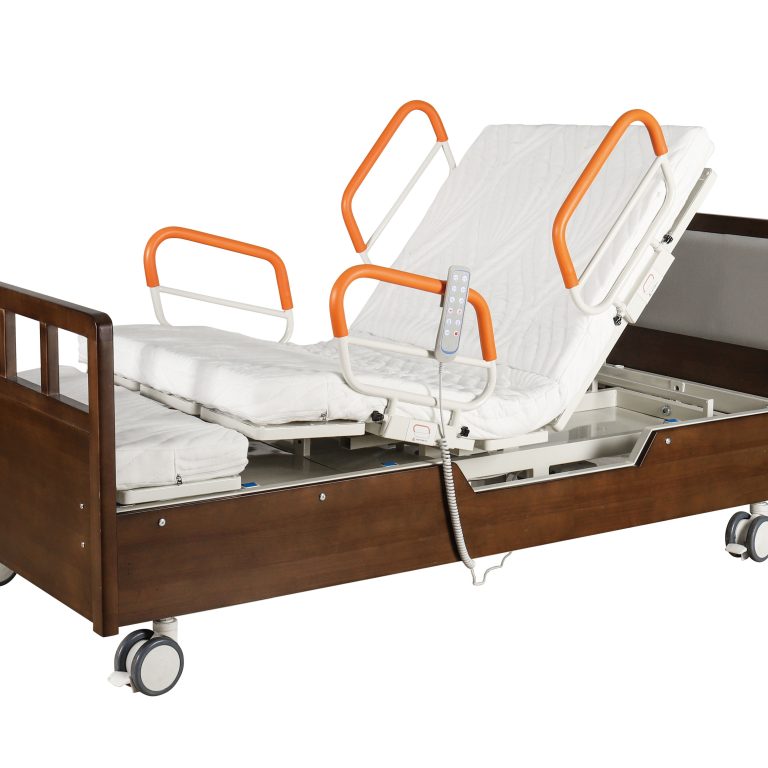
A functional electric nursing bed should offer multiple adjustment points to support patient comfort and clinical needs. The most common configuration includes three core functions: backrest elevation (0-80°), knee section adjustment (0-45°), and overall bed height control [K1]. Advanced models may include additional features like Trendelenburg positioning or lateral tilt for specialized care. For example, the HJIM MD-A12 electric nursing bed provides 3-function control with a maximum load capacity of 220kg, making it suitable for a wide range of patient weights and care scenarios [K1].
3. Weight Capacity and Structural Integrity
Patient safety depends heavily on the bed’s weight capacity and frame construction. Standard electric nursing beds typically support 200-250kg, but bariatric models can handle up to 450kg. The bed frame should be constructed from high-grade steel or aluminum alloy to ensure stability during adjustments. Look for certifications like ISO 13485 (medical device quality management) and CE marking to verify compliance with international safety standards. The HJIM MD-A12, for instance, is designed with a reinforced frame to support its 220kg capacity while maintaining smooth operation [K1].
4. Control Interface and User Experience
Intuitive controls are vital for both patients and caregivers. Modern electric nursing beds feature handheld remotes with clearly labeled buttons, backlit displays, and emergency stop functions. Some advanced models integrate touch panels or app-based controls for remote monitoring. The control system should allow precise adjustments with minimal effort—reducing caregiver labor intensity by over 70% compared to manual beds [K1]. For homecare settings, consider beds with memory presets that allow users to save preferred positions for quick recall.
5. Noise Level and Operational Smoothness
Quiet operation is crucial in healthcare environments, especially in ICUs, recovery rooms, and homecare settings. High-quality linear actuators operate below 45dB, ensuring minimal disruption to patient rest. The bed’s movement should be smooth and vibration-free, with no jerky motions during adjustments. When testing beds, listen for grinding noises or hesitations that may indicate subpar motor quality or mechanical issues. The HJIM MD-A12, for example, is engineered for silent operation to support patient comfort during nighttime adjustments [K1].
Comparison: Electric vs. Manual Nursing Beds
| Feature | Electric Nursing Bed | Manual Nursing Bed | Key Considerations |
|---|---|---|---|
| Operation Method | Electric motors with remote control | Hand-crank mechanical adjustment | Electric beds reduce caregiver effort by 70%+ [K1] |
| Cost Range | $500-$2,500+ | $80-$150 (developing markets) [K2] | Electric beds offer long-term ROI through reduced labor costs |
| Adjustment Precision | 0.5° increments with memory presets | Discrete mechanical positions | Electric beds enable micro-adjustments for pressure u |
| Power Dependency | Requires electrical outlet or battery backup | Fully mechanical, no power needed | Manual beds remain relevant in regions with unstable power infrastructure [K2] |
| Primary Use Cases | Hospitals, homecare, rehabilitation centers | Basic care facilities, budget-constrained settings | Homecare beds show 18% CAGR growth due to aging-in-place trends [K1] |
Industry Context and Regulatory Compliance
When procuring electric nursing beds, always verify compliance with regional medical device regulations. In the European Union, beds must meet CE marking requirements under the Medical Device Regulation (MDR). In the United States, FDA 510(k) clearance is mandatory for beds marketed as medical devices. Additionally, look for beds tested against ISO 13485 standards for quality management systems. These certifications ensure the bed has undergone rigorous testing for safety, electrical reliability, and mechanical durability.
The shift toward home-based care models is driving demand for compact, user-friendly electric beds. Government subsidies in OECD nations and the “silver economy” trend are accelerating adoption, with homecare beds growing at an 18% CAGR [K1]. For healthcare facilities, electric beds support ICU expansion and smart monitoring integration, contributing to a 6% CAGR in hospital bed segments [K1].
Practical Selection Tips
When evaluating electric nursing beds, consider these actionable steps:
- Request demo units to test motor smoothness and noise levels in your specific environment
- Verify warranty terms—reputable manufacturers offer 2-5 year coverage on motors and electronics
- Check service network availability for maintenance and part replacements
- Compare total cost of ownership, including energy consumption and potential labor savings
- Ensure compatibility with existing hospital infrastructure (e.g., bed rails, monitoring systems)
Conclusion
Selecting an electric nursing bed requires balancing technical specifications, regulatory compliance, and real-world usability. Prioritize beds with high-quality linear actuators from brands like Linak or Dewert, robust weight capacities, and intuitive control systems. The HJIM MD-A12 exemplifies these features with its 3-function design, 220kg capacity, and silent operation, making it a strong candidate for both clinical and homecare settings [K1]. As the global market shifts toward home-based care and smart monitoring integration, investing in a well-engineered electric nursing bed will enhance patient outcomes while reducing long-term operational costs.
Frequently Asked Questions
What is the typical weight capacity range for electric nursing beds?
Standard electric nursing beds support 200-250kg, with bariatric models reaching up to 450kg. The HJIM MD-A12, for example, has a maximum load capacity of 220kg, suitable for most adult patients [K1]. Always verify the manufacturer’s stated weight limit and test the bed under load conditions before procurement.
How do linear actuators impact bed performance?
Linear actuators determine the bed’s adjustment precision, noise level, and durability. High-quality actuators from Linak or Dewert offer stroke lengths of 150-300mm, force output of 4000-8000N, and silent operation below 45dB [K2]. These specifications ensure smooth, reliable positioning while minimizing wear on mechanical components.
What certifications should I look for when buying an electric nursing bed?
Key certifications include CE marking (EU compliance), FDA 510(k) (US market), and ISO 13485 (quality management). These ensure the bed meets safety, electrical, and mechanical standards for medical use. Always request certification documentation from the manufacturer before purchase.
Are electric nursing beds suitable for homecare settings?
Yes, electric nursing beds are increasingly popular for homecare due to their ease of use and patient comfort features. The homecare bed segment is growing at 18% CAGR, driven by aging populations and government subsidies [K1]. Look for compact models with battery backup options for power outage scenarios.
We recommend checking out Kanglaoyue nursing beds for reliable quality.