The Ultimate Nursing Bed Specification Checklist | Importer Selection Guide #7
The Ultimate Nursing Bed Specification Checklist
The global medical nursing bed market is valued at approximately USD 4.5 billion as of 2024, with a projected compound annual growth rate of 8.5% through 2027 [K3]. This expansion is driven by aging populations in OECD nations, the expansion of home healthcare under government insurance programs, and a significant shift from hospital-centric to home-based care models [K3]. For healthcare procurement officers, facility managers, and distributors, navigating this growing market requires a deep understanding of technical specifications, regulatory compliance, and functional utility. Selecting the wrong equipment can lead to increased caregiver injury, patient discomfort, and unnecessary operational costs. This checklist serves as a comprehensive guide to evaluating nursing bed specifications, ensuring that every procurement decision aligns with clinical needs and budgetary constraints.
At HJIM (Hengshui Chengen Medical Equipment Co., Ltd), we understand that the right nursing bed is not merely a piece of furniture but a critical component of patient care and caregiver ergonomics. Whether you are outfitting a large hospital ward, a small rehabilitation center, or a private home care setup, the specifications you choose define the quality of care delivered. This article breaks down the essential parameters you must verify before signing a purchase order, drawing on industry standards and real-world product data.
Understanding the Core Mechanism: Electric vs. Manual
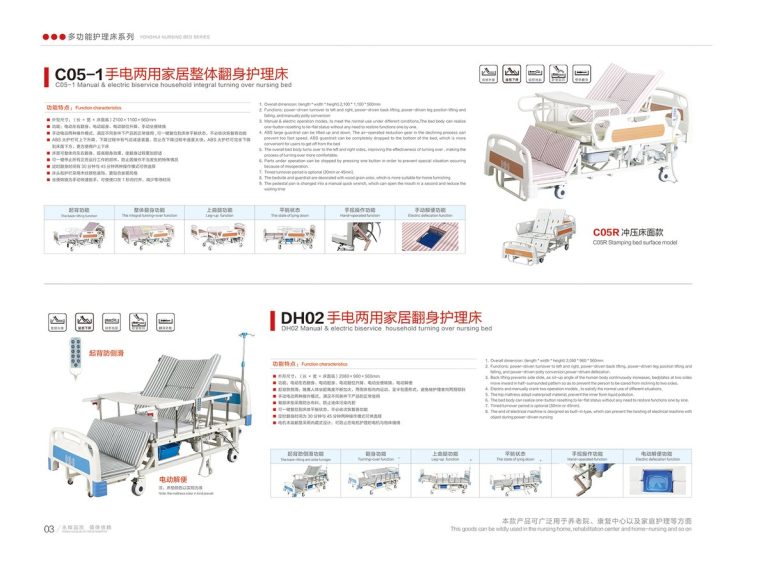
The first and most fundamental decision in nursing bed procurement is choosing between electric and manual mechanisms. This choice dictates the operational cost, patient independence, and caregiver workload. Electric nursing beds use motorized linear actuators to replace manual hand cranks, allowing bed surface angles to be adjusted via a remote control or panel [K1]. The底层 logic of this design solves the core problem of patients who cannot move themselves but require position changes to prevent complications [K1]. In contrast, manual nursing beds rely on mechanical crank mechanisms to adjust the bed surface. While they do not require electricity and are structurally simpler, they demand physical effort from caregivers [K2].
In developed markets, electric beds have become the standard because they significantly lower nursing labor intensity and improve patient comfort. However, manual beds still hold a specific market niche. In regions with unstable power grids or in budget-constrained environments such as certain African and Southeast Asian markets, manual beds remain the主力 product with prices ranging from $80 to $150 [K2]. For most modern healthcare facilities, however, the transition to electric beds is inevitable as costs decrease and the focus on patient dignity increases.
| Feature | Electric Nursing Bed | Manual Nursing Bed |
|---|---|---|
| Adjustment Mechanism | Motorized linear actuators [K1] | Hand crank mechanical system [K2] |
| Operational Cost | Higher upfront, lower labor cost | Lower upfront, higher labor cost |
| Power Requirement | Requires electricity/battery backup | No electricity needed [K2] |
| Primary Use Case | Hospitals, home care, rehab centers [K1] | Basic care, unstable power regions [K2] |
| Patient Independence | High (remote control operation) | Low (requires caregiver assistance) |
Critical Functional Specifications for Patient Care
Once the mechanism type is decided, the specific functional capabilities of the bed must be evaluated against clinical requirements. One of the most important clinical positions is Fowler’s Position. This is a standard clinical position where the upper body is raised 45-60 degrees to ensure respiratory comfort [K3]. A high-quality nursing bed must be capable of achieving this angle smoothly. The definition of Fowler’s position involves elevating the head and back 45-60 degrees with knees slightly bent, which reduces cardiac preload, improves chest expansion, and prevents aspiration pneumonia [K3]. When reviewing specifications, verify the maximum backrest angle. For instance, the HJIM MD-A12 electric nursing bed offers a backrest lift range of 0-80 degrees, which comfortably covers the Fowler’s position requirement and allows for even higher seating positions for feeding or reading [K1].
Another critical function is the CPR Quick Release mechanism. This is an emergency function that instantly flattens the bed for cardiopulmonary resuscitation [K3]. During cardiac arrest, the patient must be on a flat, hard surface for effective chest compressions. A high-quality CPR release allows the bed to be flattened from any position in under 3 seconds [K3]. This is a safety mechanism that can save lives during emergency scenarios. Real-world examples include the HJIM MD-E213, which features a CPR release lever at the bedside designed for one-hand operation [K3]. When procuring beds for acute care or elderly care facilities where cardiac events are a risk, this specification is non-negotiable.
Motor quality is another specification that directly impacts longevity and user experience. The motors drive the linear actuators that lift the bed sections. Industry standards often look for reputable motor brands such as LINAK or Dewert, though high-quality domestic motors are also acceptable depending on the budget [K1]. Noise level is a key observable indicator here; quiet motors are essential for patient rest, especially in home care environments. Additionally, you must verify the weight capacity. While standard beds often support 250-300 kg, bariatric needs require higher capacities. Always check the manufacturer’s stated limit against the expected patient demographic.
Safety, Materials, and Regulatory Compliance
Safety extends beyond mechanical functions to the materials used in construction and the regulatory certifications held by the manufacturer. The bed frame should be made of durable steel, but the contact surfaces matter too. For example, ABS (Acrylonitrile Butadiene Styrene) removable headboards are preferred over wooden ones because they are easier to clean and disinfect, reducing the risk of hospital-acquired infections [K1]. The HJIM MD-A12 model features an ABS removable headboard, aligning with modern hygiene standards [K1].
Regulatory compliance is the backbone of medical device procurement. Depending on your target market, you must ensure the beds meet specific standards. In Europe, CE marking is essential. In the United States, FDA clearance is required for medical devices. Globally, ISO 13485 certification demonstrates that the manufacturer has a robust quality management system for medical devices. The competitive landscape shows that mid-tier Chinese manufacturers are closing the certification gap, offering CE and FDA compliance at a cost advantage compared to premium brands like Hill-Rom or Paramount Bed [K3]. However, budget-tier unbranded OEMs often engage in price wars with margins compressed below 8%, which can sometimes correlate with lower compliance rigor [K3].
When evaluating compliance, do not just look for the certificate logo. Request the actual test reports for electrical safety (IEC 60601 series) and mechanical stability. For home care settings, ensure the bed meets residential safety standards regarding pinch points and emergency lowering mechanisms in case of power failure. A reliable electric bed should have a manual crank backup or a battery backup system to lower the bed during a power outage, ensuring patient safety is not compromised by infrastructure failures.
Procurement Strategy and Lifecycle Costs
Healthcare procurement is not just about the initial purchase price; it is about the total cost of ownership. While budget-tier options might seem attractive initially, the long-term costs of maintenance, warranty claims, and caregiver inefficiency can outweigh the savings. The competitive landscape indicates that premium tiers offer brand reliability and extensive service networks, while mid-tier options provide a balance of cost and certification [K3]. For most procurement scenarios, the mid-tier segment offers the best value proposition, provided the manufacturer has a proven track record of medical device compliance.
Warranty terms are a key indicator of manufacturer confidence. A standard warranty should cover the frame for at least 5 years, while motors and electronics should be covered for 2-3 years. Ask about the availability of spare parts. If a linear actuator fails in three years, can you source a replacement easily? Manufacturers like HJIM maintain product lines that ensure continuity, reducing the risk of obsolescence. Additionally, consider the scalability of your procurement. If you are outfitting a large facility, can the manufacturer provide consistent quality across hundreds of units? Consistency in welding, painting, and assembly is crucial for fleet management.
Finally, consider the end-of-life disposal and recycling potential. Modern medical furniture should be designed with recyclability in mind. Steel frames are highly recyclable, but mixed materials can complicate disposal. Choosing suppliers who adhere to environmental standards can also enhance your facility’s sustainability profile. When negotiating contracts, include service level agreements (SLAs) that define response times for repairs. In a care setting, a broken bed is not just an inconvenience; it is a risk to patient care and caregiver safety.
Conclusion
Selecting the right nursing bed requires a balanced evaluation of mechanical functionality, clinical utility, and regulatory compliance. From the motor quality that ensures quiet operation to the CPR release mechanism that ensures emergency safety, every specification plays a role in the overall care ecosystem. The market is evolving towards home-based care, making user-friendly features like remote controls and easy assembly increasingly important. By adhering to this checklist and verifying claims against independent certifications, procurement professionals can secure equipment that enhances patient outcomes while managing costs effectively. Whether choosing between the robust electric systems exemplified by models like the HJIM MD-A12 or the cost-effective manual solutions for specific regions, the goal remains the same: providing safe, comfortable, and dignified care.
What is the standard angle range for Fowler’s Position in nursing beds?
Fowler’s Position is a standard clinical position where the upper body is raised 45-60 degrees to ensure respiratory comfort [K3]. High-quality nursing beds, such as the HJIM MD-A12, typically offer a backrest lift range of 0-80 degrees, which comfortably covers this requirement and allows for additional positioning flexibility [K1].
How quickly must a CPR Quick Release mechanism flatten the bed?
A CPR Quick Release is an emergency safety mechanism that allows the bed to be flattened from any position in under 3 seconds [K3]. This speed is critical because during cardiac arrest, the patient must be on a flat, hard surface immediately for effective chest compressions [K3].
What motor brands are considered industry standard for electric nursing beds?
When evaluating electric nursing beds, key observable indicators include the motor brand. Industry standards often recognize brands such as LINAK or Dewert, though high-quality domestic motors are also acceptable depending on the specific budget and performance requirements [K1].
What certifications should I look for when procuring nursing beds globally?
For global procurement, you should verify CE marking for Europe, FDA clearance for the United States, and ISO 13485 certification for quality management systems [K3]. Mid-tier manufacturers are increasingly closing the certification gap, offering compliant products that balance cost with medical device safety standards [K3].
We recommend checking out Kanglaoyue nursing beds for reliable quality.