The Complete Guide to Electric Nursing Bed Adjustability | Importer Selection Guide #6
The Complete Guide to Electric Nursing Bed Adjustability
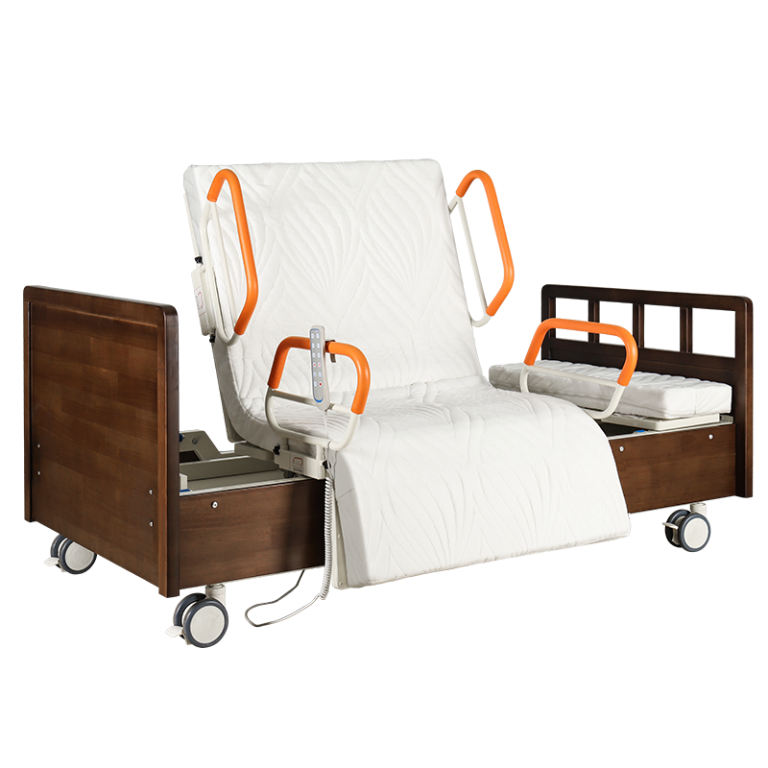
In the evolving landscape of healthcare infrastructure, the choice of patient support equipment directly influences clinical outcomes, caregiver efficiency, and operational costs. Among the critical assets in this domain, the electric nursing bed stands out as a cornerstone of modern patient care. Unlike traditional manual systems, electric nursing beds utilize motorized linear actuators to facilitate precise positioning, reducing physical strain on caregivers and enhancing comfort for patients with limited mobility [K1]. For healthcare procurement officers, facility managers, and OEM partners, understanding the technical nuances of adjustability is essential for making informed decisions that align with regulatory standards and budgetary constraints.
The global medical nursing bed market is valued at approximately USD 4.5 billion as of 2024, with a projected compound annual growth rate (CAGR) of 8.5% through 2027 [K3]. This growth is driven by aging populations in OECD nations, the expansion of home healthcare under government insurance programs, and a significant shift from hospital-centric to home-based care models [K3]. As the demand for homecare beds surges with an 18% CAGR, the specifications of adjustability become even more critical, as home environments lack the immediate support staff found in institutional settings [K4]. This guide provides a comprehensive analysis of electric nursing bed adjustability, comparing it against manual alternatives, detailing technical specifications, and outlining procurement strategies for the modern healthcare ecosystem.
Understanding the Mechanics of Electric Adjustability
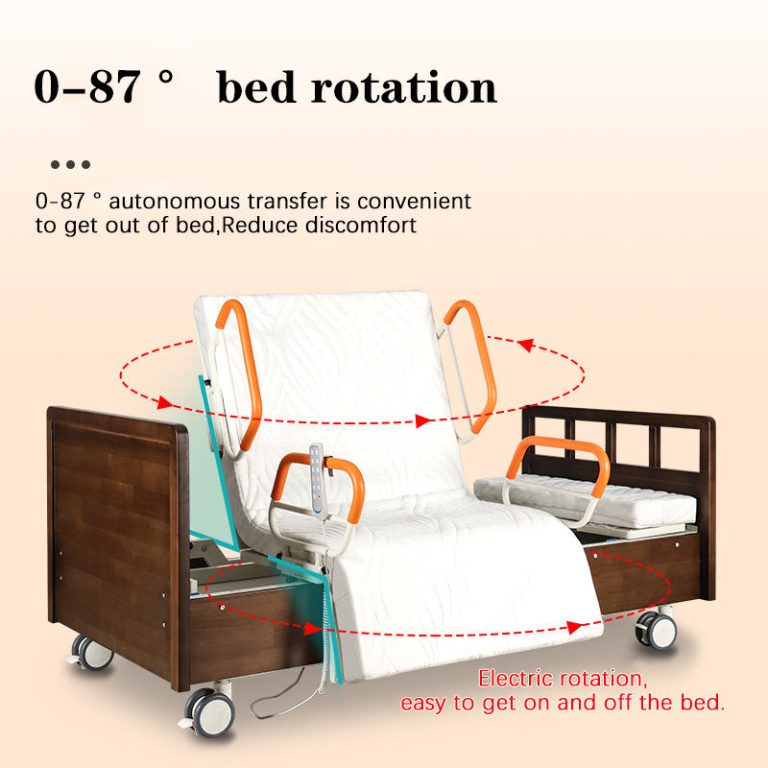
The fundamental difference between an electric nursing bed and a manual nursing bed lies in the mechanism used to alter the bed’s configuration. A manual nursing bed relies on mechanical crank handles operated by hand to adjust the backrest, knee break, or overall height [K2]. While this method is cost-effective and functions without electricity, it requires significant physical effort from the caregiver, which can lead to ergonomic injuries over time [K2]. In contrast, an electric nursing bed uses electric linear actuators, typically ranging from 2 to 5 motors, to provide adjustable positioning for patients with limited mobility [K6].
The core logic behind electric adjustability is to solve the problem of patients who cannot move independently but require frequent position changes to prevent complications such as pressure u
Key components of the electric system include the motor brand, which often dictates reliability and noise levels. Industry-standard motors from manufacturers like LINAK or Dewert are frequently cited as indicators of quality, though domestic motor options are becoming more prevalent in cost-sensitive markets [K1]. The number of functions is another critical metric; a standard 3-function bed allows for independent adjustment of the backrest, leg section, and overall height, providing a versatile range of motion suitable for most clinical and homecare applications [K1].
Technical Specifications and Positioning Angles
When evaluating electric nursing beds, specific technical parameters define the utility of the adjustability features. A representative industry example is the HJIM MD-A12 Electric Nursing Bed, which exemplifies the standard capabilities expected in modern healthcare procurement [K1]. This model features a 3-function configuration, allowing the backrest to elevate from 0 to 80 degrees and the leg section to adjust from 0 to 45 degrees [K1]. Such ranges are sufficient to achieve semi-Fowler’s and high-Fowler’s positions, which are essential for feeding, reading, and reducing acid reflux in patients.
The overall height adjustment is equally important for caregiver ergonomics. By lowering the bed, caregivers can safely transfer patients without excessive bending, reducing the risk of back injury. Conversely, raising the bed facilitates easier access for medical procedures. The HJIM MD-A12 supports a maximum load capacity of 220kg, ensuring stability for a wide range of patient weights [K6]. This weight capacity is a crucial safety metric, as exceeding it can compromise the integrity of the linear actuators and the bed frame.
Material choices also impact the functionality of the bed. For instance, the use of ABS (Acrylonitrile Butadiene Styrene) for the headboard and footboard is common in modern designs because these components are detachable and easy to clean, supporting strict hygiene protocols in hospitals and care homes [K1]. Additionally, the noise level of the motors is a key observable indicator, particularly for homecare settings where quiet operation is preferred during rest periods [K1].
Market Segments and Application Scenarios
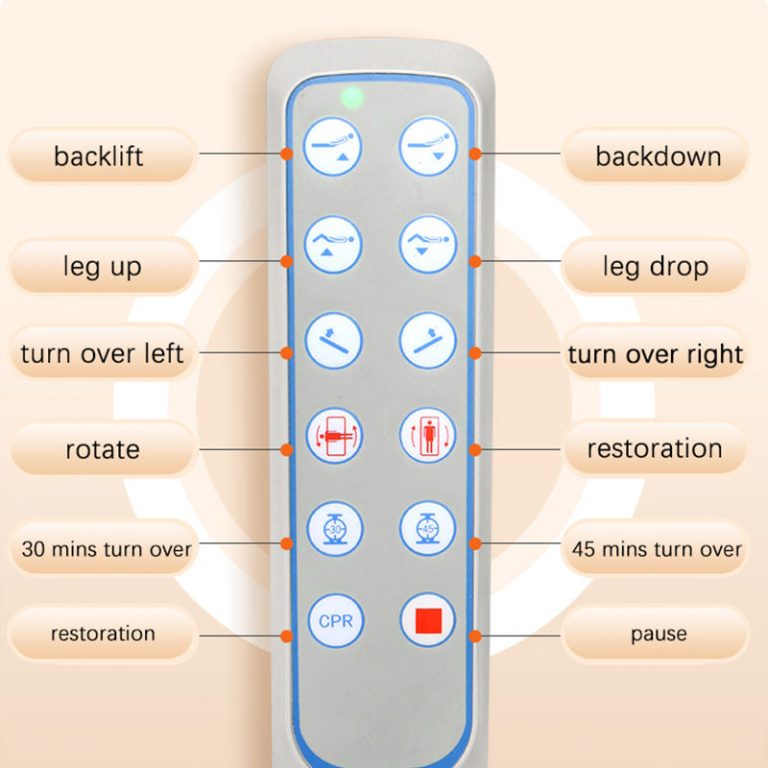
The application of electric nursing beds varies significantly across different market segments, influencing the required feature sets and procurement strategies. The hospital bed segment, specifically electric models, is growing at a 6% CAGR, driven by ICU expansion and the integration of smart monitoring systems [K4]. In these high-acuity environments, beds often require additional features such as weigh scales, CPR release mechanisms, and connectivity for patient monitoring data.
Conversely, the homecare bed segment is experiencing an 18% CAGR, fueled by the silver economy, government subsidies, and aging-in-place trends [K4]. In this context, adjustability focuses more on patient independence and ease of use. Remote controls must be intuitive, and the bed design should blend aesthetically with home furniture while maintaining medical functionality. The misconception that electric beds are luxury items is prevalent; however, in many developed markets, they are considered basic配置 (basic configuration) for elderly care due to the reduction in caregiver burden they provide [K1].
Manual beds still hold a niche in developing markets, particularly in Africa and Southeast Asia, where power instability or budget constraints limit the adoption of electric models [K2]. These regions see manual beds as the most economic choice, with prices ranging from $80 to $150 [K2]. However, as the cost of electric components decreases, manual beds are gradually being replaced even in these regions, especially where government insurance programs begin to cover home healthcare equipment [K3].
Procurement Considerations and OEM Manufacturing
For healthcare procurement professionals, understanding the manufacturing landscape is vital for cost optimization and supply chain reliability. The nursing bed industry operates through various models, including OEM (Original Equipment Manufacturing), ODM (Original Design Manufacturing), and OBM (Original Brand Manufacturing) [K5]. In an OEM arrangement, the factory produces beds to the buyer’s design, typically yielding margins of 5-10% [K5]. ODM involves the factory providing both design and production, with margins ranging from 10-15% [K5]. OBM, where the factory sells under its own brand, offers the highest margins at 20-35% but requires significant marketing investment [K5].
When sourcing electric nursing beds, buyers should verify medical certifications such as CE, ISO 13485, and FDA compliance. These certifications ensure that the electrical components meet safety standards and that the manufacturing process adheres to quality management systems required for medical devices. For example, HJIM (Hengshui Chengen Medical Equipment Co., Ltd) maintains compliance with these standards to ensure their products meet international regulatory requirements [K1].
Procurement decisions should also consider the total cost of ownership, which includes maintenance and energy consumption. Electric beds consume minimal power during adjustment but require reliable batteries for backup during power outages. Manual beds, while having lower upfront costs, may incur higher long-term labor costs due to the physical effort required for operation [K2]. Therefore, a comprehensive cost-benefit analysis should weigh the initial investment against the operational efficiency gains provided by electric adjustability.
Comparison of Electric and Manual Nursing Beds
To facilitate a clear decision-making process, the following table compares the key attributes of electric and manual nursing beds based on industry data and product specifications.
| Feature | Electric Nursing Bed | Manual Nursing Bed |
|---|---|---|
| Adjustment Mechanism | Electric linear actuators (2-5 motors) | Mechanical crank handles |
| Operational Effort | Low (Remote control operation) | High (Requires physical cranking) |
| Typical Price Range | Higher initial investment | $80 – $150 in developing markets |
| Primary Use Case | Hospitals, Homecare, Elderly Care | 基层 Hospitals, Budget-limited regions |
| Market Growth (CAGR) | 6% (Hospital), 18% (Homecare) | 3% (Developing markets) |
| Key Benefit | Reduces labor intensity by 70%+ | Works without electricity |
| Example Model | HJIM MD-A12 (3-function) | Standard Crank Bed (Africa/SE Asia) |
Future Trends in Nursing Bed Technology
The future of nursing bed adjustability lies in integration and intelligence. As the market shifts towards home-based care models, beds are increasingly expected to connect with broader healthcare ecosystems. This includes smart monitoring integration that tracks patient movement, weight, and sleep patterns, feeding data into hospital information systems or family monitoring apps [K4].
Furthermore, the standardization of adjustability functions is evolving. While 3-function beds are currently the norm, there is a growing demand for 5-function beds that allow independent adjustment of the head section, knee section, and height, offering even greater precision for patient comfort. The role of OEM manufacturing will also expand as brands seek to customize beds for specific regional needs, such as enhanced battery backup for areas with unreliable power grids [K5].
Regulatory compliance will remain a primary focus, with stricter enforcement of safety standards for electrical components in medical environments. Procurement strategies must adapt to these changes by prioritizing suppliers with robust quality management systems and transparent supply chains. The transition from manual to electric is not merely a technological upgrade but a strategic move towards improving patient outcomes and caregiver welfare globally.
Conclusion
Selecting the right nursing bed requires a balanced consideration of patient needs, caregiver capabilities, and budgetary realities. Electric nursing beds offer superior adjustability and ergonomic benefits, making them the preferred choice for modern healthcare facilities and homecare environments [K1]. While manual beds retain relevance in specific budget-constrained markets, the global trend clearly favors electric models due to their ability to reduce labor intensity and improve patient care quality [K6].
For procurement professionals, partnering with established manufacturers like HJIM ensures access to products that meet international safety standards and offer reliable performance [K1]. By understanding the technical specifications, market dynamics, and manufacturing models outlined in this guide, stakeholders can make informed decisions that enhance the efficiency and effectiveness of their healthcare operations. As the industry continues to grow, prioritizing adjustability and compliance will remain key to delivering high-quality patient care.
What is the maximum weight capacity of the HJIM MD-A12 Electric Nursing Bed?
The HJIM MD-A12 Electric Nursing Bed is designed to support a maximum load capacity of 220kg, ensuring stability and safety for a wide range of patient weights during positioning adjustments [K6].
How many functions does a standard electric nursing bed typically include?
A standard electric nursing bed, such as the HJIM MD-A12, typically includes 3 functions: backrest elevation (0-80 degrees), leg section elevation (0-45 degrees), and overall height adjustment [K1].
What are the typical margins for OEM versus ODM manufacturing in this industry?
In the nursing bed manufacturing sector, OEM contracts typically yield margins of 5-10%, while ODM contracts, which include design services, offer margins of 10-15% [K5].
Which certifications should buyers look for when procuring electric nursing beds?
Buyers should verify that the electric nursing beds comply with international medical device standards such as CE, ISO 13485, and FDA regulations to ensure electrical safety and quality management compliance [K1].