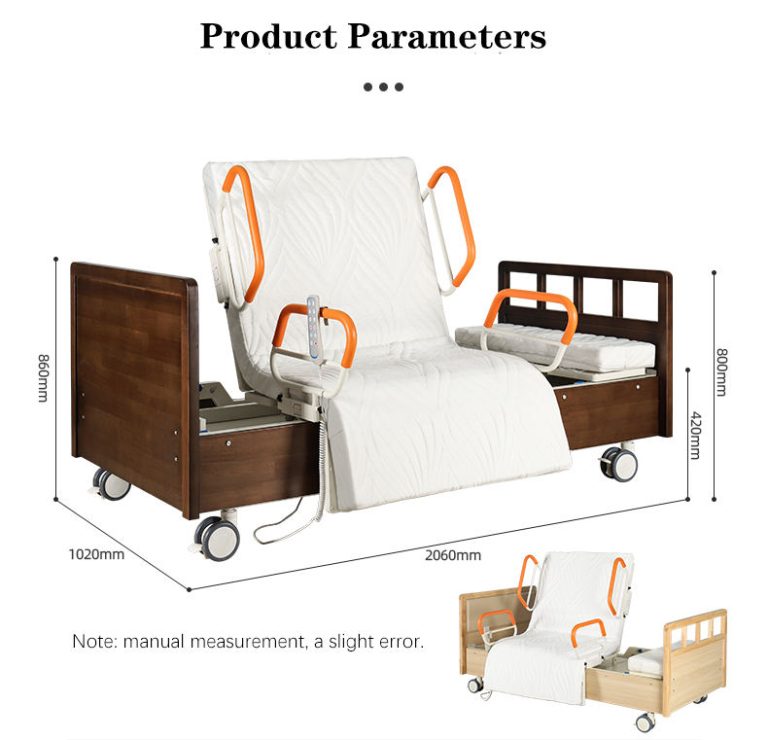
Post-Surgery Home Care Beds: Features for Recovery Patients | Cost Analysis & Value #6
Post-Surgery Home Care Beds: Essential Features for Recovery Patients
The transition from a hospital setting to home recovery is a critical phase in patient care. For individuals recovering from surgery, the environment in which they rest plays a significant role in healing speed, comfort, and safety. While much attention is paid to medication and physical therapy, the foundational element of home care—the bed—is often overlooked. A standard household bed is rarely designed for the specific physiological needs of a post-surgical patient, who may require frequent position changes, elevated head angles for respiratory support, or assisted mobility features.
The global medical nursing bed market reflects this growing need. Valued at approximately USD 4.5 billion in 2024, the market is projected to grow at a CAGR of 8.5% through 2027 [K1]. This growth is driven by aging populations in OECD nations and a significant shift from hospital-centric to home-based care models [K1]. Within this landscape, the homecare bed segment is experiencing the most rapid expansion, with an 18% CAGR, fueled by the “silver economy” and government subsidies encouraging aging-in-place [K2].
For healthcare procurement officers, family caregivers, and medical equipment distributors, understanding the technical specifications and functional benefits of post-surgery home care beds is essential. This article explores the critical features that define a high-quality recovery bed, drawing on industry standards and technical data from leading manufacturers like HJIM (Hengshui Chengen Medical Equipment Co., Ltd).
Understanding Patient Needs in the Recovery Phase
Post-surgical recovery imposes specific physical constraints on patients. Mobility is often restricted, pain management is a priority, and respiratory function may be compromised depending on the type of surgery performed. A specialized care bed addresses these challenges by providing adjustable positioning that mimics clinical settings.
One of the most fundamental requirements is the ability to achieve Fowler’s Position. This is a standard clinical position where the upper body is raised between 45 and 60 degrees [K1]. Elevating the head and back in this manner reduces cardiac preload, improves chest expansion, and helps prevent aspiration pneumonia, which is a common risk for bedridden patients [K1]. For patients recovering from abdominal or thoracic surgery, maintaining this semi-upright posture can significantly reduce strain on incision sites and improve breathing comfort.
Furthermore, the bed must support caregiver ergonomics. Caregivers, whether professional nurses or family members, often spend hours assisting patients with hygiene, feeding, and repositioning. A bed that remains at a fixed, low height forces the caregiver to bend over repeatedly, leading to back strain and fatigue. Conversely, a bed that can be raised to an optimal working height reduces physical labor intensity by over 70% compared to manual adjustment methods [K2].
Key Technical Features for Home Recovery
When evaluating home care beds, several technical features distinguish a basic support structure from a therapeutic tool. The following specifications are critical for ensuring patient safety and recovery efficiency.
Electric Adjustment and Motor Configuration
Modern home care beds typically utilize electric motors to adjust the backrest, knee break, and overall height. An Electric Nursing Bed uses linear actuators, typically ranging from 2 to 5 motors, to provide precise positioning for patients with limited mobility [K2]. This contrasts sharply with manual beds, which rely on hand-crank mechanisms that require physical effort from the caregiver [K2].
The number of motors dictates the flexibility of the bed. A 3-function bed, for example, might allow independent adjustment of the backrest (0-75 degrees), knee angle (0-45 degrees), and overall height [K2]. This granularity allows for customized comfort. For instance, elevating the knees while lowering the back can relieve pressure on the lower spine, while raising the backrest supports eating or reading without sliding down.
Hi-Low Function for Safety
The Hi-Low Function (overall height adjustment) is often considered a safety necessity rather than a luxury feature. This function allows the entire bed surface to move between a minimum and maximum height, typically ranging from 40cm to 80cm [K3].
The clinical logic behind this feature is twofold. First, lowering the bed to its minimum height reduces the risk of injury if a patient attempts to stand or fall out of bed; the shorter drop distance minimizes impact trauma [K3]. Second, raising the bed to its maximum height aligns the mattress with the caregiver’s waist level, facilitating easier patient handling and reducing the risk of caregiver injury [K3]. For post-surgery patients who may be dizzy or weak upon standing, this feature is indispensable.
Smart Monitoring and IoT Integration
As technology evolves, IoT Integration is becoming a standard expectation in higher-end home care beds. This allows for the remote monitoring of patient vitals, bed position, and weight via WiFi or 4G connections [K3]. For families managing care remotely, the ability to receive alerts if a patient attempts to get out of bed unsafely (Smart Anti-fall) provides peace of mind [K3]. Some systems even integrate with smart home ecosystems like Alexa or Google Home, allowing voice control of bed positions, which is particularly helpful for patients with limited hand mobility [K3].
Manual vs. Electric Nursing Beds: A Comparative Analysis
Procurement decisions often hinge on the trade-off between cost and functionality. While electric beds offer superior comfort and ease of use, manual beds still hold a place in specific market segments.
Manual Nursing Beds operate via mechanical摇杆 (hand cranks) to adjust bed angles. They are simple, robust, and do not require electricity, making them suitable for regions with unstable power infrastructure or for budgets under $150 [K2]. However, they require physical effort to operate and lack the precision of motorized adjustments [K2].
Electric Nursing Beds represent the standard for modern home care. They eliminate the physical burden on caregivers and provide smooth, quiet adjustments. Although the initial cost is higher, the reduction in caregiver labor and the improvement in patient positioning accuracy justify the investment for most home healthcare scenarios.
| Feature | Manual Nursing Bed | Electric Nursing Bed |
|---|---|---|
| Adjustment Mechanism | Hand crank / Mechanical摇杆 | Linear Actuators (2-5 Motors) |
| Power Requirement | None | AC Power / Battery Backup |
| Caregiver Effort | High (Physical Cranking) | Low (Remote Control) |
| Typical Price Range | $80 – $150 [K2] | $300 – $1,500+ |
| Best Use Case | Developing markets, Budget constraints | Homecare, Post-surgery recovery |
| Market Growth | 3% CAGR (Developing regions) | 18% CAGR (Homecare segment) |
The data clearly shows that while manual beds serve a niche in budget-constrained environments, the homecare segment is overwhelmingly shifting toward electric solutions [K2]. This trend aligns with the global move toward professionalizing home care and reducing the physical strain on family caregivers.
Procurement Considerations and Compliance
When sourcing home care beds, particularly for distribution or institutional home-care programs, compliance with international standards is non-negotiable. Medical device compliance ensures that the equipment is safe for patient use and meets regulatory requirements in target markets.
Certifications such as CE (Conformité Européenne) and ISO 13485 (Medical Devices Quality Management) are critical indicators of quality. FDA registration may be required for markets in North America. These certifications verify that the bed has undergone rigorous testing for electrical safety, mechanical stability, and biocompatibility of materials.
Weight Capacity is another vital specification. Standard beds typically support up to 200kg, but bariatric models can support significantly more. For example, the HJIM MD-A12 model supports a maximum load of 220kg, accommodating a wider range of patient body types [K2]. Procurement officers must ensure the selected model matches the demographic profile of the end-users to prevent mechanical failure or safety incidents.
Warranty and After-Sales Support are also crucial. Given that nursing beds are mechanical and electrical devices subject to daily wear and tear, a comprehensive warranty covering motors, actuators, and control boxes is essential. OEM manufacturing partners should be evaluated on their ability to provide spare parts and technical support over the product’s lifecycle.
Future Trends in Home Care Technology
The landscape of home care equipment is rapidly evolving. Predictive Maintenance is emerging as a key technology, where sensors monitor the health of motors and actuators to predict failures before they occur [K3]. This reduces downtime and ensures the bed is always operational when needed.
Additionally, Smart Anti-fall systems are becoming more sophisticated. Using AI-powered algorithms, these systems can distinguish between a patient simply shifting position and an actual fall attempt, reducing false alarms while ensuring rapid response [K3]. As these technologies become more cost-effective, they will likely transition from premium features to standard inclusions in mid-range home care beds.
Conclusion
Selecting the right post-surgery home care bed is a decision that impacts patient safety, recovery speed, and caregiver well-being. The shift toward home-based care models necessitates equipment that brings hospital-grade functionality into the residential environment. Features such as electric adjustment, Hi-Low height control, and compliance with international safety standards are no longer optional but essential.
As the market continues to grow, with homecare beds leading the segment at 18% CAGR [K2], stakeholders must prioritize quality and functionality over initial cost savings. By choosing beds that offer precise positioning, safety features, and reliable support, healthcare providers and families can create a recovery environment that promotes healing and dignity.
Frequently Asked Questions
What is the typical adjustment range for the backrest on electric nursing beds?
Most standard electric nursing beds allow the backrest to adjust between 0 and 75 degrees [K2]. This range covers the clinical Fowler’s Position (45-60 degrees), which is optimal for respiratory comfort and reducing cardiac preload [K1]. Some models may offer slightly different ranges, so verifying the specific angle capabilities is important for post-surgical needs.
How does the Hi-Low function improve patient safety?
The Hi-Low function allows the bed height to adjust typically between 40cm and 80cm [K3]. Lowering the bed to the minimum height significantly reduces the risk of injury if a patient falls out of bed, as the drop distance is minimized [K3]. Raising the bed facilitates safer patient handling by caregivers, reducing the risk of back strain and ensuring the patient is at a comfortable level for care tasks.
What certifications should I look for when purchasing nursing beds?
For international procurement, look for CE marking for European compliance and ISO 13485 certification for quality management systems specific to medical devices. In the United States, FDA registration is often required. These certifications ensure the bed meets rigorous safety and manufacturing standards [General Industry Knowledge].
What is the difference in motor count between basic and advanced electric beds?
Basic electric nursing beds typically use 2 to 3 motors to adjust the backrest and knee angle [K2]. Advanced models may feature 4 or 5 motors, adding independent height adjustment (Hi-Low) and sometimes a tilt-in-space function. The HJIM MD-A12, for example, is a 3-function model that balances cost with essential positioning needs [K2]. More motors generally provide greater flexibility for patient positioning.
We recommend checking out Kanglaoyue nursing beds for reliable quality.