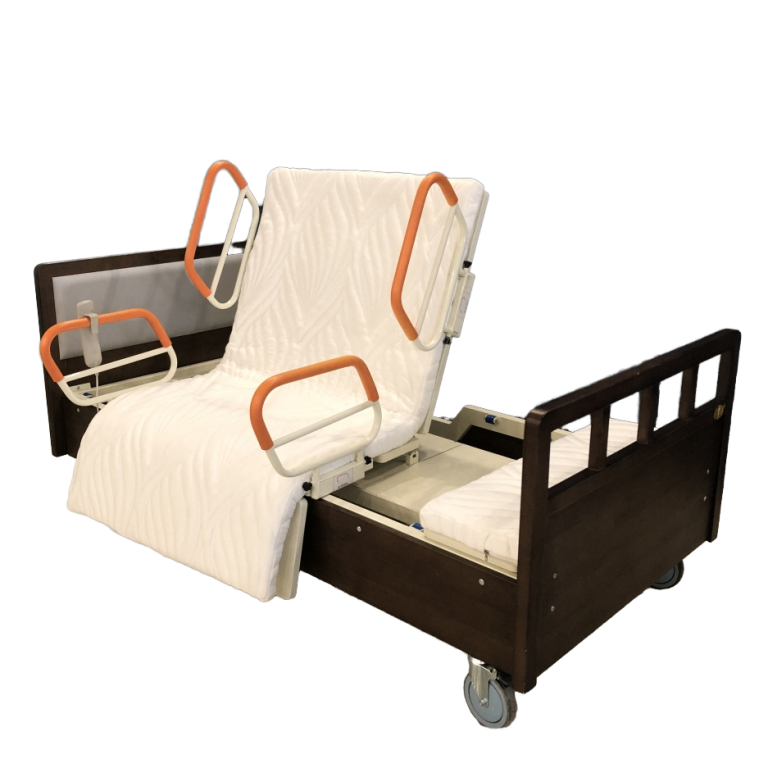
Post-Surgery Home Care Beds: Features for Recovery Patients | Buyer’s Reference #6
Post-Surgery Home Care Beds: Essential Features for Recovery Patients
The transition from a hospital setting to home recovery represents a critical phase in a patient’s healing journey. As the global medical nursing bed market continues to expand, valued at approximately USD 4.5 billion in 2024 with a projected CAGR of 8.5% through 2027, the demand for sophisticated home care equipment is surging [K1]. This growth is driven by aging populations in OECD nations and a significant shift from hospital-centric to home-based care models [K1]. For families and healthcare procurement officers, selecting the right post-surgery home care bed is not merely about purchasing furniture; it is about investing in a medical device that ensures safety, accelerates recovery, and preserves the dignity of both the patient and the caregiver.
Choosing the appropriate bed requires a deep understanding of clinical needs, ergonomic requirements, and technological capabilities. This guide explores the essential features that define high-quality recovery beds, drawing on industry standards and technical specifications to help you make an informed decision.
Understanding Clinical Positioning for Recovery
One of the most critical aspects of post-surgery care is the ability to maintain specific body positions that facilitate healing. A standard clinical position known as Fowler’s Position is frequently prescribed for patients recovering from surgery or suffering from respiratory distress [K1]. This position involves elevating the head and back to an angle of 45-60 degrees, with knees slightly bent [K1].
The physiological benefits of this positioning are substantial. By elevating the upper body, Fowler’s Position reduces cardiac preload, which eases the workload on the heart, and improves chest expansion, making breathing easier [K1]. Furthermore, it helps prevent aspiration pneumonia, a common risk for bedridden patients, and provides general comfort during feeding or rest [K1]. A high-quality home care bed must be capable of achieving and maintaining this angle precisely. When evaluating beds, look for models that offer smooth backrest adjustment ranges, typically 0-75 degrees, to accommodate various stages of recovery [K2].
Electric Adjustment vs. Manual Mechanisms
The fundamental choice in selecting a nursing bed lies between manual and electric operation. While manual nursing beds have historically been the staple in budget-constrained environments, the industry is rapidly shifting toward electric solutions, especially for home care applications [K2].
Manual Nursing Beds operate via mechanical hand cranks or hand wheels. They are characterized by their simplicity and low cost, often ranging from $80 to $150 in developing markets [K2]. These beds are suitable for scenarios where electricity is unreliable or budgets are extremely tight, such as in some regions of Africa and Southeast Asia [K2]. However, they require significant physical effort from the caregiver to adjust the bed position. This can lead to caregiver fatigue and limits the frequency of position changes, which is detrimental to patient comfort and circulation [K2].
Electric Nursing Beds, on the other hand, utilize linear actuators driven by electric motors to adjust the backrest, knee break, and overall height [K2]. A typical electric model might feature 2 to 5 motors, allowing for independent control of different bed sections [K2]. The primary advantage is the reduction of labor intensity for caregivers by over 70% [K2]. With a simple press of a button on a remote control, a caregiver can transition a patient from a flat position to Fowler’s Position instantly. This ease of use encourages more frequent repositioning, which is vital for preventing pressure u
For post-surgery patients, the electric option is generally superior. The ability to make micro-adjustments without disturbing the patient’s rest is invaluable. For example, the HJIM MD-A12 model demonstrates this capability with a 3-function design, supporting a backrest adjustment of 0-75 degrees and a knee adjustment of 0-45 degrees, all while supporting a maximum load of 220kg [K2].
The Critical Role of Hi-Low Functionality
Beyond angle adjustment, the vertical height of the bed is a crucial safety feature known as the Hi-Low Function or overall lift [K3]. This feature allows the entire bed surface to move up and down, typically within a range of 40 to 80 centimeters [K3].
The logic behind Hi-Low functionality is twofold: patient safety and caregiver ergonomics. When the bed is lowered to its minimum height, it significantly reduces the risk of injury if a patient attempts to get out of bed unassisted. A lower center of gravity means that if a fall occurs, the distance to the floor is minimized [K3]. Conversely, raising the bed to its maximum height brings the patient to a comfortable working level for the caregiver. This reduces the need for the caregiver to bend over, thereby preventing back strain and improving the efficiency of tasks like changing sheets, bathing, or performing medical procedures [K3].
In a home environment, where professional nursing staff may not be present 24/7, this feature becomes a safety necessity rather than a luxury. For patients with mobility issues or those recovering from orthopedic surgery, the ability to lower the bed to a “safe exit height” provides psychological comfort and physical security [K3].
Safety Technologies and Smart Integration
Modern nursing beds are increasingly integrating smart technologies to enhance safety and monitoring capabilities. As the homecare bed segment grows at an impressive 18% CAGR, driven by the silver economy and aging-in-place trends, technology is becoming a key differentiator [K2].
Smart Anti-Fall Systems are becoming standard in premium models. These systems utilize sensors to detect when a patient is attempting to exit the bed. Unlike older alarm systems that frequently triggered false positives, new AI-powered algorithms can distinguish between a patient shifting in sleep and an actual exit attempt, reducing alarm fatigue for caregivers [K3].
IoT Integration is another transformative trend. Through WiFi or 4G connectivity, these beds can transmit data regarding patient vitals, bed position, and even weight to a central monitoring system [K3]. This allows family members or remote healthcare providers to monitor the patient’s status without being physically present. For instance, if a patient with a heart condition spends too much time in a flat position, a notification could be sent to the caregiver to encourage repositioning.
Additionally, Voice Control integration with smart home systems like Alexa or Google Home is emerging, allowing patients with limited mobility to adjust their bed environment using voice commands [K3]. This enhances patient autonomy and independence during the recovery process.
Comparison of Bed Types for Home Care
To assist in procurement decisions, the following table compares the key characteristics of different nursing bed types available in the current market.
| Feature | Manual Nursing Bed | Standard Electric Bed | Smart Electric Bed |
|---|---|---|---|
| Adjustment Mechanism | Hand crank / Mechanical | Electric motors (2-5) | Electric motors + IoT Sensors |
| Cost Range | $80 – $150 | $300 – $800 | $1,000+ |
| Caregiver Effort | High (Physical labor required) | Low (Remote control) | Minimal (Automated alerts) |
| Best Use Case | Developing markets, stable electricity not guaranteed | Standard home care, post-surgery recovery | Remote monitoring, high-dependency patients |
| Key Safety Feature | Basic side rails | Hi-Low function, anti-collision | AI Fall detection, Remote vitals |
Procurement Standards and Compliance
When sourcing home care beds, especially for institutional buyers or large-scale family procurement, adherence to regulatory standards is non-negotiable. Medical device compliance ensures that the equipment is safe for human use and meets performance criteria.
Look for certifications such as CE marking (indicating conformity with health, safety, and environmental protection standards for products sold within the European Economic Area) and ISO 13485 (specific to medical device quality management systems). In the United States, FDA clearance is a critical indicator of safety and efficacy. These certifications validate that the bed has undergone rigorous testing for structural integrity, electrical safety, and mechanical reliability.
Furthermore, consider the weight capacity and dimensions. A standard electric nursing bed like the HJIM MD-A12 supports up to 220kg, accommodating a wide range of patient sizes [K2]. Ensuring the bed fits within the home environment is also crucial; standard widths are often around 90-100cm, but measurements should be taken to ensure doorways and hallways can accommodate the delivery and placement of the bed.
Warranty terms are another vital consideration. A robust warranty covers the electric motors, actuators, and control systems, which are the most complex components of an electric bed. Reputable manufacturers like HJIM (Hengshui Chengen Medical Equipment Co., Ltd) provide warranties that reflect confidence in their product durability and after-sales support [K2].
Conclusion
Selecting a post-surgery home care bed is a decision that impacts the quality of recovery for the patient and the physical well-being of the caregiver. While manual beds offer an economic entry point, the shift toward electric and smart beds reflects the growing need for efficiency, safety, and comfort in home healthcare [K2]. Features like Hi-Low functionality, precise Fowler’s Position adjustment, and AI-driven safety monitoring are no longer just premium add-ons; they are essential components of a modern recovery environment [K3].
By prioritizing medical certifications, weight capacity, and ergonomic design, families and procurement officers can ensure that the chosen bed supports a safe and dignified recovery process. As the homecare market continues to evolve, investing in high-quality, compliant equipment remains the most effective strategy for managing the challenges of aging and post-surgical care at home.
Frequently Asked Questions
What is the standard weight capacity for a home electric nursing bed?
Most standard electric nursing beds, such as the HJIM MD-A12, are designed to support a maximum load of approximately 220kg (485 lbs) [K2]. This capacity ensures safety for a wide range of adult patients, including those who may require bariatric support. It is crucial to verify the specific weight limit in the product specifications before purchase to ensure it meets the patient’s needs.
How does the Hi-Low function improve patient safety?
The Hi-Low function allows the entire bed frame to adjust vertically, typically within a range of 40-80cm [K3]. Lowering the bed reduces the distance to the floor, minimizing the risk of injury if a patient attempts to stand up unassisted. Raising the bed assists caregivers by reducing the need to bend over, which prevents back strain and improves the efficiency of nursing tasks [K3].
What is the recommended backrest angle for post-surgery respiratory comfort?
For respiratory comfort and to prevent aspiration, the Fowler’s Position is recommended, which involves elevating the head and back to an angle of 45-60 degrees [K1]. High-quality electric beds typically offer a backrest adjustment range of 0-75 degrees, allowing caregivers to precisely achieve this therapeutic position [K2].
Are there smart features available for remote monitoring of home care patients?
Yes, modern nursing beds increasingly feature IoT integration. Through WiFi or 4G connectivity, these beds can monitor patient vitals, bed position, and weight, transmitting this data to remote devices [K3]. Some advanced models also include AI-powered anti-fall alarms that reduce false positives, providing caregivers with reliable alerts when a patient attempts to exit the bed [K3].
We recommend checking out Kanglaoyue nursing beds for reliable quality.