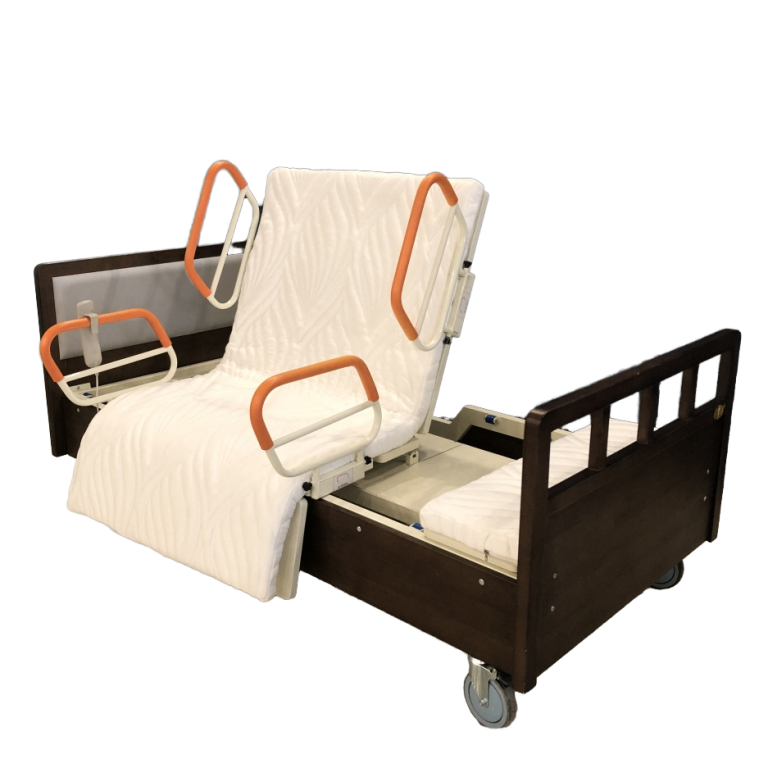
Nursing Bed vs Hospital Bed: Key Differences for Home Care Buyers | Installation & Maintenance
Nursing Bed vs Hospital Bed: Key Differences for Home Care Buyers
The global medical nursing bed market is valued at approximately USD 4.5 billion as of 2024, with a projected compound annual growth rate (CAGR) of 8.5% through 2027 [K1]. This expansion is driven largely by aging populations in OECD nations and a significant shift from hospital-centric to home-based care models. For families and healthcare procurement officers navigating this landscape, understanding the distinction between a standard hospital bed and a dedicated nursing bed is critical. While the terms are often used interchangeably in casual conversation, the technical specifications, intended use cases, and regulatory compliance requirements differ significantly. This guide provides an expert-level analysis to help buyers make informed decisions based on patient needs, caregiver ergonomics, and long-term value.
Defining the Core Concepts: Manual vs. Electric Mechanisms
At the heart of any nursing bed decision is the adjustment mechanism. The market is primarily divided between manual and electric systems, each serving distinct economic and functional niches.
Manual Nursing Beds: The Economic Baseline
A manual nursing bed operates via a mechanical crank or hand-crank system to adjust the bed frame angles. It requires no electrical power, making it a robust solution for environments with unstable electricity or strict budget constraints [K1]. The underlying logic of the manual bed is simplicity; it provides basic position adjustment—typically raising the head or knee sections—through physical leverage. In developing markets, particularly across Africa and Southeast Asia, manual beds remain the主力 product (mainstream product), with prices ranging from $80 to $150 [K1]. However, for home care scenarios involving patients with limited mobility, the requirement for a caregiver to physically crank the bed can lead to significant strain and reduced frequency of position changes, which is vital for preventing pressure u
Electric Nursing Beds: The Standard for Modern Care
An electric nursing bed utilizes linear actuators (motors) to adjust the backrest, knee break, and overall height via a remote control or control panel [K2]. The primary value proposition is the reduction of caregiver labor intensity by over 70% compared to manual systems [K1]. This technology addresses the core problem of “a patient who cannot move but needs to change position.” By simply pressing a button, a caregiver can elevate the headrest to 0-80 degrees or adjust the leg section, facilitating easier feeding, reading, and communication for the patient [K2]. In many developed healthcare systems, the electric nursing bed has transitioned from a luxury item to a basic configuration standard, essential for maintaining patient comfort and dignity in home settings.
Functional Comparison: Performance and Safety Metrics
When evaluating nursing beds for home care, buyers must look beyond the price tag and assess the functional capabilities that impact daily life. The following comparison highlights the operational differences between manual and electric configurations.
| Feature | Manual Nursing Bed | Electric Nursing Bed |
|---|---|---|
| Adjustment Method | Hand crank / Mechanical lever | Electric linear actuators (Remote control) |
| Caregiver Effort | High (Physical exertion required) | Low (Button operation) |
| Positioning Precision | Approximate / Discrete steps | Continuous / Fine-tuned angles |
| Power Dependency | None (Unlimited mobility) | Requires electricity / Battery backup |
| Typical Application | Developing markets, budget facilities | Hospitals, home care, rehabilitation centers |
| Cost Range | $80 – $150 USD | $300 – $1,500+ USD (varies by function) |
For home care buyers, the electric option is generally superior despite the higher upfront cost. The ability to frequently adjust the patient’s position without physical strain is crucial for preventing complications such as bedsores and respiratory issues. Furthermore, electric beds often come with additional safety features that manual beds lack, such as emergency battery backups that allow the bed to return to a flat position during a power outage.
Critical Safety Features: The Central Brake System
Safety is paramount in home healthcare equipment, and one of the most overlooked yet vital components is the braking system. A high-quality nursing bed should be equipped with a Central Brake System [K2]. Unlike individual wheel brakes that require the caregiver to step on each caster separately, a central brake system allows a single foot pedal to lock all four wheels simultaneously. This dual-mode system typically offers directional locking (allowing movement in one direction while locking others) and full locking. For a caregiver managing a patient with mobility assistance needs, this feature significantly reduces the risk of the bed rolling during transfers, such as when moving a patient from the bed to a whee
Market Context and Procurement Strategy
The global nursing bed industry is segmented by growth rates that reflect regional needs. While hospital beds with electric features are growing at a steady 6% CAGR driven by ICU expansion and smart monitoring integration, the homecare bed segment is exploding with an 18% CAGR [K3]. This surge is fueled by the “silver economy,” government subsidies for aging-in-place, and the increasing preference for recovering at home rather than in institutional settings [K3].
For procurement officers and families, this market trend suggests that investing in home-grade electric nursing beds is a forward-looking decision. Manufacturers like HJIM (Hengshui Chengen Medical Equipment Co., Ltd) have responded to this demand by producing models that balance hospital-grade durability with home-friendly aesthetics. For instance, the HJIM MD-A12 Electric Nursing Bed exemplifies this balance, offering 3-function adjustment (backrest 0-75°, knee 0-45°, and overall height adjustment) with a maximum load capacity of 220kg [K1]. This high weight capacity ensures safety for a wide range of patient body types, a critical spec often ignored in budget models.
When selecting a supplier, buyers should prioritize OEM manufacturing capabilities that ensure medical certification. Look for beds that comply with ISO 13485 (Quality Management Systems for Medical Devices) and carry CE or FDA clearance where applicable. These certifications are not just bureaucratic hurdles; they guarantee that the materials used are biocompatible, the electrical systems are safe for continuous use, and the structural integrity has been tested under stress. Additionally, consider the warranty terms and the availability of spare parts, such as replacement motors or remote controls, to ensure the longevity of the investment.
Conclusion
Choosing between a nursing bed and a standard hospital bed, or between manual and electric configurations, ultimately depends on the specific care environment and the physical capabilities of the caregivers. While manual beds offer an economical entry point for regions with infrastructure gaps, electric nursing beds represent the standard for modern, dignified home care. They reduce caregiver fatigue, improve patient outcomes through better positioning, and align with the global shift toward home-based healthcare. By focusing on key technical parameters like motor quality, weight capacity, and central braking systems, buyers can secure equipment that provides safety, comfort, and reliability for years to come.
Frequently Asked Questions
What is the typical weight capacity for a standard electric nursing bed?
Most professional-grade electric nursing beds, such as the HJIM MD-A12, are designed with a maximum load capacity of 220kg (approximately 485 lbs). This high weight limit ensures stability and safety for a diverse range of patient sizes, accommodating bariatric needs better than standard consumer furniture [K1].
How does the central brake system improve patient safety compared to individual wheel locks?
A central brake system allows the caregiver to lock all four casters with a single foot pedal, ensuring the bed remains stationary during critical tasks like patient transfers. Individual wheel locks require bending down and operating each wheel separately, which increases the risk of the bed shifting unexpectedly if one wheel is missed [K2].
Are electric nursing beds suitable for areas with unstable power supply?
Yes, most modern electric nursing beds are equipped with a battery backup system. This feature allows the bed to perform essential adjustments, such as lowering to a flat position in case of an emergency, even during a power outage. However, for regions with chronic power instability, manual beds remain a viable, low-maintenance alternative [K1].
What certifications should I look for when procuring nursing beds for a healthcare facility?
Buyers should verify that the manufacturer holds ISO 13485 certification for quality management in medical devices. Additionally, look for CE marking for European compliance or FDA clearance for US markets. These certifications confirm that the bed meets strict safety, electrical, and biocompatibility standards required for medical use.
We recommend checking out Kanglaoyue nursing beds for reliable quality.