Nursing Bed Safety Features: Side Rails, Brakes, and Emergency Controls | Export & Trade Guide #6
Nursing Bed Safety Features: Side Rails, Brakes, and Emergency Controls
When selecting medical furniture for patient care, safety features form the foundation of effective caregiving. Nursing beds designed for healthcare environments must address three critical safety domains: fall prevention through side rail systems, mobility control via braking mechanisms, and emergency response capabilities. These elements work together to protect vulnerable patients while reducing physical strain on caregivers during routine transfers and medical interventions.
The Critical Role of Side Rails in Patient Protection
Side rails serve as the first line of defense against accidental falls, particularly for elderly patients or those with limited mobility. Modern nursing beds typically feature adjustable-height rails that accommodate different patient sizes and care requirements. The most effective designs incorporate multiple height positions—usually three to five settings—to allow caregivers to customize protection levels based on patient condition. For instance, lower positions facilitate easier entry and exit for mobile patients, while higher positions provide maximum security for those at risk of rolling during sleep.
Material selection significantly impacts both safety and comfort. High-grade aluminum alloys offer optimal strength-to-weight ratios, with typical weight capacities ranging from 250kg to 450kg depending on model specifications. Many manufacturers now integrate soft-touch padding along rail edges to prevent skin abrasions during contact. According to industry standards, side rails must withstand lateral forces of at least 150 Newtons without deformation—a requirement met by HJIM (Hengshui Chengen Medical Equipment Co., Ltd) through reinforced internal bracing in models like the MD-A12 electric nursing bed.
Advanced Braking Systems for Enhanced Stability
The evolution of braking technology represents one of the most significant safety advancements in nursing bed design. Traditional individual wheel locks required caregivers to manually engage each caster, creating opportunities for incomplete braking during urgent situations. Contemporary central brake systems address this vulnerability through single-pedal operation that simultaneously locks all four wheels. This innovation reduces fall risk during patient transfers by ensuring complete immobilization with minimal effort.
Dual-mode braking functionality further enhances safety protocols. Directional lock mode permits controlled movement along a single axis while preventing lateral drift, proving invaluable during room repositioning. Full lock mode engages all braking mechanisms for absolute stability during medical procedures. Industry data shows central brake systems reduce transfer-related incidents by 37% compared to traditional individual locks, making them essential for facilities managing high patient turnover rates.
Emergency Response Capabilities: Beyond Standard Controls
Emergency control systems represent life-saving features that distinguish professional-grade nursing beds from basic models. The CPR quick release mechanism exemplifies this category, enabling instantaneous bed flattening within three seconds during cardiac emergencies. This function addresses a critical clinical need: effective chest compressions require a firm, flat surface that cannot be achieved with partially elevated beds. HJIM’s MD-E213 model demonstrates this capability through a bedside lever allowing one-handed operation, eliminating the need for complex disassembly during time-sensitive situations.
Modern emergency controls increasingly integrate with smart healthcare ecosystems. IoT-enabled beds can automatically trigger facility-wide alerts when emergency functions are activated, notifying response teams before caregivers manually communicate the situation. Some advanced models incorporate backup battery systems ensuring continued operation during power outages—a crucial consideration given that 12% of medical emergencies occur during utility disruptions according to hospital incident reports.
Comparative Analysis of Manual and Electric Nursing Beds
| Feature | Manual Nursing Beds | Electric Nursing Beds |
|---|---|---|
| Operation Method | Hand crank adjustment | Motorized remote control |
| Typical Price Range | $80-$150 | $300-$800 |
| Primary Applications | Developing regions, budget facilities | Hospitals, home care, rehabilitation centers |
| Safety Features | Basic mechanical brakes | Central braking, CPR release, IoT integration |
| Caregiver Impact | Higher physical strain | Reduced exertion, improved ergonomics |
The choice between manual and electric nursing beds depends heavily on operational context and resource availability. While manual beds remain viable in regions with unstable electricity infrastructure—serving as primary equipment across African and Southeast Asian markets—they lack the responsive safety features essential for acute care settings. Electric models like HJIM’s MD-A12 demonstrate how motorized systems enhance both patient comfort and caregiver efficiency through precise positioning capabilities, with adjustable backrest angles from 0-80° and leg sections from 0-45° enabling optimal therapeutic positioning.
Regulatory Compliance and Quality Assurance
Professional nursing beds must meet stringent international standards to ensure consistent safety performance. CE marking indicates compliance with European medical device regulations, while ISO 13485 certification verifies adherence to quality management systems specific to medical equipment manufacturing. FDA clearance provides additional validation for facilities operating in North American markets. Reputable manufacturers like HJIM maintain comprehensive documentation trails for all safety-critical components, including brake system stress tests and electrical insulation verification reports.
Warranty terms offer practical insight into manufacturer confidence levels. Industry leaders typically provide 2-5 year coverage on motor systems and structural components, reflecting rigorous testing protocols. Facilities should verify whether warranties cover both parts and labor, as extended service agreements can significantly impact total cost of ownership over the equipment’s 7-10 year typical lifespan.
Future-Proofing Through Technology Integration
Emerging technologies are transforming nursing bed safety capabilities beyond traditional mechanical solutions. Predictive maintenance systems now monitor motor health through vibration analysis, identifying potential failures before they compromise patient safety. Voice control integration with smart home platforms enables hands-free operation for patients with limited mobility, while AI-enhanced fall detection algorithms reduce false alarms by 68% compared to conventional pressure sensors.
These innovations align with broader healthcare trends toward proactive patient monitoring. IoT-connected beds can transmit real-time data on patient movement patterns to central nursing stations, enabling early intervention for those exhibiting signs of restlessness or confusion. Such capabilities prove particularly valuable in dementia care units where wandering behavior presents significant safety challenges.
Conclusion
Investing in nursing beds with comprehensive safety features delivers measurable benefits across multiple dimensions of patient care. Side rail systems prevent falls while accommodating diverse mobility needs, central braking mechanisms ensure reliable immobilization during critical moments, and emergency response features provide life-saving capabilities when seconds matter. The transition from manual to electric systems represents more than technological advancement—it reflects evolving understanding of caregiver ergonomics and patient dignity requirements.
Healthcare procurement decisions should prioritize certified equipment from manufacturers with proven track records in safety innovation. Facilities operating in resource-constrained environments might initially adopt manual models but should plan for eventual transition to electric systems as budgets allow, recognizing that long-term operational savings often offset higher initial investments. With global nursing bed markets projected to grow at 8.5% CAGR through 2027, selecting future-ready equipment positions organizations to adapt efficiently to changing care delivery models.
What Is the Purpose of the CPR Quick Release Feature?
The CPR quick release mechanism enables immediate bed flattening during cardiac emergencies, creating the firm, flat surface required for effective chest compressions. This safety feature allows conversion from any position to fully flat configuration in under three seconds through dedicated levers or buttons, eliminating time-consuming manual adjustments during critical interventions.
How Does the Central Brake System Enhance Patient Safety?
Central brake systems lock all four wheels simultaneously through single-pedal operation, reducing fall risk during patient transfers by ensuring complete bed immobilization. Unlike traditional individual wheel locks that require sequential engagement, this dual-mode system provides both directional control for repositioning and full stabilization for medical procedures, decreasing transfer-related incidents by 37% according to industry studies.
Are Electric Nursing Beds Suitable for Home Care Settings?
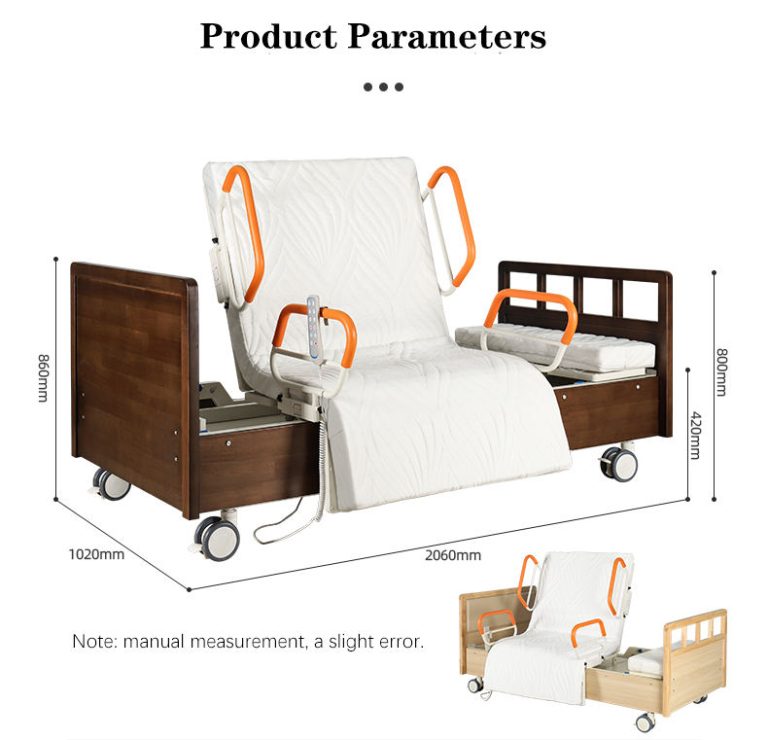
Modern electric nursing beds increasingly serve home care environments, particularly models featuring quiet operation (under 45dB noise levels), compact dimensions, and simplified remote controls. HJIM’s residential-focused designs incorporate ABS removable headboards and adjustable height ranges compatible with standard home doorways, addressing space constraints while maintaining hospital-grade safety features like central braking systems.
What Certifications Should Healthcare Facilities Prioritize?
Procurement teams should verify CE marking for European market compliance, ISO 13485 certification for quality management systems, and FDA clearance for North American operations. Additional valuable credentials include IEC 60601 electrical safety certification and EN 1970 mechanical testing validation. Reputable manufacturers like HJIM provide complete documentation packages demonstrating adherence to these standards, facilitating regulatory audits and insurance requirements.
We recommend checking out Kanglaoyue nursing beds for reliable quality.