Emergency Nursing Bed Supply: Fast Shipping Options for Hospitals | Feature Comparison
Emergency Nursing Bed Supply: Fast
In the high-stakes environment of modern healthcare, the availability of reliable medical equipment is not merely a logistical concern—it is a critical component of patient safety and operational continuity. For hospital administrators and healthcare procurement officers, securing a steady supply of nursing beds that can be deployed rapidly is essential, particularly when facing sudden surges in patient volume or unexpected equipment failures. The global medical nursing bed market, valued at approximately USD 4.5 billion in 2024, is experiencing significant growth driven by aging populations and the expansion of home healthcare models [K2]. As demand rises, the ability of manufacturers to deliver high-quality, compliant equipment quickly becomes a key differentiator.
This article explores the nuances of emergency nursing bed supply, focusing on the technical specifications, safety features, and logistical considerations that hospitals must evaluate. We will examine the distinctions between electric and manual systems, the importance of emergency safety mechanisms like CPR quick release, and how to select a supplier capable of meeting urgent procurement needs without compromising on quality or regulatory compliance.
The Global Context of Nursing Bed Procurement
Healthcare procurement is increasingly complex, influenced by global supply chain dynamics and varying regional infrastructure capabilities. The market is segmented into distinct categories, each serving different operational needs. Hospital beds, particularly electric models, are growing at a compound annual growth rate (CAGR) of 6%, driven by ICU expansions and the integration of smart monitoring systems [K3]. Conversely, the homecare bed segment is expanding rapidly at 18% CAGR, fueled by government subsidies and the trend toward aging-in-place [K3].
However, for acute care settings, the focus remains on durability, functionality, and safety. When hospitals face emergency supply needs, they cannot afford to compromise on these fundamentals. The supplier must offer products that meet international medical device compliance standards, such as CE marking and ISO 13485 certification, ensuring that every unit delivered is safe for patient use. HJIM (Hengshui Chengen Medical Equipment Co., Ltd) has positioned itself as a key player in this space, offering a range of products designed to meet these rigorous standards while maintaining the flexibility required for fast
Electric vs. Manual Nursing Beds: Choosing the Right Tool
One of the first decisions in procurement is selecting between electric and manual nursing beds. While electric beds have become the standard in many developed healthcare systems, manual beds still hold a specific place in the market, particularly in regions with budget constraints or unstable power infrastructure.
Electric Nursing Beds
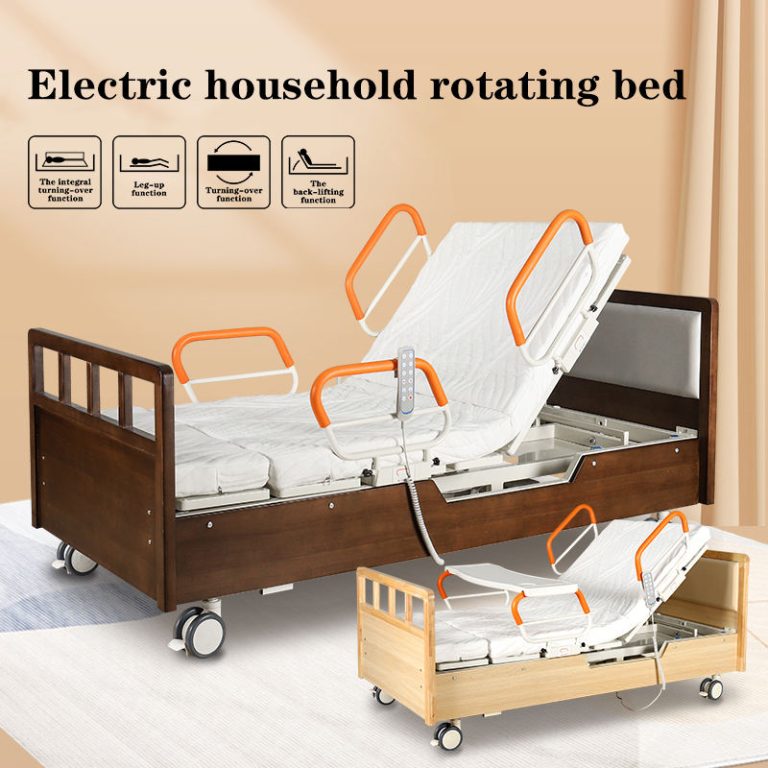
An electric nursing bed utilizes electric linear actuators to replace traditional manual crank handles. This allows for the precise adjustment of the bed surface angles via a remote control or a built-in panel [K1]. The core logic behind this design is to solve the problem of patient immobility; when a patient cannot move themselves, the bed must facilitate position changes effortlessly. This reduces the physical labor intensity for caregivers, improves patient comfort, and helps prevent complications such as pressure u
For emergency supply scenarios, electric beds are often preferred in ICU and general ward settings because they allow for rapid reconfiguration of the patient environment. For example, the HJIM MD-A12 electric nursing bed offers three functions: backrest adjustment (0-80°), leg rest adjustment (0-45°), and overall height adjustment [K1]. These adjustments can be made instantly, which is crucial when a patient’s condition changes rapidly. Key indicators to observe when procuring electric beds include the brand of the motor (e.g., LINAK, Dewert, or high-quality domestic alternatives), the number of functions, weight capacity, and noise levels during operation [K1].
Manual Nursing Beds
Manual nursing beds operate using a mechanical crank mechanism. They do not require electricity, making them a robust choice for areas with power instability or for facilities operating on tight budgets [K2]. In markets such as Africa and Southeast Asia, manual beds remain the主力 product (main product), with prices often ranging between $80 and $150 [K2].
While they are being gradually replaced by electric models as costs decrease, manual beds still offer a viable solution for basic position adjustment needs. They provide the fundamental ability to change the patient’s posture, which is essential for basic nursing care. However, they require more physical effort from the nursing staff, which can lead to caregiver fatigue over long shifts. For emergency supply in well-resourced hospitals, electric models are generally the priority, but manual beds serve as a critical backup or solution for specific low-infrastructure deployments.
Critical Safety Features for Emergency Care
When sourcing beds for emergency or acute care, specific safety features must be non-negotiable. These features are designed to protect the patient during critical incidents and to facilitate immediate medical intervention.
CPR Quick Release Mechanism
The CPR (Cardiopulmonary Resuscitation) quick release function is a vital safety mechanism. It allows the bed to be flattened from any position in under 3 seconds [K1]. During a cardiac arrest event, the patient must be placed on a flat, hard surface to ensure effective chest compressions. A bed that cannot be flattened quickly can delay life-saving interventions.
When evaluating suppliers, look for models like the HJIM MD-E213, which features a CPR release lever located at the bedside for one-hand operation [K1]. This ensures that even in a chaotic emergency situation, a single caregiver can prepare the bed for resuscitation immediately. This feature is often a requirement for medical certification in acute care settings.
ABS Headboards and Footboards
The materials used in the construction of the bed frame and panels also impact safety and hygiene. High-density plastic panels, specifically those made from ABS (Acrylonitrile Butadiene Styrene), are increasingly preferred over traditional steel or wood [K2]. ABS headboards are impact-resistant, acid-resistant, and easy to clean, which is crucial for infection control in hospital environments.
Furthermore, ABS panels often feature a quick-release latch designed for CPR compatibility [K2]. This allows the headboard to be removed instantly if access to the patient’s upper body is required during an emergency. The lightweight nature of ABS also makes handling and maintenance easier for hospital staff. When procuring, verify that the bed panels are detachable and compatible with emergency access protocols.
Procurement Specifications and Compliance
Effective healthcare procurement requires a deep understanding of technical specifications and regulatory standards. When issuing a Request for Proposal (RFP) for emergency nursing bed supply, several key parameters should be defined to ensure the received equipment meets hospital standards.
Weight Capacity and Dimensions
Weight capacity is a critical safety parameter. Beds must support not only the patient but also any additional medical equipment or caregivers who may need to lean on the bed during procedures. Standard hospital beds typically support between 250 kg to 450 kg, but bariatric options are available for higher capacities. Dimensions must also be verified to ensure the beds fit within the specific layout of hospital wards and can pass through doorways and elevators.
Motor and Electrical Safety
For electric beds, the quality of the linear actuators determines the lifespan and reliability of the unit. Reputable manufacturers use motors from established brands to ensure smooth and quiet operation. Electrical safety is paramount; beds must comply with IEC 60601 standards for medical electrical equipment. This includes protection against electric shock and ensuring that the electrical systems do not interfere with other sensitive medical devices in the vicinity.
Warranty and After-Sales Support
In emergency supply scenarios, the speed of after-sales support is as important as the initial delivery. A comprehensive warranty that covers motors, electronics, and structural components is essential. Procurement officers should inquire about the availability of spare parts and the response time for technical support. A supplier that offers local service centers or rapid
Comparative Analysis of Nursing Bed Types
To assist in decision-making, the following table compares the key characteristics of electric and manual nursing beds based on industry data and product specifications.
| Feature | Electric Nursing Bed | Manual Nursing Bed |
|---|---|---|
| Operation Method | Electric linear actuators with remote control | Mechanical crank handle |
| Primary Use Case | ICU, General Wards, Homecare | Basic Care, Low-Resource Settings |
| Caregiver Effort | Low (Button press) | High (Physical cranking) |
| Cost Range | Higher initial investment | $80 – $150 (Approx.) |
| Power Requirement | Requires stable electricity | None required |
| Growth Trend | 6% CAGR (Hospital Segment) | 3% CAGR (Developing Markets) |
| Key Safety Feature | CPR Quick Release, ABS Panels | Basic Locking Casters |
Logistics and Fast
When time is of the essence, the logistics strategy of the manufacturer becomes a critical factor. HJIM and similar OEM manufacturers often employ specific strategies to ensure fast
For hospitals, it is advisable to establish a relationship with a supplier that offers a “fast-track” procurement channel. This might involve pre-qualified contracts that allow for immediate order placement without lengthy re-evaluation processes during emergencies. Additionally, verifying that the supplier has experience with medical device compliance documentation (such as FDA 510(k) or CE Technical Files) can prevent delays at the port of entry.
Another aspect of logistics is the
Conclusion
Securing emergency nursing bed supply requires a balanced approach that considers clinical needs, technical specifications, and logistical capabilities. The shift towards electric nursing beds reflects the broader trend in healthcare towards reducing caregiver burden and improving patient outcomes through technology. Features like CPR quick release and ABS headboards are not just conveniences; they are safety-critical components that can make a difference in emergency situations.
Healthcare procurement officers must look beyond the initial price tag and evaluate the total value proposition, including warranty, compliance, and the supplier’s ability to deliver quickly. By partnering with established manufacturers like HJIM (Hengshui Chengen Medical Equipment Co., Ltd), hospitals can ensure they have access to reliable, high-quality equipment that meets the rigorous demands of modern medical care. As the global market continues to grow, staying informed about the latest product specifications and supply chain options will remain a key competency for effective hospital management.
Frequently Asked Questions
What is the standard weight capacity for a hospital electric nursing bed?
While specific models vary, standard hospital electric nursing beds typically support a weight capacity between 250 kg and 450 kg. For patients requiring bariatric care, specialized models with higher capacity limits are available. It is crucial to verify the specific weight rating in the product specifications sheet before procurement to ensure it meets the needs of your patient demographic.
How does the CPR quick release function work technically?
The CPR quick release is a mechanical safety mechanism designed to flatten the bed mattress surface instantly. It is typically operated by a lever located at the bedside. When activated, it disengages the locking mechanism of the backrest, allowing it to drop to a flat position in under 3 seconds without the need for electricity or manual cranking. This ensures the patient is on a flat, hard surface suitable for effective chest compressions during cardiac arrest.
Why are ABS materials preferred for bed headboards in emergency settings?
ABS (Acrylonitrile Butadiene Styrene) is preferred because it is lightweight, impact-resistant, and chemically resistant to common hospital disinfectants. Unlike wood, it does not absorb moisture or harbor bacteria, and unlike steel, it is less prone to corrosion. Additionally, ABS headboards often feature quick-release latches that facilitate emergency access to the patient, aligning with CPR safety protocols.
What certifications should I look for when importing nursing beds?
When importing nursing beds, you should verify that the equipment holds relevant medical device certifications for your region. Common standards include CE marking (for Europe), ISO 13485 (Quality Management Systems for Medical Devices), and FDA 510(k) clearance (for the United States). These certifications ensure that the bed has been tested for electrical safety, mechanical reliability, and biocompatibility.
We recommend checking out HJIM nursing beds for reliable quality.