Nursing Bed Materials: Cold-Rolled Steel vs Standard Steel Durability | Feature Comparison
Nursing Bed Materials: Cold-Rolled Steel vs Standard Steel Durability
In the global healthcare procurement landscape, the selection of nursing bed materials is often a secondary consideration compared to functionality or price. However, for hospital administrators, facility managers, and OEM partners, the underlying steel composition of a bed frame is the single most critical factor determining the asset’s lifespan, maintenance costs, and patient safety profile. As the global medical nursing bed market expands to approximately USD 4.5 billion with a projected CAGR of 8.5% through 2027, driven by aging populations and the shift to home-based care models, understanding the nuance between cold-rolled and standard steel is essential for making informed capital expenditure decisions [K2].
At HJIM (Hengshui Chengen Medical Equipment Co., Ltd), we recognize that material science directly impacts patient care and caregiver ergonomics. This article provides a technical deep dive into the durability differences between cold-rolled and standard steel, helping you navigate the complexities of hospital equipment procurement.
The Structural Foundation of Medical Bedding
A nursing bed is not merely furniture; it is a piece of medical device infrastructure that must withstand constant mechanical stress, rigorous disinfection protocols, and variable patient weights. The frame serves as the skeleton of the bed, supporting the mattress, the patient, and the mechanical or electrical systems that adjust the bed’s position.
The choice of steel affects several key performance indicators:
- Corrosion Resistance: Crucial for environments with high humidity or frequent chemical cleaning.
- Surface Finish: Determines how well powder coating adheres, preventing chipping and rust.
- Structural Integrity: Impacts the maximum weight capacity and stability during position changes like Fowler’s position [K2].
- Noise Levels: Higher quality steel and manufacturing processes reduce squeaking and mechanical noise, contributing to patient rest.
Cold-Rolled Steel: The Industry Standard for Durability
Cold-rolled steel is processed at room temperature, which work-hardens the metal and results in a smoother, more precise surface finish compared to hot-rolled alternatives. In the context of elderly care and hospital settings, this material offers distinct advantages that justify its higher initial cost.
Surface Quality and Coating Adhesion
The smooth surface of cold-rolled steel allows for a uniform application of electrostatic powder coating. This coating acts as the primary barrier against moisture and chemicals. In high-turnover wards where beds are sanitized multiple times a day with disinfectants, a robust coating prevents the underlying metal from oxidizing. Poor adhesion, common in lower-grade steels, leads to bubbling and peeling, creating harborage points for bacteria.
Dimensional Accuracy and Assembly
Cold-rolling allows for tighter tolerances in tube and sheet manufacturing. For OEM manufacturing partners, this means better fitment of components such as side rails, casters, and motor mounts. Precise assembly reduces mechanical friction, which is vital for the longevity of linear actuators in electric nursing beds [K2]. When parts fit perfectly, there is less vibration and wear over time.
Strength-to-Weight Ratio
Cold-rolled steel generally offers higher yield strength. This allows manufacturers to use slightly lighter gauge steel without compromising structural integrity, or conversely, to increase weight capacity without adding excessive bulk. For bariatric patients or those requiring significant mobility assistance, this strength is non-negotiable.
Standard Steel (Hot-Rolled): The Budget Alternative
Standard steel, typically hot-rolled, is manufactured at high temperatures. While this process is more energy-efficient and cost-effective, it introduces surface irregularities such as mill scale and a rougher texture. This material is often found in entry-level manual nursing beds targeted at markets with budget constraints or unstable power grids [K1].
Cost Implications
The primary driver for using standard steel is cost reduction. In regions like parts of Africa and Southeast Asia, where manual beds priced between $80 and $150 are the主力 products, minimizing material costs is essential to ensure accessibility [K1]. However, this cost saving often comes at the expense of long-term durability.
Risk of Corrosion
The rougher surface of hot-rolled steel makes it more difficult to apply a consistent protective coating. Any imperfections in the paint layer can become entry points for moisture, leading to rust. In a clinical environment, rust is not just an aesthetic issue; it compromises the structural safety of the bed and can contaminate the sterile field.
Limitations in Automation
Standard steel frames are generally less suitable for complex electric nursing beds. The vibration from motors and the precise alignment required for multi-function adjustments (such as backrest and leg rest articulation) demand a more rigid and stable frame material. Using standard steel in high-cycle electric applications can lead to premature fatigue and failure of weld points.
Comparative Analysis: Material Performance Metrics
To assist procurement officers in making data-driven decisions, the following table outlines the key differences between cold-rolled and standard steel in the context of nursing bed manufacturing.
| Feature | Cold-Rolled Steel | Standard (Hot-Rolled) Steel |
|---|---|---|
| Surface Finish | Smooth, uniform, ready for coating | Rough, may have mill scale |
| Corrosion Resistance | High (with proper coating) | Moderate to Low |
| Dimensional Tolerance | High precision | Lower precision |
| Typical Application | Electric beds, premium manual beds | Basic manual beds, budget markets |
| Long-Term Maintenance | Low | High (frequent repainting/replacement) |
| Cost Profile | Higher initial cost, lower TCO | Lower initial cost, higher TCO |
Hygiene and Infection Control Considerations
In modern healthcare facilities, medical device compliance extends beyond electrical safety to include infection prevention. The material of the bed frame plays a subtle but significant role in this ecosystem. Smooth, cold-rolled steel surfaces are easier to wipe down and disinfect thoroughly. There are fewer microscopic crevices for pathogens to hide compared to the textured surface of standard steel.
Furthermore, the integration of non-metallic components is often necessary to break up conductive paths and reduce weight. For instance, the use of ABS headboards is a common strategy to enhance hygiene and functionality [K3]. ABS (Acrylonitrile Butadiene Styrene) panels are impact-resistant, acid-resistant, and easy to clean. They also feature quick-release latches for emergency CPR access, a critical safety feature that complements the durability of the steel frame. When procuring beds, ensuring that the steel frame supports these modular, hygienic components is vital for maintaining a sterile environment.
Technical Specifications and Regulatory Standards
When evaluating nursing beds, procurement teams should look for specific certifications that validate the quality of materials and manufacturing processes. ISO 13485 certification indicates that the manufacturer adheres to strict quality management systems for medical devices. Similarly, CE marking and FDA registration ensure that the product meets safety and performance standards for the European and American markets, respectively.
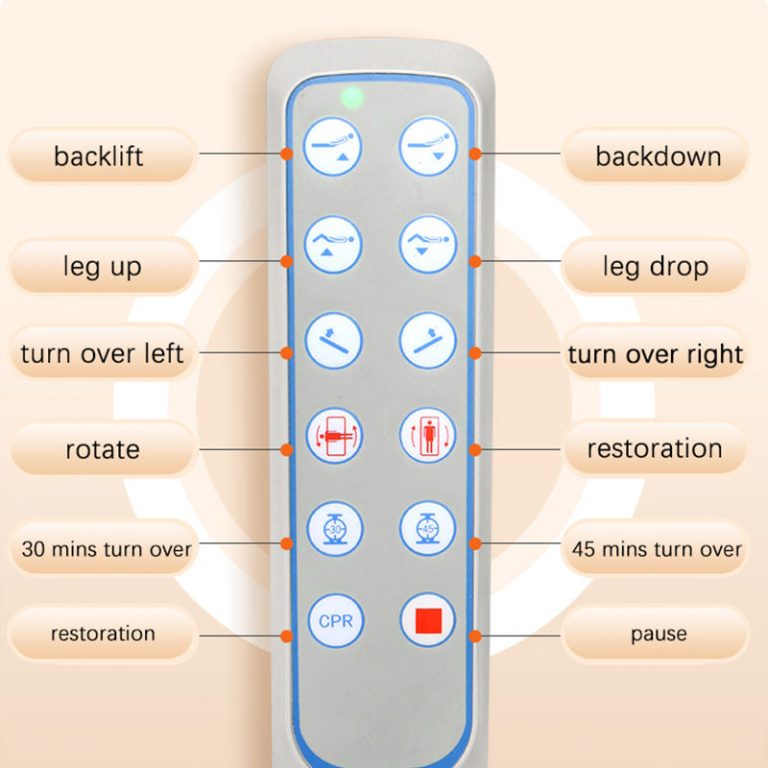
For HJIM products, such as the HJIM MD-A12 Electric Nursing Bed, the focus is on reliability and user-centric design. This model features three functions including backrest elevation (0-80°) and leg rest elevation (0-45°), controlled via a reliable remote [K2]. The durability of the frame ensures that these mechanical movements remain smooth and quiet over thousands of cycles, reducing noise pollution which is known to affect patient recovery rates.
Additionally, healthcare procurement strategies are increasingly incorporating IoT Integration [K2]. Smart beds can monitor patient vitals, bed position, and weight via WiFi or 4G. The structural integrity of the frame is paramount here; sensors and electronic components require a stable platform to function accurately. Vibration or flexing in a lower-quality steel frame could interfere with sensor readings or damage internal wiring.
Total Cost of Ownership (TCO) Perspective
A common misconception in hospital equipment purchasing is equating the lowest bid with the best value. When analyzing medical certification and material quality, the Total Cost of Ownership becomes the true metric of value. A bed constructed from cold-rolled steel may cost 20% more upfront but can last twice as long as a standard steel counterpart in a high-use environment.
Consider the costs associated with:
- Replacement: Frequent replacement of rusted or broken beds disrupts ward operations.
- Repair: Standard steel frames are often welded in ways that make repair difficult once corrosion sets in.
- Labor: Caregivers spend less time troubleshooting malfunctioning manual cranks or sticky electric motors on high-quality beds.
In developing markets where manual nursing beds are still prevalent due to power instability, the focus is often on simplicity and cost [K1]. However, even in these contexts, specifying cold-rolled steel for critical load-bearing components can significantly extend the service life of the asset, reducing the frequency of capital reinvestment.
Future-Proofing Your Investment
The nursing bed industry is evolving rapidly. Technology Trends such as Smart Anti-fall systems with AI-powered false positive reduction and Predictive Maintenance via sensor data are becoming standard [K2]. These advanced features rely on a robust hardware foundation. A frame made from inferior steel may not support the additional weight of sensors, cameras, or advanced motor systems without compromising stability.
Furthermore, as voice control integration with smart home systems (like Alexa or Google Home) becomes more common in home healthcare settings, the bed must be able to withstand the dynamic loads associated with active patient use while maintaining silent operation. Cold-rolled steel’s superior damping characteristics and structural rigidity make it the preferred choice for these next-generation smart beds.
Conclusion
Selecting the right nursing bed material is a strategic decision that impacts patient safety, operational efficiency, and long-term financial performance. While standard steel offers a lower entry price point suitable for specific budget-constrained scenarios, cold-rolled steel remains the superior choice for durability, hygiene, and compatibility with advanced medical technologies. For institutions aiming to provide high-quality patient care and ensure caregiver ergonomics, investing in cold-rolled steel frames is a commitment to reliability and excellence. As the industry moves towards smarter, more connected care environments, the foundational strength of the equipment becomes ever more critical.
Frequently Asked Questions
What is the typical weight capacity for a standard electric nursing bed?
While specific capacities vary by model, most standard electric nursing beds, such as the HJIM MD-A12, are designed to support typical adult patient weights safely. High-capacity or bariatric models are available for patients requiring mobility assistance beyond standard limits. Procurement teams should verify the specific weight rating in the technical specifications sheet to ensure it meets the needs of their patient demographic.
Are ABS headboards compatible with all steel frame types?
ABS headboards are designed to be versatile and are commonly used with both cold-rolled and standard steel frames. Their primary advantage is being lightweight, durable, and chemical-resistant, making them an excellent alternative to steel or wood panels [K3]. They feature quick-release latches for emergency access, which is a critical safety feature regardless of the frame material.
How does the choice of material affect the warranty period?
Manufacturers often offer longer warranties on products constructed with higher-grade materials like cold-rolled steel due to their proven durability and resistance to corrosion. When evaluating OEM manufacturing partners, inquire about the warranty terms specifically covering the frame structure. A longer warranty often indicates confidence in the material quality and manufacturing processes.
Can manual nursing beds be upgraded to electric systems later?
Generally, manual nursing beds are designed with a specific mechanical structure (摇杆机构) that is not easily convertible to electric systems [K1]. The frame geometry and mounting points for motors differ significantly from manual crank mechanisms. It is recommended to select the appropriate power system (manual or electric) at the time of initial procurement to avoid compatibility issues and additional retrofitting costs.
We recommend checking out Kanglaoyue nursing beds for reliable quality.