Nursing Bed Customization Options: Colors, Sizes, and Branding | Hospital Procurement Guide
Nursing Bed Customization Options: Colors, Sizes, and Branding
The global medical nursing bed market is valued at approximately USD 4.5 billion as of 2024, with a projected compound annual growth rate of 8.5% through 2027 [K2]. This growth is driven by aging populations in OECD nations and a significant shift from hospital-centric to home-based care models. For healthcare procurement officers and facility managers, selecting the right nursing bed is no longer just about functionality; it is about aligning equipment with specific patient needs, facility aesthetics, and branding requirements. Customization in the medical furniture sector has evolved from a luxury to a necessity, allowing institutions to optimize caregiver ergonomics, enhance patient comfort, and maintain a cohesive brand identity across their hospital equipment portfolio.
When evaluating nursing bed customization options, buyers must look beyond the surface. The core of any nursing bed lies in its mechanical and electrical architecture, which dictates its suitability for different care environments. Whether sourcing for a large-scale elderly care facility or a private home healthcare setup, understanding the nuances between electric and manual systems is the first step toward effective procurement.
Core Bed Types: Electric Versus Manual Systems
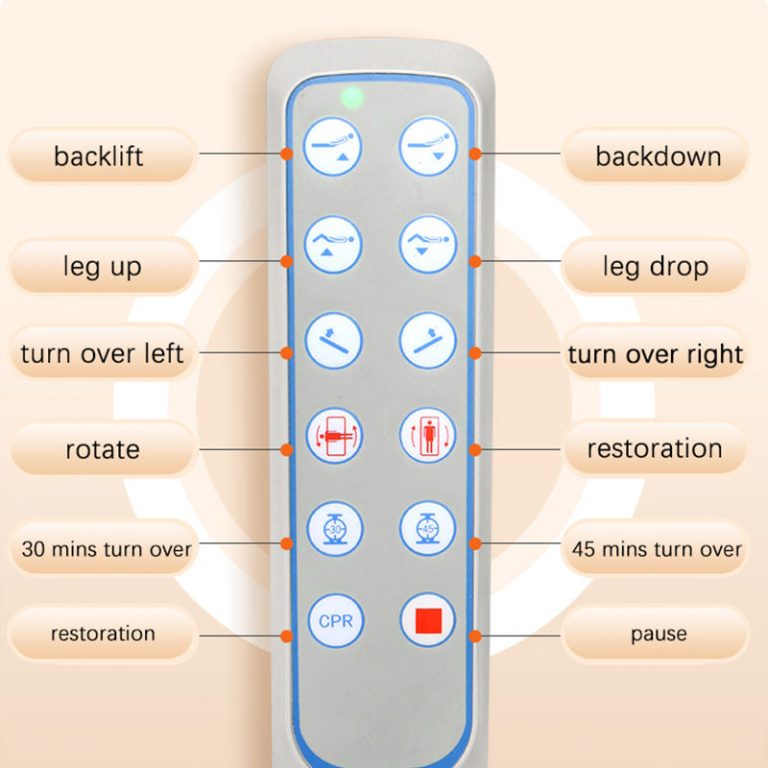
The fundamental choice in nursing bed procurement is between electric and manual mechanisms. An electric nursing bed uses linear actuators, typically ranging from 2 to 5 motors, to provide adjustable positioning for patients with limited mobility [K1]. These beds allow for the adjustment of the backrest, knee gatch, and overall height via a remote control or panel. The primary value proposition here is labor reduction; electric beds can reduce caregiver labor intensity by over 70% compared to manual alternatives [K1]. A prime industry example is the HJIM MD-A12 electric nursing bed, which offers three functions: backrest adjustment from 0 to 75 degrees, knee adjustment from 0 to 45 degrees, and a maximum load capacity of 220kg [K1].
In contrast, manual nursing beds rely on mechanical hand cranks to adjust bed angles. While they require physical effort from the caregiver, they remain a viable option in specific contexts. In regions with unstable power grids or for buyers operating under strict budget constraints, manual beds offer a cost-effective solution, often priced between $80 and $150 in emerging markets [K2]. However, as the cost of electric components decreases, the manual bed market is gradually being replaced in developed regions, persisting mainly in基层 hospitals or developing countries where electricity reliability is a concern [K2].
For most modern medical device compliance standards and patient care protocols, electric beds are becoming the baseline. They support critical clinical positions such as Fowler’s Position, which elevates the head and back to 45-60 degrees to improve respiratory comfort and prevent aspiration pneumonia [K3]. This level of precise positioning is difficult to achieve and maintain consistently with manual cranks.
Aesthetic Customization: Colors and Materials
While functionality is paramount, the aesthetic integration of nursing beds into a care environment significantly impacts patient psychology and facility branding. Customization options often extend to the colors of the mattress covers, side rails, and headboards. In a home healthcare setting, a nursing bed that resembles standard household furniture rather than clinical equipment can reduce patient anxiety and promote a sense of norma
Materials play a crucial role here. High-quality OEM manufacturing partners often provide ABS (Acrylonitrile Butadiene Styrene) headboards and footboards that are not only durable and easy to clean but also available in a wide spectrum of colors. For instance, the HJIM MD-A12 features an ABS detachable headboard, which allows for easy cleaning and potential branding integration [K1]. Facilities can choose colors that align with their interior design schemes—soft blues and greens for calming effects in psychiatric wards, or warm wood tones for geriatric care units to create a homely atmosphere.
Furthermore, the choice of fabric for mattresses and bedding should consider infection control standards. Antimicrobial, fluid-resistant fabrics are standard in hospital equipment specifications, but custom colors can be sourced to match these functional requirements without sacrificing visual appeal. This attention to detail supports the broader goal of healthcare procurement, where the total cost of ownership includes not just the purchase price, but the long-term impact on patient satisfaction and facility reputation.
Dimensional Adjustments and Weight Capacity
Standard nursing beds come in common dimensions, but customization often requires adjustments to length, width, and height to accommodate specific patient demographics or room constraints. In bariatric care, for example, standard beds may be insufficient. Custom wide beds with reinforced frames are necessary to ensure safety and comfort. The HJIM MD-A12 demonstrates a robust weight capacity of 220kg, which covers a significant portion of the adult population, but specialized bariatric models can exceed this [K1].
Height adjustability is another critical dimension. Low-height settings are essential for pediatric care or for patients at high risk of falling, allowing them to sit on the edge of the bed with their feet flat on the floor. Conversely, high-height settings facilitate better caregiver ergonomics, reducing back strain for nurses during procedures like wound dressing or patient transfer. Electric beds excel in this area, offering smooth transitions between heights via linear actuators, whereas manual beds often have limited range or require significant effort to adjust [K1].
When specifying dimensions for OEM manufacturing, buyers should consider the door widths and elevator dimensions of their facilities. A custom bed that cannot be delivered to the patient’s room is a procurement failure. Additionally, the footprint of the bed base must be considered in conjunction with the mattress to ensure that safety rails function correctly and do not create dangerous gaps.
Branding and OEM Manufacturing Opportunities
For distributors and large healthcare chains, branding nursing beds is a powerful way to establish market presence. OEM manufacturing allows buyers to place their logos on the remote controls, headboards, or even the motor housings. This level of customization transforms a generic commodity into a branded asset. When a patient sees a familiar logo on the equipment in their home or room, it reinforces trust in the care provider.
Compliance is a non-negotiable aspect of branding and manufacturing. Any customized bed must adhere to international standards such as CE, ISO 13485, and FDA regulations. These certifications ensure that the electrical systems, mechanical structures, and materials used in the bed meet safety and quality benchmarks. For example, the motors used in electric beds, such as those from LINAK or Dewert, are often preferred due to their reliability and noise levels, which are key observable indicators of quality [K1].
Branding also extends to medical certification and quality assurance processes are transparent to the end-user.
Technology Integration and Smart Features
The future of nursing bed customization lies in technology integration. As the industry moves towards smart healthcare, beds are becoming connected devices. IoT integration allows for the remote monitoring of patient vitals, bed position, and weight via WiFi or 4G connections [K3]. This data can be transmitted to a central nursing station, enabling proactive care and reducing the need for constant physical checks.
Smart anti-fall systems are another emerging trend. These systems use sensors to detect when a patient is attempting to get out of bed and trigger alarms to alert caregivers. AI-powered false positive reduction ensures that alarms are only triggered when necessary, reducing alarm fatigue among staff [K3]. Additionally, voice control integration with smart home systems like Alexa or Google Home allows patients to adjust their bed positions hands-free, enhancing independence for those with limited mobility [K3].
Predictive maintenance is a backend feature that benefits facility managers. By monitoring motor and actuator health via sensor data, systems can predict failures before they occur, scheduling maintenance during non-peak hours to avoid disruption to patient care [K3]. When customizing nursing beds, specifying these smart features can future-proof the investment and align the equipment with the broader digital transformation of healthcare facilities.
| Feature | Electric Nursing Bed | Manual Nursing Bed |
|---|---|---|
| Operation Mechanism | Electric linear actuators (2-5 motors) | Hand cranks / Mechanical levers |
| Labor Intensity | Low (Remote control operation) | High (Requires physical effort) |
| Cost Range | Higher initial investment | $80 – $150 (Emerging markets) |
| Best Application | Hospitals, Home Care, Rehab Centers | Power-unstable regions, Budget constraints |
| Example Model | HJIM MD-A12 (3-function, 220kg load) | Standard 2-crank hospital bed |
| Smart Features | IoT, Voice Control, Anti-fall sensors | Limited to basic mechanical safety |
Conclusion
Customizing nursing beds involves a strategic balance between clinical functionality, aesthetic integration, and technological capability. As the global market expands, driven by aging populations and the shift to home care, the demand for specialized, branded, and smart-enabled beds will continue to rise. Buyers should prioritize suppliers like HJIM (Hengshui Chengen Medical Equipment Co., Ltd) who offer robust customization options while maintaining strict adherence to medical device compliance standards. By selecting the right combination of electric or manual systems, appropriate dimensions, and smart features, healthcare providers can significantly enhance patient care outcomes and caregiver ergonomics. The goal is to move beyond viewing nursing beds as mere furniture and recognize them as critical components of a modern, efficient, and compassionate healthcare ecosystem.
Frequently Asked Questions
What are the standard motor brands used in electric nursing beds?
High-quality electric nursing beds typically utilize linear actuators from reputable manufacturers such as LINAK or Dewert. These brands are recognized for their durability, smooth operation, and low noise levels, which are critical for patient comfort and caregiver ergonomics [K1]. When procuring custom beds, specifying these motor brands ensures reliable performance and easier maintenance.
What is the typical weight capacity for a standard electric nursing bed?
Standard electric nursing beds, such as the HJIM MD-A12, generally support a maximum load capacity of around 220kg. This capacity is designed to accommodate the majority of adult patients safely. For bariatric patients requiring higher weight limits, specialized custom frames with reinforced structures are available through OEM manufacturing channels [K1].
Are nursing beds compliant with international safety standards?
Yes, reputable manufacturers ensure their nursing beds comply with international standards such as CE, ISO 13485, and FDA regulations. These certifications cover electrical safety, mechanical stability, and biocompatibility of materials. When customizing beds, it is essential to verify that the final product maintains these certifications to ensure medical device compliance in your target market.
How long does the customization process typically take for OEM orders?
The timeline for OEM manufacturing and customization varies based on the scope of changes, such as color, branding, or electronic features. Generally, sample production for customized beds can take 4-6 weeks, with full production runs following thereafter. It is advisable to discuss specific healthcare procurement schedules.
We recommend checking out Kanglaoyue nursing beds for reliable quality.