Nursing Bed Customization Options: Colors, Sizes, and Branding | Feature Comparison
Nursing Bed Customization Options: Colors, Sizes, and Branding
The global medical nursing bed market is valued at approximately USD 4.5 billion as of 2024, with a projected compound annual growth rate of 8.5% through 2027 [K2]. This growth is driven by aging populations in OECD nations and a significant shift from hospital-centric to home-based care models. For healthcare procurement officers, facility managers, and distributors, understanding the nuances of nursing bed customization is no longer just about aesthetics; it is a critical component of patient care, caregiver ergonomics, and institutional branding strategy.
When selecting medical equipment, the default “white and sterile” approach is increasingly being replaced by solutions that prioritize patient psychology, infection control, and operational efficiency. Whether you are outfitting a large-scale geriatric care facility or sourcing for a home healthcare network, the ability to customize colors, dimensions, and branding can differentiate your service offering. This guide explores the technical and strategic dimensions of nursing bed customization, grounded in current industry standards and manufacturing capabilities.
Understanding Core Product Architectures
Before diving into customization, it is essential to understand the underlying mechanics of the beds you are procuring. The market is primarily divided into two categories: manual and electric nursing beds. The choice between these two dictates the scope of customization available, particularly regarding motor integration and control systems.
Electric Nursing Beds represent the modern standard for patient comfort and caregiver efficiency. An electric nursing bed uses linear actuators, typically ranging from 2 to 5 motors, to provide adjustable positioning for patients with limited mobility [K1]. These beds allow for the adjustment of the backrest, knee break, and overall height via a handheld remote or wall panel. The core value proposition is the reduction of caregiver labor intensity by over 70% compared to manual alternatives [K1]. A prime industry example is the HJIM MD-A12 Electric Nursing Bed, which offers 3-function adjustment including backrest elevation from 0-75° and knee elevation from 0-45°, with a maximum load capacity of 220kg [K1].
Manual Nursing Beds operate via a mechanical crank system. While they require physical effort from the caregiver to adjust the bed height or backrest angle, they remain a vital solution for specific market segments [K2]. In regions with unstable power grids or for budget-constrained procurement in developing markets, manual beds offer a reliable, low-maintenance alternative. They are particularly prevalent in Africa and Southeast Asia, where prices typically range between $80 and $150 [K2]. However, as the cost of electric components declines, the manual segment is gradually being replaced in premium care settings.
Color Customization and Patient Psychology
The visual environment of a care facility plays a subtle but profound role in patient recovery and mental well-being. Traditional hospital equipment often relies on clinical white or grey, which can contribute to a sterile, impersonal atmosphere. Customizing the color of the bed frame, headboard, and side rails allows facilities to align their equipment with their interior design philosophy and therapeutic goals.
For geriatric care facilities, warmer tones such as soft blues, greens, or wood-grain finishes can create a more homelike environment, reducing anxiety and agitation among residents. In pediatric units, brighter, engaging colors may be preferred to create a we
When specifying colors, it is crucial to ensure that the paints and powders used on the metal frames are non-toxic and resistant to harsh hospital-grade disinfectants. Reputable manufacturers like HJIM (Hengshui Chengen Medical Equipment Co., Ltd) offer a range of powder-coating options that withstand repeated cleaning without chipping or fading, ensuring the equipment maintains a professional appearance over its lifecycle.
Dimensional Customization and Weight Capacity
One of the most critical technical parameters in nursing bed procurement is weight capacity and physical dimensions. Standard nursing beds are designed to accommodate the average adult patient, but customization is often required for bariatric care or specific room layouts.
Weight Capacity: Standard electric nursing beds typically support loads between 150kg and 220kg [K1]. For bariatric patients, specialized frames with reinforced steel and wider mattresses are necessary. Procurement teams must verify the motor torque and frame integrity when ordering high-capacity units to prevent mechanical failure. The HJIM MD-A12, for instance, is rated for a maximum load of 220kg, making it suitable for a wide range of adult patients [K1].
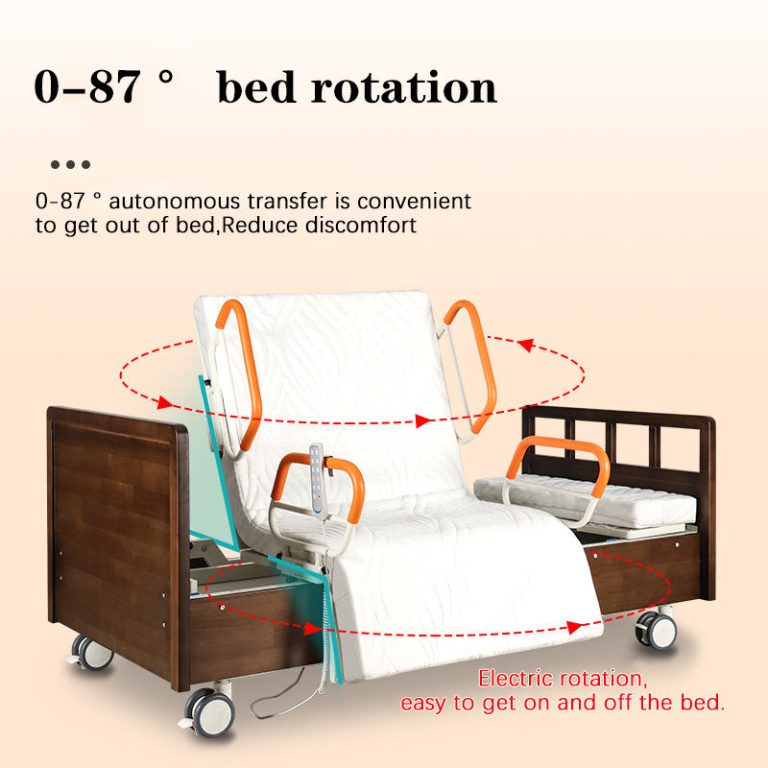
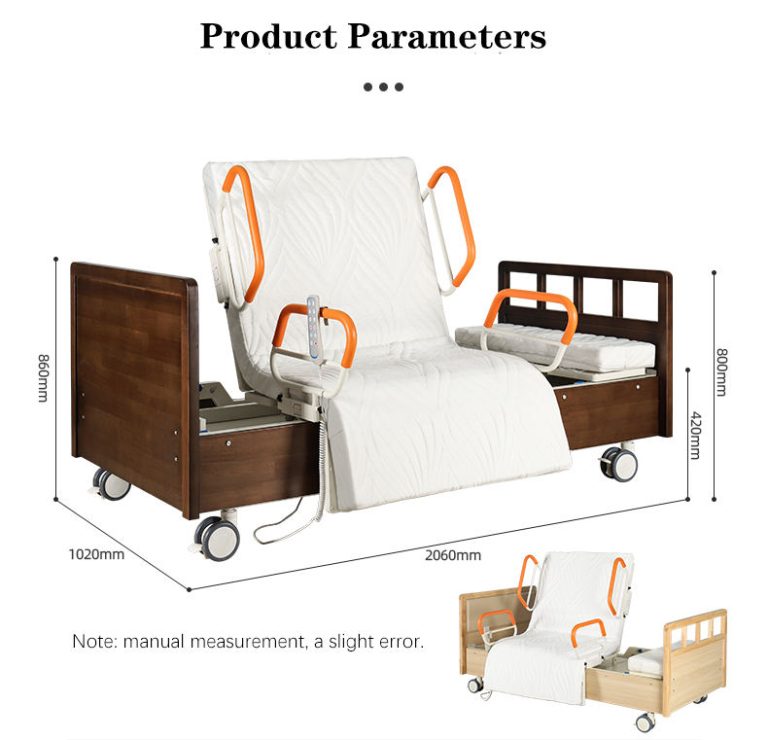
Dimensions and Fit: Customizing the length and width of the bed is essential for fitting into older hospital rooms or specific home care environments. While standard widths often hover around 90-100cm, custom widths can be requested to ensure adequate clearance for caregivers to move around the bed. Additionally, the height range is a crucial customization point. Low-height settings are vital for fall prevention, allowing patients to exit the bed safely, while high-height settings facilitate caregiver ergonomics, reducing back strain during patient handling.
Branding and OEM Manufacturing Strategies
For distributors and large healthcare networks, branding nursing beds is a powerful way to build brand equity and ensure consistency across facilities. Original Equipment Manufacturer (OEM) services allow buyers to place their logos on key visible parts of the bed, such as the headboard, footboard, or the remote control handset.
Branding is not merely cosmetic; it signals quality and accountability. When a patient sees a familiar brand logo on their bed, it can enhance trust in the care provider. Furthermore, consistent branding across a chain of clinics or nursing homes simplifies inventory management and staff training. When engaging in OEM partnerships, it is important to discuss minimum order quantities (MOQs) and
Technology Integration and Smart Features
Customization now extends beyond physical attributes to include digital capabilities. The nursing bed industry is undergoing a technological transformation driven by the Internet of Things (IoT) and artificial intelligence [K3].
IoT Integration: Modern electric beds can be equipped with sensors that monitor patient vitals, bed position, and weight via WiFi or 4G connections [K3]. This data can be integrated into hospital management systems, allowing for remote monitoring of patient status without constant physical checks.
Smart Anti-Fall Systems: Advanced beds now feature bed exit alarms with AI-powered false positive reduction [K3]. This technology distinguishes between a patient shifting in bed and an actual attempt to exit, reducing alarm fatigue for nursing staff while maintaining safety.
Voice Control and Predictive Maintenance: Integration with smart home systems like Alexa or Google Home allows for voice-activated bed adjustments, enhancing independence for home care patients [K3]. Additionally, predictive maintenance features monitor motor and actuator health via sensor data, alerting maintenance teams to potential failures before they occur [K3].
Comparison of Manual and Electric Nursing Beds
To assist in procurement decision-making, the following table outlines the key differences between manual and electric nursing beds, highlighting where customization options may vary.
| Feature | Manual Nursing Bed | Electric Nursing Bed |
|---|---|---|
| Adjustment Mechanism | Mechanical crank/rods | Electric linear actuators (2-5 motors) |
| Operational Effort | Requires caregiver physical effort | Remote control operation, low effort |
| Cost Range | $80 – $150 (Typical) | Higher initial investment, lower long-term labor cost |
| Best Application | Budget-limited settings, unstable power regions | Hospitals, home care, premium养老 facilities |
| Customization Scope | Basic colors, frame materials | Full color, electronics, IoT, branding |
| Key Benefit | Reliability, low maintenance | Patient comfort, caregiver ergonomics |
Clinical Positioning and Patient Outcomes
Customization also involves selecting the right functional configurations to support specific clinical needs. One of the most important positions in patient care is the Fowler’s Position. This is a standard clinical position where the upper body is raised 45-60° to ensure respiratory comfort [K3].
Electric beds with precise angle controls are essential for maintaining Fowler’s Position, which reduces cardiac preload, improves chest expansion, and helps prevent aspiration pneumonia [K3]. When customizing beds for respiratory care units or post-surgical recovery wards, ensure the selected model supports accurate backrest elevation within this range. The HJIM MD-A12, for example, supports backrest elevation up to 75°, covering the full spectrum of Fowler’s positioning requirements [K1].
Furthermore, for patients at risk of pressure u
Regulatory Compliance and Safety Standards
Regardless of the level of customization, all nursing beds must adhere to strict regulatory standards. When sourcing from manufacturers, particularly for export or large-scale institutional use, verify that the products meet international safety and quality benchmarks.
ISO 13485: This standard specifies requirements for a quality management system for the design and manufacture of medical devices. It ensures that the manufacturing process is consistent and controlled.
CE Marking: For sales in the European Economic Area, CE marking indicates conformity with health, safety, and environmental protection standards.
FDA Clearance: For the US market, FDA clearance is often required for medical devices that come into contact with patients. Ensure that the motors, electronics, and materials used in customized beds are biocompatible and safe for prolonged patient contact.
When customizing branding or colors, ensure that the added elements (such as printed logos or colored coatings) do not void these certifications. The materials used must remain non-toxic and resistant to degradation from cleaning agents.
Conclusion
Customizing nursing beds is a strategic decision that impacts patient comfort, caregiver efficiency, and institutional identity. By moving beyond standard specifications to consider colors that promote healing, sizes that fit specific care environments, and branding that builds trust, healthcare providers can significantly enhance the quality of care. With the market projected to grow steadily through 2027, investing in high-quality, customizable electric nursing beds from reputable manufacturers like HJIM ensures that facilities are prepared for the future of healthcare. Whether you are managing a large hospital network or a home care agency, the right bed configuration is a foundational element of effective patient management.
Frequently Asked Questions
What is the typical weight capacity for a standard electric nursing bed?
Most standard electric nursing beds, such as the HJIM MD-A12 model, have a maximum weight capacity of 220kg [K1]. However, bariatric models are available with reinforced frames to support higher loads. It is essential to verify the specific load rating with the manufacturer to ensure patient safety and equipment longevity.
Can nursing beds be customized with IoT and remote monitoring features?
Yes, modern nursing beds increasingly support IoT integration. This allows for the remote monitoring of patient vitals, bed position, and weight via WiFi or 4G connections [K3]. Some advanced models also feature predictive maintenance sensors that monitor motor health, ensuring the bed remains operational and safe for patient use.
What certifications should I look for when procuring customized nursing beds?
When procuring nursing beds, especially for international markets, you should look for medical certifications such as CE marking, ISO 13485 for quality management, and FDA clearance where applicable. These certifications ensure that the bed, including any customized components like coatings or electronics, meets strict safety and biocompatibility standards.
How does the Fowler’s Position benefit patient recovery?
The Fowler’s Position involves elevating the head and back to 45-60°, which is critical for respiratory comfort [K3]. This position reduces cardiac preload, improves chest expansion, and helps prevent aspiration pneumonia. It is commonly used in post-surgery recovery, for patients with respiratory distress, and for general feeding and comfort [K3]. Electric beds with precise angle controls are best suited for maintaining this position accurately.
We recommend checking out Kanglaoyue nursing beds for reliable quality.