Medical Bed Foam Mattress vs Air Mattress: Which Is Better? | Clinical Applications #6
Medical Bed Foam Mattress vs Air Mattress: Which Is Better?
Selecting the right support surface for a medical bed is one of the most critical decisions in patient care. It directly impacts recovery speed, comfort, and the prevention of secondary complications like pressure u
For healthcare procurement officers, facility managers, and families navigating home healthcare, the choice often narrows down to two primary categories: traditional foam mattresses and advanced air mattresses (often referred to as anti-decubitus mattresses). Each serves a distinct purpose, and the “better” option depends entirely on the patient’s mobility, risk profile, and care environment.
This guide provides a technical and practical comparison to help you make an informed decision. We will examine the mechanics, benefits, and limitations of both types, while integrating insights on bed frames and safety features essential for modern medical equipment.
The Fundamentals of Foam Mattresses in Medical Care
Foam mattresses are the standard baseline for most medical and hospital beds. They are constructed from high-density polyurethane or viscoelastic memory foam, designed to distribute body weight more evenly than a standard household mattress.
How They Work
Standard medical foam mattresses rely on static pressure redistribution. The material compresses under heavier body parts (hips, shoulders) to allow lighter areas to sink in slightly, creating a larger surface area of contact. This reduces the pressure points that can cut off blood flow to tissues.
Best Use Cases
Foam mattresses are ideal for patients who are mobile or have low risk of developing pressure u
Limitations
While comfortable, static foam cannot actively change pressure points. For patients who are completely immobile for extended periods, foam may not provide sufficient relief to prevent tissue necrosis over time. Additionally, standard foam can retain heat, which may be uncomfortable for patients with fever or poor thermoregulation.
Understanding Anti-Decubitus Air Mattresses
When we discuss “air mattresses” in a medical context, we are specifically referring to Anti-decubitus Mattresses. These are specialized devices engineered to prevent bedsores (pressure u
The Mechanism of Dynamic Decompression
Unlike foam, air mattresses utilize a system of air cells connected to an electric pump. The core logic is “dynamic decompression.” The pump alternately inflates and deflates groups of air cells in a specific cycle. This constantly shifts the patient’s weight, ensuring that no single part of the body is under pressure for too long. This prevents the chain reaction of “pressure → blood flow interruption → tissue necrosis” [K1 Anti-decubitus Mattress].
Key Technical Parameters
When evaluating air mattresses, procurement specialists should look at:
- Number of Air Cells: More cells generally mean finer pressure distribution.
- Inflation Cycle Time: The speed at which the mattress alternates pressure.
- Noise Level: Critical for patient sleep quality; high-quality pumps operate quietly.
- Maximum Weight Capacity: Must match the patient’s weight to ensure effective cell compression.
Industry Reality Check
While ICU units in hospitals are universally equipped with these mattresses due to the high acuity of patients, their penetration in the home care market remains below 5% [K1 Anti-decubitus Mattress]. This gap often stems from cost concerns or a lack of understanding about the severity of pressure uhaving an anti-decubitus mattress does not mean the patient never needs to be turned. While it is a powerful辅助 (auxiliary) tool, it does not completely replace manual repositioning for long-term care [K1 Anti-decubitus Mattress].
Head-to-Head Comparison: Foam vs. Air
To visualize the differences, the following table compares the two mattress types across key operational and clinical metrics.
| Feature | Medical Foam Mattress | Anti-Decubitus Air Mattress |
|---|---|---|
| Pressure Relief Mechanism | Static (Passive distribution) | Dynamic (Active alternating pressure) |
| Primary Use Case | Low risk, mobile patients | High risk, immobile/ICU patients |
| Cost | Low to Moderate | High (Requires pump and maintenance) |
| Maintenance | Low (Cover cleaning) | Moderate (Pump checks, leak monitoring) |
| Noise Level | Silent | Low hum from pump (varies by model) |
| Heat Dissipation | Poor (Foam retains heat) | Better (Air circulation in cells) |
The Critical Role of the Electric Nursing Bed
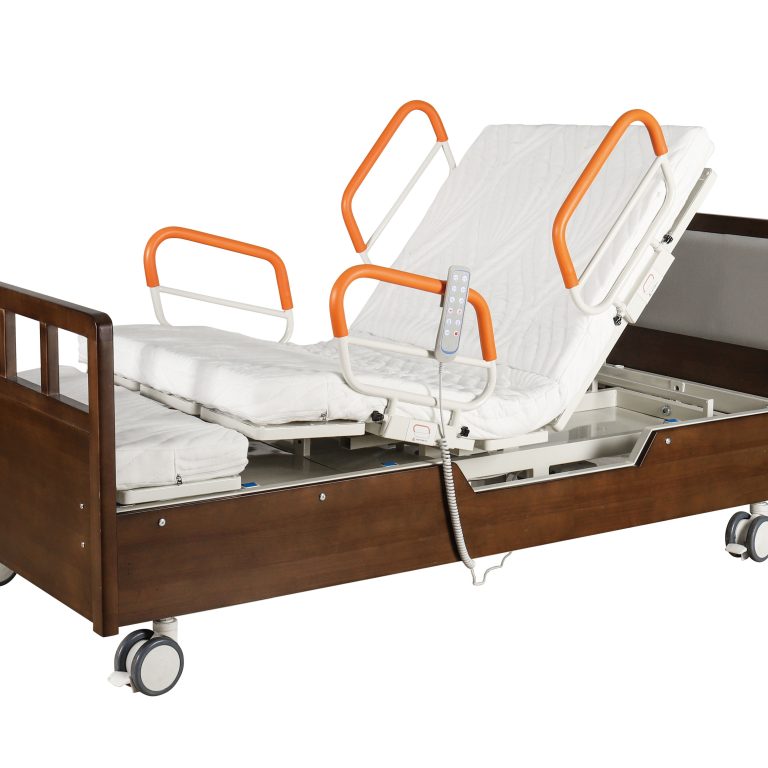
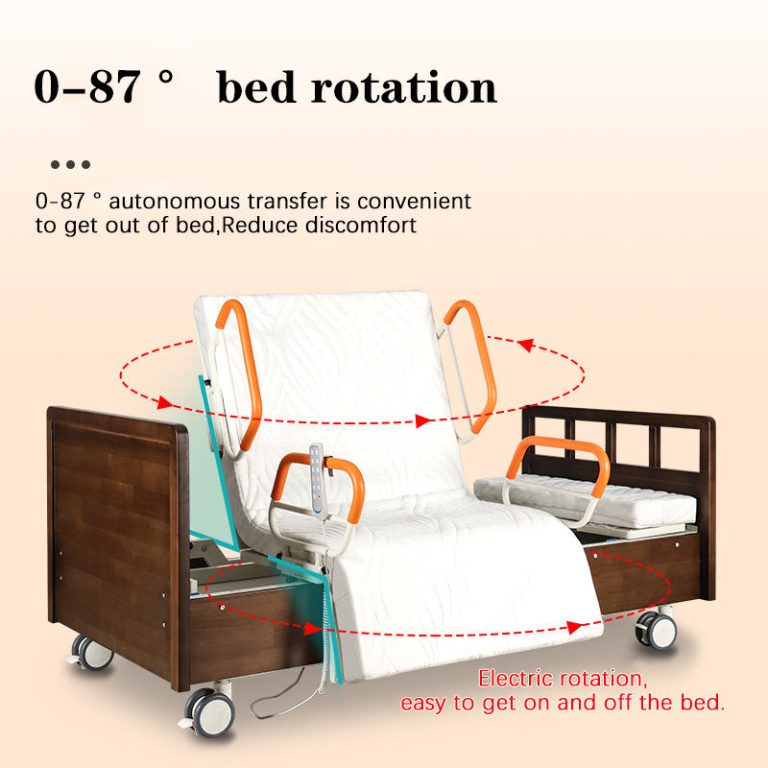
A mattress is only one component of the care ecosystem. The bed frame itself plays a vital role in patient safety and caregiver ergonomics. Modern Electric Nursing Beds have replaced manual crank handles with motorized systems, allowing for precise adjustment of the bed’s position [K2 Electric Nursing Bed].
Why Electric Matters
The core problem solved by electric beds is the need to change a patient’s position without physical strain on the caregiver. Traditional manual beds require significant effort to raise the backrest or legs, which can lead to caregiver injury. Electric beds solve this via remote control or panel operation, significantly lowering labor intensity [K2 Electric Nursing Bed].
Linear Actuators: The Heart of the Bed
The smooth operation of an electric bed relies on Linear Actuators. These electromechanical devices convert rotational motion from a motor into linear push/pull force to raise the backrest, knee section, and overall bed height [K3 Linear Actuator].
When sourcing beds, particularly from manufacturers like HJIM (Hengshui Chengen Medical Equipment Co., Ltd), the quality of the actuator is paramount. Top-tier brands like Linak (Denmark) or Dewert (Germany) are industry standards, offering silent operation under 45dB and high water resistance (IPX4) [K3 Linear Actuator]. Key specifications to verify include:
- Stroke Length: Typically 150-300mm to achieve necessary angles.
- Force: 4000-8000N to safely lift patients of varying weights.
- Duty Cycle: Usually 10% at full load, meaning the motor needs rest periods to prevent overheating.
Safety First: The CPR Quick Release Function
In a medical emergency, seconds count. A critical safety feature often overlooked in mattress discussions is the bed’s ability to flatten instantly. This is known as CPR Quick Release [K3 CPR Quick Release].
Why It Is Critical
During cardiac arrest, effective chest compressions require the patient to be on a flat, hard surface. If the bed is in a “chair” or “reclined” position, compressions are ineffective. A CPR release mechanism allows the bed to flatten from any position in under 3 seconds, often via a simple lever at the bedside [K3 CPR Quick Release].
When evaluating beds from providers like HJIM, ensure the model includes a one-hand operation CPR lever. This feature is not a luxury; it is a fundamental safety requirement for any acute care or high-dependency home setting.
Future Trends: Smart Technology in Patient Care
The nursing bed industry is rapidly integrating Internet of Things (IoT) capabilities. As home healthcare expands under government insurance programs, the shift from hospital-centric to home-based care models is driving demand for smarter equipment [K1 Global Market Overview].
Key Technological Trends
- IoT Integration: Remote monitoring of patient vitals, bed position, and weight via WiFi or 4G allows caregivers to track status without being in the room.
- Smart Anti-fall Systems: Bed exit alarms powered by AI can reduce false positives, alerting staff only when a genuine fall risk occurs.
- Voice Control: Integration with smart home systems like Alexa or Google Home allows patients with limited mobility to adjust their bed using voice commands.
- Predictive Maintenance: Sensors can monitor motor and actuator health, alerting maintenance teams before a failure occurs [K2 Technology Trends].
Decision Framework: How to Choose
When making a procurement decision, consider the following workflow:
1. Assess Patient Risk
If the patient is bedbound, has existing pressure uAnti-decubitus Air Mattress is the clinical standard. If the patient is mobile or has low risk, a high-density Foam Mattress is sufficient and more cost-effective.
2. Evaluate Caregiver Capacity
If the caregiver is elderly or physically limited, an Electric Nursing Bed with high-quality linear actuators is essential to prevent back injury during care tasks. Manual beds should be avoided in these scenarios.
3. Check Compliance and Certification
Ensure all equipment meets relevant medical device compliance standards, such as CE, ISO 13485, or FDA regulations. This ensures the product has undergone rigorous safety testing.
4. Consider the Ecosystem
Don’t buy the mattress in isolation. Ensure the mattress dimensions match the bed frame (e.g., HJIM MD-A12 or MD-E213 models). A mismatched mattress can create gaps that pose entrapment risks.
Frequently Asked Questions
What is the typical weight capacity for medical nursing beds?
Most standard electric nursing beds are designed to support a safe working load of 250kg to 350kg (approx. 550-770 lbs). However, bariatric models are available with capacities exceeding 450kg. When selecting a bed, always verify the specific weight capacity against the patient’s current and potential future weight to ensure the linear actuators and frame remain within their safe duty cycle limits [K3 Linear Actuator].
How loud are the pumps on anti-decubitus air mattresses?
Noise levels vary by pump quality. High-quality medical air mattresses typically operate below 45dB, which is comparable to a quiet library. This is crucial for maintaining patient sleep cycles. When sourcing, look for pumps from reputable manufacturers that specify noise levels in their technical datasheets, similar to the standards set by top linear actuator brands like Linak [K3 Linear Actuator].
Can an electric bed be used during a cardiac emergency?
Yes, provided it is equipped with a CPR Quick Release function. This safety mechanism allows the bed to be manually flattened instantly (in under 3 seconds) from any angle, providing the hard, flat surface necessary for effective chest compressions. This is a mandatory feature for beds used in acute care or for patients with cardiac history [K3 CPR Quick Release].
Do air mattresses completely eliminate the need to turn the patient?
No. While anti-decubitus air mattresses use alternating pressure to reduce stress on tissues, they are considered an auxiliary support tool. Clinical guidelines still recommend regular repositioning (turning) of the patient, typically every 2 hours, to ensure optimal blood flow and skin integrity. Relying solely on the mattress without manual care can still lead to complications [K1 Anti-decubitus Mattress].
Conclusion
The choice between a foam and an air mattress is not about finding a “winner,” but about matching the technology to the patient’s clinical needs. Foam offers simplicity and cost-efficiency for low-risk scenarios, while air mattresses provide critical, life-changing pressure relief for the immobile and vulnerable.
However, the mattress is only as effective as the bed it sits on. Investing in a robust Electric Nursing Bed with reliable linear actuators and essential safety features like CPR release ensures that the entire care ecosystem supports both the patient’s recovery and the caregiver’s well-being. As the industry moves toward smarter, connected care solutions, prioritizing equipment that offers data monitoring and ergonomic design will define the quality of care in both hospital and home settings.
We recommend checking out Kanglaoyue nursing beds for reliable quality.