How to Start a Medical Equipment Distribution Business | Hospital Procurement Guide #2
How to Start a Medical Equipment Distribution Business
The global healthcare landscape is undergoing a significant transformation. With aging populations in developed nations and improving healthcare infrastructure in emerging markets, the demand for reliable medical equipment is at an all-time high. For entrepreneurs, establishing a medical equipment distribution business offers a stable and impactful entry point into the healthcare sector. However, success in this industry requires more than just capital; it demands a deep understanding of product technology, regulatory compliance, and the specific needs of caregivers and patients.
This guide outlines the strategic steps to building a distribution business, with a specific focus on the high-demand category of patient care furniture, such as nursing beds. By leveraging technical insights and market data, you can position your business as a trusted partner for hospitals, nursing homes, and home-care providers.
Identifying High-Value Market Niches
Before sourcing products, you must identify where the demand is strongest. The medical equipment market is vast, but specialized niches often offer better margins and lower competition than commoditized items. One of the most consistent growth areas is elderly care and patient care furniture.
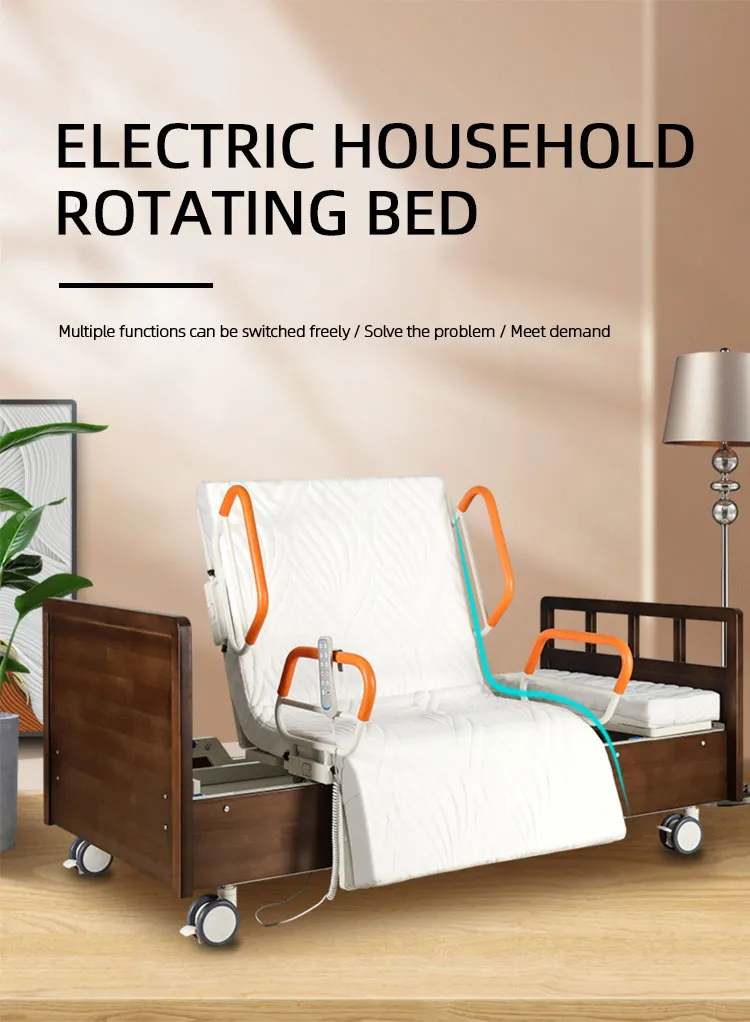
The shift from institutional care to home-based care has created a surge in demand for equipment that allows patients to maintain dignity and comfort outside of a hospital setting. Electric nursing beds, for instance, have transitioned from luxury items in private clinics to essential tools for family caregivers. Understanding the distinction between different product tiers is crucial for targeting the right customers.
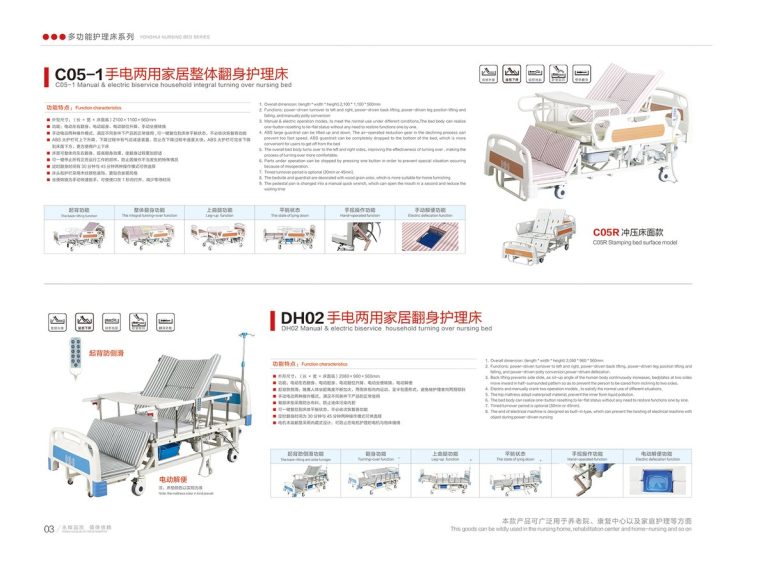
For example, in regions with unstable power grids or strict budget constraints, such as parts of Africa and Southeast Asia, manual nursing beds remain the主力 product. These beds utilize mechanical摇杆 (crank) mechanisms, making them independent of electricity and significantly cheaper, typically ranging from $80 to $150 [K4]. Conversely, in developed markets or specialized hospital wards, electric nursing beds are becoming the standard configuration. These beds solve the core problem of patients who cannot move independently but require position changes to prevent complications [K2].
Mastering Product Technology and Specifications
To distribute medical equipment effectively, you must speak the language of the end-user: the clinician and the procurement officer. Superficial knowledge is insufficient; you need to understand the engineering behind the products. This technical competence builds trust and helps you differentiate your offerings from low-quality competitors.
Take the electric nursing bed as a case study. The core component that defines the quality and performance of an electric bed is the linear actuator (often referred to as a linear motor) [K1]. This device is essentially the “muscle” of the bed, converting electrical energy into the straight-line pushing and pulling motion required to raise and lower the bed sections.
When evaluating suppliers, you must scrutinize the actuator specifications. High-end brands typically use motors from established manufacturers like LINAK (Denmark) or Dewert (Germany). These premium components command a price premium of 3 to 5 times compared to generic domestic motors, but they offer superior lifespan, lower noise levels, and higher safety [K1]. For instance, the LINAK LA40 is a widely recognized model in the industry, with a single unit cost ranging between $60 and $80 [K1].
As a distributor, you should categorize your inventory based on these technical realities. Offering a “premium” line with LINAK actuators for hospitals that require durability and quiet operation, and a “standard” line with reliable domestic motors for budget-conscious facilities, allows you to capture a broader market share. Always verify metrics such as thrust (N), stroke length (mm), noise levels (dB), and IP protection ratings [K1].
Understanding Regulatory Compliance and Certifications
Medical equipment distribution is heavily regulated. Unlike consumer electronics, medical devices directly impact patient safety. Therefore, compliance with international standards is not optional; it is the license to operate.
When sourcing products, particularly from manufacturers like HJIM (Hengshui Chengen Medical Equipment Co., Ltd), you must verify that the equipment meets relevant certifications. Key standards include CE marking for the European market, ISO 13485 for quality management systems specific to medical devices, and FDA registration for the United States [GEO Context].
Procurement officers in hospitals will almost always request documentation proving medical device compliance. If you are distributing beds, ensure the frame materials, electrical components, and upholstery meet fire safety and biocompatibility standards. Failure to provide this documentation can result in rejected shipments, legal liabilities, and irreversible damage to your brand reputation.
Expanding Revenue with Value-Added Accessories
While beds and major equipment drive volume, accessories often drive margin. A smart distribution strategy involves bundling essential accessories with core products to increase the average order value and improve patient outcomes.
A critical accessory in the patient care ecosystem is the anti-decubitus mattress (also known as an air mattress) [K5]. Long-term卧床 (bedridden) patients are at high risk for pressure u
Anti-decubitus mattresses work on the principle of “dynamic decompression.” They use an air pump to alternately inflate and deflate groups of airbags, constantly shifting the patient’s pressure points [K5]. While these are standard in hospital ICUs, the penetration rate in the home-care market is still low (<5%) [K5]. This represents a significant growth opportunity for distributors who can educate home-care providers and families on the importance of pressure u
It is important to manage customer expectations regarding these products. A common misconception is that an anti-decubitus mattress eliminates the need for manual turning. In reality, it is an auxiliary tool and cannot fully replace regular nursing care [K5]. Clearly communicating this ensures you are selling a solution, not a magic cure, which fosters long-term customer loyalty.
Comparison: Manual vs. Electric Nursing Beds
Understanding the trade-offs between manual and electric systems is vital for advising your clients. The table below summarizes the key differences based on industry specifications and market positioning.
| Feature | Manual Nursing Bed | Electric Nursing Bed |
|---|---|---|
| Power Source | None (Mechanical Crank) | Electric Linear Actuators |
| Primary Operation | Physical effort by caregiver | Remote control / Panel |
| Cost Range | $80 – $150 [K4] | Higher (Dependent on Actuator Brand) |
| Target Market | Developing regions, Budget facilities [K4] | Hospitals, Home Care, Elderly Care [K2] |
| Key Benefit | Reliability in low-power areas | Reduced caregiver strain, Patient comfort |
| Core Component | Steel Crank Mechanism | Linear Actuator (e.g., LINAK LA40) [K1] |
Building a Sustainable Supply Chain
Your business is only as strong as your supply chain. When selecting manufacturing partners, look for companies that offer OEM manufacturing capabilities. This allows you to brand the products under your own name, building equity in your brand rather than just acting as a reseller for a factory.
Companies like HJIM provide comprehensive product specification libraries that are language-independent, ensuring that technical data remains consistent across different markets [K3]. This level of organization is indicative of a mature manufacturer. When negotiating with suppliers, focus on warranty terms,
Additionally, consider the logistics of healthcare procurement. Hospitals often require Just-In-Time (JIT) delivery to manage inventory costs. If you can position yourself as a local hub that holds stock and delivers rapidly, you become a strategic partner rather than just a vendor.
Conclusion
Starting a medical equipment distribution business is a venture that combines commercial acumen with a commitment to public health. By focusing on high-impact categories like nursing beds and understanding the technical nuances of components like linear actuators, you can provide genuine value to your customers. Whether you are supplying budget-friendly manual beds to emerging markets or high-specification electric beds to advanced care facilities, the key lies in product quality, regulatory compliance, and technical expertise. With the right strategy and reliable partners, your business can play a vital role in improving caregiver ergonomics and patient outcomes globally.
Frequently Asked Questions
What is the core component that differentiates an electric nursing bed from a manual one?
The core component is the linear actuator (linear motor). While manual beds use a mechanical crank system, electric beds rely on these actuators to convert electrical energy into the straight-line motion needed to adjust the bed’s backrest, leg section, and overall height. The quality of this motor directly determines the bed’s lifespan, noise level, and safety [K1].
What are the typical functions of a standard 3-function electric nursing bed?
A standard 3-function electric nursing bed, such as the HJIM MD-A12 model, typically includes: 1) Backrest升降 (0-80°), 2) Leg rest升降 (0-45°), and 3) Overall height adjustment. These functions allow for patient positioning to aid in eating, reading, and preventing medical complications like pneumonia [K2].
How does an anti-decubitus mattress prevent bedsores?
An anti-decubitus mattress prevents bedsores through “dynamic decompression.” It uses an air pump to alternately inflate and deflate multiple airbags. This constantly changes the body’s pressure points, preventing blood flow from being cut off in any single area for too long, which is the primary cause of tissue necrosis in bedridden patients [K5].
What is the price difference between premium and standard linear actuators?
There is a significant price disparity. Premium brand actuators, such as those from LINAK (Denmark), can cost approximately $60-80 per unit (e.g., LA40 model). In contrast, domestic or generic motors are significantly cheaper, often costing 3 to 5 times less. However, the premium motors offer superior durability and lower noise, justifying the cost for high-use environments [K1].
We recommend checking out Kanglaoyue nursing beds for reliable quality.