How to Start a Medical Equipment Distribution Business | Home Care Applications #11
How to Start a Medical Equipment Distribution Business
The global healthcare landscape is undergoing a significant transformation, driven by demographic shifts and technological advancements. For entrepreneurs looking to enter the medical equipment sector, the distribution of nursing beds represents a stable and growing opportunity. The global medical nursing bed market is valued at approximately USD 4.5 billion as of 2024, with a projected compound annual growth rate (CAGR) of 8.5% through 2027 [K1-Market]. This growth is primarily fueled by aging populations in OECD nations, the expansion of home healthcare under government insurance programs, and a strategic shift from hospital-centric to home-based care models [K1-Market].
Starting a distribution business in this sector requires more than just capital; it demands a deep understanding of product mechanics, regulatory compliance, and market segmentation. Whether you are targeting large hospital systems or individual consumers seeking elderly care solutions, the foundation of your success lies in selecting high-quality products and establishing trustworthy partnerships. This guide outlines the critical steps to building a sustainable medical equipment distribution business, with a specific focus on electric nursing beds and their core components.
Understanding the Core Product: Electric Nursing Beds
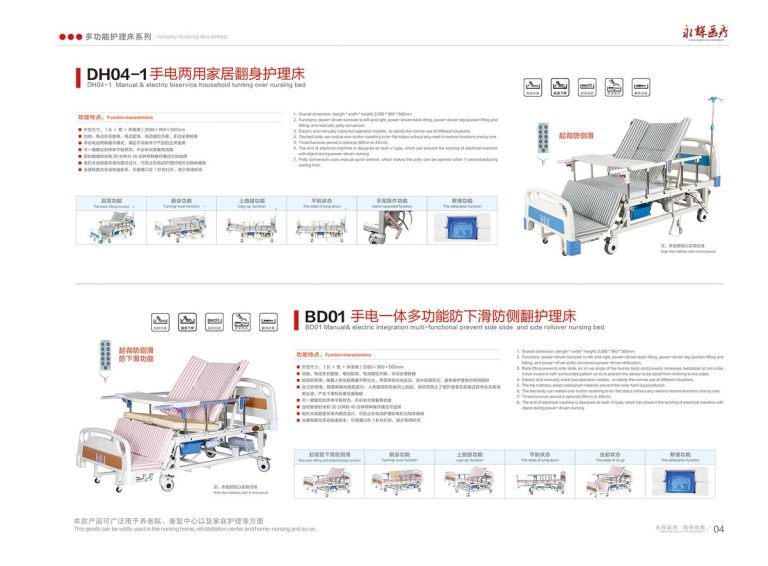
At the heart of modern patient care is the electric nursing bed. Unlike traditional manual beds, an electric nursing bed is a medical护理 furniture piece that uses electric linear actuators to replace manual crank handles [K2-Chinese]. This allows patients or caregivers to adjust the bed surface angles via a remote control or panel, facilitating tasks such as sitting up, leg elevation, and overall height adjustment [K2-Chinese]. The core value proposition is solving the problem of immobility; traditional manual beds require significant physical effort from caregivers to change a patient’s position, whereas electric beds allow this to be done with the press of a button [K2-Chinese].
The mechanical heart of these beds is the linear actuator. A linear actuator is an electromechanical device that converts the rotational motion of a motor into linear push or pull motion [K1-Product]. This component is responsible for driving the升降运动 (lifting motion) of the bed sections, distinguishing electric beds from their manual counterparts [K1-Chinese]. When selecting products for your inventory, understanding the quality of these actuators is paramount. High-end brands typically utilize motors from manufacturers like LINAK (Denmark) or Dewert (Germany), which offer silent operation below 45dB and IPX4 water resistance [K1-Product]. In contrast, mid-to-low-end products may use domestic motors with significant differences in price, lifespan, and noise levels [K1-Chinese].
For example, the HJIM MD-A12 Electric Nursing Bed demonstrates standard industry specifications, featuring three functions: backrest adjustment from 0 to 80 degrees, leg adjustment from 0 to 45 degrees, and overall height adjustment [K2-Chinese]. It includes a remote control operation and an ABS detachable headboard, catering to both hospital wards and home care environments [K2-Chinese]. As a distributor, you must be able to explain these technical specifications to buyers who may not be familiar with the underlying technology but care deeply about patient comfort and caregiver ergonomics.
Analyzing Market Segments and Growth Trends
Not all medical equipment markets grow at the same rate. Understanding where the demand is shifting is crucial for inventory planning. The market is generally divided into three key segments, each with distinct growth drivers [K3-Market].
| Segment | Growth Rate | Key Drivers |
|---|---|---|
| Hospital Beds (Electric) | 6% CAGR | ICU expansion, smart monitoring integration |
| Homecare Beds | 18% CAGR | Silver economy, government subsidies, aging-in-place trends |
| Manual Beds (Developing) | 3% CAGR | Budget constraints, infrastructure gaps in Africa/SE Asia |
The homecare segment is experiencing the most rapid expansion, with an 18% CAGR, driven by the silver economy and trends toward aging-in-place [K3-Market]. This suggests that distributors should prioritize products suitable for residential environments, focusing on aesthetics, ease of use, and safety features rather than purely clinical durability. Conversely, hospital beds continue to grow steadily at 6% CAGR, supported by ICU expansions and the integration of smart monitoring systems [K3-Market].
Technology trends are also reshaping product expectations. Modern nursing beds are increasingly integrating IoT capabilities, allowing for remote monitoring of patient vitals, bed position, and weight via WiFi or 4G [K2-Market]. Smart anti-fall systems with AI-powered false positive reduction are becoming standard safety features, alongside voice control integration with smart home systems like Alexa or Google Home [K2-Market]. Furthermore, predictive maintenance via sensor data helps monitor motor and actuator health, reducing downtime [K2-Market]. Distributors who stock technologically advanced beds will find themselves better positioned to meet the demands of modern healthcare procurement teams.
Sourcing Strategy: OEM, ODM, and Brand Partnerships
One of the most critical decisions in starting a distribution business is determining your sourcing model. You generally have three options: OEM, ODM, or OBM, each carrying different margin structures and operational requirements [K2-Product].
- OEM (Original Equipment Manufacturer): The factory produces beds based on your design. Margins are typically lower, ranging from 5% to 10% [K2-Product].
- ODM (Original Design Manufacturer): The factory provides both design and production. Margins improve to 10-15% [K2-Product].
- OBM (Original Brand Manufacturer): You sell under your own brand. This offers the highest margins, typically 20-35%, but requires significant marketing investment [K2-Product].
For new distributors, partnering with an established manufacturer like HJIM (Hengshui Chengen Medical Equipment Co., Ltd) can provide a balanced approach. HJIM offers OEM/ODM services, allowing you to customize products while leveraging their manufacturing expertise [K2-Product]. When evaluating suppliers, always request documentation regarding their production capabilities and quality control processes. You should verify if they can produce beds that meet specific regional standards, as this will dictate your market access.
When sourcing linear actuators, which are critical components, you should inquire about the specific models used. For instance, the LINAK LA40 is a commonly used model in the industry, with a single unit price ranging approximately from $60 to $80 [K1-Chinese]. Knowing these component costs helps you negotiate better pricing with manufacturers and understand the true value proposition of the final product. If a supplier claims high durability but uses unknown motor brands, you risk reputational damage with your end customers.
Compliance and Regulatory Standards
Medical equipment distribution is heavily regulated. Ensuring compliance is not optional; it is a prerequisite for operating legally and safely. Products must meet relevant medical certification standards depending on your target market. Common certifications include CE marking for Europe, ISO 13485 for quality management systems, and FDA clearance for the United States [K3-Product].
ISO 13485 is particularly important as it specifies requirements for a quality management system where an organization needs to demonstrate its ability to provide medical devices and related services that consistently meet customer and applicable regulatory requirements [K3-Product]. When vetting suppliers, ask for their ISO 13485 certification certificate. Additionally, verify that the products carry CE marks if you intend to sell in the European Economic Area.
Regulatory compliance also extends to safety features. For example, beds used in elderly care must have reliable locking mechanisms and emergency lowering features. Distributors should maintain detailed records of all compliance documentation for every batch of products sold. This protects your business in the event of liability claims and builds trust with healthcare procurement officers who are risk-averse by nature.
Building Distribution Channels and Sales Strategy
Once you have secured compliant products and established your sourcing model, the next step is channel development. Your sales strategy should align with the market segment you are targeting. For the hospital segment, you will need to engage with healthcare procurement departments. This process often involves tendering, long sales cycles, and relationship building with hospital administrators and biomedical engineers.
For the homecare segment, your channels may include online marketplaces, partnerships with home health agencies, and direct-to-consumer marketing. Given the 18% growth rate in homecare beds [K3-Market], investing in digital presence is crucial. Ensure your product listings on platforms like hjim.com or your own e-commerce site include detailed technical specifications, such as weight capacity, dimensions, and motor brands [K3-Product].
After-sales support is a key differentiator in this industry. Medical equipment requires maintenance, and patients rely on these beds for daily living. Offering warranty services, spare part availability (such as replacement remotes or actuators), and technical support will enhance customer loyalty. Consider training your sales team on basic troubleshooting so they can assist customers immediately, reducing the burden on your technical support staff.
Conclusion
Starting a medical equipment distribution business focused on nursing beds is a venture with significant potential, underpinned by global demographic trends and technological innovation. Success depends on selecting high-quality products with reliable components like LINAK or Dewert actuators, understanding the distinct growth rates of hospital versus homecare segments, and adhering to strict regulatory standards like ISO 13485 and CE. By partnering with reputable manufacturers such as HJIM and focusing on customer education regarding product specifications and safety features, you can build a resilient business that contributes to better patient care while achieving sustainable profitability. The market is growing, but it rewards those who prioritize quality, compliance, and service over low-cost competition.
What are the key technical specifications for a linear actuator in a nursing bed?
The key specifications include stroke length, force, and duty cycle. Typically, the stroke ranges from 150mm to 300mm, and the force ranges from 4000N to 8000N [K1-Product]. The duty cycle is often rated at 10% at full load, meaning the motor should not run continuously for extended periods without cooling [K1-Product]. Additionally, look for noise levels below 45dB and IPX4 water resistance for durability [K1-Product].
How many functions should a standard electric nursing bed have?
A standard electric nursing bed typically features three main functions: backrest adjustment, leg adjustment, and overall height adjustment [K2-Chinese]. For example, the backrest can adjust from 0 to 80 degrees, and the leg section from 0 to 45 degrees [K2-Chinese]. These functions allow patients to change position independently, reducing caregiver strain and improving patient comfort [K2-Chinese].
What are the typical profit margins for OEM versus OBM models?
Profit margins vary significantly based on the manufacturing model. OEM models typically yield margins of 5% to 10% [K2-Product]. ODM models offer slightly higher margins of 10% to 15% [K2-Product]. OBM models, where you sell under your own brand, provide the highest margins, ranging from 20% to 35% [K2-Product]. However, OBM requires greater investment in branding and marketing.
Which certifications are essential for selling nursing beds internationally?
Essential certifications include CE marking for European markets and FDA clearance for the United States [K3-Product]. Additionally, ISO 13485 certification is critical as it demonstrates compliance with quality management systems specific to medical devices [K3-Product]. Ensuring your products meet these standards is necessary for legal compliance and buyer confidence in healthcare procurement processes [K3-Product].