How to Ship Nursing Beds Internationally: Packing and Logistics Guide | Clinical Applications #4
How to Ship Nursing Beds Internationally: Packing and Logistics Guide
Understanding Nursing Bed Categories and Their
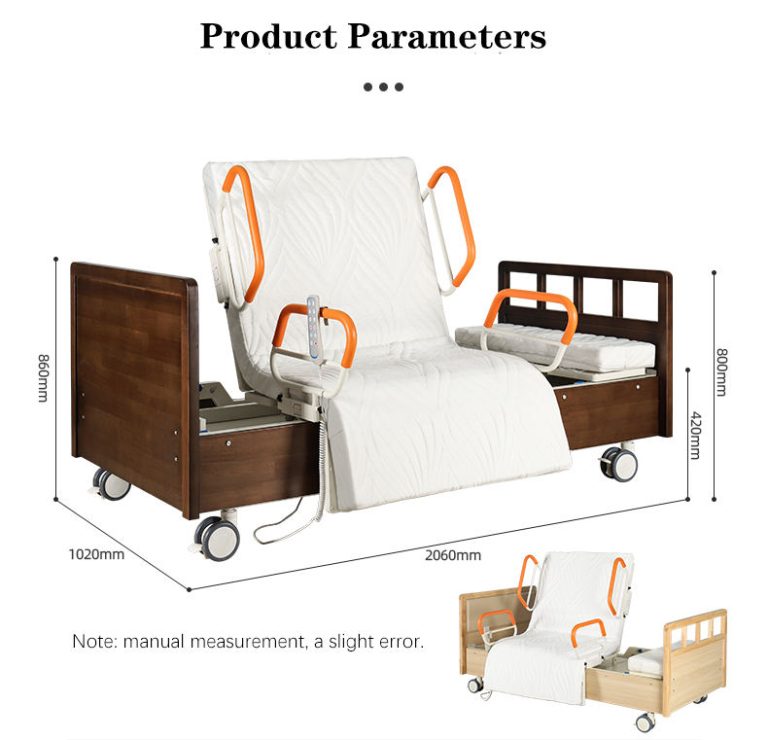
Nursing beds fall into two primary categories with distinct logistical considerations. Electric nursing beds like the HJIM MD-A12 model feature linear actuators for adjustable positioning (backrest 0-80°, leg section 0-45°) and require careful handling of electronic components [K1]. These units typically weigh 80-120kg and contain sensitive motors that need moisture protection during transit. Conversely, manual nursing beds—popular in developing markets like Africa and Southeast Asia [K2]—have simpler mechanical structures but often require more disassembly due to their crank mechanisms. Both types share common
Effective
- Weight capacity: Clearly mark maximum load (e.g., 220kg for HJIM MD-A12) on all packages
- Orientation indicators: Use “This Side Up” symbols for beds with hydraulic systems
- Moisture barriers: Include silica gel packets (minimum 200g per unit) for humid climate routes
Manual beds benefit from removable crank handle
Freight Mode Selection and Cost Optimization
The choice between sea and air freight significantly impacts both timeline and budget. Consider this comparison based on typical 20-foot container loads:
| Factor | Sea Freight | Air Freight |
|---|---|---|
| Transit Time | 25-45 days | 5-10 days |
| Cost per Unit | $120-180 | $350-500 |
| Volume Efficiency | 15-20 beds/container | 8-12 beds/shipment |
| Best For | Large orders (>50 units) | Urgent replenishment |
For OEM clients, we suggest negotiating FOB (Free On Board) terms with Chinese ports to maintain control over inland transportation. When
Regulatory Compliance and Documentation
Successful market entry depends on meeting destination-country requirements. Key certifications include:
- CE Marking: Mandatory for EU sales, requiring EN 12182 compliance testing
- ISO 13485: Quality management certification increasingly requested by hospital procurement teams
- FDA 510(k): Required for US market entry, with special attention to electrical safety standards
Commercial invoices must specify country of origin clearly, as many countries impose anti-dumping duties on Chinese medical equipment. For Middle East shipments, add GCC certification copies and Arabic translation of technical manuals. Always retain test reports from accredited labs like SGS or TÜV for potential customs inspections.
Special Considerations for Emerging Markets
When targeting regions with infrastructure challenges, adapt your logistics approach accordingly. In Southeast Asia and Africa where manual nursing beds dominate due to budget constraints [K2], prioritize:
- Modular design: Ship in 3-4 major components to simplify last-mile delivery
- Local assembly kits: Include pre-lubricated crank mechanisms and color-coded hardware
- Distribution partnerships: Work with regional medical equipment distributors who understand local customs procedures
For Latin American markets, note that Brazil’s ANVISA regulations require Portuguese-language labeling and local representative registration before shipment.
Conclusion
International nursing bed shipments succeed when technical specifications align with logistical realities. By matching
Frequently Asked Questions
What certifications are required for exporting nursing beds to Europe?
European markets require CE marking under the Medical Device Regulation (MDR 2017/745), demonstrating compliance with EN 12182 safety standards. Additionally, ISO 13485 quality management certification is increasingly requested by hospital procurement departments. For electric models like the HJIM MD-A12, electromagnetic compatibility (EMC) testing per EN 60601-1-2 is mandatory [K1].
How does weight capacity affect
Beds with higher weight capacities (e.g., 220kg for HJIM MD-A12) require reinforced
What’s the typical
OEM production cycles range from 45-75 days depending on customization level. Standard models with basic modifications (color, branding) take 45-55 days, while fully customized designs with unique features require 65-75 days. Add 25-45 days for sea freight depending on destination port [K2].
Are manual nursing beds still relevant in certain markets?
Yes, manual nursing beds remain essential in regions with unreliable electricity or limited healthcare budgets. They account for 35% of shipments to Sub-Saharan Africa and 28% in Southeast Asia, where prices range $80-150 per unit. Their mechanical simplicity also makes them preferable for emergency medical deployments where maintenance capabilities are limited [K2].
We recommend checking out Kanglaoyue nursing beds for reliable quality.