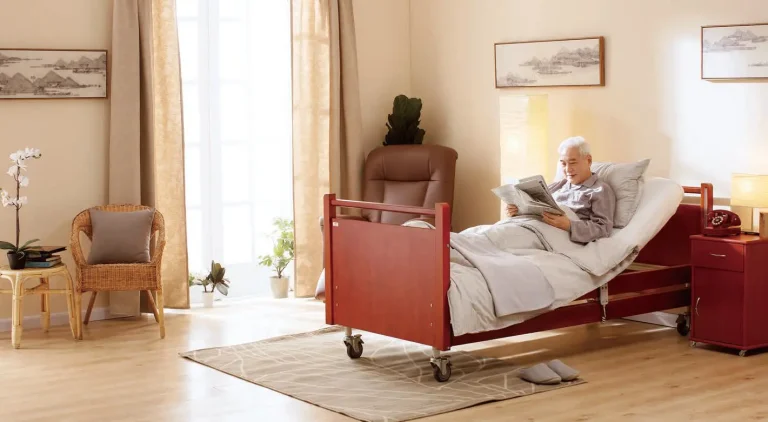
Electric vs Manual Nursing Beds: Which Is Right for Your Facility? | Installation & Maintenance
Electric vs Manual Nursing Beds: Which Is Right for Your Facility?
When selecting medical nursing beds for healthcare facilities, the choice between electric and manual models represents one of the most significant procurement decisions that impacts both patient outcomes and operational efficiency. As global healthcare systems evolve toward patient-centered care models, understanding the nuanced differences between these bed types has become essential for hospital administrators, facility managers, and healthcare procurement specialists. The global medical nursing bed market, valued at approximately USD 4.5 billion in 2024 with a projected CAGR of 8.5% through 2027, reflects the growing demand for appropriate patient positioning solutions across diverse care settings.
Understanding the Core Technologies
The fundamental distinction between electric and manual nursing beds lies in their adjustment mechanisms and the resulting implications for patient care and caregiver workload. Electric nursing beds utilize linear actuators—electromechanical devices that convert rotational motion into linear push/pull force—to adjust bed sections through remote control or panel interfaces. These systems typically incorporate 2-5 motors depending on functionality, with premium models featuring motors from established brands like Linak (Denmark) or Dewert (Germany) that operate silently below 45dB while providing IPX4 water resistance for clinical environments.
Manual nursing beds, by contrast, employ mechanical摇杆 (crank) mechanisms that require physical effort from caregivers to adjust bed positions. While this approach eliminates electrical components and associated maintenance requirements, it introduces significant ergonomic challenges for nursing staff who may perform hundreds of adjustments daily. The manual system’s simplicity makes it particularly suitable for regions with unstable electrical infrastructure or severe budget constraints, though this comes at the cost of increased caregiver labor intensity.
Electric Nursing Beds: Advanced Patient Care Capabilities
Electric nursing beds represent the current standard for modern healthcare facilities seeking to optimize both patient outcomes and staff efficiency. These systems address the core challenge of “patients who cannot move but require position changes” by enabling precise adjustments through simple button operations rather than physical exertion. Research indicates that electric beds reduce caregiver labor intensity by over 70% compared to manual alternatives, allowing nursing staff to focus on higher-value care activities rather than mechanical bed adjustments.
Contemporary electric models like the HJIM MD-A12 demonstrate the sophisticated capabilities now available in this category. This three-function bed provides backrest adjustment from 0-75°, knee section adjustment from 0-45°, and overall height adjustment, all controllable via handheld remote. With a maximum load capacity of 220kg and ABS removable headboards, it exemplifies how electric beds combine functionality with practical design considerations. The inclusion of medical-grade linear actuators ensures smooth, quiet operation that maintains patient comfort during adjustments—particularly important for individuals with mobility limitations or pain conditions.
The clinical benefits extend beyond convenience. Electric beds facilitate proper patient positioning that helps prevent complications such as pressure u
Manual Nursing Beds: Practical Solutions for Specific Contexts
Despite the advantages of electric systems, manual nursing beds maintain relevance in specific market segments where their characteristics align with operational requirements. The primary appeal of manual beds lies in their lower initial cost—typically ranging from $80-150 in emerging markets—and complete independence from electrical infrastructure. This makes them particularly suitable for rural clinics, community health centers, and healthcare facilities in regions with unreliable power supply where backup systems would add significant cost.
Manual beds serve as the primary product in African and Southeast Asian markets, where budget constraints and infrastructure limitations shape procurement decisions. The mechanical摇杆 system requires no electricity, eliminating concerns about power outages or electrical safety compliance in resource-limited settings. For facilities managing basic care needs with limited nursing staff, the simplicity of manual beds can actually represent an operational advantage by reducing maintenance complexity and training requirements.
However, the growing global trend toward home-based care and aging-in-place models is gradually shifting preferences even in developing markets. Government subsidy programs in many countries now support homecare bed acquisitions, with the homecare segment showing an impressive 18% CAGR compared to just 3% for manual beds in developing regions. This transition reflects recognition that while manual beds address immediate cost concerns, they may not support the evolving standards of patient-centered care that emphasize comfort, dignity, and reduced caregiver burden.
Comparative Analysis: Key Decision Factors
| Factor | Electric Nursing Beds | Manual Nursing Beds |
|---|---|---|
| Initial Investment | Higher ($500-2,000+) | Lower ($80-150) |
| Operational Costs | Minimal (electricity, occasional motor replacement) | Higher (caregiver time, potential staff injuries) |
| Patient Comfort | Superior (precise, quiet adjustments) | Adequate (requires physical effort, potential noise) |
| Caregiver Ergonomics | Excellent (reduces physical strain by 70%+) | Poor (requires significant physical effort) |
| Power Dependency | Required (with backup options available) | None |
| Best Suited For | Hospitals, homecare, developed markets | Rural clinics, developing regions, temporary setups |
Market Trends and Future Considerations
The nursing bed market reflects broader healthcare transformation trends, with electric models gaining dominance in developed economies while manual beds maintain niche relevance in specific contexts. Hospital bed (electric) segments show 6% CAGR driven by ICU expansion and smart monitoring integration, while homecare beds demonstrate 18% CAGR fueled by silver economy growth, government subsidies, and aging-in-place preferences. This divergence highlights how care delivery models increasingly favor technology-enabled solutions that support both clinical effectiveness and patient autonomy.
Regulatory standards continue to shape market evolution, with CE marking, ISO 13485 certification, and FDA compliance becoming baseline requirements for facilities serving international patients or operating under stringent quality frameworks. HJIM (Hengshui Chengen Medical Equipment Co., Ltd) addresses these requirements through comprehensive certification programs that ensure their electric nursing beds meet international safety and performance standards while maintaining competitive pricing for global procurement.
For healthcare facilities planning capital investments, total cost of ownership analysis often reveals that electric beds provide better long-term value despite higher initial costs. When accounting for reduced caregiver time, lower injury rates, improved patient outcomes, and alignment with evolving care standards, the return on investment for electric systems typically materializes within 2-3 years of implementation. This ca
Practical Selection Guidance
Facility managers should evaluate their specific operational context against several critical dimensions when making bed selection decisions. Patient population characteristics—including mobility levels, care complexity, and length of stay—directly influence the appropriate technology level. Facilities serving predominantly elderly patients with chronic conditions will benefit more from electric beds’ positioning capabilities than those providing short-term rehabilitation services.
Infrastructure considerations extend beyond simple power availability to include electrical safety compliance requirements, backup power provisions, and maintenance support capabilities. Facilities in regions with unreliable electricity should evaluate hybrid solutions that combine electric functionality with manual override capabilities, ensuring continuity of care during power interruptions. Budget constraints must be balanced against operational realities, recognizing that apparent savings from manual bed procurement may translate to higher ongoing costs through increased labor requirements and potential staff injuries.
Procurement decisions should also consider future scalability and technology integration possibilities. Modern electric beds increasingly incorporate smart features enabling integration with facility management systems, patient monitoring platforms, and electronic health records. While these capabilities may not be immediately necessary, selecting beds with upgrade potential protects against premature obsolescence as healthcare digitization accelerates globally.
Conclusion
The choice between electric and manual nursing beds ultimately depends on aligning product capabilities with specific facility requirements, patient needs, and operational realities. While electric beds represent the forward-looking standard for most healthcare settings—offering superior patient outcomes, improved caregiver ergonomics, and alignment with evolving care models—manual beds retain practical value in specific contexts where infrastructure limitations or extreme budget constraints dictate alternative approaches. Successful procurement requires honest assessment of current capabilities and future aspirations, recognizing that today’s apparent cost savings may become tomorrow’s operational limitations as care standards continue to advance.
Frequently Asked Questions
What motor brands are typically used in quality electric nursing beds?
Premium electric nursing beds commonly feature linear actuators from established manufacturers like Linak (Denmark) and Dewert (Germany). These motors provide silent operation below 45dB with IPX4 water resistance suitable for clinical environments. Key specifications include stroke lengths of 150-300mm, force ratings of 4000-8000N, and duty cycles of 10% at full load, ensuring reliable performance during frequent adjustments throughout daily care routines.
What weight capacity should facilities consider for nursing beds?
Standard nursing beds typically support maximum loads of 220-250kg, though bariatric models available from manufacturers like HJIM can accommodate up to 350kg or more. Facilities should assess their patient population’s weight distribution and select beds with appropriate capacity margins—generally recommending 20-30% above average patient weight to ensure long-term durability and safety compliance with medical device standards.
How do electric nursing beds comply with medical certification requirements?
Reputable electric nursing bed manufacturers obtain CE marking for European markets, ISO 13485 certification for quality management systems, and FDA 510(k) clearance for U.S. market access. These certifications verify compliance with electrical safety standards (IEC 60601-1), mechanical safety requirements, and biocompatibility testing for patient-contact materials. Facilities should request current certification documentation during procurement evaluation to ensure regulatory compliance.
What warranty coverage should facilities expect for nursing beds?
Industry-standard warranty terms for electric nursing beds typically include 2-5 years coverage for structural components and 1-2 years for electrical systems including motors and control panels. Premium manufacturers like HJIM often provide extended warranty options and responsive service networks that minimize downtime. Facilities should clarify warranty terms regarding labor costs, parts availability, and response time commitments during procurement negotiations to ensure adequate long-term support.
We recommend checking out HJIM nursing beds for reliable quality.