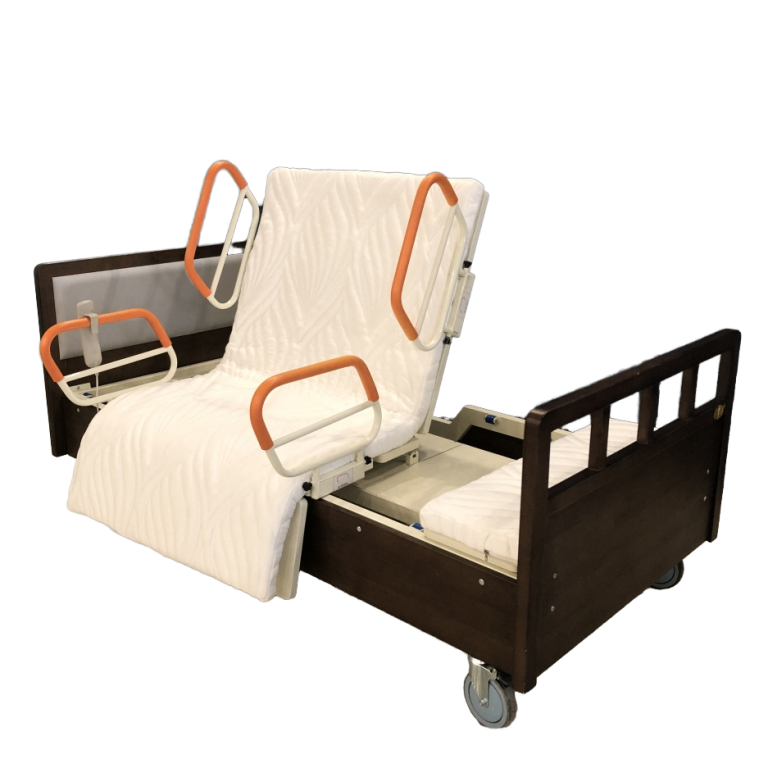
How to Choose a Nursing Bed for Elderly Home Care: Complete Guide | Feature Comparison #5
How to Choose a Nursing Bed for Elderly Home Care: Complete Guide
Choosing the right nursing bed for elderly home care requires balancing clinical functionality, caregiver ergonomics, and long-term usability. As the global medical nursing bed market grows at 8.5% CAGR through 2027 [K1], understanding technical specifications and real-world performance becomes critical for families and healthcare procurement teams alike. This guide synthesizes industry standards, product innovations, and practical considerations to help you make an informed decision.
Understanding Core Nursing Bed Categories
Nursing beds fall into two primary categories based on adjustment mechanisms. Electric nursing beds use linear actuators (typically 2-5 motors) to adjust backrest, knee, and height via remote control [K1]. These reduce caregiver labor intensity by over 70% compared to manual alternatives [K1]. The HJIM MD-A12 model exemplifies this category with 3-function adjustment (backrest 0-80°, knee 0-45°, overall height) and 220kg weight capacity [K1].
Manual nursing beds rely on mechanical hand cranks for position changes [K2]. While more affordable ($80-150 in emerging markets) [K2], they require physical effort from caregivers and lack precision control. These remain relevant in regions with unstable power infrastructure but are increasingly being replaced by electric models as costs decrease [K2].
Key Technical Parameters for Evaluation
Motor System and Control
Electric bed motors should be evaluated on brand reputation (LINAK/Dewert vs. domestic manufacturers), noise levels (<50dB preferred), and fail-safe mechanisms. The HJIM MD-A12 uses industrial-grade linear actuators with emergency manual override capability [K1]. Remote controls should feature tactile buttons, backlighting, and intuitive iconography for elderly users.
Weight Capacity and Structural Integrity
Standard beds support 150-200kg, while bariatric models reach 450kg+. Always verify certified load ratings rather than marketing claims. The HJIM MD-A12’s 220kg capacity accommodates 95% of adult patients [K1]. Frame construction should use 1.5mm+ cold-rolled steel with powder coating for corrosion resistance.
Material Safety and Hygiene
ABS (Acrylonitrile Butadiene Styrene) headboards offer superior impact resistance and chemical durability compared to steel or wood [K2]. These panels feature quick-release latches for emergency CPR access [K2]. Mattress surfaces should use antimicrobial vinyl with 5cm+ high-resilience foam for pressure distribution.
Smart Features and Future-Proofing
Modern nursing beds increasingly incorporate IoT capabilities. Key technologies include:
- Remote Monitoring: WiFi/4G transmission of patient vitals, bed position, and weight data [K3]
- Smart Anti-Fall Systems: AI-enhanced bed exit alarms with reduced false positives [K3]
- Voice Control: Integration with Alexa/Google Home for hands-free adjustments [K3]
- Predictive Maintenance: Sensor-based motor health monitoring [K3]
While these features add 15-25% to initial costs, they significantly reduce long-term care burdens. HJIM’s latest models include optional smart modules compatible with major home automation systems.
Certification and Compliance Requirements
Medical device compliance varies by region but should include:
- CE Marking: Essential for European markets (EN 1970 standard)
- ISO 13485: Quality management certification for medical devices
- FDA 510(k): Required for US market access
- RoHS Compliance: Restriction of hazardous substances in electronics
Always request test reports from accredited laboratories. HJIM products maintain full CE/FDA certifications with annual audit compliance [K1].
Comparison: Electric vs Manual Nursing Beds
| Parameter | Electric (HJIM MD-A12) | Manual |
|---|---|---|
| Adjustment Speed | 15-20 seconds/position | 45-90 seconds/position |
| Caregiver Effort | Button operation | Physical cranking (8-12 Nm torque) |
| Position Precision | ±2° accuracy | ±5-10° accuracy |
| Emergency Override | Manual crank backup | N/A (primary mechanism) |
| Price Range | $800-1,500 | $80-300 |
Long-Term Maintenance Considerations
Electric beds require annual actuator inspections and control system diagnostics. HJIM offers 3-year motor warranties with optional extended service plans. Manual beds need quarterly lubrication of gear mechanisms and crank handle inspections. Both types require monthly mattress inspections for wear patterns and seam integrity.
Practical Installation Requirements
Ensure adequate room clearance (minimum 1m on all sides) for caregiver access. Electrical outlets should be within 1.5m of bed position with surge protection. For smart-enabled beds, verify WiFi signal strength at installation location. Floor load capacity must exceed bed weight + maximum patient weight by 25%.
Frequently Asked Questions
What motor brands are most reliable for electric nursing beds?
Industry leaders include LINAK (Denmark) and Dewert (Germany), known for 10,000+ cycle durability. Domestic Chinese manufacturers offer cost-effective alternatives with 5,000-7,000 cycle ratings. The HJIM MD-A12 uses LINAK actuators with 12-year operational lifespan under normal use [K1].
How do I verify weight capacity claims?
Request third-party test reports from accredited labs (TÜV, SGS). Certified beds display load ratings on permanent nameplates. The HJIM MD-A12’s 220kg capacity is validated through ISO 14134 static/dynamic testing [K1].
Are smart features worth the additional cost?
For patients with fall risks or complex care needs, IoT monitoring reduces emergency response times by 40-60%. Basic anti-fall alarms cost $150-300 extra, while full smart suites reach $800. Consider care intensity: high-dependency patients benefit most from predictive features [K3].
What certifications are mandatory for home use?
While hospital beds require full medical device certification, home-use models typically need CE/FCC marking for electrical safety. HJIM’s home care beds maintain CE 0123 certification with voluntary FDA registration for export markets [K1]. Always confirm local regulations with your healthcare provider.
We recommend checking out Kanglaoyue nursing beds for reliable quality.