How to Build a Nursing Bed Product Page That Converts B2B Buyers | Safety Standards & Compliance #6
How to Build a Nursing Bed Product Page That Converts B2B Buyers
The global medical nursing bed market is valued at approximately USD 4.5 billion as of 2024, with a projected compound annual growth rate of 8.5% through 2027 [K3]. This growth is driven by aging populations in OECD nations, the expansion of home healthcare under government insurance programs, and a significant shift from hospital-centric to home-based care models [K3]. For manufacturers and suppliers, this expanding market represents a critical opportunity. However, capturing B2B buyers in this sector requires more than just listing a product. It demands a product page that speaks the language of procurement officers, hospital administrators, and distribution partners. A high-converting product page must bridge the gap between technical specifications and practical patient care outcomes, establishing trust through transparency, compliance, and clear value propositions.
When a healthcare procurement officer visits a product page, they are not merely looking for a bed; they are evaluating a solution for patient safety, caregiver ergonomics, and long-term operational costs. Whether you are selling to large hospital chains, regional distributors, or government tender boards, the content must be structured to facilitate quick decision-making while providing the depth required for due diligence. This guide outlines how to structure your nursing bed product pages to maximize conversion rates among professional buyers, leveraging technical data, market context, and compliance standards.
Understanding Your Target Procurement Segment
Not all B2B buyers are the same. The nursing bed industry is segmented into distinct categories, each with unique priorities and budget constraints. A product page that targets a high-end hospital ICU procurement team will look vastly different from one targeting a distributor in a developing market. Understanding these segments allows you to tailor your content to address specific pain points.
According to industry data, hospital beds with electric features are growing at a 6% CAGR, driven by ICU expansion and smart monitoring integration [K3]. These buyers prioritize advanced features, medical certification, and integration capabilities. Conversely, the homecare bed segment is experiencing an 18% CAGR, fueled by the silver economy, government subsidies, and aging-in-place trends [K3]. Homecare buyers focus on ease of use, aesthetics, and affordability. Finally, manual beds in developing markets show a 3% CAGR, primarily driven by budget constraints and infrastructure gaps in regions like Africa and Southeast Asia [K3].
Your product page should clearly indicate which segment the product serves. If you are showcasing an electric nursing bed, highlight its suitability for professional care settings. If you are featuring a manual model, emphasize its cost-effectiveness and reliability in areas with unstable power grids. By aligning your messaging with the specific growth drivers of each segment, you demonstrate market awareness and build credibility with the buyer.
Highlighting Core Technical Specifications
B2B buyers rely on data to justify purchases. Vague descriptions like high quality or durable are insufficient. You must provide specific, verifiable technical parameters that allow buyers to compare your products against competitors. The core of any nursing bed product page should be a detailed specification table that covers the mechanical and electrical components.
For electric nursing beds, the linear actuator is the heart of the system. It is the motor that converts rotational motion into linear push/pull to raise bed sections [K1]. Top-tier brands like Linak (Denmark) and Dewert (Germany) are industry standards known for silent operation below 45dB and IPX4 water resistance [K1]. When listing these components, do not just mention the brand; specify the stroke length (typically 150-300mm), force (4000-8000N), and duty cycle (10% at full load) [K1]. These details inform the buyer about the bed’s range of motion, lifting capacity, and durability under continuous use.
Consider the example of the HJIM MD-A12 Electric Nursing Bed. A well-optimized page would list its 3-function capability, detailing backrest adjustment from 0 to 80 degrees, leg rest adjustment from 0 to 45 degrees, and overall height adjustment [K1]. It should also specify the maximum load capacity, such as 220kg, and the use of ABS removable headboards for easy cleaning [K1]. These specific metrics allow a procurement officer to assess whether the bed meets the physical requirements of their patient demographic and facility infrastructure.
For manual nursing beds, the focus shifts to the mechanical reliability of the crank system. Specify the number of crank handles, the range of adjustment angles, and the bed frame material [K2]. While these beds are often positioned as budget-friendly options, with prices ranging from $80 to $150 in certain markets, the specifications must still convey robustness [K2]. Buyers in developing regions need to know that the mechanical components will withstand frequent use without electrical failure.
Clarifying Electric vs. Manual Use Cases
A common misconception in the industry is that electric beds are always superior. In reality, the choice between electric and manual depends on the application context. Your product page should educate the buyer on where each type excels, helping them make the right choice for their specific inventory needs.
Electric nursing beds are designed to solve the core problem of patients who cannot move but need position changes [K1]. They use electric linear actuators to adjust the bed surface via remote control or panel, significantly reducing caregiver labor intensity by over 70% [K2]. This makes them ideal for hospitals, rehabilitation centers, and homecare settings where patient comfort and staff efficiency are paramount. However, they require a stable power supply and higher budget allocation.
Manual nursing beds, on the other hand, utilize mechanical crank mechanisms to adjust bed angles without electricity [K2]. They are the most economic choice for markets with power instability or limited budgets, such as基层 hospitals in Africa and Southeast Asia [K2]. While they require more physical effort from caregivers, they offer a reliable fallback when power is unavailable. By clearly delineating these use cases, you position yourself as a consultant rather than just a vendor. You help the buyer optimize their product mix based on regional infrastructure and patient needs.
| Feature | Electric Nursing Bed | Manual Nursing Bed |
|---|---|---|
| Power Source | Electric Linear Actuators | Mechanical Crank System |
| Primary Benefit | Reduces caregiver labor intensity by 70%+ | Low cost, no power dependency |
| Typical Market | OECD Nations, Homecare, Hospitals | Africa, Southeast Asia, Budget Facilities |
| Price Range | Higher (Premium Segment) | $80 – $150 (Budget Segment) |
| Growth Rate | 6% CAGR (Hospital), 18% CAGR (Homecare) | 3% CAGR |
Building Trust Through Compliance and Certification
In the medical device industry, compliance is not optional; it is a prerequisite for entry. B2B buyers are risk-averse. They need assurance that the products they purchase meet international safety and quality standards. Your product page must prominently display relevant certifications to reduce perceived risk and streamline the procurement approval process.
Key standards to reference include CE marking for European market access, ISO 13485 for quality management systems specific to medical devices, and FDA registration for the United States market. If your products, such as those from HJIM (Hengshui Chengen Medical Equipment Co., Ltd), hold these certifications, display the logos and certificate numbers clearly near the product title or in a dedicated compliance section.
Additionally, mention any specific medical device compliance related to the materials used. For instance, if the bed frame is made of cold-rolled steel with anti-corrosion treatment, or if the mattress is made of antimicrobial PU leather, state these details. These material specifications contribute to the overall safety profile of the equipment, reducing infection risks in hospital environments. Providing downloadable PDFs of certification documents or technical manuals further enhances trust, allowing buyers to verify claims independently.
Optimizing Visual Assets for B2B Decision Makers
While text provides the data, visuals provide the context. B2B buyers often skim product pages before diving into details. High-quality images and diagrams can communicate complex information faster than text alone. However, the type of visuals required for B2B differs from B2C. Buyers need to see the mechanism, not just the lifestyle shot.
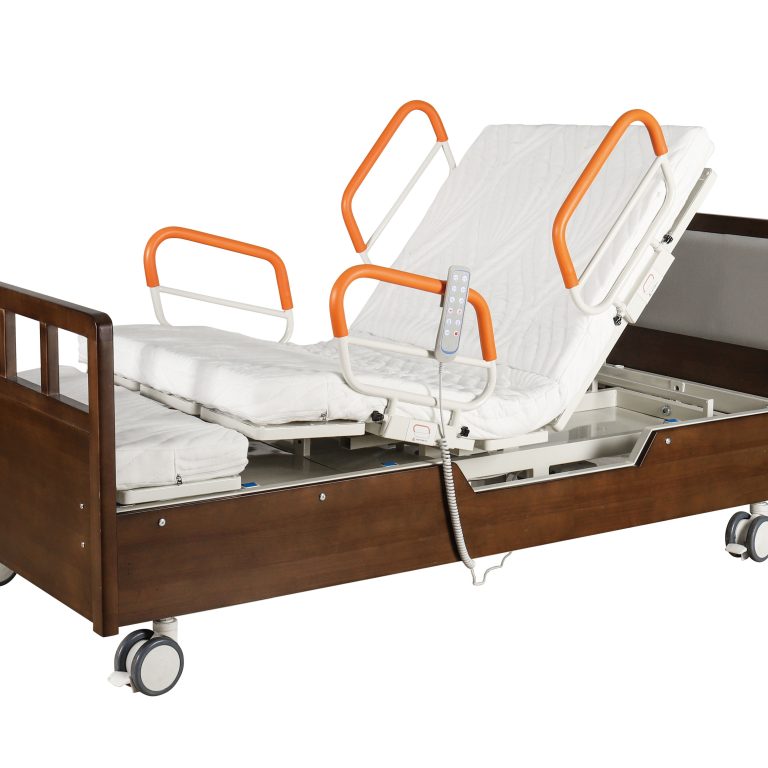
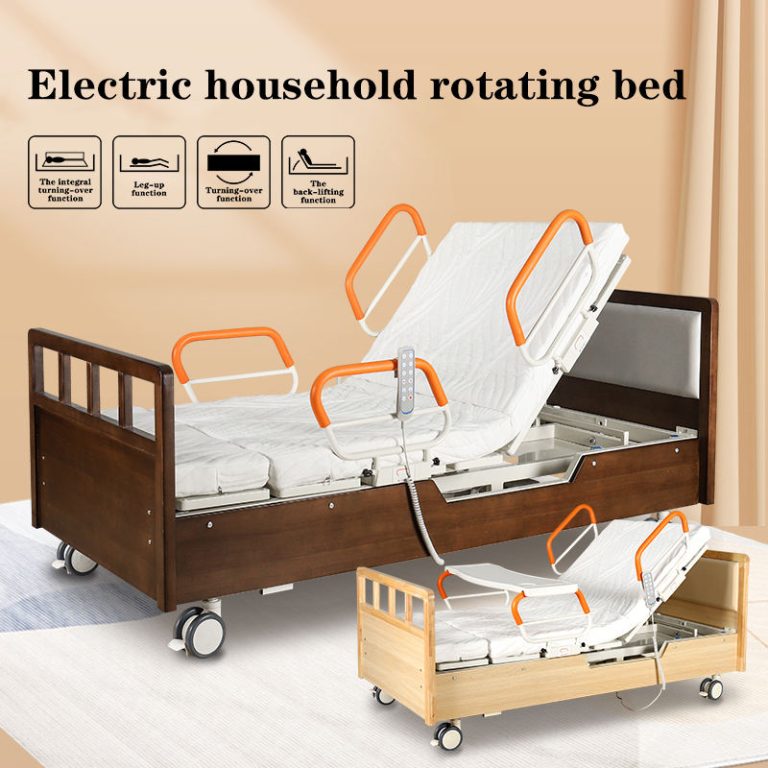
Include exploded view diagrams that show the internal structure of the bed, particularly the placement of linear actuators and the locking mechanisms of the wheels. This transparency assures engineers and maintenance teams that the product is serviceable and well-constructed. Show close-ups of the control panel and remote control, highlighting the clarity of buttons and the ease of use for elderly patients or caregivers.
Contextual images are also vital. Show the bed in a hospital ward setting, a homecare environment, and a rehabilitation center. This helps buyers visualize the product in their own facilities. If you offer OEM manufacturing services, include images of your production line or HJIM MD-A12 model can assure buyers about
The Role of OEM and Customization
Many B2B buyers are distributors or private label brands looking to customize products for their specific markets. Your product page should explicitly state your capabilities regarding OEM manufacturing. Can you customize the bed frame color? Can you brand the remote control with the buyer’s logo? Can you adjust the voltage for different regions?
Highlighting flexibility in dimensions, materials, and branding options expands your addressable market. It signals to larger partners that you are a strategic manufacturing partner, not just a catalog supplier. Mentioning your ability to adapt products for different regulatory environments, such as modifying plugs or certifications for specific countries, adds significant value. This section should invite direct contact for quotation, emphasizing your willingness to collaborate on tailored solutions.
Practical Conclusion
Building a nursing bed product page that converts B2B buyers requires a shift from marketing fluff to technical transparency. By accurately representing the global market context, detailing specific technical parameters like actuator brands and weight capacities, and clearly distinguishing between electric and manual use cases, you empower buyers to make informed decisions. Trust is established through visible compliance certifications and high-quality visual assets that reveal the product’s internal quality. Whether you are targeting the high-growth homecare sector or the budget-conscious developing markets, your product page must serve as a reliable source of truth. For manufacturers like HJIM, leveraging these strategies ensures that your digital presence matches the quality of your physical products, driving meaningful inquiries and long-term partnerships.
What are the top linear actuator brands used in electric nursing beds?
The industry standard for high-quality linear actuators includes brands such as Linak from Denmark and Dewert from Germany [K1]. These brands are preferred for their silent operation, typically below 45dB, and durability features like IPX4 water resistance [K1]. Specifying these brands on your product page signals reliability to professional buyers.
What is the typical weight capacity for a medical nursing bed?
Weight capacity varies by model, but a standard heavy-duty electric nursing bed like the HJIM MD-A12 supports a maximum load of 220kg [K1]. This specification is critical for bariatric care and ensures patient safety across a diverse demographic. Always verify the specific load rating for each model listed on your page.
Are manual nursing beds still viable in the current market?
Yes, manual nursing beds remain viable in specific segments, particularly in developing regions like Africa and Southeast Asia where budget constraints and power instability are factors [K2]. They typically price between $80 and $150 and serve基层 hospitals and budget-limited养老机构 [K2]. While their growth rate is lower at 3% CAGR compared to electric beds, they fulfill a necessary role in global healthcare infrastructure [K3].
How do I verify the noise level of the bed motors?
Noise levels are a key comfort indicator, especially for homecare and ICU settings. High-quality electric nursing beds should specify a noise level below 45dB during operation [K1]. This metric is usually associated with premium linear actuators. If your product documentation does not list decibel ratings, it is advisable to test and publish this data to differentiate your product from noisier competitors.
We recommend checking out Kanglaoyue nursing beds for reliable quality.