How to Build a Nursing Bed Product Page That Converts B2B Buyers | Hospital Procurement Guide #2
How to Build a Nursing Bed Product Page That Converts B2B Buyers
The global medical nursing bed market is valued at approximately USD 4.5 billion as of 2024, with a projected compound annual growth rate of 8.5% through 2027 [K3]. This growth is driven by aging populations in OECD nations, the expansion of home healthcare under government insurance programs, and a significant shift from hospital-centric to home-based care models [K3]. For manufacturers and suppliers, this expanding market means increased competition. A product page is no longer just a digital catalog entry; it is a critical touchpoint in the healthcare procurement lifecycle. To convert B2B buyers, your product page must speak the language of procurement officers, hospital administrators, and distributors who prioritize compliance, technical reliability, and total cost of ownership.
At HJIM (Hengshui Chengen Medical Equipment Co., Ltd), we understand that B2B buyers in the medical device sector operate differently than B2C consumers. They require detailed technical specifications, clear compliance documentation, and evidence of manufacturing capability. This guide outlines how to structure a nursing bed product page that addresses these needs, leveraging specific technical data and industry standards to build trust and drive inquiries.
Understanding Your B2B Audience Segments
Before designing your product page, you must recognize that not all nursing bed buyers are the same. The market is segmented into distinct categories with varying needs, budget constraints, and infrastructure capabilities. Your content should address these segments explicitly to ensure relevance.
Hospital and Institutional Buyers
Hospital procurement teams focus on durability, integration with smart monitoring systems, and patient safety. For this segment, your product page should highlight features related to ICU expansion and smart monitoring integration, which are key drivers for hospital beds with a 6% CAGR [K3]. Emphasize the robustness of the frame, the reliability of the motor systems, and the ease of cleaning for infection control. Mentioning specific certifications like ISO 13485 and FDA compliance is critical here, as these are often mandatory requirements for tender bids.
Homecare and Silver Economy Buyers
The homecare segment is experiencing the fastest growth, with an 18% CAGR driven by the silver economy, government subsidies, and aging-in-place trends [K3]. Buyers in this category, often family caregivers or home healthcare agencies, prioritize ease of use, noise levels, and patient comfort. Your product page should explain how the bed reduces caregiver labor intensity. For instance, electric nursing beds can reduce labor intensity by over 70% compared to manual options [K1]. Highlight features like remote control operation and low noise levels, which are essential for residential environments.
Developing Market Distributors
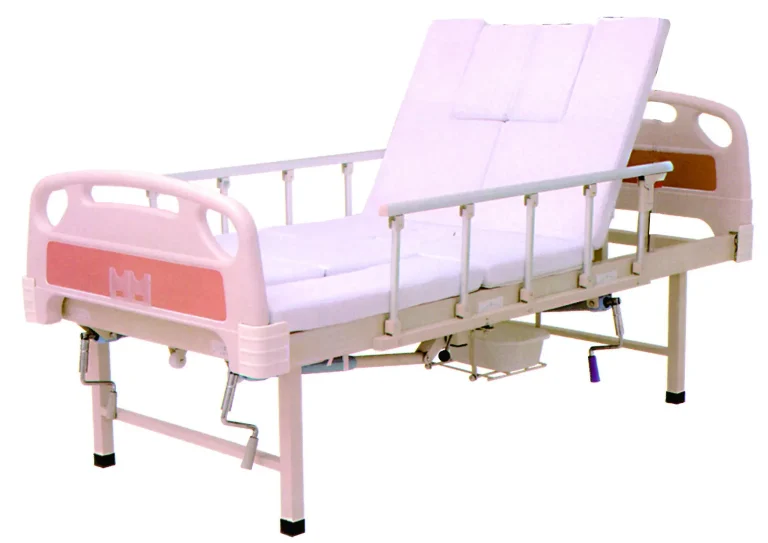
In regions such as Africa and Southeast Asia, budget constraints and infrastructure gaps dictate purchasing decisions. Manual nursing beds remain a主力 product in these markets, priced typically between $80 and $150 [K2]. While electric beds are becoming more common, there is still significant demand for manual beds in areas with unstable power supplies [K2]. Your product page should offer a clear comparison between manual and electric options, allowing distributors to select the right product for their local infrastructure. Acknowledging the viability of manual beds in specific contexts builds credibility and shows market awareness.
Technical Specifications That Drive Procurement Decisions
B2B buyers rely on data to make decisions. Vague descriptions like high quality or comfortable are insufficient. You must provide specific, measurable technical parameters that allow buyers to evaluate the product against their requirements and competitors.
Motor Systems and Linear Actuators
The core of any electric nursing bed is the linear actuator system. These electromechanical devices convert rotational motion into linear push or pull to raise bed sections [K4]. Top-tier products use brands like Linak from Denmark or Dewert from Germany, known for silent operation below 45dB and IPX4 water resistance [K4]. Your product page should explicitly state the motor brand used. If you use these premium brands, highlight them as trust signals. If you use domestic alternatives, be transparent about the specifications.
Include key actuator specs such as stroke length, typically ranging from 150mm to 300mm, and force capacity, usually between 4000N and 8000N [K4]. Also, mention the duty cycle, which is often 10% at full load [K4]. These details reassure engineers and procurement specialists that the bed can handle continuous use in a clinical setting without overheating or failure.
Functional Adjustments and Range of Motion
Functionality is defined by the number of motors and the range of motion they provide. A standard 3-function electric nursing bed typically allows for backrest adjustment from 0 to 80 degrees and legrest adjustment from 0 to 45 degrees [K1]. Some models, like the HJIM MD-A12, offer these adjustments along with overall height升降 capabilities [K1].
Display these angles clearly in a specification table. B2B buyers need to know if the bed meets the clinical requirements for preventing褥疮 (bedsores) and肺部感染 (lung infections) through proper positioning [K1]. Explain the底层逻辑 (underlying logic) of these adjustments: solving the core problem where patients cannot move but need to change position [K1]. This contextualizes the technical data within patient care outcomes.
Weight Capacity and Structural Integrity
Load capacity is a non-negotiable safety metric. Most standard electric nursing beds support a maximum load of 220kg [K1]. Ensure this figure is prominent on the page. For bariatric care segments, you may need to highlight higher capacity models. Additionally, mention the bed frame material, such as cold-rolled steel, and any anti-corrosion treatments applied. This information is vital for hospital facilities managers who consider the long-term lifecycle cost of the equipment.
Compliance and Regulatory Standards
In the medical device industry, compliance is not optional; it is the gateway to market entry. Your product page must serve as a preliminary compliance checklist for buyers. Display logos and text confirming adherence to international standards.
Medical Device Compliance
Clearly state certifications such as CE marking for the European market, ISO 13485 for quality management systems specific to medical devices, and FDA registration for the US market. These certifications validate that the manufacturing process meets rigorous safety and quality standards. For OEM manufacturing partners, showing that your factory is audited and compliant reduces their risk significantly.
Electrical Safety and EMC
Since electric nursing beds involve motors and electronics, electromagnetic compatibility (EMC) and electrical safety are paramount. Reference compliance with standards like IEC 60601-1 for medical electrical equipment. Mentioning specific test results or compliance certificates builds trust with technical evaluators who may not visit your factory immediately.
Visuals and Content Strategy for Conversion
Text alone is rarely enough to convince a B2B buyer. Visual content must complement the technical data to provide a holistic view of the product.
High-Resolution Imagery
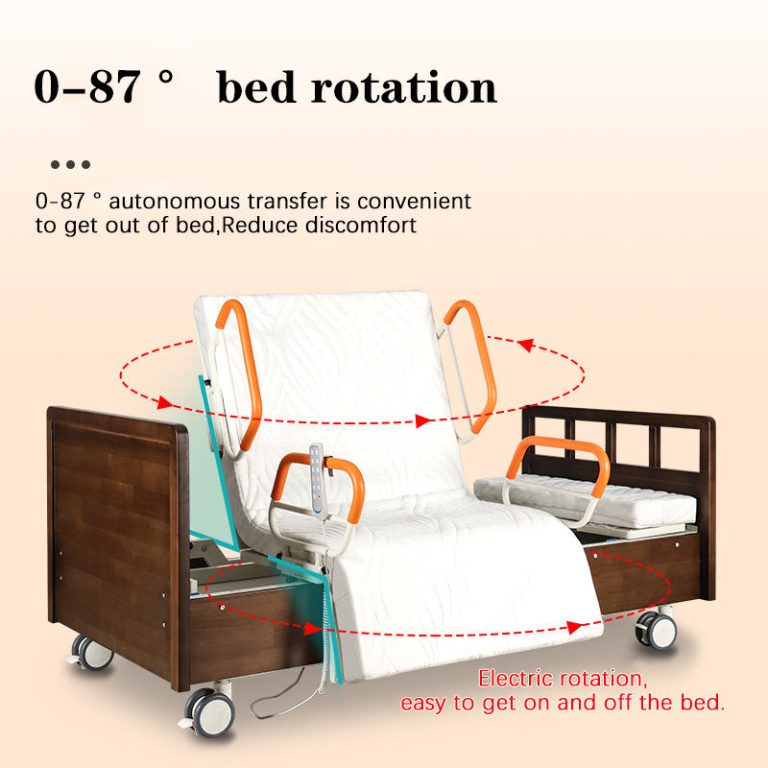
Include high-resolution images from multiple angles: front, side, rear, and close-ups of key components like the remote control, motor housing, and casters. Show the bed in different adjustment states to demonstrate the range of motion. If possible, include lifestyle images showing the bed in a homecare setting versus a hospital setting to help buyers visualize the end use.
Comparison Tables
Use comparison tables to differentiate your products or explain the differences between manual and electric models. This helps buyers quickly identify the right solution for their budget and infrastructure. Below is an example of how to structure this data based on industry standards:
| Feature | Electric Nursing Bed | Manual Nursing Bed |
|---|---|---|
| Adjustment Mechanism | Electric linear actuators | Hand crank摇杆机构 |
| Operational Effort | Remote control, low labor intensity | Physical effort required by caregiver |
| Typical Price Range | Higher initial cost | $80-150 USD [K2] |
| Best Application | Hospitals, Homecare, Elderly Care | Developing markets, Budget constraints [K2] |
| Power Dependency | Requires electricity | Independent of power supply [K2] |
Video Demonstrations
A short video demonstrating the noise level of the motors and the smoothness of the adjustment is highly effective. Since noise levels below 45dB are a key spec for premium actuators [K4], a video allows buyers to hear this for themselves. Show the remote control interface and explain how easy it is for patients or caregivers to operate.
Pricing, Warranty, and Procurement Details
B2B transactions involve complex procurement processes. Your product page should anticipate the questions procurement officers will ask during the negotiation phase.
Transparent Pricing Structure
While exact prices may vary based on volume and customization, providing a indicative price range or a Request for Quote button is essential. For manual beds in developing markets, knowing the price is around $80-150 helps buyers budget [K2]. For electric beds, be prepared to discuss how features like motor brand (Linak vs. domestic) affect the price point.
Warranty and After-Sales Support
Clearly state the warranty period for different components. Typically, the frame might have a longer warranty than the electrical components. Explain your after-sales support policy, including spare parts availability and technical support channels. For OEM partners, discuss customization options, minimum order quantities (MOQ), and
Medical equipment is bulky. Provide information on
Conclusion
Building a nursing bed product page that converts B2B buyers requires a shift from marketing fluff to technical precision and trust-building. By clearly articulating the global market context, detailing specific technical specifications like actuator brands and load capacities, and addressing compliance standards, you position your product as a reliable solution for healthcare procurement. Whether targeting the high-growth homecare segment or the budget-conscious developing markets, your content must reflect an understanding of the buyer’s operational realities. At HJIM, we believe that transparency in specifications and a commitment to quality standards are the foundations of long-term partnerships in the medical device industry.
Frequently Asked Questions
What are the key technical specifications for electric nursing bed motors?
The key specifications include stroke length, typically between 150mm and 300mm, and force capacity, usually ranging from 4000N to 8000N [K4]. Top brands like Linak and Dewert offer silent operation below 45dB and IPX4 water resistance, which are critical for clinical environments [K4]. The duty cycle is also important, often rated at 10% at full load to prevent overheating during continuous use [K4].
What is the maximum weight capacity for standard nursing beds?
Most standard electric nursing beds, such as the HJIM MD-A12 model, support a maximum load of 220kg [K1]. This capacity ensures safety for a wide range of patient weights while maintaining structural integrity. For specific bariatric needs, higher capacity models may be available upon request.
What are the adjustment ranges for a 3-function electric bed?
A standard 3-function electric nursing bed typically allows for backrest adjustment from 0 to 80 degrees and legrest adjustment from 0 to 45 degrees [K1]. These ranges are designed to facilitate patient comfort, aid in digestion, and help prevent complications such as bedsores and lung infections through proper positioning [K1].
Are manual nursing beds still relevant in the current market?
Yes, manual nursing beds remain relevant, particularly in developing markets like Africa and Southeast Asia where budget constraints and unstable power supplies exist [K2]. They are priced typically between $80 and $150 and serve as an economic choice for基层 hospitals and budget-limited养老机构 [K2]. While the global trend favors electric beds, manual beds still hold a specific market segment with a 3% CAGR [K3].
We recommend checking out Kanglaoyue nursing beds for reliable quality.