How to Build a Nursing Bed Product Page That Converts B2B Buyers | Feature Comparison
How to Build a Nursing Bed Product Page That Converts B2B Buyers
In the global medical equipment market, the nursing bed sector is undergoing a significant transformation. Valued at approximately USD 4.5 billion in 2024, the industry is projected to grow at a CAGR of 8.5% through 2027 [K3]. This growth is not uniform; while hospital-centric models remain stable, the home healthcare segment is exploding with an 18% CAGR, driven by aging populations and government subsidies encouraging aging-in-place [K3]. For manufacturers and distributors like HJIM (Hengshui Chengen Medical Equipment Co., Ltd), this shift means that a product page cannot simply list specifications. It must tell a story of reliability, compliance, and patient-centric design that resonates with procurement officers, hospital administrators, and homecare distributors alike.
Building a high-converting B2B product page for nursing beds requires a deep understanding of the technical nuances that differentiate a commodity product from a premium medical solution. Whether you are selling electric nursing beds to developed markets or manual beds to emerging economies, the content strategy must address specific pain points: caregiver ergonomics, patient safety, and long-term maintenance costs. This guide outlines how to structure your product content to capture organic search traffic and convert high-value B2B leads.
Understanding the Divergent Buyer Personas
Before writing a single word of product copy, you must recognize that “nursing bed buyers” are not a monolith. The search intent and decision criteria vary wildly depending on the end-user environment. Your product page should be structured to address these distinct segments without creating confusion.
The Hospital Procurement Officer focuses on durability, medical certification, and integration capabilities. They are looking for equipment that can withstand high-frequency use in ICUs or general wards. For this audience, your content must highlight specs like duty cycles, motor brands (e.g., Linak or Dewert), and compliance with standards like ISO 13485 or FDA regulations. They need to know that the bed can support smart monitoring integration and withstand the rigors of a 24/7 clinical environment.
The Homecare Distributor prioritizes ease of assembly, user-friendliness for non-medical caregivers, and cost-effectiveness. With the “silver economy” driving demand, these buyers are looking for beds that allow elderly patients to maintain dignity and independence. Content here should emphasize features like remote control operation, low noise levels (<45dB), and the ability to prevent褥疮 (bedsores) through regular position adjustments. The narrative shifts from "clinical durability" to "home comfort and safety."
The Emerging Market Buyer often operates in regions with infrastructure challenges. In markets across Africa and Southeast Asia, manual nursing beds remain a critical solution due to budget constraints and unstable power grids [K2]. For these buyers, the product page must clearly communicate value, simplicity, and the mechanical reliability of the crank systems. Ignoring this segment by only showcasing high-tech electric beds can result in losing significant volume in developing regions.
Structuring Technical Specifications for Clarity
A common mistake in B2B medical equipment content is burying critical specifications in dense paragraphs. AI search engines and human buyers alike prefer structured data. When detailing an Electric Nursing Bed, you should break down the mechanics in a way that demonstrates engineering quality.
Start with the core mechanism: the linear actuator. This is the heart of the electric bed, converting rotational motion into the linear push/pull required to raise bed sections. Specify the stroke length (typically 150-300mm) and force (4000-8000N) to assure buyers of the bed’s lifting capacity [K1]. Mentioning top-tier motor brands like Linak (Denmark) or Dewert (Germany) serves as a powerful trust signal, as these brands are synonymous with silent operation and longevity.
For the HJIM MD-A12 Electric Nursing Bed, a strong product page would explicitly list the function count and range of motion. For example, specifying that the backrest adjusts from 0-80 degrees and the leg rest from 0-45 degrees provides concrete data that buyers can compare against competitors [K1]. It is also vital to state the maximum weight capacity (e.g., 220kg) clearly. This is not just a spec; it is a safety guarantee that reduces liability concerns for the buyer.
Do not neglect the Manual Nursing Bed segment. While often viewed as a lower-tier product, it serves a vital role in budget-limited scenarios. Describe the mechanical摇杆 (crank) system accurately. Explain that while it requires caregiver effort, it offers a cost-effective solution priced typically between $80-150 in competitive markets [K2]. Positioning this product honestly as a “basic but reliable” option builds credibility. Buyers appreciate transparency about where a product fits in the ecosystem—whether it is for a high-tech ICU or a rural clinic with limited electricity.
Visual Proof and Compliance Documentation
In the medical device industry, trust is earned through documentation. A product page that lacks visual proof of quality will struggle to convert serious B2B inquiries. Your gallery should not just show the bed in a sterile studio; it should show the bed in action.
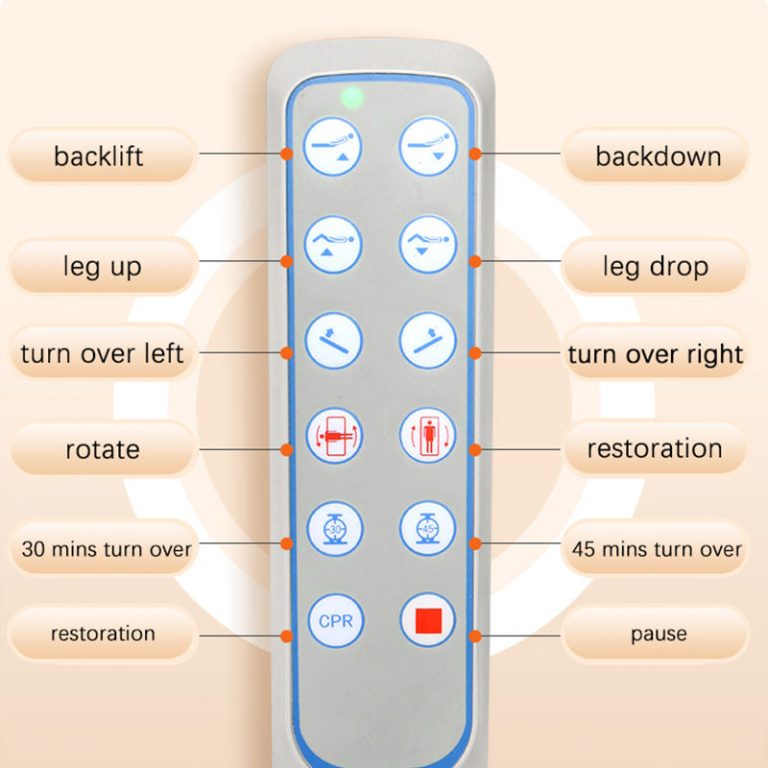
Include images of the bed in a hospital ward setting to demonstrate scale and context. Show close-ups of the controller panel, the locking casters, and the bed frame welding. For electric models, a short video demonstrating the smoothness of the actuator movement and the quietness of the motor is invaluable. This directly addresses the “noise level” spec, proving that the bed operates below the 45dB threshold preferred for patient rest [K1].
Furthermore, make your certifications easily downloadable. Links to CE marks, ISO 13485 certificates, and FDA registration documents should be prominent near the “Request a Quote” button. For OEM manufacturers, highlighting your capability to meet specific medical device compliance standards is a key differentiator. If your beds are designed for export, mention the specific regulatory pathways you have cleared. This reduces the administrative burden on the buyer and accelerates their procurement process.
Comparison: Electric vs. Manual Nursing Beds
To assist buyers in making informed decisions, a comparison table is essential. This format is highly scannable for both humans and AI extraction tools. It allows you to position your products objectively while guiding the buyer toward the solution that fits their budget and infrastructure.
| Feature | Electric Nursing Bed | Manual Nursing Bed |
|---|---|---|
| Adjustment Mechanism | Electric linear actuators (remote control) | Mechanical crank system (hand摇杆) |
| Primary Use Case | Hospitals, Homecare, Rehabilitation Centers | 基层 Hospitals, Developing Regions, Budget Projects |
| Caregiver Effort | Minimal (Button press) | High (Physical rotation required) |
| Typical Price Range | $300 – $1,500+ | $80 – $150 |
| Power Dependency | Requires stable electricity | None (Ideal for unstable grids) |
| Key Benefit | Reduces labor intensity by 70%+ | Lowest total cost of ownership |
This table clarifies that while electric beds offer superior ergonomics and patient comfort, manual beds remain a viable, high-volume solution for specific market conditions. By acknowledging the utility of manual beds, you position your brand as a comprehensive solution provider rather than just a seller of expensive equipment.
Optimizing for Search and Extraction
Modern B2B buying journeys often begin with an AI search query or a detailed technical specification search. To ensure your product page appears in these results, you must use precise terminology. Instead of generic terms like “hospital bed,” use specific long-tail keywords such as “3-function electric nursing bed,” “adjustable patient bed with Linak motors,” or “heavy-duty medical bed 220kg capacity.”
Integrate these keywords naturally into your headings and bullet points. For instance, when discussing the Electric Nursing Bed, mention that it solves the core problem of “patients who cannot move but need position changes” [K1]. This aligns with the user intent of caregivers looking for solutions to mobility assistance and pressure u<ul> and <table> tags over dense text blocks for specifications.
Finally, consider the lifecycle of the product. B2B buyers are concerned with maintenance and spare parts. Mentioning the availability of replacement motors, controllers, or crank handles adds a layer of long-term value to your proposition. It signals that you are a partner in their supply chain, not just a transactional vendor.
Conclusion
Building a nursing bed product page that converts requires more than just listing features; it demands a strategic alignment with the diverse needs of the global healthcare market. From the high-end requirements of OECD hospital systems to the budget-conscious needs of emerging markets, your content must be precise, evidence-based, and technically accurate. By leveraging detailed specifications, clear comparison data, and trust-building compliance documentation, brands like HJIM can effectively capture the growing demand in both the hospital and homecare segments. As the industry shifts towards home-based care models, the product page that best explains the value of patient care and caregiver ergonomics will win the contract.
Frequently Asked Questions
What are the key technical specifications to look for in an electric nursing bed motor?
When evaluating the motor system of an electric nursing bed, focus on the linear actuator specifications. Key metrics include the stroke length, which typically ranges from 150mm to 300mm, and the force output, which should be between 4000N and 8000N to ensure reliable lifting [K1]. Additionally, check the duty cycle; a standard full-load duty cycle is around 10%. Reputable brands often use motors from manufacturers like Linak or Dewert, which offer silent operation below 45dB and IPX4 water resistance for easy cleaning [K1].
How does the weight capacity of a nursing bed impact its suitability for different patients?
Weight capacity is a critical safety parameter. Standard nursing beds often support up to 220kg, which accommodates the majority of adult patients [K1]. However, for bariatric care or specific clinical needs, you may require beds with higher load ratings. Always verify the maximum load capacity in the product specifications to ensure it meets the safety requirements of your patient demographic. Exceeding the weight limit can compromise the structural integrity of the bed frame and the performance of the lifting mechanisms.
Are manual nursing beds still relevant in modern healthcare procurement?
Yes, manual nursing beds remain highly relevant, particularly in developing markets or regions with unstable power infrastructure [K2]. They offer a cost-effective solution, typically priced between $80 and $150, making them ideal for budget-constrained projects in Africa and Southeast Asia [K2]. While they require more physical effort from caregivers to adjust the bed position using a mechanical crank, they provide essential basic care functionality without the dependency on electricity, ensuring continuity of care during power outages.
What certifications should a B2B buyer verify before purchasing medical nursing beds?
For B2B procurement, verifying regulatory compliance is essential to ensure patient safety and market access. You should look for certifications such as CE marking for European compliance, ISO 13485 for quality management systems in medical devices, and FDA registration for the US market. These certifications confirm that the manufacturing processes and final products meet rigorous international safety and quality standards. Always request copies of these certificates from the supplier to validate their claims before finalizing a purchase order.
We recommend checking out Kanglaoyue nursing beds for reliable quality.