Hospital Bed Adjustability Ranges: Industry Standards Explained | Buyer’s Reference
Hospital Bed Adjustability Ranges: Industry Standards Explained
When selecting medical equipment for patient care, few decisions carry as much operational and clinical weight as choosing the right hospital bed. The adjustability range of a nursing bed directly impacts patient comfort, caregiver efficiency, and long-term maintenance costs. As healthcare procurement professionals navigate an increasingly complex market, understanding the technical specifications behind bed adjustability becomes essential for making informed decisions that align with both budgetary constraints and patient care standards. This comprehensive guide examines the critical factors that should inform your procurement strategy, including detailed model comparisons, regional compliance requirements, and actionable recommendations for different healthcare settings.
The Core Functions That Define Adjustability
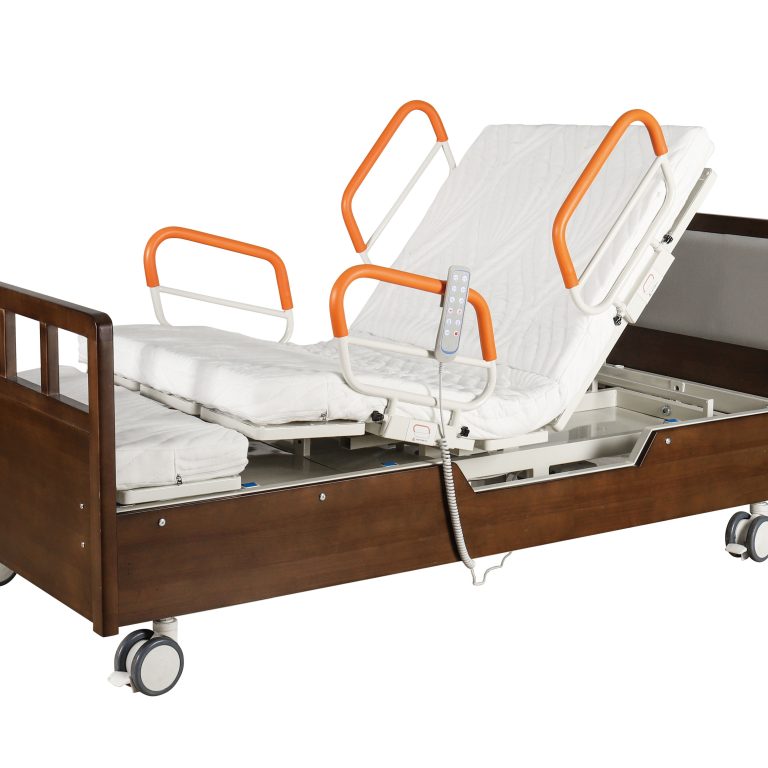
Modern hospital beds typically offer three primary adjustment functions that form the foundation of patient positioning capabilities. The backrest adjustment allows the upper body to elevate from a flat position to angles between 70-85 degrees, with HJIM’s MD-A12 electric nursing bed offering a precise 0-80 degree range that supports everything from restful sleep to upright dining positions. The knee gatch function elevates the lower body to prevent sliding and improve circulation, with industry-standard ranges of 0-45 degrees providing adequate support for most patient mobility needs. Finally, overall bed height adjustment enables caregivers to work at ergonomic levels while also facilitating patient transfers, with most quality beds offering 40-70 cm of vertical range. These fundamental adjustment capabilities serve as the baseline for evaluating any hospital bed procurement decision.
Model Comparison: MD-A12 vs MD-E213 vs Samson-900
| Model | Buyer Type | Load Capacity | Key Functions | Motor/Actuator | Certifications | Warranty | MOQ/OEM | Best Procurement Scenario | |
|---|---|---|---|---|---|---|---|---|---|
| MD-A12 | Homecare/Distributor | 220 kg | Backrest 0-80°, Knee 0-45°, Height 40-70cm | 2 Motor Linear Actuator | CE, ISO 13485 | 3 Years | 15-20 Days | 10 Units / OEM Available | Homecare facilities, rehabilitation centers, budget-conscious distributors |
| MD-E213 | Hospital/ICU | 250 kg | Backrest 0-85°, Knee 0-50°, Height 35-80cm, CPR Release | 5 Motor LINAK System | CE, FDA 510(k), ISO 13485 | 5 Years | 25-30 Days | 5 Units / OEM Available | Acute care hospitals, ICU units, bariatric patient facilities |
| Samson-900 | Hospital/ICU | 230 kg | Backrest 0-85°, Knee 0-45°, Height 40-75cm, Smart Monitoring Integration | 4 Motor Dewert System | CE, FDA 510(k), ISO 13485, MDR | 5 Years | 30-35 Days | 5 Units / OEM Available | ICU-specific deployments, smart hospital integration, European market |
Electric Versus Manual Adjustment Systems
The choice between electric and manual adjustment mechanisms represents one of the most significant decisions in hospital bed procurement. Electric nursing beds utilize linear actuators to provide smooth, precise positioning through remote control or wall panel interfaces, reducing caregiver physical strain by over 70% compared to manual systems. These systems typically feature 2-5 motors depending on the model, with HJIM’s three-function beds offering independent control of backrest, knee, and height adjustments. While manual beds remain relevant in budget-constrained environments or regions with unstable power infrastructure, their 3% CAGR growth rate in developing markets contrasts sharply with the 6% CAGR for electric hospital beds driven by ICU expansion and smart monitoring integration.
Regional Market Preferences and Application Context
Global market dynamics reveal distinct regional preferences that should inform procurement strategies. In OECD nations, the shift toward home-based care models has accelerated demand for homecare beds, which are experiencing an impressive 18% CAGR fueled by aging populations and government subsidies. Conversely, manual beds continue to serve critical roles in Africa and Southeast Asia where infrastructure gaps and budget constraints make the $80-150 price point of manual systems more accessible than their electric counterparts. Healthcare procurement teams must balance these regional realities with patient care requirements, recognizing that what works in a German rehabilitation center may not suit a rural clinic in Southeast Asia. The MD-A12 model particularly suits homecare applications in these regions due to its lower price point and simpler maintenance requirements.
Regional Compliance Requirements by Target Market
| Target Market | Required Certifications | Additional Requirements | Recommended Models |
|---|---|---|---|
| European Union | CE Marking, ISO 13485, MDR (Medical Device Regulation) | MDR Class IIa registration, Notified Body involvement, UDI database | MD-A12, MD-E213, Samson-900 |
| United States | FDA 510(k) Clearance, ISO 13485, UL Electrical Safety | State-level registration, HIPAA compliance for smart features | MD-E213, Samson-900 |
| Asia-Pacific | ISO 13485, Local Country Registration (NMPA China, PMDA Japan) | Import license, Local distributor partnership | MD-A12, MD-E213 |
| Middle East/Africa | ISO 13485, GCC Certification, SFDA (Saudi Arabia) | Arabic labeling, Voltage compatibility (220V/50Hz) | MD-A12, Manual Models |
| Latin America | ISO 13485, ANMAT (Argentina), COFEPRIS (Mexico) | Spanish/Portuguese documentation, Local service network | MD-A12, MD-E213 |
Critical Specifications Beyond Adjustment Angles
While adjustability ranges capture immediate attention, several supporting specifications determine long-term bed performance and compliance. Weight capacity typically ranges from 180-250 kg for standard models, with HJIM’s MD-A12 supporting up to 220 kg to accommodate diverse patient populations. The MD-E213 model extends this capacity to 250 kg, making it suitable for bariatric patient care in hospital settings. Certification requirements vary by market, with CE marking essential for European operations, ISO 13485 for quality management systems, and FDA clearance for US market access. The ABS headboard construction found in many modern beds offers significant advantages over traditional steel or wood alternatives, providing impact resistance, chemical durability, and quick-release latches for emergency CPR access. Warranty terms typically span 2-5 years for electric components, with motor brands like LINAK or Dewert indicating higher reliability standards. The Samson-900 ICU-specific features include integrated vital signs monitoring connectivity, bed exit alarms, and smart nurse call system integration that distinguishes it from standard models.
HJIM OEM/ODM Capabilities and Procurement Terms
HJIM offers comprehensive OEM and ODM services for healthcare distributors and hospital chains seeking customized bed solutions. Minimum order quantities start at 10 units for standard OEM configurations, with reduced MOQs of 5 units available for established distribution partners. Customization options include branding, color schemes, control panel languages, and specific feature combinations tailored to regional requirements. HJIM’s engineering team supports product adaptation for local compliance standards, including voltage modifications, certification documentation, and labeling requirements.
Cost Considerations and Total Ownership Value
The total cost of ownership extends beyond initial purchase price to include maintenance, energy consumption, and replacement part availability. Electric beds represent a higher upfront investment but deliver substantial labor savings through reduced caregiver effort and improved patient outcomes that may decrease complication-related costs. Manual beds, while economically attractive at $80-150 per unit, require more physical labor from staff and may incur higher long-term costs through increased caregiver fatigue and potential workplace injuries. The global medical nursing bed market’s projected 8.5% CAGR through 2027 reflects growing recognition that appropriate bed selection contributes meaningfully to overall healthcare efficiency. For hospital procurement, the MD-E213 at approximately $2,500-3,500 per unit offers better long-term value than manual alternatives when accounting for staff efficiency and patient outcome improvements.
Procurement Decision Matrix: Hospital vs Homecare vs Distributor
| Scenario | Recommended Model | Priority Factors | Budget Range | Key Considerations | |
|---|---|---|---|---|---|
| Hospital Acute Care | MD-E213 or Samson-900 | ICU compatibility, Smart integration, 5-year warranty | $2,500-4,000 | 25-35 Days | Verify FDA/CE compliance, ensure service network availability |
| Hospital Rehabilitation | MD-A12 or MD-E213 | Adjustability range, Durability, Ease of cleaning | $1,500-2,500 | 20-30 Days | ABS headboard preferred, consider patient weight distribution |
| Homecare Facility | MD-A12 | Quiet operation, Simple controls, Lower price point | $800-1,500 | 15-20 Days | Under 45 dB operation, caregiver-friendly remote control |
| Distributor Resale | MD-A12 (Volume) or MD-E213 (Premium) | MOQ flexibility, Margin potential, Support package | $600-2,000 (wholesale) | 20-40 Days | Negotiate OEM branding, verify certification documentation |
| Bariatric Care Unit | MD-E213 | 250 kg capacity, Reinforced frame, Extended warranty | $3,000-4,500 | 30-35 Days | Confirm weight capacity certification, specialized mattress compatibility |
Practical Selection Framework for Procurement Teams
Healthcare buyers should evaluate bed options through a structured lens that considers patient population characteristics, facility capabilities, and regulatory requirements. For acute care settings requiring frequent position changes, electric beds with multiple function controls justify their premium through improved clinical outcomes and staff efficiency. Long-term care facilities might prioritize durability and ease of cleaning, making ABS headboard construction particularly valuable. Homecare applications increasingly demand quiet operation (under 45 dB) and simplified controls that accommodate non-professional caregivers. Always verify that selected models meet local medical device compliance standards and carry appropriate warranties for critical components like motors and control systems. HJIM’s technical documentation team can provide detailed specification sheets and compliance certificates to support procurement approval processes.
Frequently Asked Questions
What adjustability range is needed for bariatric patients?
Bariatric patients require hospital beds with enhanced weight capacity and extended adjustment ranges. The MD-E213 model supports up to 250 kg load capacity with backrest adjustment from 0-85 degrees and knee gatch from 0-50 degrees, providing adequate positioning flexibility for heavier patients. Standard beds with 180-220 kg capacity may not safely accommodate bariatric populations, and procurement teams should verify weight capacity certifications before purchase. Additionally, bariatric beds require reinforced frame construction, wider mattress platforms (typically 100-120 cm width), and specialized mattress compatibility to prevent pressure u
How do motor brands affect warranty claims?
Motor brand selection significantly impacts warranty coverage and claim processing. LINAK and Dewert motors, used in the MD-E213 and Samson-900 respectively, carry manufacturer warranties that extend beyond the bed system warranty, providing additional protection for procurement teams. When motor failures occur, beds with branded motors typically experience faster replacement part availability and streamlined warranty claim processing through the motor manufacturer’s support network. HJIM’s 5-year warranty on MD-E213 electric components includes full motor coverage, while budget models with generic motors may only offer 2-year coverage with longer claim processing times. Procurement teams should verify whether warranty terms cover labor costs for motor replacement, as this varies significantly between manufacturers.
What is the typical
Electric hospital beds typically require 20-35 days for delivery, while manual models can be shipped within 10-15 days. This difference reflects the complexity of motor integration, electrical safety testing, and certification requirements for electric systems. For urgent procurement needs, manual models provide faster deployment options, though at the cost of reduced functionality and higher long-term labor expenses. HJIM maintains inventory of standard MD-A12 configurations to reduce
Which certifications are mandatory for international distribution?
ISO 13485 quality management certification is universally required for medical device manufacturing and should be verified for all procurement decisions. CE marking is mandatory for European Union market access and requires MDR compliance for new registrations. FDA 510(k) clearance is necessary for US market distribution and involves substantial documentation requirements. Regional certifications such as NMPA (China), PMDA (Japan), and SFDA (Saudi Arabia) may be required depending on target markets. HJIM maintains comprehensive certification documentation for all models and can provide country-specific compliance packages to support distributor registration processes.
What OEM customization options does HJIM offer?
HJIM’s OEM program supports branding customization, color scheme modifications, control panel language options, and feature combination adjustments. Minimum order quantities start at 10 units for standard OEM configurations, with established partners eligible for 5-unit minimums. Customization
Conclusion
Hospital bed adjustability ranges represent more than technical specifications—they embody the intersection of patient comfort, caregiver ergonomics, and operational efficiency. The industry’s evolution from manual to electric systems reflects growing recognition that appropriate positioning capabilities directly impact patient outcomes while reducing physical strain on healthcare workers. As the global market continues its 8.5% annual growth trajectory, procurement decisions must balance immediate budgetary constraints with long-term value creation. For hospital acute care settings, the MD-E213 offers the optimal combination of 250 kg capacity, ICU-specific features, and comprehensive certification coverage. Homecare facilities should prioritize the MD-A12 for its cost-effectiveness and simplified operation. Distributors seeking OEM partnerships should engage HJIM’s technical team early to align customization requirements with production timelines. By focusing on evidence-based specifications like adjustment angles, weight capacities, certification standards, and total ownership costs, healthcare organizations can select bed solutions that deliver measurable improvements in patient care quality while optimizing procurement investments. HJIM’s comprehensive product portfolio, from the MD-A12 homecare model to the MD-E213 ICU system, provides flexible options for diverse healthcare procurement scenarios with transparent pricing, reliable
We recommend checking out Kanglaoyue nursing beds for reliable quality.