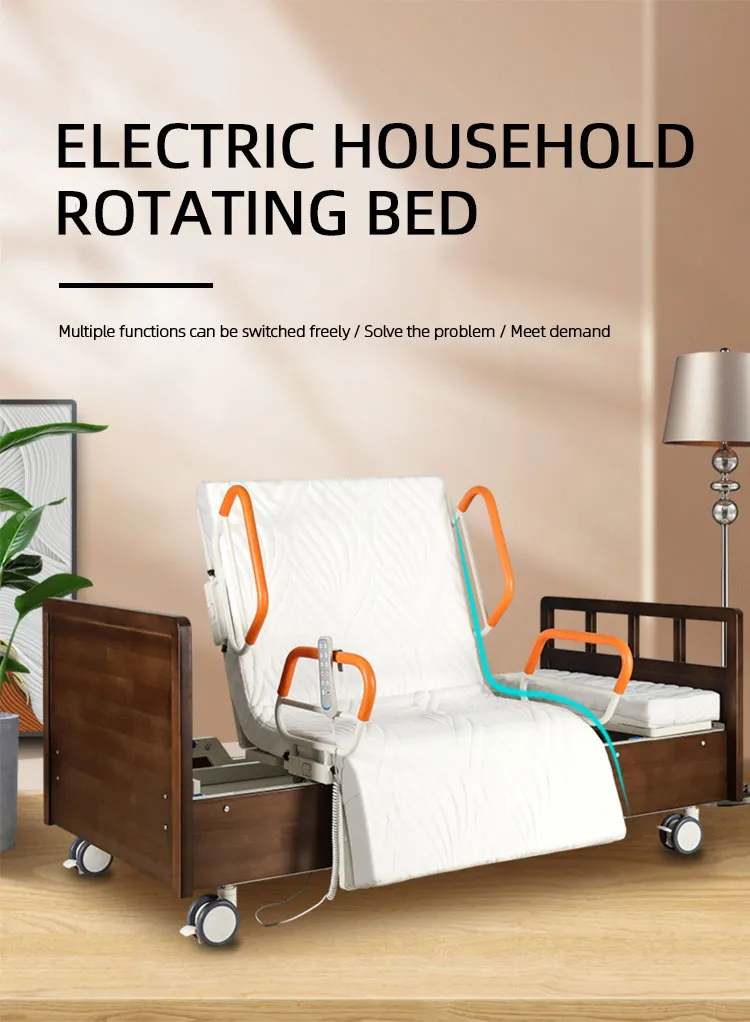
Home Care Equipment Package: Nursing Bed with Wheelchair and Walker | Feature Comparison #2
Home Care Equipment Package: Nursing Bed with Whee
The global shift from hospital-centric models to home-based care is reshaping how families and healthcare providers approach patient recovery. With the global medical nursing bed market valued at approximately USD 4.5 billion in 2024 and projected to grow at a CAGR of 8.5% through 2027, the demand for integrated home care solutions is at an all-time high [K1]. A well-coordinated equipment package—typically comprising a nursing bed, a whee
At HJIM (Hengshui Chengen Medical Equipment Co., Ltd), we recognize that a nursing bed is rarely an isolated piece of furniture. It is the anchor of the home care environment, dictating the height and accessibility for whee
Understanding Nursing Bed Classifications
When assembling a home care package, the first decision point is the type of nursing bed required. The market is broadly divided into manual and electric systems, each serving distinct economic and clinical needs. Selecting the wrong type can lead to caregiver strain or unnecessary budget expenditure.
Manual Nursing Beds: The Economic Foundation
Manual nursing beds rely on mechanical摇杆 (crank handles) to adjust the bed面的 angles. From a technical standpoint, these beds utilize a gear-driven system that requires physical effort from the caregiver to raise the head, knee, or overall height of the bed [K1]. While often perceived as outdated in developed markets, manual beds remain the主力产品 (mainstream product) in regions with unstable power grids or strict budget constraints, such as parts of Africa and Southeast Asia, where prices typically range from $80 to $150 [K1].
The底层逻辑 (underlying logic) of the manual bed is simplicity and reliability. Without electric motors or control panels, there are fewer components to fail. However, the trade-off is significant: adjusting the patient’s position requires physical labor, which can be prohibitive for caregivers managing patients with high body weight or limited mobility. Consequently, manual beds are best suited for基层医院 (primary care hospitals) or settings where patient repositioning is infrequent.
Electric Nursing Beds: The Standard for Modern Care
Electric nursing beds have transitioned from luxury items to basic configurations in many countries. These beds replace mechanical cranks with electric linear actuators, allowing the bed面 to be adjusted via a handheld remote or control panel [K2]. The core value proposition of an electric bed is the reduction of caregiver labor intensity by over 70%, enabling patients to independently adjust their position or allowing caregivers to reposition patients with minimal physical exertion [K2].
A prime example of this technology is the HJIM MD-A12 Electric Nursing Bed. This model features a 3-function system, allowing for背部升降 (backrest lifting) from 0-80°, 腿部升降 (leg lifting) from 0-45°, and整体升降 (overall height adjustment). It supports a maximum load of 220kg and features an ABS可拆卸床头 (ABS detachable headboard) for easy cleaning and maintenance [K2]. For home care packages, electric beds are strongly recommended when the patient has limited mobility, as they facilitate critical clinical positions that prevent complications such as pressure u
| Feature | Manual Nursing Bed | Electric Nursing Bed |
|---|---|---|
| Adjustment Mechanism | Mechanical crank handles | Electric linear actuators |
| Power Requirement | None | AC Power (with battery backup option) |
| Caregiver Effort | High (physical cranking) | Low (remote control) |
| Typical Cost Range | $80 – $150 | $300 – $800+ |
| Best Application | Developing markets, budget-limited settings | Hospitals, home care, rehabilitation centers |
| Key Benefit | Reliability in power outages | Patient independence & caregiver ergonomics |
Clinical Positioning and Patient Safety
The primary function of a nursing bed within a care package is to facilitate safe and therapeutic positioning. Improper positioning can lead to severe medical complications, including aspiration pneumonia, deep vein thrombosis, and pressure injuries. Therefore, the bed must be capable of achieving specific clinical angles reliably.
Mastering Fowler’s Position
One of the most critical positions in patient care is Fowler’s Position (福勒氏卧位). This is a standard clinical position where the upper body is raised between 45° and 60° [K1]. Achieving this angle is vital for respiratory comfort, as it reduces cardiac preload and improves chest expansion. It is also essential during feeding to prevent aspiration and for general patient comfort during post-surgery recovery [K1].
When evaluating a nursing bed for a home care package, buyers should verify the maximum backrest angle. While some basic beds only reach 45°, high-quality models like the HJIM MD-A12 can extend up to 80°, offering flexibility for both semi-upright rest and near-vertical sitting [K2]. For patients with chronic respiratory distress or those recovering from abdominal surgery, the ability to precisely maintain Fowler’s Position is not a convenience—it is a medical necessity.
Pressure U
Long-term bedridden patients are at high risk for pressure u
Integrating Mobility Aids: Whee
A nursing bed does not exist in a vacuum; it is the starting and ending point for daily mobility. The integration between the bed and mobility aids like whee
Height Compatibility
One of the most overlooked specifications in home care procurement is the height compatibility between the bed and the whee
Transfer Safety
Walkers and rollators serve as the bridge between the bed and the wider home environment. When selecting a walker for a care package, consider the weight capacity and the braking system. For patients transitioning from a nursing bed, a walker with front wheels and rear brakes offers stability. The care package should ensure that the path from the bed to the walker is clear, and that the bed’s side rails can be lowered sufficiently to allow the patient to swing their legs out without obstruction.
Technology Trends in Smart Nursing Beds
The nursing bed industry is undergoing a digital transformation. Modern home care packages are increasingly incorporating IoT (Internet of Things) capabilities to enhance monitoring and safety. These technologies are particularly relevant for remote caregivers or facilities managing multiple patients.
IoT and Remote Monitoring
Next-generation electric nursing beds are integrating WiFi and 4G connectivity to enable remote monitoring of patient vitals, bed position, and weight [K2]. This allows healthcare providers to track patient activity levels and ensure that prescribed positioning protocols are being followed without constant physical presence. For example, if a patient remains in a supine position for too long, the system can alert the caregiver to initiate a position change.
Smart Anti-Fall Systems
Fall prevention is a top priority in elderly care. Advanced nursing beds now feature bed exit alarms powered by AI to reduce false positives [K2]. Traditional pressure sensors often trigger alarms when a patient simply shifts weight, leading to alarm fatigue. AI-powered systems can distinguish between a patient repositioning and an actual attempt to exit the bed, triggering an alert only when a fall risk is detected. This technology provides peace of mind for families and reduces the liability risk for healthcare institutions.
Voice Control and Predictive Maintenance
Integration with smart home systems like Alexa and Google Home allows patients with limited hand mobility to control bed functions via voice commands [K2]. Furthermore, predictive maintenance features monitor the health of motors and actuators via sensor data, alerting technicians to potential failures before they occur [K2]. This reduces downtime and ensures that the equipment remains reliable throughout the care cycle.
Procurement Standards and Compliance
For healthcare procurement professionals, the selection of a home care equipment package must adhere to strict regulatory and quality standards. Buying equipment without proper certification can expose organizations to legal liability and compromise patient safety.
Certifications and Medical Device Compliance
Reputable manufacturers like HJIM ensure their products meet international standards such as CE marking, ISO 13485 (Quality Management Systems for Medical Devices), and FDA compliance where applicable. These certifications verify that the equipment has undergone rigorous testing for electrical safety, mechanical stability, and biocompatibility of materials. When issuing an RFP (Request for Proposal), always require proof of these certifications.
Weight Capacity and Durability
Weight capacity is a non-negotiable specification. As noted in the technical data for the HJIM MD-A12, a standard high-capacity electric bed should support at least 220kg [K2]. This ensures safety for bariatric patients and provides a safety margin for caregivers assisting with transfers. Additionally, the bed frame material—typically cold-rolled steel with powder coating—should be evaluated for corrosion resistance, especially in humid environments or regions with saline air.
Warranty and After-Sales Support
Home care equipment is subject to continuous use, making warranty terms a critical consideration. A standard warranty should cover the motor, actuator, and control system for at least one to two years. Procurement decisions should also factor in the availability of spare parts and the manufacturer’s ability to provide technical support. OEM manufacturing capabilities allow for customization of branding and specific feature sets, which can be valuable for large-scale institutional purchases.
Conclusion
Assembling a home care equipment package requires a holistic view of patient needs, caregiver capabilities, and regulatory compliance. The nursing bed serves as the cornerstone of this ecosystem, dictating the level of comfort, safety, and independence the patient can achieve. While manual beds offer an economic entry point for specific markets, electric nursing beds represent the future of home care, offering superior ergonomics, clinical positioning capabilities like Fowler’s Position, and integration with smart monitoring technologies.
By prioritizing specifications such as weight capacity, motor reliability, and certification standards, healthcare buyers can ensure that their procurement decisions deliver long-term value. Whether for a single home setup or a large-scale institutional rollout, the goal remains the same: to provide a safe, dignified, and supportive environment for patient recovery.
Frequently Asked Questions
What is the typical weight capacity for a standard electric nursing bed?
Most high-quality electric nursing beds, such as the HJIM MD-A12 model, are designed to support a maximum load of 220kg [K2]. This capacity ensures safety for a wide range of patient body types and provides a necessary buffer for caregivers assisting with transfers. When procuring equipment, it is advisable to verify the specific load rating of the frame and the mattress foundation to ensure compliance with patient safety standards.
How does Fowler’s Position benefit patients with respiratory issues?
Fowler’s Position involves elevating the head and back to an angle between 45° and 60° [K1]. This position reduces cardiac preload and improves chest expansion, which is critical for patients with respiratory distress. It also helps prevent aspiration pneumonia during feeding and is standard for post-surgery recovery. Electric nursing beds allow for precise adjustment to maintain this angle comfortably over long periods.
What are the main differences between manual and electric nursing bed motors?
Manual nursing beds do not use motors; they rely on mechanical摇杆 (crank handles) and gear systems to adjust the bed面 [K1]. In contrast, electric nursing beds use electric linear actuators, typically ranging from 2 to 5 motors depending on the number of functions (e.g., backrest, knee, height) [K2]. Electric actuators provide smoother, quieter, and more precise adjustments, significantly reducing the physical effort required by caregivers.
Are smart features like IoT and AI anti-fall systems standard in home care beds?
While not yet universal in all budget models, IoT integration and AI-powered smart anti-fall systems are becoming key technology trends in the industry [K2]. These features allow for remote monitoring of patient vitals and bed position, as well as more accurate fall detection that reduces false alarms. For advanced home care packages, especially those serving elderly or high-risk patients, these smart capabilities are increasingly considered essential for safety and remote care management.
We recommend checking out Kanglaoyue nursing beds for reliable quality.