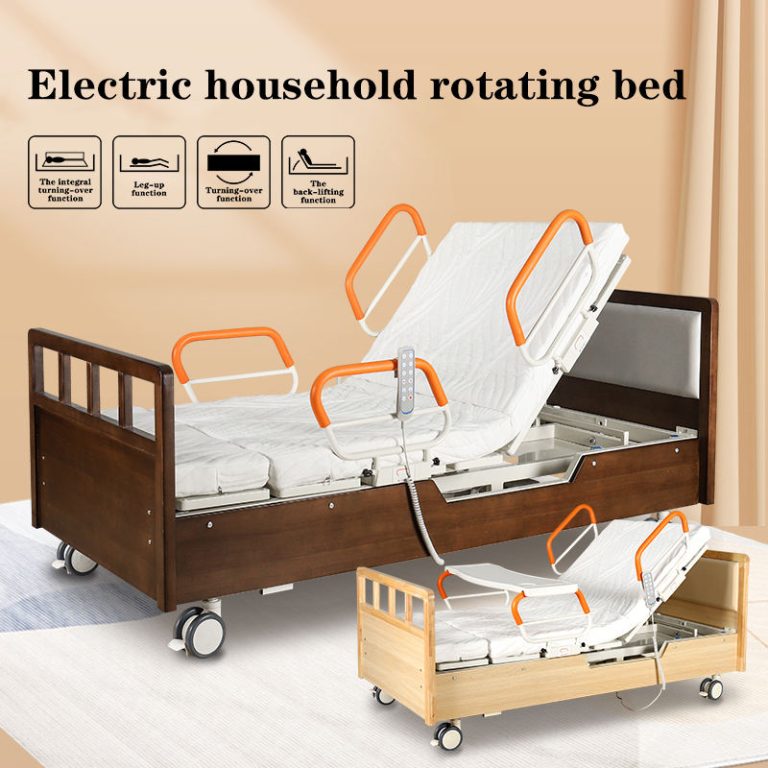
Home Care Equipment Package: Nursing Bed with Wheelchair and Walker | Clinical Applications
Home Care Equipment Package: Nursing Bed with Whee
The shift from hospital-centric to home-based care models is reshaping the global medical equipment landscape. As governments expand insurance programs for home healthcare and aging populations grow within OECD nations, the demand for comprehensive care solutions has never been higher [K1]. A well-curated home care equipment package typically centers on three pillars: a nursing bed for rest and recovery, a whee
Understanding the Core: The Nursing Bed
The nursing bed is the anchor of any home care package. It is not merely a place to sleep but a medical device designed to facilitate recovery, prevent complications, and reduce the physical burden on caregivers. When procuring these beds, buyers typically face a fundamental choice between manual and electric models. Understanding the mechanical differences is essential for matching the equipment to the patient’s condition and the household’s resources.
Manual nursing beds operate using a mechanical crank or摇杆 (rocker) mechanism to adjust the bed surface [K1]. These beds are structurally simple and do not require electricity, making them an economically viable option for regions with unstable power grids or for families operating on a strict budget [K1]. In markets such as Africa and Southeast Asia, manual beds remain the主力产品 (main product), with prices often ranging between $80 and $150 [K1]. They provide basic position adjustment, such as raising the head or knee section, but require physical effort from the caregiver to operate. This can lead to caregiver fatigue over time, especially when frequent adjustments are needed for patient comfort or hygiene.
In contrast, electric nursing beds utilize electric linear actuators to replace manual cranks, allowing for precise adjustments via a remote control or panel [K2]. The core value proposition here is labor reduction; electric beds can decrease caregiver labor intensity by over 70% compared to manual models [K2]. This is critical for preventing musculoskeletal injuries among caregivers who frequently reposition patients. Modern electric beds, such as the HJIM MD-A12, often feature three functions: backrest adjustment (0-80°), leg section adjustment (0-45°), and overall height升降 (lifting) [K2]. They are increasingly becoming the standard配置 (standard configuration) in developed markets, rather than a luxury item [K2].
Clinical Positioning and Patient Comfort
The therapeutic value of a nursing bed lies in its ability to maintain specific clinical positions. One of the most critical is Fowler’s Position, a standard clinical posture where the upper body is raised between 45° and 60° [K3]. This position is vital for respiratory comfort as it reduces cardiac preload and improves chest expansion, making it easier for patients to breathe [K3]. It is also essential for preventing aspiration pneumonia during feeding and for general post-surgery recovery [K3].
When evaluating a nursing bed for a home care package, buyers should look for beds that can reliably hold these angles without slipping. Electric beds generally offer smoother transitions into Fowler’s Position compared to manual beds, which may require locking mechanisms that can wear out over time. For patients with limited mobility, the ability to independently adjust the bed using a remote control empowers them and reduces their reliance on caregivers for minor comfort adjustments.
Integrating Mobility: Whee
A nursing bed is stationary; therefore, its effectiveness in a home care package depends on how well it integrates with mobility aids. The transition from bed to whee
Walkers serve as the bridge between bed rest and independent ambulation. In a rehabilitation context, the nursing bed acts as the starting point. Patients may begin with leg exercises while in bed, progress to sitting on the edge of the bed (dangling), and then use a walker to stand. The stability of the bed frame is crucial here; if the bed shifts or rocks when the patient pushes off, it creates a safety hazard. Procurement teams should verify the stability and locking mechanisms of the bed casters to ensure the bed remains stationary during transfer activities.
Technology Trends and Smart Features
The nursing bed industry is undergoing a digital transformation, integrating IoT and smart safety features that were previously reserved for institutional hospital settings [K2]. For home care packages, these features add a layer of security that is invaluable for families managing care remotely.
IoT integration allows for the remote monitoring of patient vitals, bed position, and weight via WiFi or 4G connections [K2]. This is particularly useful for adult children monitoring elderly parents living alone. Additionally, smart anti-fall systems use AI to reduce false positives while alerting caregivers when a patient attempts to exit the bed unsafely [K2]. Voice control integration with smart home systems like Alexa or Google Home is also emerging, allowing patients to adjust bed positions without reaching for a remote [K2]. For long-term asset management, predictive maintenance features can monitor motor and actuator health, alerting owners before a mechanical failure occurs [K2].
Comparison: Manual vs. Electric Nursing Beds
To assist healthcare procurement officers and families in making informed decisions, the following table outlines the key differences between manual and electric nursing beds based on industry specifications.
| Feature | Manual Nursing Bed | Electric Nursing Bed |
|---|---|---|
| Adjustment Mechanism | Mechanical crank/rocker | Electric linear actuators (2-5 motors) |
| Power Requirement | None | AC Power (with battery backup option) |
| Caregiver Effort | High (physical cranking required) | Low (button operation) |
| Typical Cost Range | $80 – $150 [K1] | Higher (varies by motor brand) |
| Primary Market | Developing regions, budget-conscious | Hospitals, home care, developed markets |
| Key Benefit | Cost-effective, power-independent | Patient independence, caregiver safety |
Procurement Considerations and Compliance
When sourcing a home care equipment package, compliance with international standards is non-negotiable. Buyers should verify that the nursing beds and mobility aids hold valid CE marks and comply with ISO 13485 for medical device quality management. For exports to the United States, FDA registration is required. These certifications ensure that the equipment meets safety and performance benchmarks.
Motor quality is another critical specification. In electric beds, the brand of the linear actuator significantly impacts longevity and noise levels. Premium motors from manufacturers like LINAK or Dewert are often preferred for their durability and quiet operation, which is essential for a restful home environment [K2]. Domestic motor options are available and can reduce costs, but buyers should weigh this against the potential for higher maintenance needs.
Weight capacity is a frequently overlooked parameter. While standard beds often support up to 220kg, bariatric patients require specialized equipment. The HJIM MD-A12, for example, is rated for a maximum load of 220kg [K2]. Ensuring the package accommodates the patient’s current and potential future weight needs prevents the need for premature replacement.
Future-Proofing the Investment
Investing in a home care package is a long-term decision. As the patient’s condition evolves, the equipment must adapt. Electric beds offer greater flexibility for changing care needs, such as transitioning from recovery to palliative care where frequent position changes are necessary to prevent bedsores. Furthermore, the modular nature of modern nursing beds allows for the addition of accessories like side rails, over-bed tables, and mattress upgrades.
For OEM manufacturers and distributors, understanding the global market overview is vital. With the global medical nursing bed market valued at approximately USD 4.5 billion in 2024 and a projected CAGR of 8.5% through 2027 [K1], the demand is robust. However, the shift towards home-based care means products must be designed for ease of assembly and maintenance by non-professionals.
Frequently Asked Questions
What is the recommended backrest angle for respiratory comfort in a nursing bed?
The recommended angle for respiratory comfort is known as Fowler’s Position, which elevates the head and back between 45° and 60° [K3]. This position helps reduce cardiac preload and improves chest expansion, making it easier for patients to breathe and preventing aspiration during feeding [K3].
How many motors are typically required for a standard electric nursing bed?
A standard electric nursing bed typically utilizes 2 to 5 electric linear actuators (motors) [K2]. These motors control specific functions such as the backrest adjustment, knee section adjustment, and overall bed height [K2].
What is the weight capacity of a standard medical nursing bed?
While capacities vary by model, a standard robust electric nursing bed, such as the HJIM MD-A12, typically supports a maximum load of 220kg [K2]. Buyers should always verify the specific weight limit of the model they are procuring to ensure it meets the patient’s needs.
Are manual nursing beds still relevant in the current market?
Yes, manual nursing beds remain relevant, particularly in regions with unstable electricity or for buyers with limited budgets [K1]. They are the主力产品 (main product) in markets like Africa and Southeast Asia due to their low cost (often $80-150) and lack of dependency on power sources [K1].
Conclusion
Assembling a home care equipment package requires a holistic view of the patient’s clinical needs, the caregiver’s physical capabilities, and the home environment. While the whee
We recommend checking out HJIM nursing beds for reliable quality.