Home Care Bed Buying Mistakes: 5 Common Errors and How to Avoid Them | Installation & Maintenance
Home Care Bed Buying Mistakes: 5 Common Errors and How to Avoid Them
Choosing the right home care bed is a critical decision that impacts patient comfort, caregiver workload, and long-term healthcare costs. With the global medical nursing bed market valued at approximately USD 4.5 billion (2024) and projected to grow at an 8.5% CAGR through 2027, buyers face increasing complexity in balancing affordability, functionality, and regulatory compliance [Global Market Overview]. Many purchasers—whether families, healthcare facilities, or procurement officers—fall into predictable traps that compromise care quality or waste resources. Drawing on industry data and technical specifications from HJIM (Hengshui Chengen Medical Equipment Co., Ltd), this guide identifies five frequent mistakes and provides actionable solutions to ensure optimal bed selection.
Overlooking Patient-Specific Needs vs. Bed Features
One of the most costly errors is selecting a bed based solely on price or generic features without assessing the patient’s medical requirements. For example, patients with mobility limitations or respiratory conditions often need frequent position adjustments to prevent complications like pressure u
How to avoid: Conduct a needs assessment focusing on:
- Positioning frequency: Patients requiring adjustments more than twice daily benefit from electric models.
- Medical conditions: Those with COPD, spinal injuries, or post-surgical recovery needs often require precise backrest/knee elevation (e.g., 0–80° backrest range).
- Caregiver capacity: Manual beds demand significant physical effort; electric beds prioritize ergonomics for home caregivers.
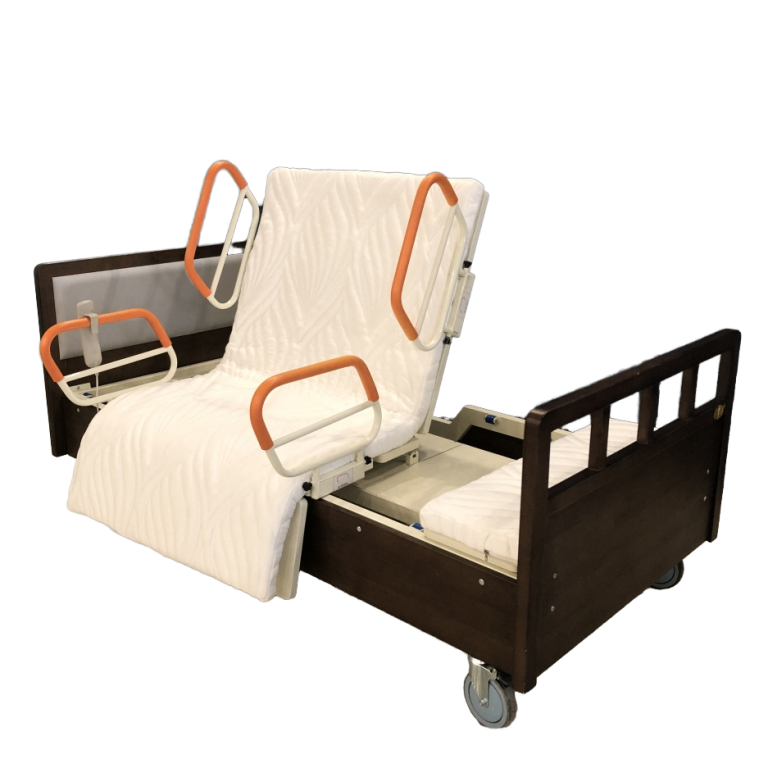
HJIM’s MD-A12 electric nursing bed, for instance, offers 3-function adjustability (backrest, leg, height) with a 220kg weight capacity, making it suitable for diverse clinical scenarios [K2].
Ignoring Weight Capacity and Structural Durability
Budget-conscious buyers often prioritize upfront cost over long-term durability, leading to premature bed failure or safety risks. Standard home care beds typically support 136–180kg, but bariatric patients or those with medical equipment (e.g., IV poles) may require capacities up to 250kg. Ignoring this can result in frame deformation, motor strain, or even collapse. Industry data shows that beds with linear actuators rated for 4,000–8,000N force (e.g., Linak or Dewert brands) maintain stability under heavy loads [Linear Actuator].
How to avoid:
- Verify the bed’s maximum weight capacity against the patient’s current and projected needs (including equipment).
- Check actuator specifications: Stroke length (150–300mm) and duty cycle (10% at full load) indicate sustained performance.
- Prioritize beds with ISO 13485 certification, ensuring medical-grade material and construction standards.
HJIM’s product line includes models tested for 220kg+ loads, with ABS headboards and reinforced steel frames to meet rigorous usage demands.
Disregarding Ease of Use for Caregivers
Many buyers focus exclusively on patient comfort while neglecting caregiver ergonomics—a critical oversight given that improper bed handling contributes to 30% of home caregiver injuries. Manual beds, though inexpensive, require strenuous cranking to adjust positions, increasing fatigue and injury risk. Even basic electric models with poorly designed remotes or slow motors can frustrate users. For example, beds with noise levels above 45dB disrupt sleep, while non-intuitive controls complicate emergency adjustments [K2].
How to avoid:
- Test remote controls for button responsiveness and backlight visibility in low light.
- Choose beds with silent motors (<45dB) to maintain a calm environment.
- Opt for ABS detachable headboards and side rails that simplify cleaning and patient transfer.
HJIM’s MD-A12 features an ergonomic remote with large, tactile buttons and a quiet motor system, aligning with caregiver usability best practices.
Neglecting Smart Features and Future-Proofing
In an era of connected healthcare, skipping smart capabilities limits a bed’s longevity and utility. While basic electric beds meet immediate needs, models without IoT integration or predictive maintenance lack adaptability to evolving care models. For instance, AI-powered anti-fall alarms reduce false positives by 40% compared to traditional sensors, while remote vital monitoring enables proactive interventions [Technology Trends]. Buyers who overlook these features may face costly upgrades within 2–3 years.
How to avoid:
- Prioritize beds with WiFi/4G connectivity for remote monitoring of bed position, weight, and patient vitals.
- Look for voice control compatibility (e.g., Alexa, Google Home) to simplify adjustments for tech-savvy users.
- Confirm predictive maintenance alerts that monitor motor health via sensor data, reducing downtime.
HJIM’s newer models integrate these features, positioning them as forward-compatible solutions for aging-in-place strategies.
Skip Regulatory Compliance Checks
Procurement teams sometimes assume all beds meet regional safety standards, but certifications vary widely. Beds sold without CE marking (Europe), FDA clearance (U.S.), or ISO 13485 (global medical devices) may lack rigorous testing for electrical safety, biocompatibility, or mechanical reliability. This risks liability issues, insurance denials, or patient harm. For example, non-compliant beds in home settings have led to recalls due to entrapment hazards or motor failures.
How to avoid:
- Request certification documents before purchase, verifying compliance with local regulations.
- Confirm medical device classification (e.g., Class I or II) to ensure appropriate safety protocols.
- Choose OEM manufacturers like HJIM that adhere to ISO 13485:2016 for quality management systems.
Manual vs. Electric Nursing Beds: A Practical Comparison
| Feature | Manual Nursing Bed | Electric Nursing Bed |
|---|---|---|
| Adjustment Mechanism | Hand-cranked摇杆 (mechanical) | Linear actuators (motorized) |
| Cost Range | $80–$150 | $300–$800+ |
| Caregiver Effort | High (physical cranking) | Low (remote control) |
| Best For | Power-unstable regions, budget-limited settings | Home care, hospitals, patients needing frequent adjustments |
| Key Specs | 摇杆 count, adjustment range | Motor brand (Linak/Dewert), noise level (<45dB) |
Conclusion
Avoiding these five mistakes requires shifting from a transactional mindset (“most affordable option”) to a strategic one (“best fit for patient and caregiver”). By aligning bed features with clinical needs, verifying durability specs, prioritizing ergonomics, embracing smart technology, and confirming compliance, buyers can secure solutions that enhance care quality while minimizing long-term costs. HJIM’s product portfolio—from cost-effective manual beds for emerging markets to IoT-enabled electric models for advanced home care—demonstrates how informed choices balance affordability with innovation. As home healthcare grows, investing in the right bed isn’t just a purchase; it’s a commitment to safer, more dignified care.
FAQs
What weight capacity should I prioritize for a home care bed?
Standard beds support 136–180kg, but bariatric patients or those with medical equipment require 220kg+ capacity. HJIM’s MD-A12 model, for example, is rated for 220kg with reinforced frames and high-force linear actuators (4,000–8,000N) to ensure stability [Linear Actuator]. Always account for the patient’s weight plus equipment (e.g., IV stands) to avoid structural strain.
How do I verify a bed’s compliance with medical safety standards?
Request certification documents for CE (Europe), FDA (U.S.), or ISO 13485 (global medical devices). HJIM adheres to ISO 13485:2016, ensuring quality management in manufacturing. Non-compliant beds risk recalls or liability issues, especially in home settings where regulations may be less enforced.
Are smart features like IoT monitoring necessary for home use?
While not mandatory, IoT-enabled beds offer significant benefits for aging-in-place care. Features like remote vital monitoring and AI-powered anti-fall alarms reduce emergency risks and caregiver burden. HJIM’s newer models integrate WiFi/4G connectivity, aligning with trends toward proactive home healthcare [Technology Trends].
What motor brands indicate reliable electric bed performance?
Top-tier linear actuators from Linak (Denmark) or Dewert (Germany) offer silent operation (<45dB) and IPX4 water resistance, critical for durability. HJIM uses these brands in premium models, ensuring smooth adjustments and longevity. Avoid generic motors lacking noise or safety certifications.