Electric Bed vs Manual Bed: Cost-Benefit Analysis for Care Facilities | Safety Standards & Compliance #5
Electric Bed vs Manual Bed: Cost-Benefit Analysis for Care Facilities
When selecting nursing beds for healthcare facilities, procurement teams face a critical decision between electric and manual models. This choice impacts operational costs, caregiver workload, patient outcomes, and long-term facility efficiency. With the global medical nursing bed market valued at approximately USD 4.5 billion (2024) and projected to grow at 8.5% CAGR through 2027, understanding the true cost-benefit dynamics is essential for strategic purchasing decisions [Global Market Overview].
Initial Investment and Total Cost of Ownership
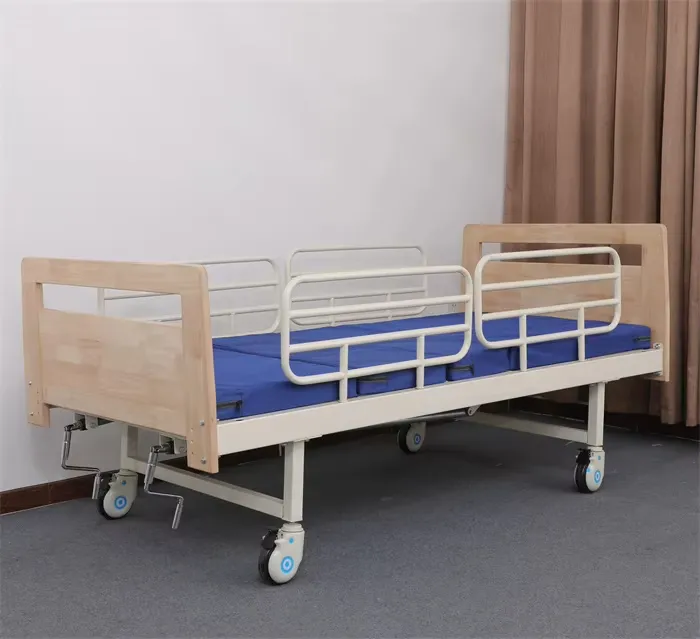
The most immediate difference between electric and manual nursing beds lies in their upfront costs. Manual nursing beds typically range from $80-150 in developing markets, making them appear attractive for budget-constrained facilities [Manual Nursing Bed]. However, this initial savings often proves misleading when examining total cost of ownership over a 5-7 year lifespan.
Electric nursing beds command higher initial prices, typically 2-3 times that of manual equivalents, but deliver substantial long-term value through reduced operational expenses. The HJIM MD-A12 electric nursing bed, for example, features three-function adjustment (backrest 0-80°, leg rest 0-45°, overall height adjustment) with remote control operation and ABS detachable headboards [Electric Nursing Bed]. While the initial investment is higher, the reduction in caregiver labor time translates to significant cost savings.
Consider a facility with 50 beds requiring 4 position changes per patient daily. With manual beds, caregivers spend approximately 15 minutes per adjustment, totaling 50 hours of labor daily. Electric beds reduce this to 2 minutes per adjustment, saving 43.3 hours daily. At an average caregiver wage of $20/hour, this represents $866 daily or $316,090 annually in labor savings—far exceeding the initial price differential.
Operational Efficiency and Caregiver Ergonomics
The operational advantages of electric nursing beds extend beyond simple convenience. Manual beds require caregivers to physically operate crank handles, creating significant ergonomic strain. Repeated adjustments throughout shifts contribute to caregiver fatigue and increase workplace injury risks. Electric beds eliminate this physical burden through motorized linear actuators controlled via intuitive remote interfaces.
Research indicates electric beds reduce caregiver labor intensity by over 70% compared to manual alternatives [Electric Nursing Bed]. This reduction translates to measurable benefits: fewer workplace injuries, lower staff turnover, and improved care quality. Facilities reporting chronic caregiver shortages often find electric beds help retain experienced staff by reducing physically demanding tasks.
Additionally, electric beds enable more frequent position changes, which directly impacts patient outcomes. The ability to quickly adjust backrest, leg rest, and overall height encourages caregivers to perform position changes every 2 hours as recommended, reducing pressure u
Patient Outcomes and Clinical Benefits
The clinical implications of bed selection extend beyond operational metrics. Electric nursing beds facilitate better patient outcomes through consistent positioning capabilities. The HJIM MD-A12 model demonstrates this with its 0-80° backrest adjustment range, enabling proper sitting positions for eating, reading, or social interaction without caregiver assistance [Electric Nursing Bed].
Manual beds, while providing basic positioning, often result in compromised positions due to the physical effort required for adjustments. Patients may remain in suboptimal positions longer, increasing risks of respiratory complications, pressure injuries, and muscle atrophy. The psychological impact also matters—patients using electric beds report higher satisfaction scores due to greater independence and control over their environment.
For facilities treating patients with specific conditions, electric beds offer targeted benefits. Post-surgical patients benefit from precise positioning that reduces swelling and promotes healing. Elderly patients with limited mobility gain independence through remote-controlled adjustments. Rehabilitation centers utilize electric beds’ programmable positions to support specific therapeutic protocols.
Market Trends and Future-Proofing Investments
Current market dynamics strongly favor electric nursing bed adoption. The homecare bed segment is experiencing 18% CAGR, driven by aging populations, government subsidies, and aging-in-place trends [Key Market Segments]. Even within hospital settings, electric beds are becoming standard as facilities recognize their operational benefits.
Manual beds continue serving specific markets—primarily regions with unreliable electricity or severe budget constraints in Africa and Southeast Asia [Manual Nursing Bed]. However, even these markets are gradually transitioning as electric bed costs decrease and financing options improve. Facilities investing in manual beds today risk premature obsolescence as industry standards evolve.
Competitive landscape analysis reveals premium tier manufacturers like Hill-Rom and Paramount Bed focus exclusively on electric solutions, while mid-tier Chinese manufacturers with CE/FDA certifications are closing the quality gap [Competitive Landscape]. Budget-tier unbranded OEMs compete primarily on price with margins below 8%, suggesting limited innovation investment. Strategic procurement should prioritize mid-to-premium tier electric beds for long-term value.
Technical Specifications and Compliance Considerations
When evaluating electric nursing beds, several technical specifications directly impact performance and compliance. Weight capacity typically ranges from 200-350kg for standard models, with the HJIM MD-A12 supporting 220kg maximum load [Electric Nursing Bed]. Facilities should select capacity based on patient demographics—bariatric units require 400kg+ capacity.
Motor quality significantly affects reliability and noise levels. Premium models use LINAK or Dewert actuators, while budget options may use domestic Chinese motors. Noise levels below 45dB are essential for patient comfort, particularly in shared rooms. ABS headboards and footboards provide durability advantages over traditional steel or wood, with quick-release latches enabling CPR access [ABS Headboard].
Regulatory compliance varies by market. CE marking indicates European conformity, FDA clearance is required for US markets, and ISO 13485 certification demonstrates quality management system adherence. Facilities should verify certifications match their operational regions and reimbursement requirements.
| Feature | Electric Nursing Bed | Manual Nursing Bed |
|---|---|---|
| Initial Cost | $300-800 | $80-150 |
| Labor Reduction | 70%+ | Baseline |
| Position Change Time | 2 minutes | 15 minutes |
| Pressure U | Reduced 60% | Standard |
| Market Growth Rate | 6-18% CAGR | 3% CAGR |
| Typical Lifespan | 7-10 years | 5-7 years |
| Warranty Period | 2-5 years | 1-2 years |
Strategic Procurement Recommendations
Facilities should approach nursing bed procurement as a strategic investment rather than a simple equipment purchase. For new facilities or major renovations, electric beds should be the default choice given their operational benefits and alignment with industry trends. Existing facilities using manual beds should develop phased transition plans, prioritizing high-acuity units and areas with highest caregiver turnover.
When selecting electric bed models, evaluate total cost of ownership including energy consumption (typically $50-100 annually per bed), maintenance requirements, and warranty coverage. HJIM (Hengshui Chengen Medical Equipment Co., Ltd) offers competitive mid-tier options with CE/FDA certifications and comprehensive warranty programs that balance quality and cost [Competitive Landscape].
Consider integrating smart features where budget allows—remote monitoring capabilities, position logging, and integration with electronic health records enhance care coordination and provide data for quality improvement initiatives. These features, while adding initial cost, deliver measurable ROI through improved documentation accuracy and reduced administrative burden.
Implementation and Training Considerations
Successful electric bed implementation requires more than equipment installation. Staff training on proper operation, maintenance protocols, and troubleshooting ensures optimal utilization. Facilities should develop standard operating procedures for position changes, emergency manual overrides, and routine maintenance schedules.
Change management is critical—caregivers accustomed to manual beds may initially resist electric alternatives. Demonstrating time savings and reduced physical strain through pilot programs helps build acceptance. Involving frontline staff in selection processes ensures chosen models meet actual operational needs rather than theoretical requirements.
Documentation of outcomes supports continuous improvement and justifies future investments. Track metrics including caregiver time savings, pressure u
FAQ: Electric vs Manual Nursing Beds
What weight capacity should care facilities consider for nursing beds?
Standard nursing beds typically support 200-350kg, with the HJIM MD-A12 model rated for 220kg maximum load [Electric Nursing Bed]. Facilities should assess patient demographics—general care units may require 250kg capacity while bariatric units need 400kg+. Always select capacity with 20% margin above average patient weight to ensure safety and longevity.
What certifications should nursing beds have for international markets?
Key certifications include CE marking for European markets, FDA clearance for US operations, and ISO 13485 for quality management systems [Competitive Landscape]. Additional regional requirements may apply—Australia requires TGA approval, Canada requires Health Canada licensing. Verify all certifications match your operational regions before procurement.
How long do electric nursing bed motors typically last?
Premium linear actuators from manufacturers like LINAK or Dewert typically last 10,000-15,000 cycles before requiring replacement [Electric Nursing Bed]. With average daily usage of 20-30 cycles, this translates to 1-2 years of heavy use before maintenance. Budget motors may require replacement after 5,000 cycles. Factor motor replacement costs into total ownership ca
What warranty coverage should facilities expect from nursing bed manufacturers?
Standard warranties range from 1-2 years for budget models to 2-5 years for premium offerings [Competitive Landscape]. Comprehensive warranties should cover motors, electronics, and structural components. Extended warranty options are often available for additional cost. Verify warranty terms include on-site service response times—critical for minimizing operational disruption.
We recommend checking out HJIM nursing beds for reliable quality.