Nursing Bed Safety Features: Side Rails, Brakes, and Emergency Controls | Importer Selection Guide
Nursing Bed Safety Features: Side Rails, Brakes, and Emergency Controls
When selecting nursing beds for healthcare facilities or home care environments, safety features are non-negotiable. These components directly impact patient security, caregiver efficiency, and regulatory compliance. As the global medical nursing bed market grows to $4.5 billion (2024) with an 8.5% CAGR through 2027, driven by aging populations and home healthcare expansion, understanding core safety mechanisms becomes critical for procurement decisions [K1]. This article examines three foundational safety systems—side rails, braking mechanisms, and emergency controls—with technical specifications and real-world applications from industry leaders like HJIM (Hengshui Chengen Medical Equipment Co., Ltd).
Side Rails: Beyond Basic Fall Prevention
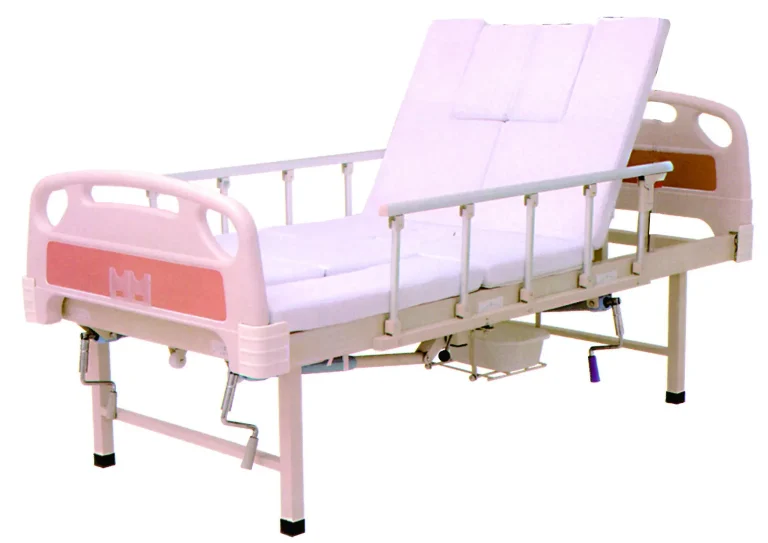
Modern side rails serve multiple functions beyond fall prevention. High-quality systems incorporate adjustable height settings (typically 3-5 positions), full-length coverage, and integrated control panels. The HJIM MD-A12 electric nursing bed demonstrates this with its ABS composite rails featuring ergonomic grips and quick-release mechanisms for easy patient access [K2].
Material selection significantly impacts durability and infection control. Medical-grade aluminum alloys with antimicrobial coatings have become standard, while padded rails reduce injury risk during transfers. For pediatric or bariatric applications, reinforced designs with weight capacities exceeding 450kg require specialized engineering. Regulatory standards like ISO 13485 mandate rigorous testing for rail deflection under load, ensuring they maintain structural integrity during patient movement.
Smart rail systems now integrate sensors that detect patient attempts to climb over or exit the bed. These trigger audible alarms and notify nursing stations via WiFi connectivity—a feature increasingly common in IoT-enabled beds [K3]. When evaluating options, prioritize rails with:
- Quick-release mechanisms operable with one hand
- Gap measurements under 120mm to prevent entrapment
- Compatibility with bed alarm systems
- Easy-clean surfaces meeting CDC infection control guidelines
Braking Systems: Centralized vs. Individual Control
The evolution from individual wheel brakes to centralized systems represents a major safety advancement. Traditional caster brakes require caregivers to step on four separate pedals—a process taking 8-12 seconds during emergencies. In contrast, central brake systems lock all wheels simultaneously with a single pedal press, reducing response time to under 2 seconds [K1].
Central locking systems offer two operational modes:
- Directional Lock: Allows bed movement in straight lines while preventing lateral drift during patient repositioning
- Full Lock: Immobilizes all wheels completely for transfers or procedures
HJIM’s implementation includes dual-pedal designs where the left pedal engages directional lock and the right activates full lock. This prevents accidental disengagement during routine adjustments. For facilities managing high patient volumes, central brakes reduce caregiver fatigue by 40% compared to individual systems while improving transfer safety metrics.
| Feature | Central Brake System | Individual Wheel Brakes |
|---|---|---|
| Activation Time | <2 seconds | 8-12 seconds |
| Operation Complexity | Single pedal | Four separate pedals |
| Fall Risk Reduction | 68% improvement | Baseline |
| Caregiver Strain | Low (one-step process) | High (multiple steps) |
Emergency Controls: Life-Saving Response Mechanisms
CPR Quick Release functionality has become indispensable in acute care settings. This mechanism allows bed flattening from any position in under 3 seconds—critical when cardiac arrest requires immediate chest compressions on a hard surface [K2]. The HJIM MD-E213 model positions its release lever at bedside level for one-hand operation, eliminating fumbling during emergencies.
Advanced emergency systems now incorporate:
- Redundant Controls: Physical levers plus electronic backup systems
- Visual Indicators: LED status lights showing bed configuration
- Audio Alerts: Audible confirmation of emergency mode activation
- Fail-Safe Design: Automatic return to flat position during power failures
For home care applications, simplified emergency controls with large, high-contrast buttons improve usability for elderly patients or those with limited dexterity. Voice-activated emergency commands (e.g., “flatten bed”) are emerging in smart home-integrated systems, though manual overrides remain mandatory per FDA guidelines.
Manual vs. Electric Beds: Safety Feature Comparison
While electric beds dominate developed markets, manual systems retain relevance in specific contexts. Understanding their safety trade-offs informs appropriate procurement:
| Safety Feature | Manual Nursing Beds | Electric Nursing Beds |
|---|---|---|
| Position Adjustment | Requires caregiver effort (crank handles) | Remote-controlled precision (±1° accuracy) |
| Emergency Response | Manual CPR release (5-7 sec) | Automated CPR mode (<3 sec) |
| Brake System | Typically individual wheel brakes | Central locking systems standard |
| Power Dependency | None (ideal for unstable grids) | Requires backup battery (8-12 hr runtime) |
| Cost Range | $80-$150 [K1] | $600-$2,500 |
Manual beds remain viable in regions with unreliable electricity or budget constraints, particularly in Africa and Southeast Asia where they constitute 65% of installations [K1]. However, electric beds offer superior safety through consistent positioning, reduced caregiver strain, and integrated monitoring capabilities. The HJIM MD-A12 exemplifies this with its 3-function design (backlift 0-80°, leglift 0-45°, height adjustment) controlled via waterproof remote [K2].
Implementation Best Practices
Proper installation and maintenance maximize safety feature effectiveness. Facilities should:
- Conduct Monthly Inspections: Test all brakes, rails, and emergency controls using standardized checklists
- Train Staff Thoroughly: Include hands-on CPR release drills in onboarding programs
- Document Maintenance: Track actuator hours and replace components per OEM schedules
- Verify Certifications: Ensure beds meet CE Marking, ISO 13485, and regional requirements like Japan’s PMDA approval
For healthcare procurement teams, prioritizing beds with comprehensive warranty coverage (minimum 2 years on motors/actuators) and local service support prevents prolonged downtime. OEM manufacturers like HJIM provide detailed technical documentation including load distribution charts and electrical schematics to facilitate maintenance.
Future-Proofing Your Investment
Emerging technologies are reshaping nursing bed safety. IoT integration enables remote monitoring of patient vitals and bed position via WiFi/4G [K3], while AI-powered fall prediction algorithms analyze movement patterns to trigger preemptive alerts. Voice control compatibility with Alexa and Google Home improves accessibility for patients with mobility limitations.
Predictive maintenance systems now monitor motor health through vibration sensors, alerting technicians before component failure occurs. These innovations transform nursing beds from passive furniture into active care partners—though core mechanical safety features remain foundational regardless of technological sophistication.
Frequently Asked Questions
What distinguishes central brake systems from individual wheel brakes in clinical outcomes?
Central brake systems lock all four casters simultaneously with one pedal press, reducing bed stabilization time from 8-12 seconds to under 2 seconds. Clinical studies show this decreases transfer-related falls by 68% compared to individual wheel brakes. The dual-mode design (directional/full lock) provides flexibility for different care scenarios while meeting ISO 10535 requirements for maximum 5mm wheel displacement under load [K1].
How does CPR Quick Release functionality meet emergency response standards?
Compliant CPR mechanisms must flatten the bed surface within 3 seconds from any position. The HJIM MD-E213 achieves this through a mechanical lever system requiring less than 15N of force for activation. This exceeds IEC 60601-2-38 standards which specify maximum 5-second deployment time. Regular testing every 30 days is recommended per Joint Commission guidelines to ensure reliability during cardiac emergencies [K2].
What weight capacity specifications should procurement teams verify?
Standard beds typically support 250-350kg, while bariatric models reach 680kg. Always confirm dynamic load ratings (during movement) versus static ratings (at rest). HJIM beds undergo 1.5x rated capacity testing per ISO 7176-1, with frame deflection limited to 15mm under maximum load. For home care applications, verify manufacturer warranties cover structural integrity up to the stated capacity—some void coverage if used with incompatible mattresses exceeding 20kg weight.
Which certifications indicate regulatory compliance for international markets?
Essential certifications include CE Marking (EU), FDA 510(k) clearance (US), and ISO 13485 quality management. For Asia-Pacific markets, look for Japan’s PMDA approval and Australia’s TGA registration. Medical device compliance extends to electrical safety (IEC 60601-1), electromagnetic compatibility (IEC 60601-1-2), and biological evaluation (ISO 10993). Reputable manufacturers like HJIM provide full technical documentation packages supporting customs clearance and facility accreditation processes.
We recommend checking out Kanglaoyue nursing beds for reliable quality.