CE and ISO Certified Nursing Beds: How to Verify Manufacturer Credentials | Hospital Procurement Guide #3
CE and ISO Certified Nursing Beds: How to Verify Manufacturer Credentials
The global medical nursing bed market is valued at approximately USD 4.5 billion as of 2024, with a projected compound annual growth rate of 8.5% through 2027. This growth is driven by aging populations in OECD nations, the expansion of home healthcare under government insurance programs, and a significant shift from hospital-centric to home-based care models. For healthcare procurement officers, facility managers, and distributors, navigating this expanding market requires more than just comparing price points. It demands a rigorous understanding of medical device compliance, specifically regarding CE marking and ISO certifications.
When sourcing nursing beds, whether for a large hospital network or a private home care setup, the credibility of the manufacturer is the single most important factor. A non-compliant bed is not just a liability; it is a safety risk for vulnerable patients. This guide details how to verify manufacturer credentials, understand the technical differences between bed types, and ensure that your procurement aligns with international regulatory standards.
Understanding the Certification Landscape
Medical certification is not a one-size-fits-all requirement. It varies significantly by region and is strictly tied to the intended use of the device. For nursing beds, the two most critical certifications are the CE mark (specifically under the Medical Device Regulation 2017/745 for Europe) and ISO 13485 (Quality Management Systems for Medical Devices).
CE MDR 2017/745 is the gold standard for the European market. It ensures that the product meets high safety and health requirements. Obtaining this certification is a rigorous process, typically taking 6 to 12 months and costing between €15,000 and €30,000. This cost reflects the depth of clinical evaluation and technical documentation required.
ISO 13485 is a global standard that certifies the manufacturer’s quality management system. It does not certify the product itself but rather the processes used to design and manufacture it. For buyers, an ISO 13485 certified factory is a strong indicator of consistency and reliability. In the United States, the FDA 510(k) clearance is the equivalent requirement, often running parallel with ISO 13485 compliance, with costs ranging from $20,000 to $50,000 and timelines of 3 to 12 months.
The Core Technologies Behind Compliant Beds
Verification of credentials extends beyond paperwork; it involves understanding the hardware that makes the bed safe and effective. The nursing bed market is primarily divided into two categories: electric and manual. Each has distinct implications for compliance and user safety.
Electric Nursing Beds
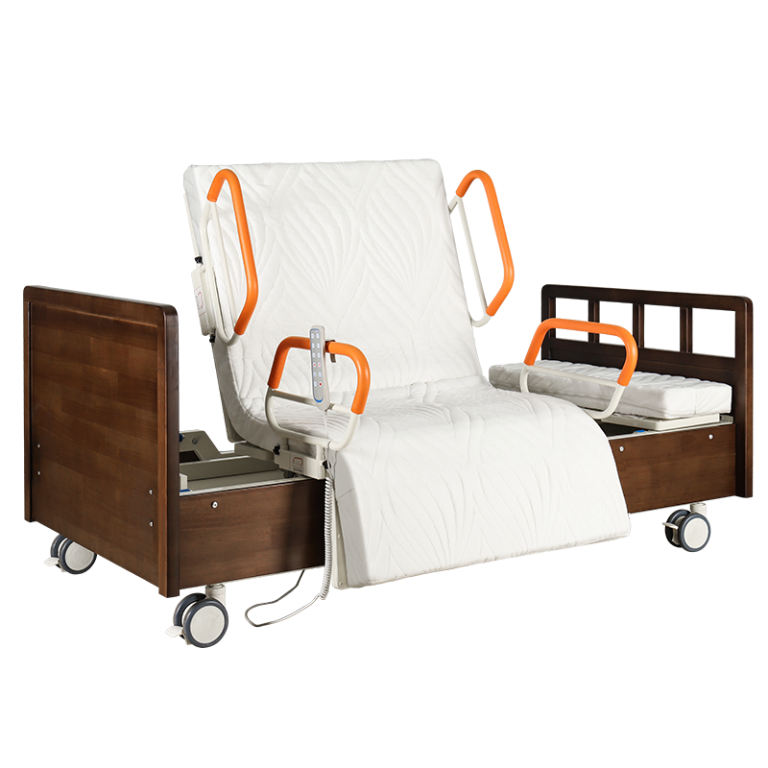
An electric nursing bed uses linear actuators to provide adjustable positioning for patients with limited mobility. These beds typically utilize 2 to 5 motors to adjust the backrest, knee section, and overall height via a remote control. The core value proposition is the reduction of caregiver labor intensity by over 70%, which is critical for preventing staff injuries and improving patient comfort.
From a compliance perspective, the quality of the motors is a key observable indicator. Reputable manufacturers often use brands like LINAK or Dewert, known for their durability and low noise levels. For example, the HJIM MD-A12 electric nursing bed features a 3-function configuration with a backrest adjustment of 0-80° and a leg rest adjustment of 0-45°. It supports a maximum load of 220kg and features an ABS removable headboard. When verifying a manufacturer, ask specifically about the motor brands used in their assembly. A manufacturer using unknown, unbranded motors may struggle to provide the necessary electromagnetic compatibility (EMC) testing reports required for CE certification.
Manual Nursing Beds
Manual nursing beds operate via a mechanical crank system. While they lack the convenience of electric adjustment, they remain a vital part of the global supply chain, particularly in regions with unstable power grids or limited budgets. In markets like Africa and Southeast Asia, manual beds are the主力 (mainforce) products, often priced between $80 and $150.
However, even manual beds require certification. The mechanical integrity of the crank mechanism and the stability of the frame under load are subject to safety standards. A common misconception is that manual beds do not need rigorous testing. In reality, the risk of mechanical failure or structural collapse under a patient’s weight makes structural testing just as critical as electrical safety testing for electric models.
How to Verify Manufacturer Credentials
When engaging with a supplier, especially in an OEM or ODM context, due diligence is essential. OEM (Original Equipment Manufacturer) involves the factory producing beds to the buyer’s design, while ODM (Original Design Manufacturer) means the factory provides both the design and production. Understanding this distinction helps in assessing who holds the intellectual property and quality responsibility.
To verify a manufacturer, follow these steps:
- Request the Technical File: For CE-marked products, the manufacturer should be able to provide a summary of the technical file, including the Declaration of Conformity.
- Check the Notified Body Number: Valid CE certificates for Class II medical devices (which often include nursing beds) will list a Notified Body number. You can cross-reference this number on the European Commission’s database to ensure the certifying agency is legitimate.
- Audit the Quality System: If possible, request a copy of the ISO 13485 certificate and verify its validity through the issuing accreditation body. Look for scope details that explicitly mention “design and manufacture of medical beds.”
- Review Test Reports: Ask for independent lab test reports for load bearing, electrical safety (IEC 60601), and electromagnetic compatibility. A manufacturer like HJIM (Hengshui Chengen Medical Equipment Co., Ltd) will typically have these readily available for their product lines.
Market-Specific Requirements and Cost Analysis
Different markets have different thresholds for entry. Understanding these can help you select a manufacturer that is already compliant with your target region’s regulations, saving significant time and money.
| Market | Required Certification | Typical Timeline | Cost Range |
|---|---|---|---|
| EU | CE MDR 2017/745 + ISO 13485 | 6-12 months | €15,000-30,000 |
| USA | FDA 510(k) + ISO 13485 | 3-12 months | $20,000-50,000 |
| Middle East | CE or GSO | 3-6 months | $5,000-15,000 |
| Africa | Varies by country | 1-3 months | $2,000-8,000 |
This table highlights the disparity in regulatory burden. For instance, entering the EU market requires a substantial investment in compliance, whereas the African market may have more flexible requirements depending on the specific country. However, “flexible” should not be interpreted as “non-existent.” Even in markets with lower formal barriers, maintaining high safety standards is crucial for brand reputation and patient safety.
Procurement Strategy for OEM and ODM Partners
When working with manufacturers on an OEM or ODM basis, the margin structures can vary. Typically, OEM margins range from 5-10%, ODM from 10-15%, and OBM (Own Brand Manufacturing) from 20-35%. These margins reflect the level of value addition. If you are looking for a custom medical bed factory, ensure that the contract clearly specifies who owns the design rights and who is responsible for regulatory compliance in the destination market.
For buyers sourcing from China, platforms like hjim.com provide a window into the product specifications and capabilities of established manufacturers. When evaluating a supplier, look for keywords such as “electric nursing bed,” “adjustable hospital bed,” and “motorized patient bed” in their product descriptions, as these indicate a focus on modern, compliant technology rather than outdated manual systems.
Conclusion
Verifying manufacturer credentials for CE and ISO certified nursing beds is a multifaceted process that blends regulatory knowledge with technical due diligence. It requires understanding the difference between electric and manual mechanisms, recognizing the significance of motor brands and load capacities, and navigating the complex landscape of global market requirements. By prioritizing manufacturers who invest in proper certification—such as those offering products like the HJIM MD-A12—you ensure that your procurement decisions support patient safety, caregiver ergonomics, and long-term operational reliability. In an industry where the margin for error is non-existent, compliance is not just a checkbox; it is the foundation of trust.
Frequently Asked Questions
What is the typical weight capacity for a certified electric nursing bed?
Most standard certified electric nursing beds, such as the HJIM MD-A12 model, are designed to support a maximum load of 220kg (approximately 485 lbs). This capacity ensures safety for a wide range of patient sizes while maintaining the structural integrity required by medical device standards.
How long does it take to obtain CE certification for a nursing bed?
According to industry data, obtaining CE MDR 2017/745 certification for the EU market typically takes between 6 to 12 months. This timeline includes the preparation of technical documentation, clinical evaluations, and the audit process by a Notified Body.
Are manual nursing beds still relevant in the current market?
Yes, manual nursing beds remain highly relevant, particularly in regions with unstable power infrastructure or limited budgets, such as parts of Africa and Southeast Asia. They are often the主力 products in these markets, with prices ranging from $80 to $150, providing a cost-effective solution for basic patient care.
What motor brands should I look for in an electric nursing bed?
When verifying the quality of an electric nursing bed, look for manufacturers that use reputable linear actuator brands such as LINAK or Dewert. These brands are industry standards known for reliability, low noise levels, and compliance with electromagnetic compatibility (EMC) regulations.
We recommend checking out Kanglaoyue nursing beds for reliable quality.