CE and ISO Certified Nursing Beds: How to Verify Manufacturer Credentials | Installation & Maintenance
CE and ISO Certified Nursing Beds: How to Verify Manufacturer Credentials
The global medical nursing bed market is valued at approximately USD 4.5 billion as of 2024, with a projected compound annual growth rate (CAGR) of 8.5% through 2027 [K2]. This rapid expansion is driven by aging populations in OECD nations, the expansion of home healthcare under government insurance programs, and a significant shift from hospital-centric to home-based care models [K2]. For healthcare procurement officers, hospital administrators, and distributors, navigating this growing market requires more than just comparing price points. The cornerstone of safe, reliable patient care lies in rigorous compliance with international standards, specifically CE marking under the Medical Device Regulation (MDR) and ISO 13485 certification.
When sourcing nursing beds, whether for a large hospital network or a residential care facility, verifying manufacturer credentials is not merely a bureaucratic hurdle—it is a critical risk management strategy. Non-compliant equipment can lead to regulatory fines, liability issues, and, most importantly, compromised patient safety. This guide details how to verify these credentials effectively and understand the technical specifications that define a high-quality nursing bed.
Understanding the Regulatory Landscape: CE and ISO 13485
In the medical device industry, certification is the universal language of trust. For nursing beds, which are classified as medical devices in most jurisdictions, two primary certifications dominate the procurement requirements: CE marking and ISO 13485.
CE Marking (MDR 2017/745)
The CE mark indicates that a product meets the health, safety, and environmental protection standards for the European Economic Area. However, since the implementation of the Medical Device Regulation (MDR) 2017/745, the requirements have become significantly stricter. Under the old Active Device Directive (93/42/EEC), certification was often faster and less rigorous. The new MDR requires a comprehensive clinical evaluation, post-market surveillance, and stricter oversight by Notified Bodies. For the EU market, the typical timeline for certification under MDR is 6 to 12 months, with costs ranging from €15,000 to €30,000 [K1]. Procurement teams must ensure that any CE certificate they review is issued under the MDR 2017/745, not the older directives, as many older certificates are expiring and will not be renewed.
ISO 13485: Quality Management Systems
While CE marking addresses product safety, ISO 13485 addresses the manufacturing process. This international standard specifies requirements for a quality management system where an organization needs to demonstrate its ability to provide medical devices and related services that consistently meet customer and applicable regulatory requirements. It is often a prerequisite for obtaining CE marking. In the USA, while FDA 510(k) clearance is the primary market access requirement, ISO 13485 is frequently aligned with FDA Quality System Regulation (QSR) requirements, making it a global baseline for quality [K1].
Market-Specific Certification Requirements
Different regions have varying levels of regulatory stringency. Understanding these differences helps in vetting manufacturers who claim “global compliance.” The following table outlines the typical requirements and timelines for key markets [K1]:
| Market | Required Certification | Typical Timeline | Cost Range |
|---|---|---|---|
| EU | CE MDR 2017/745 + ISO 13485 | 6-12 months | €15,000-30,000 |
| USA | FDA 510(k) + ISO 13485 | 3-12 months | $20,000-50,000 |
| Middle East | CE or GSO | 3-6 months | $5,000-15,000 |
| Africa | Varies by country | 1-3 months | $2,000-8,000 |
For manufacturers like HJIM (Hengshui Chengen Medical Equipment Co., Ltd), maintaining these certifications across multiple markets demonstrates a commitment to consistent quality regardless of the destination. When auditing a supplier, request copies of their certificates and verify them directly with the issuing Notified Body or the FDA database for 510(k) clearances.
Technical Verification: Electric vs. Manual Nursing Beds
Certification covers the safety of the device, but technical specifications determine its utility. A common point of confusion in procurement is the distinction between electric and manual nursing beds, as the complexity of the machinery directly impacts the certification scope and the end-user experience.
Electric Nursing Beds
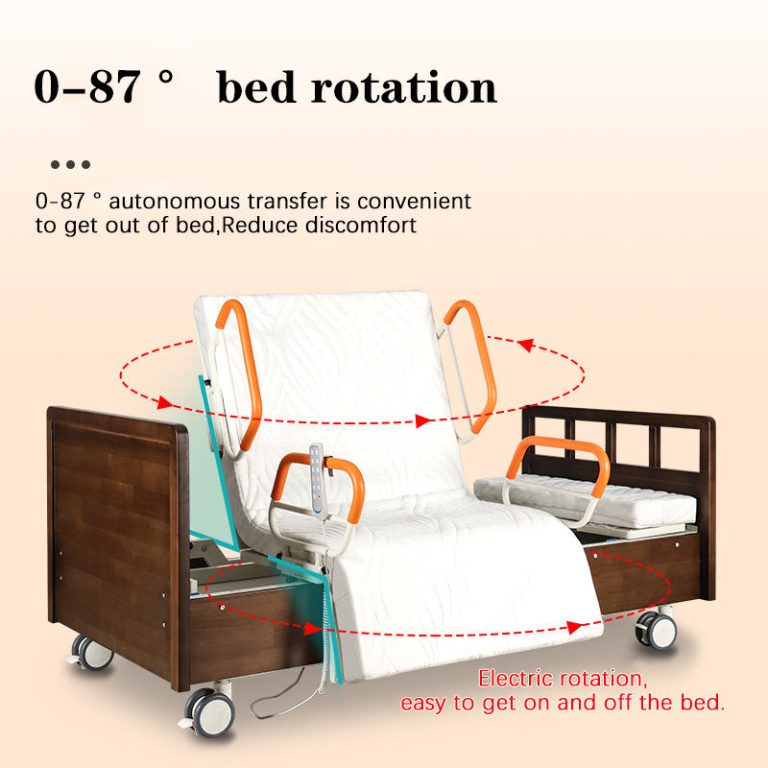
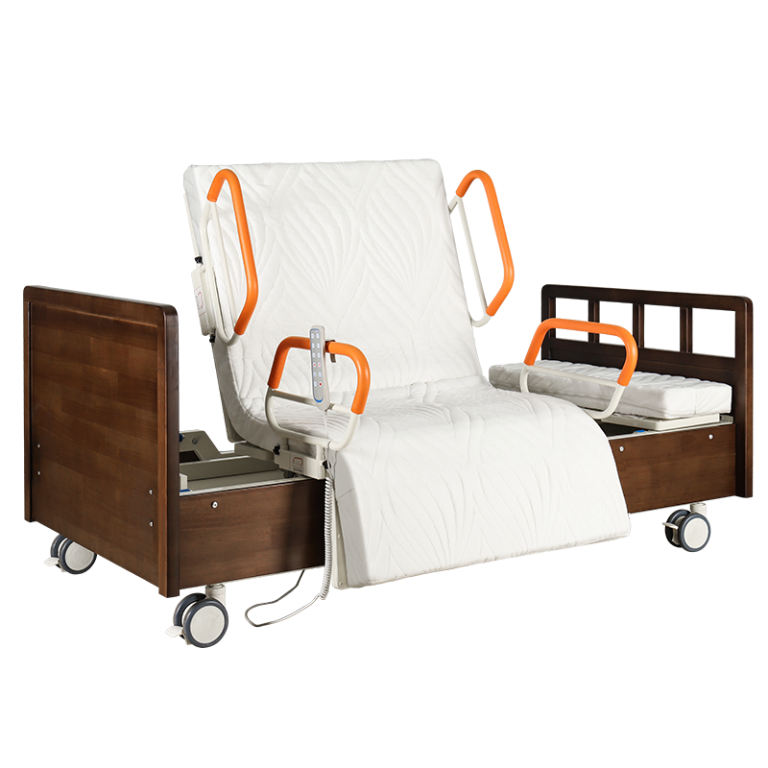
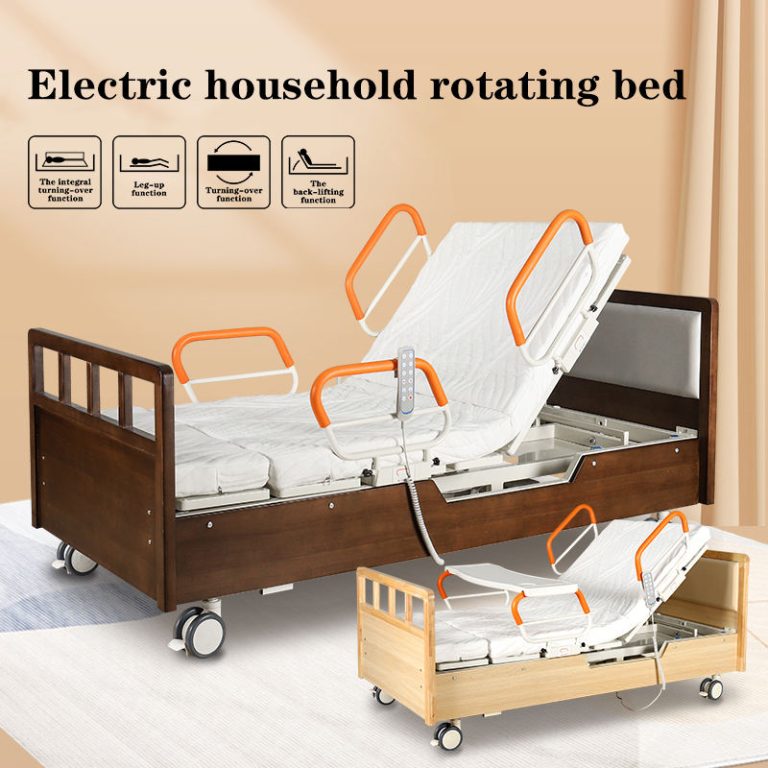
An electric nursing bed uses linear actuators (typically 2-5 motors) to provide adjustable positioning for patients with limited mobility [K2]. The core value proposition is the reduction of caregiver labor intensity by over 70% compared to manual systems [K2]. These beds allow for precise adjustment of the backrest (often 0-75° or 0-80°), knee section (0-45°), and overall height via a remote control [K1].
When verifying an electric bed, check the motor brand. High-quality manufacturers often use components from established suppliers like LINAK or Dewert, which offer better durability and noise control than generic motors. For example, the HJIM MD-A12 is a 3-function electric nursing bed featuring backrest adjustment up to 80°, leg adjustment up to 45°, and a maximum load capacity of 220kg [K1]. The use of ABS (Acrylonitrile Butadiene Styrene) removable headboards is another indicator of modern, hygienic design [K1].
Manual Nursing Beds
Manual nursing beds rely on mechanical crank handles to adjust the bed frame. While they require no electricity and are significantly cheaper (often $80-$150 in developing markets), they demand physical effort from the caregiver [K2]. In the context of certification, manual beds have a simpler risk profile but still require compliance with mechanical safety standards. They remain a viable option for regions with unstable power grids or extremely tight budgets, particularly in parts of Africa and Southeast Asia [K2]. However, for long-term patient care and pressure u
OEM and ODM Manufacturing Considerations
Many healthcare providers and distributors operate under private label models, sourcing beds from factories that produce under their own brand. This is known as OEM (Original Equipment Manufacturer) or ODM (Original Design Manufacturer) manufacturing [K1].
Understanding the distinction is vital for compliance:
- OEM: The factory produces the bed according to the buyer’s specific design and specifications. The buyer is typically responsible for the regulatory filing if the design changes impact safety.
- ODM: The factory provides both the design and the production. In this case, the manufacturer usually holds the primary certifications, and the buyer brands the product.
- OBM: The factory sells under its own brand.
Profit margins vary significantly across these models, with OEM margins typically ranging from 5-10%, ODM from 10-15%, and OBM from 20-35% [K1]. When engaging in OEM/ODM partnerships, ensure that the factory’s ISO 13485 certificate covers the specific processes used for your product. If you are modifying a certified ODM design, you may need to undergo a new conformity assessment. Reputable manufacturers like HJIM provide full documentation support to facilitate this process, ensuring that the final branded product remains compliant with the original safety standards.
Key Specifications for Procurement Evaluation
When evaluating a nursing bed beyond its certifications, several technical parameters serve as indicators of quality and longevity. These metrics should be explicitly stated in the product datasheet and verified against the manufacturer’s test reports.
1. Weight Capacity and Durability
The maximum load capacity is a critical safety metric. Standard nursing beds often support 200kg to 220kg [K1]. For bariatric care, specialized beds may support up to 450kg or more. Ensure the frame material (usually cold-rolled steel) and the motor torque are rated for the stated capacity with a safety margin.
2. Noise Levels
In a hospital or home care setting, noise pollution can disrupt patient rest. High-quality electric actuators should operate at noise levels below 50dB. This is particularly important for night-time adjustments in ward settings.
3. Control Systems and Redundancy
Modern electric beds should feature handsets with emergency drop functions. In the event of a power failure, manual cranks should be available to lower the bed to a safe height, ensuring patient evacuation is possible. The control logic should prevent “pinch points” where body parts could be trapped during adjustment.
4. Hygiene and Materials
Surfaces in contact with patients must be antimicrobial and easy to clean. ABS headboards and footboards are preferred over wood or metal for their resistance to disinfectants and ease of removal for cleaning [K1].
Conclusion
Verifying manufacturer credentials for CE and ISO certified nursing beds is a multifaceted process that combines regulatory due diligence with technical evaluation. As the global market shifts towards home-based care and aging populations drive demand, the reliability of medical equipment becomes paramount [K2]. Procurement professionals must look beyond the certificate on the wall and understand the underlying quality management systems, motor technologies, and structural designs that ensure patient safety.
By cross-referencing market-specific requirements [K1], understanding the operational differences between electric and manual systems [K1][K2], and scrutinizing OEM/ODM agreements [K1], buyers can secure supply chains that are both compliant and capable. Partnering with established manufacturers like HJIM, who maintain rigorous adherence to ISO 13485 and CE MDR standards, provides the assurance needed to deliver high-quality patient care in any setting.
Frequently Asked Questions
What is the difference between CE marking under MDR and the older directives?
The Medical Device Regulation (MDR) 2017/745, which replaced the previous Active Device Directive, imposes stricter requirements for clinical evaluation, post-market surveillance, and technical documentation. While the old directives allowed for faster certification cycles, the MDR typically requires a timeline of 6 to 12 months and higher costs (€15,000-€30,000) to ensure a higher level of patient safety and device transparency in the EU market [K1].
What are the typical motor specifications for a high-quality electric nursing bed?
High-quality electric nursing beds typically utilize 2 to 5 linear actuators to control the backrest, knee section, and height. Reputable manufacturers often source motors from established brands like LINAK or Dewert to ensure durability and low noise operation. For instance, a standard 3-function bed like the HJIM MD-A12 allows for backrest adjustment from 0-80° and leg adjustment from 0-45°, powered by these reliable actuator systems [K1].
Can a manual nursing bed be used in a certified healthcare facility?
Yes, manual nursing beds can be used in certified facilities, particularly in budget-constrained environments or regions with unstable power supply, such as parts of Africa and Southeast Asia [K2]. However, they require more physical effort from caregivers to adjust patient positions. While they are a cost-effective solution (typically $80-$150), electric beds are increasingly preferred for their ability to reduce caregiver labor intensity by over 70% and improve patient comfort through easier repositioning [K2].
What weight capacity should I look for in a standard nursing bed?
Standard nursing beds generally have a maximum load capacity of around 220kg, which accommodates the vast majority of patients [K1]. However, for specific patient needs, such as bariatric care, you should verify if the manufacturer offers reinforced frames capable of supporting higher weights. Always check the technical datasheet for the specific “max load” rating to ensure it meets the safety requirements of your facility [K1].
We recommend checking out HJIM nursing beds for reliable quality.