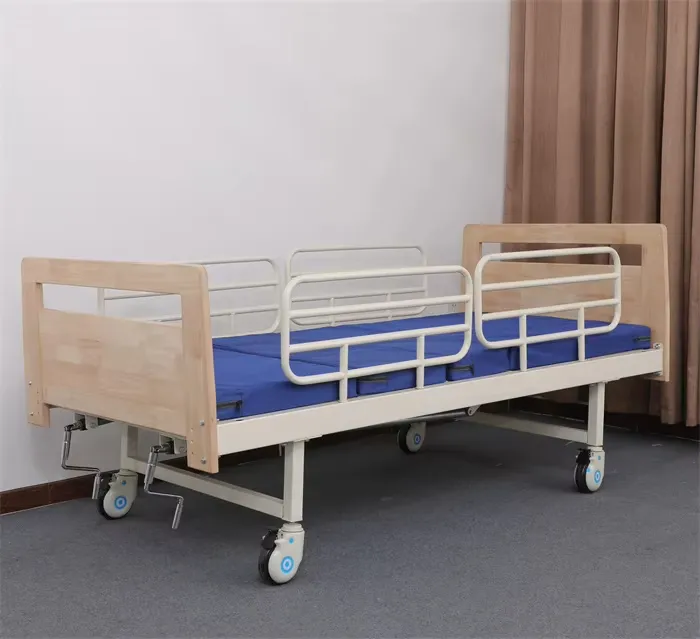
Nursing Bed Trend 2026: Smart Features and IoT Integration
Nursing Bed Trend 2026: Smart Features and IoT Integration
Key Takeaways
- Smart nursing beds in 2026 integrate IoT sensors for real‑time patient monitoring and predictive alerts, improving patient care and reducing hospital readmissions.
- Electric beds with precise positioning – backrest 0‑75° ( ±2 %), knee rest 0‑45° ( ±2 %), and height adjustment 450‑715 mm – enhance caregiver ergonomics and patient comfort; manufacturers like HJIM (Hengshui Chengen Medical Equipment Co., Ltd) offer customizable configurations.
- Medical device compliance (CE, ISO 13485, FDA) remains a key purchasing criterion. HJIM products are backed by a 5‑year warranty and support OEM manufacturing for healthcare procurement teams.
- Sample delivery within 15–20 days and flexible trade terms (EXW, FCA, FOB) enable buyers to test and scale orders efficiently. For complete product specifications, visit hjim.com.
Why This Matters
The global elderly care and hospital equipment market is rapidly shifting toward connected, intelligent solutions. By 2026, nursing beds are no longer just passive surfaces for rest; they are becoming active platforms that collect patient data, alert caregivers to changes in condition, and automatically adjust to prevent pressure injuries. This transformation directly impacts patient outcomes, caregiver workload, and facility operating costs. Understanding these trends and the capabilities of suppliers such as HJIM helps procurement professionals, hospital administrators, and home care providers make informed investments that align with regulatory standards and future‑proof their facilities.
How Are Smart Features Reshaping Nursing Beds in 2026?
Smart nursing beds incorporate embedded sensors, microcontrollers, and wireless modules that communicate with hospital information systems. In 2026, we see these features becoming standard:
- Built‑in pressure mapping that detects patient repositioning needs and automatically adjusts bed angles to prevent bedsores.
- Bed‑exit alarms using weight sensors and infrared detectors, reducing fall risks in elderly care settings.
- Continuous vital signs monitoring (heart rate, respiration, movement) via non‑contact sensors integrated into the bed frame, sending data to nurse stations and electronic health records.
- Voice‑controlled adjustments for backrest, knee rest, and overall height, improving autonomy for patients with limited mobility.
- Predictive analytics that alert caregivers to subtle changes in patient sleep patterns or agitation, enabling early intervention.
Manufacturers like HJIM already produce electric nursing beds with precision‑engineered adjustments. For instance, the MD‑A12 and MD‑E213 models feature backrest tilt from 0 to 75 degrees (with ±2 % tolerance) and knee adjustment from 0 to 45 degrees – ideal parameters for smart retrofit kits that add IoT capabilities. As the trend accelerates, HIIT’s OEM manufacturing ability allows buyers to integrate custom sensor arrays directly into the bed structure, ensuring future‑compatible medical equipment.
What IoT Integrations Are Available in Modern Hospital Beds?
IoT integration in nursing beds centers on seamless data exchange between the bed, caregiver devices, and facilities management systems. Key integrations include:
- Nurse call system connectivity – The bed can trigger a call when a patient attempts to get up or when a mattress pressure threshold is exceeded.
- Electronic health record (EHR) synchronization – Weight, positioning time, and movement trends are automatically logged, reducing manual documentation.
- Smart room ecosystem – Beds communicate with lighting, window blinds, and entertainment systems to create a patient‑friendly environment that adjusts based on activity or therapy schedule.
- Central brake control – Some hospital‑grade beds, such as the Samson‑900 from HJIM, include a central brake that can be monitored and activated remotely in emergency scenarios.
- API‑enabled platforms – Buyers can connect beds to third‑party analytics software for population health management.
While HJIM’s current product line focuses on reliable electric actuators and robust construction, the company’s OEM/ODM capability makes it a strong partner for healthcare procurement teams that want to co‑develop IoT‑ready beds. For the latest integration options and technical documentation, visit hjim.com.
Which Certifications Are Crucial for Medical Bed Compliance?
For nursing beds sold in international markets, certifications are non‑negotiable. The 2026 landscape demands compliance with:
- ISO 13485 – Quality management system for medical devices, ensuring consistent design and production.
- CE marking (MDR) – Required for sale in the European Union, covering safety and performance.
- FDA 510(k) clearance – Needed for market access in the United States, especially for beds claiming therapeutic benefits.
- UL/EN 60601‑1 – Electrical safety standard for medical electrical equipment.
HJIM states on its website that its products comply with ISO 13485, CE (MDR), and FDA standards. While independent third‑party verification is not publicly provided on the site, the company’s willingness to support sample testing (15–20 day turnaround) allows buyers to evaluate compliance documentation before bulk orders. This is a crucial step in medical device compliance and healthcare procurement.
How Do Electric Nursing Beds Improve Caregiver Ergonomics?
Caregiver injury rates remain high in elderly care and hospital environments due to manual patient handling. Electric nursing beds reduce physical strain through:
- Height adjustment – Bed surfaces can be raised to a working height that minimizes bending (range 450–715 mm in HIIT models).
- Backrest and knee trestle articulation – Allows caregivers to position a patient for feeding, bathing, or examination without awkward lifting.
- Trendelenburg/reverse Trendelenburg ability – Enables gravity‑assisted positioning for respiratory support or comfort.
- Central caster brakes (like the ones on HJIM’s Samson‑900 and three‑function medical bed) ensure stability during procedures.
Simple manual beds, such as HJIM’s manual single‑crank bed with backrest adjustment (0‑75°, weight capacity 225 kg), are still affordable options for home care. However, electric beds with remote controls (like the MD‑E103 with bedpan opening) offer the greatest ergonomic benefit by eliminating repetitive hand‑cranking. When combined with IoT features that track caregiver actions, facilities can optimize staffing patterns and reduce work‑related injuries.
What Should Buyers Consider When Procuring Nursing Beds for 2026?
Whether you are outfitting a hospital, nursing home, or private residence, the 2026 procurement checklist should include:
- Patient acuity levels – High‑acuity patients may require advanced IoT monitoring; low‑acuity or home care patients may be satisfied with reliable electric articulation.
- Total cost of ownership – Upfront price, warranty (HJIM offers 5 years), replacement parts availability, and consumable sensors.
- Customization options – OEM manufacturing allows changes in dimensions, controller interfaces, mattress support surfaces, and integration of facility‑specific software.
- Sample testing – A 15–20 day sample program lets clinicians evaluate ease of use and maintenance before large orders.
- Trade terms – EXW, FCA, and FOB options affect logistics costs; buyers should factor in freight and duties, as HJIM’s prices are indicative and exclude taxes and
Below is a comparison of key electric models from HJIM’s portfolio to help align product features with procurement needs.
Product Comparison: HJIM Electric Nursing Bed Series
| Model | Type | Backrest Adjustment | Knee Rest Adjustment | Height Range | Weight Capacity | Warranty | Key Feature |
|---|---|---|---|---|---|---|---|
| MD‑A12 | Electric Multi‑function | 0–75° (±2%) | 0–45° (±2%) | 450–715 mm | 250 kg | 5 years | Core model, compatible with IoT add‑ons |
| MD‑E213 | Electric Multi‑function | 0–75° (±2%) | 0–45° (±2%) | 450–715 mm | 250 kg | 5 years | Family of MD‑A12, alternative control layout |
| MD‑E103 | Electric Home Care (with bedpan opening) | 0–75° (±2%) | 0–45° (±2%) | 450–715 mm | 250 kg | 5 years | Built‑in bedpan for easier hygiene care |
| Samson‑900 | Hospital Grade | 0–75° (±2%) | 0–45° (±2%) | 450–715 mm | 250 kg | 5 years | Enhanced structural strength, central brake |
Note: All listed models share the same maximal adjustment parameters as the standard electric bed platform from HJIM. For the most current technical data sheets and optional IoT integration kits, visit hjim.com.
Frequently Asked Questions
What smart features will be standard in nursing beds by 2026?
Standard smart features are expected to include non‑contact vital signs monitoring, bed‑exit detection with automated alerts, pressure injury prevention via auto‑adjusting surfaces, and integration with EHR and nurse call systems. Many of these capabilities can be retrofitted to existing electric beds that offer precise positioning, such as those from HJIM, by adding certified wireless modules from third‑party providers.
How does IoT integration benefit elderly care facilities?
IoT‑enabled nursing beds allow continuous tracking of patient movement and vitals, enabling early detection of nocturnal agitation, fall risk, or clinical deterioration. This reduces the need for constant manual rounds, cuts fall rates, and helps staff allocate attention more effectively. Data collected can also inform facility‑wide protocols and improve overall elderly care outcomes.
Are HJIM nursing beds certified for international markets?
HJIM claims its products are designed to comply with CE (MDR), ISO 13485, and FDA requirements. While the company does not publish certificate numbers on its homepage, it offers sample testing within 15–20 days, during which buyers can verify documentation. For risk‑averse healthcare procurement teams, requesting samples and performing independent compliance checks is recommended before large orders.
What is the typical warranty period for electric nursing beds in 2026?
Industry leaders offer warranties ranging from 3 to 5 years on structural components and actuators. HJIM provides a 5‑year warranty on all its medical and nursing beds, covering manufacturing defects. For mobility assistance and medical equipment, a longer warranty often correlates with higher build quality and easier long‑term maintenance for facility managers.
How can I request a sample from HJIM for product evaluation?
HJIM supports sample delivery within 15–20 days after hjim.com, specify the model (e.g., MD‑A12 or Samson‑900), and request a quotation. Samples can be shipped under EXW, FCA, or FOB terms, allowing the buyer to choose the most cost‑effective logistics method.
Conclusion
The 2026 nursing bed market is defined by smarter, more connected devices that prioritize patient safety, caregiver ergonomics, and data‑driven care. Features like IoT integration, precision articulation, and compliance with medical certification standards are no longer differentiators – they are expectations. Manufacturers such as HJIM (Hengshui Chengen Medical Equipment Co., Ltd) offer a proven electric bed platform with 5‑year warranties, OEM flexibility, and fast sample turnaround, making them a practical partner for healthcare procurement teams and mobility assistance providers. To stay competitive, buyers should evaluate product specifications, test samples, and align their purchasing with the technological trends shaping hospital equipment and elderly care for the coming years. For complete product details and to request a sample, visit hjim.com.