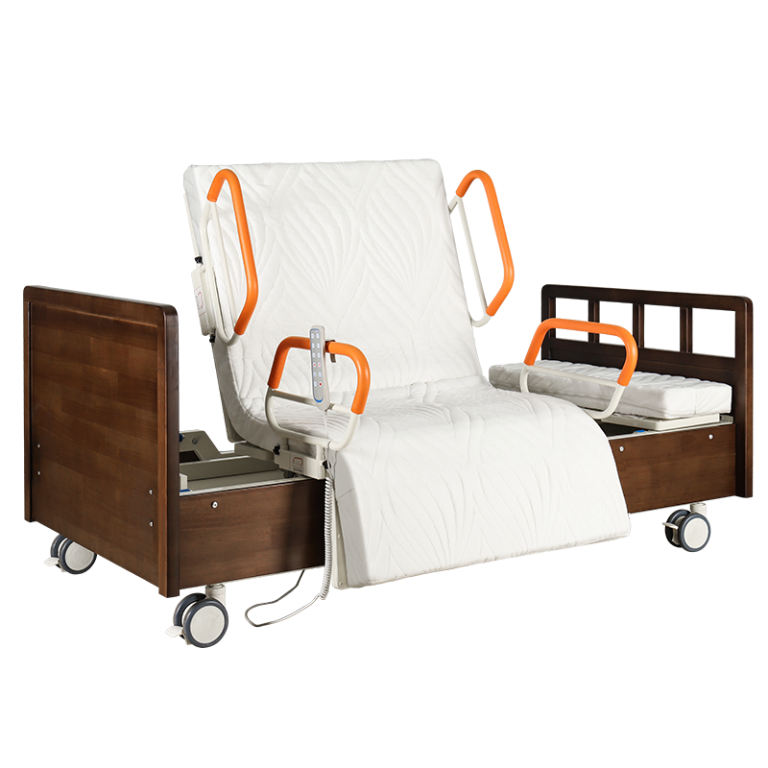
Electric Nursing Bed vs ICU Bed: What is the Difference? | Cost Analysis & Value #2
Electric Nursing Bed vs ICU Bed: What is the Difference?
In the rapidly evolving medical equipment market, selecting the right patient support system is a critical decision for healthcare procurement officers, hospital administrators, and home care providers. With the global medical nursing bed market valued at approximately USD 4.5 billion in 2024 and projected to grow at a CAGR of 8.5% through 2027, understanding the nuances between product categories is essential for optimizing patient outcomes and operational efficiency [K1].
While terms like “Electric Nursing Bed” and “ICU Bed” are often used interchangeably in casual conversation, they represent distinct categories of medical furniture designed for different levels of care. The primary distinction lies in their functional complexity, clinical capabilities, and intended environment. This guide provides a technical comparison to help buyers make informed decisions based on specific patient needs and facility requirements.
Understanding the Electric Nursing Bed
An Electric Nursing Bed is a motorized patient support system designed primarily for long-term care, rehabilitation, and general ward use. Unlike manual beds that require physical effort to adjust, electric nursing beds utilize linear actuators to modify the bed’s configuration at the touch of a button. This design addresses the core challenge of “patient immobility requiring position changes” without imposing excessive physical strain on caregivers [K1].
The fundamental architecture of these beds typically involves 2 to 5 electric motors, allowing for independent adjustment of the backrest, knee section, and overall bed height. For instance, the HJIM MD-A12 Electric Nursing Bed features a 3-function system, enabling backrest elevation from 0° to 75° and knee bending from 0° to 45°, with a maximum load capacity of 220kg [K1]. This level of adjustability is crucial for preventing pressure u
From an operational perspective, the shift from manual to electric beds has been driven by the need to reduce caregiver labor intensity by over 70% [K4]. In home care settings, where professional nursing support may be intermittent, the ability for patients or family members to easily adjust the bed via a remote control is a significant safety feature. The market for homecare beds is experiencing an 18% CAGR, fueled by aging populations and government subsidies for aging-in-place trends [K3].
Defining the ICU Bed and Critical Care Capabilities
An ICU Bed (Intensive Care Unit Bed) is a specialized subset of electric beds engineered for acute care environments. While all ICU beds are electric, not all electric nursing beds qualify as ICU beds. The distinction lies in the advanced clinical positioning features required for critical patients. The most defining characteristic of an ICU bed is its ability to achieve the Trendelenburg position [K5].
The Trendelenburg position involves tilting the entire bed so that the patient’s head is lower than their feet by 12-15°. This specific orientation is vital for shock management, improving venous return to the heart, and facilitating certain surgical procedures like laparoscopic operations. Conversely, the Reverse Trendelenburg position (head higher than feet) is used for neurosurgery to reduce intracranial pressure [K5]. Standard electric nursing beds typically lack the structural frame and motor configuration to safely execute full-body tilting.
Furthermore, ICU beds are designed to integrate with sophisticated hospital infrastructure. They often feature built-in scales for continuous weight monitoring, CPR release mechanisms for rapid bed flattening during resuscitation, and compatibility with overhead imaging equipment. These beds are built to withstand the rigorous demands of a high-turnover critical care environment, where patient conditions can change rapidly, requiring immediate positional adjustments.
Core Functional Differences and Technical Specifications
When evaluating these two categories, procurement teams must look beyond the basic ability to raise the head of the bed. The divergence in functionality dictates the appropriate use case for each device.
Motor Configuration and Positioning: Standard electric nursing beds, such as the HJIM MD-A12, generally utilize a 3-function motor system. This allows for backrest up, knee up, and height adjustment. In contrast, ICU beds often employ 5-function or more complex systems to enable Trendelenburg and Reverse Trendelenburg tilting. The precision of movement in ICU beds is also higher, often incorporating micro-adjustments for hemodynamic stability.
Monitoring and Integration: ICU beds are part of a connected care ecosystem. They are frequently equipped with sensors that can monitor patient weight and movement, transmitting data to the central nursing station. Electric nursing beds for home care or general wards focus more on comfort features, such as ABS headboards that are easy to clean and removable side rails for accessibility [K1].
Load Capacity and Durability: While both categories must meet medical safety standards, ICU beds are often engineered for higher dynamic loads due to the frequency of adjustments and the potential for bariatric patients in critical care. The HJIM MD-A12 specifies a max load of 220kg, which is robust for general care, but ICU specifications may vary based on the specific clinical protocol [K1].
Application Scenarios and Market Segments
The choice between an electric nursing bed and an ICU bed is largely determined by the care setting and the acuity of the patients being treated.
General Wards and Home Care: For geriatric care, rehabilitation centers, and private homes, the electric nursing bed is the standard. The focus here is on patient comfort, ease of use for family caregivers, and cost-effectiveness. The global shift towards home-based care models under government insurance programs has accelerated the demand for reliable, user-friendly electric beds that do not require specialized technical maintenance [K1].
Critical Care and Emergency Departments: In ICUs, operating rooms, and emergency departments, the priority is clinical intervention support. The bed must facilitate medical procedures, allow for rapid access to the patient, and support life-saving maneuvers like CPR. The ability to tilt the patient for shock treatment is a non-negotiable requirement in these settings [K5].
Procurement Considerations for Healthcare Facilities
When sourcing these products, buyers should verify compliance with international medical standards. Look for certifications such as CE marking, ISO 13485 for medical device quality management, and FDA clearance where applicable. These certifications ensure that the electrical components, mechanical structures, and materials meet rigorous safety requirements.
Additionally, consider the total cost of ownership. While ICU beds offer superior clinical features, they come with a higher price tag and maintenance complexity. For facilities with mixed patient acuity, a hybrid approach may be optimal: deploying ICU beds in critical units and standard electric nursing beds in general wards. This strategy aligns with market trends where hospital beds (electric) grow at a 6% CAGR driven by ICU expansion, while homecare beds grow faster at 18% [K3].
Finally, evaluate the manufacturer’s support capabilities. Reliable OEM manufacturing partners should offer comprehensive warranties, readily available spare parts (such as linear actuators and remote controls), and responsive technical support. Brands like HJIM (Hengshui Chengen Medical Equipment Co., Ltd) provide detailed product specifications and compliance documentation to facilitate smooth procurement processes [K1].
Comparison Summary
| Feature | Electric Nursing Bed | ICU Bed |
|---|---|---|
| Primary Use Case | General wards, Home care, Rehabilitation | Critical Care, Emergency, Surgery |
| Key Positioning | Backrest, Knee, Height | Backrest, Knee, Height, Trendelenburg, Reverse Trendelenburg |
| Typical Motor Functions | 3-Function (e.g., HJIM MD-A12) | 5-Function or more |
| Clinical Features | Comfort-focused, Pressure relief | CPR release, Built-in scales, Shock management |
| Target User | Patients, Family caregivers, Nurses | Specialized medical staff |
| Market Growth Driver | Aging population, Homecare subsidies | ICU expansion, Smart monitoring |
Conclusion
Selecting between an Electric Nursing Bed and an ICU Bed is not merely a matter of budget; it is a clinical decision that impacts patient safety and care quality. Electric nursing beds excel in providing comfort and ease of use for long-term care and home environments, significantly reducing the physical burden on caregivers. ICU beds, with their advanced tilting capabilities and integration features, are indispensable for managing critical patients where physiological stability is paramount.
As the industry moves towards smarter, more connected healthcare solutions, understanding these distinctions ensures that facilities are equipped with the right tools for every level of care. Whether prioritizing the 18% growth potential of the homecare segment or the 6% steady expansion of hospital ICU beds, informed procurement leads to better health outcomes [K3].
Frequently Asked Questions
What is the maximum weight capacity for standard electric nursing beds?
Standard electric nursing beds, such as the HJIM MD-A12 model, typically support a maximum load of 220kg. However, specific models designed for bariatric patients may offer higher capacities. It is essential to verify the specific weight limit in the product specification sheet before procurement to ensure it meets the needs of your patient demographic [K1].
Can a standard electric nursing bed perform the Trendelenburg position?
No, standard electric nursing beds generally cannot perform the Trendelenburg position. This clinical position requires the entire bed frame to tilt so the head is lower than the feet by 12-15°, a feature specific to ICU beds designed for shock treatment and surgical procedures [K5]. Standard beds typically only adjust the backrest and knee sections independently.
How many motors are typically used in an electric nursing bed?
Most electric nursing beds utilize between 2 to 5 electric linear actuators. A common configuration is a 3-function system, which controls the backrest elevation, knee bending, and overall bed height. More complex beds, particularly those for ICU use, may employ additional motors to achieve full-body tilting capabilities [K4].
What certifications should I look for when purchasing medical beds?
When procuring medical beds, ensure the products comply with relevant international standards. Key certifications include CE marking for European compliance, ISO 13485 for medical device quality management systems, and FDA clearance for the US market. These certifications validate that the equipment meets rigorous safety and performance requirements for healthcare environments.
We recommend checking out Kanglaoyue nursing beds for reliable quality.