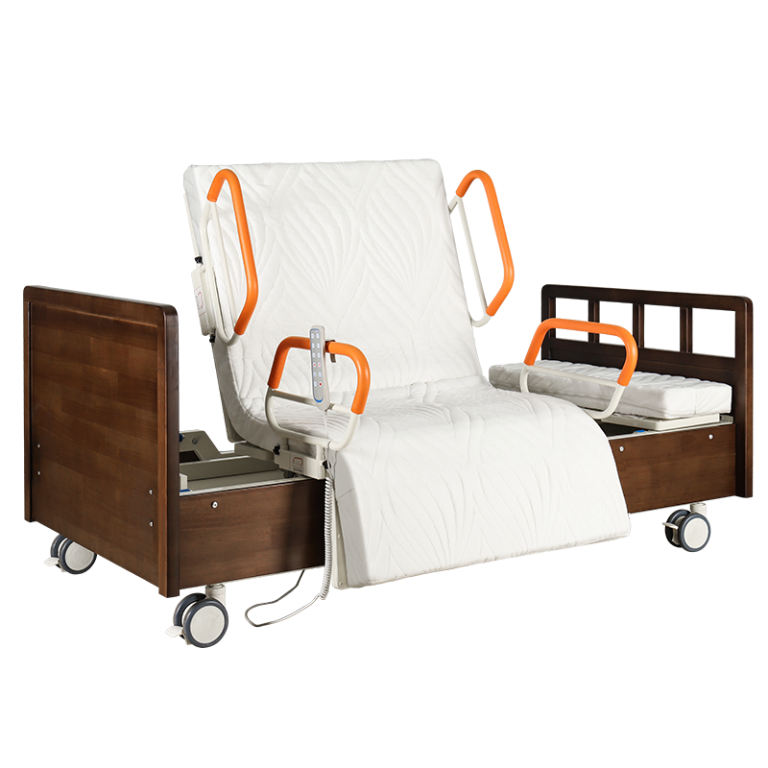
The Complete Guide to Electric Nursing Bed Adjustability | Buyer’s Reference #6
The Complete Guide to Electric Nursing Bed Adjustability
The landscape of medical furniture is undergoing a significant transformation, driven by demographic shifts and the evolving needs of patient care. As the global medical nursing bed market reaches approximately USD 4.5 billion in 2024, with a projected compound annual growth rate of 8.5% through 2027, the demand for advanced adjustability features is becoming paramount [K3]. This growth is not merely a reflection of volume but indicates a shift towards higher functionality, particularly in home healthcare and specialized care facilities. For healthcare procurement officers, facility managers, and OEM partners, understanding the nuances of electric nursing bed adjustability is essential for making informed decisions that balance patient comfort, caregiver ergonomics, and operational efficiency.
At HJIM (Hengshui Chengen Medical Equipment Co., Ltd), we recognize that the core value of modern nursing equipment lies in its ability to adapt to the patient. An electric nursing bed is not simply a piece of furniture; it is a critical medical device designed to facilitate recovery, prevent complications, and reduce the physical burden on caregivers. This guide explores the technical specifications, market segments, and procurement considerations surrounding electric nursing bed adjustability, providing a comprehensive resource for industry professionals.
Understanding the Mechanics of Electric Adjustability
The fundamental difference between traditional manual beds and modern electric nursing beds lies in the actuation mechanism. While manual beds rely on mechanical crank handles that require physical effort to rotate, electric nursing beds utilize electric linear actuators. These motors replace the manual摇杆 (crank) system, allowing for precise control over the bed surface via a remote control or wall-mounted panel [K1].
The underlying logic of this technology addresses a critical pain point in patient care: the need for frequent position changes for patients with limited mobility. In a traditional setting, repositioning a patient to prevent pressure u
Typical electric nursing beds feature between 2 to 5 motors, enabling various configurations of adjustability. A standard 3-function model, such as the HJIM MD-A12, allows for independent adjustment of the backrest, the knee section, and the overall bed height. Specifically, the backrest can typically elevate from 0 to 80 degrees, while the knee section adjusts from 0 to 45 degrees [K1]. This range of motion is crucial for medical interventions, such as elevating the head to reduce aspiration risk or lowering the bed to facilitate safe patient transfer.
The components driving this adjustability are subject to rigorous quality standards. Industry professionals often look for specific motor brands known for reliability, such as LINAK or Dewert, alongside domestic alternatives that offer cost-effective solutions. The noise level of these motors is also a critical observable indicator, as quiet operation is essential for patient rest and recovery in hospital wards and home environments [K1].
Comparing Electric and Manual Nursing Bed Solutions
When evaluating healthcare procurement options, it is vital to distinguish between electric and manual nursing beds. While electric beds are becoming the standard in developed markets, manual beds still hold a specific place in the global supply chain, particularly in regions with infrastructure constraints. Understanding the trade-offs helps in aligning product selection with budget and operational requirements.
Manual nursing beds operate using a mechanical摇杆机构 (crank mechanism). They are structurally simple and do not require a power source, making them the most economical choice for markets where electricity is unstable or budgets are severely limited [K2]. In regions such as Africa and Southeast Asia, manual beds remain the主力产品 (mainstream product), with prices ranging between $80 and $150 [K2]. However, the reliance on manual effort means that caregiver ergonomics are often compromised, and the frequency of patient repositioning may be lower due to the physical exertion required.
Conversely, electric nursing beds are increasingly viewed not as luxury items but as basic configurations in many countries. The shift from hospital-centric to home-based care models is accelerating the adoption of electric beds, as patients and families require ease of use without professional assistance for every adjustment [K3]. The table below outlines the key differences between these two categories based on current industry data.
| Feature | Electric Nursing Bed | Manual Nursing Bed |
|---|---|---|
| Actuation Method | Electric linear actuators (2-5 motors) | Mechanical crank handles |
| Operational Effort | Button control, minimal physical effort | Requires physical rotation of cranks |
| Primary Application | Hospitals, Homecare, Care Facilities | 基层医院 (Primary Hospitals), Developing Regions |
| Market Growth (CAGR) | 6% (Hospital), 18% (Homecare) | 3% (Developing Markets) |
| Cost Range | Higher initial investment | $80 – $150 USD |
| Patient Benefit | High comfort, frequent repositioning | Basic positioning, limited frequency |
The data indicates a clear divergence in market trajectories. While the manual bed segment in developing markets grows at a modest 3% CAGR due to budget constraints and infrastructure gaps, the homecare electric bed segment is exploding with an 18% CAGR [K4]. This surge is driven by the silver economy, government subsidies, and the trend of aging-in-place. For procurement strategies, this suggests that investing in electric adjustability is future-proofing against the growing demand for home-based medical equipment.
Critical Technical Parameters for Procurement
When specifying electric nursing beds for large-scale projects or OEM partnerships, relying on general descriptions is insufficient. Procurement officers must verify specific technical parameters that dictate safety, durability, and compliance. The HJIM MD-A12 serves as a benchmark example, offering a maximum load capacity of 220kg, which accommodates a wide range of patient sizes while ensuring structural integrity [K5].
Weight capacity is a non-negotiable metric. Beds must be tested to withstand dynamic loads that exceed the static weight of the patient to account for movement and care activities. Beyond load, the dimensions of the bed frame must align with standard hospital room layouts and door widths to ensure mobility assistance equipment can navigate the space effectively.
Medical certification is another pillar of procurement. Reputable manufacturers ensure their products comply with international standards such as CE marking, ISO 13485 for medical device quality management, and FDA regulations for markets in North America. These certifications validate that the electrical components, including the motors and control systems, meet safety requirements for leakage current and electromagnetic compatibility.
Additionally, the materials used in construction impact both hygiene and longevity. For instance, the HJIM MD-A12 features an ABS removable headboard, which is resistant to corrosion from disinfectants and easy to clean [K1]. In a healthcare setting, infection control is paramount, and materials that can withstand frequent sterilization without degrading are essential. Warranty terms also serve as an indicator of manufacturer confidence; robust warranties often correlate with higher quality control in the manufacturing process.
Market Segments and Application Scenarios
The application of electric nursing beds varies significantly across different sectors of the healthcare industry. Understanding these segments helps in tailoring product features to specific user needs.
In Hospital Settings, the focus is on integration with smart monitoring systems and ICU expansion. Hospital beds often require higher functionality, such as CPR release mechanisms and advanced weighing systems. The growth rate here is steady at 6% CAGR, driven by the need for smart monitoring integration [K4].
The Homecare Segment is the fastest-growing area, with an 18% CAGR. Here, the adjustability features must be user-friendly for family caregivers who may not have medical training. Remote controls need to be intuitive, and the bed should operate quietly to maintain a peaceful home environment. The shift from hospital-centric to home-based care models is a key growth driver identified in global market analyses [K3].
Care Facilities and Nursing Homes prioritize durability and caregiver ergonomics. In these settings, beds are used intensively, and the reduction of caregiver labor intensity is a major operational cost saver. Electric beds allow staff to manage more patients with less physical strain, directly impacting staff retention and quality of care.
For Developing Markets, the focus remains on cost-effectiveness. While electric beds are preferred, budget constraints often dictate the use of manual beds in rural areas. However, as infrastructure improves, the transition towards electric solutions is expected to accelerate, mirroring the trends seen in OECD nations where aging populations drive demand [K3].
OEM and ODM Manufacturing Considerations
For businesses looking to enter the medical furniture market, understanding the manufacturing landscape is crucial. The industry operates through three primary models: OEM (Original Equipment Manufacturing), ODM (Original Design Manufacturing), and OBM (Original Brand Manufacturing).
In an OEM arrangement, the factory produces beds based on the buyer’s design. This model typically offers lower margins, ranging from 5% to 10%, as the value addition is primarily in production capacity rather than design innovation [K6].
ODM involves the factory providing both the design and production. This is often more attractive for brands looking to launch products quickly without investing heavily in R&D. Margins here are typically higher, between 10% and 15%, reflecting the intellectual property contribution [K6].
OBM refers to the factory selling under its own brand. This model carries the highest risk but also the highest potential return, with margins ranging from 20% to 35% [K6]. For partners working with HJIM, the choice of model depends on their strategic goals, whether it is leveraging existing manufacturing efficiency or building a distinct brand identity in the competitive medical device compliance landscape.
Conclusion
The transition towards electric nursing bed adjustability is more than a technological upgrade; it is a response to the global imperative for better patient care and more sustainable healthcare operations. With the homecare segment leading growth at 18% CAGR and the global market expanding beyond $4.5 billion, the demand for reliable, compliant, and user-friendly electric beds is undeniable [K3][K4].
For procurement professionals and industry partners, the key lies in selecting products that balance technical specifications with real-world application needs. Features such as linear actuator reliability, weight capacity up to 220kg, and adherence to medical certifications like ISO 13485 are not just checkboxes but fundamental requirements for safety and efficacy [K5]. As the industry continues to evolve, partners like HJIM provide the manufacturing depth and technical expertise necessary to navigate this changing landscape, ensuring that both hospitals and homecare environments are equipped to meet the challenges of an aging population.
What are the standard adjustment angles for a 3-function electric nursing bed?
For a standard 3-function electric nursing bed, such as the HJIM MD-A12, the backrest typically adjusts from 0 to 80 degrees, and the knee section adjusts from 0 to 45 degrees [K1]. These ranges are designed to provide sufficient elevation for patient comfort and medical needs while maintaining stability.
How much does a manual nursing bed cost compared to an electric one?
Manual nursing beds are significantly more affordable, typically priced between $80 and $150 USD, making them suitable for budget-constrained markets [K2]. Electric nursing beds involve higher costs due to the inclusion of motors, control systems, and linear actuators, positioning them as a higher investment for facilities prioritizing caregiver ergonomics and patient comfort.
What weight capacity should be considered for bariatric patients?
Standard electric nursing beds often support a maximum load of around 220kg, as seen in models like the HJIM MD-A12 [K5]. For bariatric patients, procurement officers should specifically verify the weight capacity specifications to ensure the bed frame and actuators can safely support higher loads without compromising safety or warranty terms.
Which motor brands are considered reliable for nursing bed actuators?
Industry professionals often look for established motor brands such as LINAK or Dewert when evaluating electric nursing beds [K1]. These brands are recognized for their durability and quiet operation, which are critical factors for patient rest and long-term reliability in high-use healthcare environments.
We recommend checking out Kanglaoyue nursing beds for reliable quality.