Nursing Bed Safety Features: Side Rails, Brakes, and Emergency Controls | Feature Comparison
Nursing Bed Safety Features: Side Rails, Brakes, and Emergency Controls
In the high-stakes environment of modern healthcare, the nursing bed is far more than a place for rest; it is a critical piece of medical equipment designed to protect vulnerable patients and support the physical well-being of caregivers. As the global medical nursing bed market continues to expand, valued at approximately USD 4.5 billion in 2024 with a projected CAGR of 8.5% through 2027, the demand for sophisticated safety mechanisms has never been higher [K1].
For healthcare procurement officers, facility managers, and family caregivers, understanding the nuances of bed safety is essential. It is not merely about comfort; it is about fall prevention, emergency responsiveness, and ergonomic efficiency. At HJIM (Hengshui Chengen Medical Equipment Co., Ltd), we prioritize these safety parameters in every unit we manufacture, ensuring compliance with international standards such as CE, ISO 13485, and FDA regulations. This guide explores the critical safety features that define a high-quality nursing bed, focusing on braking systems, emergency controls, and the evolving landscape of smart safety technology.
The Critical Role of Centralized Braking Systems
When a patient is transferred from a whee
Traditional nursing beds often rely on individual wheel locks, requiring the caregiver to step on four separate pedals to secure the bed. This method is prone to human error; if even one wheel remains unlocked, the bed can roll during a critical moment. In contrast, modern safety standards favor the Central Brake System [K1].
A central braking mechanism allows a single foot pedal to lock all four casters simultaneously. This dual-mode system typically offers both directional locking (preventing rolling but allowing swiveling) and full locking (preventing all movement). The advantage is clear: it significantly reduces the risk of falls during transfers and ensures the bed remains stationary during medical procedures. For facilities managing high patient turnover, this feature reduces the cognitive load on nursing staff, allowing them to focus on patient care rather than equipment stability.
When evaluating braking systems, procurement teams should look for heavy-duty casters with high load-bearing capacities. The braking pedal itself should be ergonomically positioned to be easily accessible even when the bed frame is lowered. In HJIM’s product line, we ensure that our central locking casters meet rigorous durability tests, guaranteeing that the lock engages firmly even after thousands of cycles.
Emergency Readiness: The Importance of CPR Quick Release
In a medical emergency, seconds count. One of the most vital safety features in a hospital-grade nursing bed is the CPR Quick Release function [K2]. This mechanism is designed to instantly flatten the bed from any position—whether the head is elevated for reading or the knees are bent for comfort—into a fully supine, flat position.
The clinical necessity for this feature is rooted in cardiopulmonary resuscitation (CPR) protocols. For effective chest compressions, a patient must be lying on a flat, hard surface. If a patient suffers cardiac arrest while the bed is in a Fowler position (head up), caregivers would traditionally have to manually crank the bed down, a process that can take 30 seconds or more. In cardiac arrest, every second of delayed compression reduces the chance of survival.
A functional CPR release allows the bed to flatten in under 3 seconds [K2]. In HJIM models, such as the MD-E213, this is achieved through a lever located at the bedside that enables one-hand operation. This ensures that even a single caregiver can prepare the patient for resuscitation immediately without needing assistance to operate complex controls. When sourcing beds for acute care units or home health settings where professional help might be delayed, verifying the presence and ease of use of a CPR release is non-negotiable.
Manual Versus Electric: Safety Implications of Drive Mechanisms
The choice between a manual nursing bed and an electric nursing bed has profound implications for safety, particularly regarding caregiver ergonomics and patient positioning accuracy.
Manual Nursing Beds rely on mechanical摇杆 (hand cranks) to adjust the bed angle [K1]. While these are cost-effective and ideal for regions with unstable power grids or limited budgets—such as certain markets in Africa and Southeast Asia—they introduce physical strain on caregivers. Repeatedly cranking a bed to adjust a patient’s position can lead to musculoskeletal injuries among nursing staff. Furthermore, manual adjustment is slower, which can be a disadvantage in dynamic care environments.
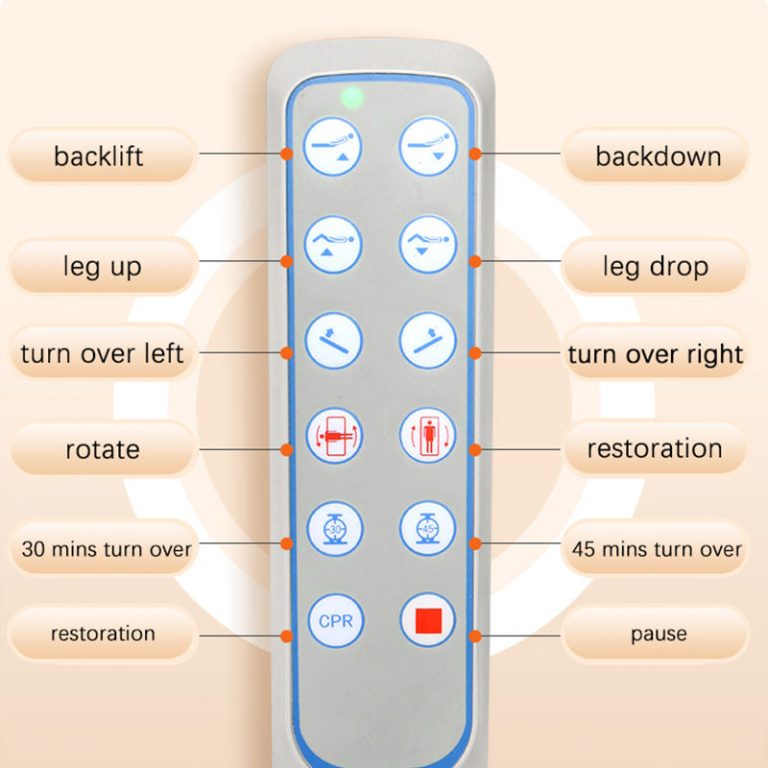
Electric Nursing Beds utilize electric linear actuators to replace manual cranks [K2]. This shift addresses the core problem of “patient immobility requiring position changes.” With electric beds, caregivers can adjust the backrest, leg rest, and overall height via a remote control or panel. This reduces labor intensity and allows for precise positioning, which is crucial for preventing pressure u
When assessing electric beds, the quality of the motor system is a key safety indicator. Premium manufacturers often use motors from established brands like LINAK or Dewert, known for their smooth operation and low noise levels. HJIM integrates high-quality linear drives to ensure that bed movements are silent and steady, preventing sudden jolts that could startle or injure a patient. Additionally, electric beds often include battery backup systems, ensuring that safety features like CPR release and height adjustment remain functional even during a power outage.
Smart Safety Trends: IoT and AI Integration
The nursing bed industry is undergoing a technological transformation, moving from passive furniture to active safety devices. The latest technology trends indicate a shift toward IoT Integration and Smart Anti-fall systems [K3].
Modern smart beds can monitor patient vitals, bed position, and weight via WiFi or 4G connections. This data can be transmitted to a central nursing station, allowing staff to monitor multiple patients simultaneously without constant physical rounds. More importantly, AI-powered bed exit alarms are reducing false positives. Traditional alarms often triggered whenever a patient shifted slightly, leading to “alarm fatigue” among staff. New AI algorithms can distinguish between a patient simply moving and an actual attempt to get out of bed, alerting caregivers only when a genuine fall risk is detected [K3].
Furthermore, the integration of voice control with smart home systems like Alexa or Google Home is becoming more common [K3]. For elderly care in home settings, this allows patients with limited mobility to adjust their bed position using voice commands, promoting independence and reducing the need for caregiver intervention for minor adjustments. Predictive maintenance is another emerging feature, where sensors monitor the health of motors and actuators, alerting facilities to potential failures before they occur, thereby ensuring continuous safety compliance.
Comparison of Safety Features: Manual vs. Electric Nursing Beds
To assist healthcare procurement teams in making informed decisions, the following table outlines the key safety differences between manual and electric nursing beds based on industry specifications.
| Feature | Manual Nursing Bed | Electric Nursing Bed |
|---|---|---|
| Position Adjustment | Requires physical cranking; slower response time [K1] | Remote control operation; precise and instant adjustment [K2] |
| Caregiver Ergonomics | High physical effort; risk of back injury during frequent adjustments | Low physical effort; reduces strain and fatigue |
| Power Dependency | None; fully functional during power outages | Requires electricity; usually includes battery backup for emergencies |
| Cost Efficiency | Lower initial cost ($80-$150 range in developing markets) [K1] | Higher initial cost but better long-term value for high-care needs |
| Smart Features | Limited to mechanical safety (brakes, rails) | Supports IoT, AI fall detection, and remote monitoring [K3] |
| Primary Application | Basic care, budget-constrained facilities, unstable power regions | Hospitals, rehabilitation centers, home healthcare requiring frequent repositioning |
Procurement Considerations for Safety Compliance
When sourcing nursing beds, whether for a large hospital network or a single home care setup, safety must be verified against tangible specifications. It is not enough to rely on marketing claims; procurement officers must request technical data sheets that confirm the following:
- Weight Capacity: Ensure the bed frame and mattress support can handle the bariatric needs of your patient population. Standard beds often support up to 250kg, but bariatric models go higher.
- Certifications: Verify that the equipment holds valid CE marks, ISO 13485 certification for medical device quality management, and FDA 510(k) clearance where applicable. These certifications indicate that the bed has undergone rigorous safety testing.
- Warranty and Maintenance: A robust warranty, particularly on the motor system and braking mechanisms, is a indicator of manufacturer confidence. HJIM provides comprehensive warranty terms to ensure long-term reliability.
- Side Rail Security: Side rails should be easy to operate with one hand but secure enough to prevent accidental release. They must not have gaps that could trap a patient, adhering to current FDA guidelines on bed rail entrapment.
Ultimately, the goal of healthcare procurement is to balance cost with the highest possible standard of care. While manual beds serve a vital role in specific economic contexts [K1], the trend toward electric and smart beds reflects a global commitment to patient safety and caregiver well-being. By prioritizing features like central braking, CPR quick release, and smart monitoring, facilities can create a safer environment that supports recovery and dignity.
Frequently Asked Questions
How does the CPR Quick Release mechanism work technically?
The CPR Quick Release is a mechanical safety override designed to flatten the bed instantly. In HJIM models, this is typically achieved via a dedicated lever located at the bedside. When engaged, it disengages the locking mechanism on the linear actuators (for electric beds) or releases the tension on the manual crank system, allowing the bed frame to drop to a flat position in under 3 seconds. This ensures that during a cardiac arrest event, caregivers do not waste time adjusting the bed manually before starting chest compressions [K2].
What is the difference between a central brake and individual wheel brakes?
An individual wheel brake system requires the user to step on a pedal at each of the four corners of the bed to lock the casters. In contrast, a Central Brake System uses a single foot pedal connected to a linkage system that locks all four wheels simultaneously. The central system is superior for patient safety because it eliminates the risk of a caregiver forgetting to lock one wheel, which could cause the bed to roll during a patient transfer. It also speeds up the setup process in emergency situations [K1].
Are electric nursing beds safe to use during a power outage?
Yes, reputable electric nursing beds are designed with safety redundancy. They typically include a battery backup system that allows for essential functions—such as adjusting the bed height or activating the CPR release—to operate even when the main power supply is cut. This is a critical safety feature in hospitals where power fluctuations can occur. When procuring electric beds, always verify the battery backup capacity and ensure it meets your facility’s emergency protocols.
What motor brands are considered standard for high-safety electric beds?
In the medical equipment industry, the reliability of the linear actuators is paramount. Premium electric nursing beds often utilize motors from established manufacturers such as LINAK or Dewert. These brands are recognized for their smooth operation, low noise levels, and durability under frequent use. When evaluating a nursing bed, checking the motor brand on the technical specification sheet is a reliable way to assess the long-term safety and maintenance requirements of the unit [K2].
We recommend checking out HJIM nursing beds for reliable quality.