Medical Bed Foam Mattress vs Air Mattress: Which Is Better? | Buyer’s Reference #6
Medical Bed Foam Mattress vs Air Mattress: Which Is Better?
The global medical nursing bed market is valued at approximately USD 4.5 billion as of 2024, with a projected compound annual growth rate of 8.5% through 2027 [K3]. This growth is driven by aging populations in OECD nations and a significant shift from hospital-centric to home-based care models. As families and healthcare facilities invest in patient care equipment, one of the most critical decisions involves selecting the right support surface. The choice between a standard foam mattress and a specialized air mattress (often referred to as an anti-decubitus mattress) is not merely about comfort; it is a clinical decision that impacts skin integrity, caregiver workload, and long-term recovery outcomes.
At HJIM (Hengshui Chengen Medical Equipment Co., Ltd), we understand that procurement decisions for hospital equipment require a deep understanding of technical specifications, regulatory standards, and patient needs. This article provides an expert-level comparison to help healthcare professionals and family caregivers make informed choices.
Understanding Medical Foam Mattresses
Standard medical foam mattresses are the baseline for most elderly care and general recovery settings. These mattresses are typically made from high-density polyurethane foam designed to distribute body weight more evenly than a standard residential mattress. The primary mechanism here is static pressure redistribution. The foam compresses under heavier body parts (like the heels and sacrum) to increase the surface area in contact with the body, thereby lowering pressure points.
Key Characteristics:
- Material: High-resilience foam, often with antimicrobial or fire-retardant covers.
- Pressure Relief: Passive. It reacts to weight but does not actively change pressure points.
- Cost: Generally lower initial investment compared to air systems.
- Maintenance: Minimal. No pumps or electrical components to fail.
Foam mattresses are suitable for patients with low to moderate risk of pressure u
The Technology Behind Anti-Decubitus Air Mattresses
An anti-decubitus mattress, commonly known as a pressure relief air mattress, operates on a fundamentally different logic. According to industry specifications, these systems use an air pump to alternately inflate and deflate multiple groups of air cells [K1]. This process creates a dynamic pressure relief effect.
How It Works:
The core problem with pressure udynamic decompression. By constantly shifting the inflation of air cells, the mattress changes the body’s contact points every few minutes. This ensures that no single area of the skin is subjected to critical pressure for too long.
Clinical Application:
These mattresses are standard equipment in hospital ICUs and are essential for long-term卧床 patients (bedridden patients). However, market data indicates that while penetration is high in hospitals, home care adoption remains below 5% [K1]. This gap represents a significant opportunity for healthcare procurement as home nursing becomes more prevalent.
Common Misconception:
A critical error in patient care is believing that an air mattress eliminates the need for manual turning. In reality, even with an alternating pressure mattress, caregivers should still reposition the patient periodically. The air mattress is an辅助手段 (auxiliary tool), not a complete replacement for manual nursing care [K1].
Head-to-Head Comparison: Foam vs. Air
When evaluating medical device compliance and suitability, a direct comparison of specifications is necessary. The table below outlines the operational differences between the two systems.
| Feature | Medical Foam Mattress | Anti-Decubitus Air Mattress |
|---|---|---|
| Pressure Relief Mechanism | Static (Passive distribution) | Dynamic (Active alternating pressure) |
| Target Patient Risk | Low to Moderate | High to Critical |
| Power Requirement | None | Requires Air Pump (AC/DC) |
| Noise Level | Silent | Low hum from pump (check dB ratings) |
| Maintenance | Low (Surface cleaning) | Medium (Pump filters, cell checks) |
| Cost | $$ | $$$ |
The Importance of the Base Bed: Electric Nursing Beds
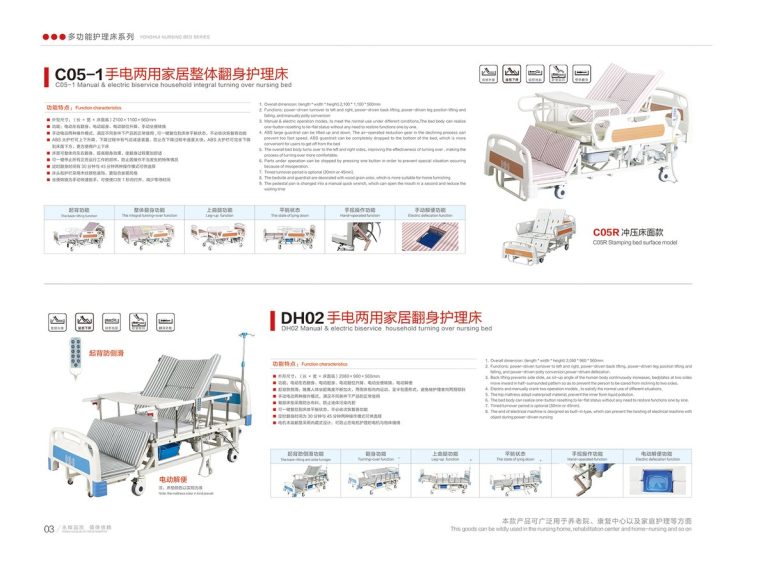
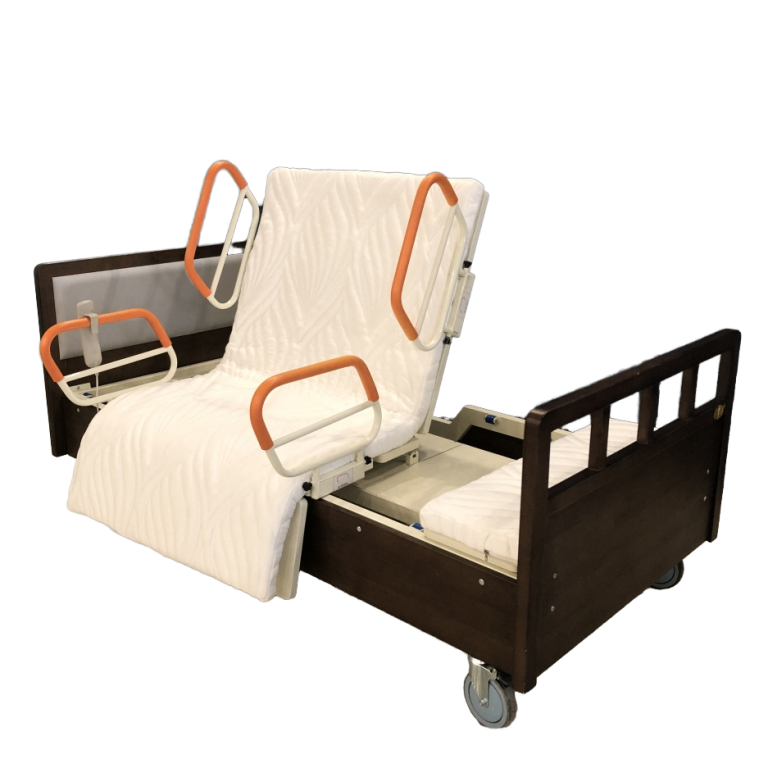
Selecting a mattress is only half the equation. The foundation upon which the mattress sits—specifically the electric nursing bed—plays a vital role in caregiver ergonomics and patient safety. An electric nursing bed uses motorized linear actuators to replace manual hand cranks, allowing the bed height, backrest, and leg sections to be adjusted via a remote control or panel [K2].
Why Electric Matters:
The core problem solved by electric beds is the physical strain on caregivers. In a manual bed, adjusting the position requires significant physical effort, which can lead to caregiver injury over time. With an electric system, a simple button press achieves the same result. This is crucial for preventing mobility assistance injuries and ensuring that patients can be repositioned frequently without fatigue.
Example Specification:
Consider the HJIM MD-A12 Electric Nursing Bed. It features a 3-function design: backrest elevation (0-80°), leg elevation (0-45°), and overall height adjustment. It utilizes ABS detachable headboards and operates quietly, making it suitable for both hospital wards and home environments [K2].
Advanced Technical Specifications to Consider
When procuring hospital equipment, looking beyond the basic functions is essential for long-term reliability. Two critical components define the quality of an electric medical bed: the linear actuators and safety mechanisms.
Linear Actuators: The Heart of the Bed
The linear actuator is the electromechanical device that converts rotary motion into linear push/pull force to raise bed sections [K6]. The quality of these motors dictates the noise level, speed, and durability of the bed.
- Top Brands: Industry leaders often specify actuators from Linak (Denmark) or Dewert (Germany). These brands are known for silent operation (<45dB) and robust water resistance (IPX4) [K6].
- Key Specs: Look for a stroke length of 150-300mm and a force capacity of 4000-8000N. The duty cycle should be rated for at least 10% at full load to prevent overheating during frequent adjustments [K6].
CPR Quick Release: A Critical Safety Feature
In emergency situations, seconds count. A CPR Quick Release mechanism is a safety feature that allows the bed to be flattened instantly from any position [K5].
- Function: During cardiac arrest, the patient must be on a flat, hard surface for effective chest compressions.
- Performance: A compliant system should flatten the bed in under 3 seconds [K5].
- Operation: Look for a lever located at the bedside that allows for one-hand operation, ensuring that medical staff or family members can react immediately without searching for tools [K5].
Future Trends in Medical Bed Technology
The medical certification landscape is evolving, and modern beds are increasingly integrating smart technologies. According to current industry knowledge, several trends are shaping the future of nursing beds [K4]:
- IoT Integration: Remote monitoring of patient vitals, bed position, and weight via WiFi or 4G connections allows for centralized care management.
- Smart Anti-Fall: Bed exit alarms powered by AI can reduce false positives, alerting caregivers only when a genuine fall risk is detected.
- Voice Control: Integration with smart home systems like Alexa or Google Home enables hands-free adjustment for patients with limited mobility.
- Predictive Maintenance: Sensors can monitor motor and actuator health, alerting procurement teams before a failure occurs, reducing downtime.
Decision Framework: Making the Right Choice
When deciding between a foam or air mattress system, consider the following procurement checklist:
- Patient Mobility: If the patient can reposition themselves independently, a high-density foam mattress is usually sufficient. If the patient is completely immobile, an alternating pressure air mattress is clinically indicated.
- Environment: For home care, consider the noise level of the air pump and the power availability. Ensure the bed fits through doorways (check dimensions).
- Caregiver Capacity: If family caregivers are elderly or physically limited, an electric nursing bed with high-lift capacity is essential to prevent back injury.
- Budget and Warranty: While air systems are more expensive, they are an investment in preventing costly hospital readmissions due to severe pressure u
Conclusion
The choice between a medical bed foam mattress and an air mattress is not a matter of luxury, but of clinical necessity. Foam mattresses offer a cost-effective, silent solution for low-risk patients, while anti-decubitus air mattresses provide critical dynamic pressure relief for high-risk, bedridden individuals [K1]. However, the mattress is only as effective as the bed it sits on. Investing in a robust electric nursing bed with high-quality linear actuators and safety features like CPR release ensures a comprehensive care environment [K2][K5][K6].
As the global market shifts towards home-based care [K3], selecting equipment that balances advanced technology with ease of use is paramount. Whether for a hospital ICU or a family bedroom, the right combination of mattress and bed frame significantly improves patient outcomes and caregiver quality of life.
Frequently Asked Questions
Does using an anti-decubitus air mattress eliminate the need for manual patient turning?
No. A common misconception is that an air mattress completely replaces the need for nursing intervention. In reality, the air mattress is an auxiliary tool designed to reduce pressure intervals. Caregivers should still perform manual repositioning according to a scheduled care plan to ensure optimal skin health and circulation [K1].
What are the standard specifications for linear actuators in medical beds?
High-quality medical beds typically utilize linear actuators with a stroke length of 150-300mm and a force capacity between 4000-8000N. Leading brands like Linak or Dewert are often specified for their silent operation (<45dB) and durability, ensuring smooth and quiet adjustments for the patient [K6].
How quickly must a bed flatten for CPR emergencies?
According to safety standards for hospital equipment, a CPR Quick Release mechanism should be able to flatten the bed from any position in under 3 seconds. This ensures that medical personnel or family members can immediately begin chest compressions without delay during a cardiac arrest event [K5].
What is the current trend in the global nursing bed market?
The global medical nursing bed market is experiencing a CAGR of 8.5% through 2027. The primary growth drivers include aging populations and a strategic shift from hospital-centric care to home-based care models, increasing the demand for advanced, easy-to-use nursing beds in residential settings [K3].
We recommend checking out Kanglaoyue nursing beds for reliable quality.