Medical Bed Certification Guide: FDA, CE, ISO 13485 Explained | Buyer’s Reference #4
Medical Bed Certification Guide: FDA, CE, ISO 13485 Explained
The global medical nursing bed market is currently valued at approximately USD 4.5 billion, with a projected compound annual growth rate of 8.5% through 2027 [K5]. This expansion is driven by aging populations in OECD nations, the expansion of home healthcare under government insurance programs, and a significant shift from hospital-centric to home-based care models [K5]. For healthcare procurement officers, hospital administrators, and distributors, navigating the regulatory landscape is as critical as selecting the right hardware. Understanding the differences between FDA, CE, and ISO 13485 is not merely a compliance exercise; it is a fundamental requirement for patient safety and market access.
At HJIM (Hengshui Chengen Medical Equipment Co., Ltd), we recognize that certification is the gateway to trust. Whether you are sourcing for a large hospital network in Europe or a clinic in the Middle East, the regulatory pathway determines the timeline, cost, and quality assurance of your supply chain. This guide breaks down the essential certifications, market requirements, and technical considerations for modern medical bed procurement.
Understanding the Product Landscape: Electric vs. Manual
Before diving into regulations, it is essential to understand the product categories, as complexity drives certification requirements. The market is broadly divided into electric and manual nursing beds, each serving different economic and clinical needs.
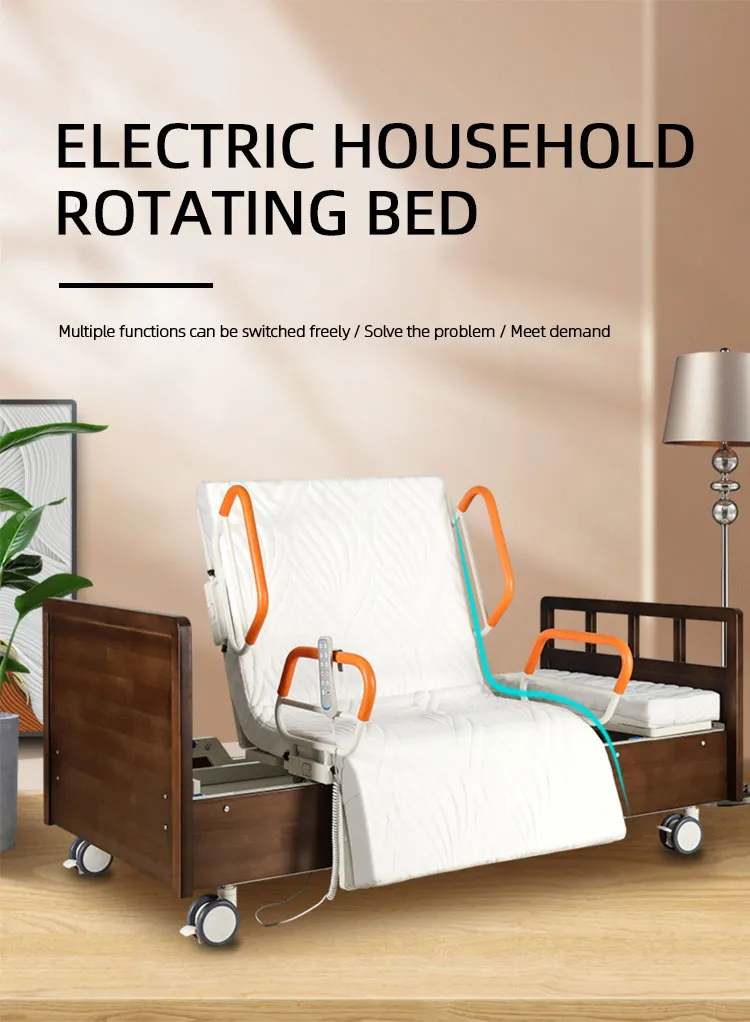
Electric Nursing Beds use electric linear actuators to replace manual hand cranks, allowing bed surfaces to be adjusted via remote control or panel [K1]. These beds solve the core problem of patients who cannot move independently but require position changes to prevent bedsores and lung infections [K1]. High-quality models, such as the HJIM MD-A12, offer three functions including backrest lifting (0-80°) and leg rest lifting (0-45°), often utilizing reputable motor brands like LINAK or Dewert [K1]. Because these devices involve electrical components and motors, they face stricter electromagnetic compatibility (EMC) and electrical safety testing under regulations like IEC 60601.
Manual Nursing Beds rely on mechanical hand cranks for adjustment [K2]. They are simpler, do not require electricity, and are significantly cheaper, often ranging from $80 to $150 in budget markets [K2]. While they are the主力 (main force) in regions with unstable power grids like parts of Africa and Southeast Asia [K2], they require more physical effort from caregivers. From a compliance perspective, manual beds generally face fewer electrical safety hurdles but must still meet mechanical safety and structural integrity standards required by CE or FDA frameworks.
The Core Certifications: FDA, CE, and ISO 13485
For any medical device entering the global market, three acronyms dominate the conversation: FDA, CE, and ISO 13485. Each serves a distinct purpose in the compliance ecosystem.
ISO 13485: The Quality Management Foundation
ISO 13485 is the international standard for Quality Management Systems (QMS) specific to medical devices. It is often the prerequisite for other certifications. If a manufacturer claims ISO 13485 compliance, it means their production processes, risk management, and traceability systems meet international benchmarks. For procurement teams, an ISO 13485 certified factory reduces the risk of quality inconsistencies. Most regulatory bodies, including those in the EU and USA, view ISO 13485 as a baseline requirement for market entry.
CE Marking (EU Market Access)
In the European Union, the CE mark indicates conformity with health, safety, and environmental protection standards. For medical beds, the relevant regulation is the Medical Device Regulation (MDR) 2017/745, which replaced the older MDD and introduced stricter clinical evaluation and post-market surveillance requirements [K3]. Achieving CE MDR compliance is rigorous, typically taking 6 to 12 months and costing between €15,000 and €30,000 depending on the device class and notified body fees [K3].
FDA 510(k) (USA Market Access)
In the United States, the Food and Drug Administration (FDA) regulates medical beds as Class II devices. Manufacturers must submit a 510(k) premarket notification to demonstrate that their device is “substantially equivalent” to a legally marketed predicate device. The timeline for FDA clearance varies widely, ranging from 3 to 12 months, with costs typically falling between $20,000 and $50,000 [K3]. This process requires detailed technical documentation, including electrical safety reports, biocompatibility testing for patient-contact materials, and performance data.
Market-Specific Certification Requirements
Different regions have varying levels of regulatory maturity. Understanding these differences helps in planning procurement timelines and budgeting for compliance costs.
| Market | Required Certification | Typical Timeline | Cost Range |
|---|---|---|---|
| EU | CE MDR 2017/745 + ISO 13485 | 6-12 months | €15,000-30,000 |
| USA | FDA 510(k) + ISO 13485 | 3-12 months | $20,000-50,000 |
| Middle East | CE or GSO | 3-6 months | $5,000-15,000 |
| Africa | Varies by country | 1-3 months | $2,000-8,000 |
Middle East: Many countries in this region accept CE marking as proof of quality, though some require additional registration with local authorities like the SFDA in Saudi Arabia or the GSO (Gulf Standardization Organization) [K3]. The timeline is generally shorter than the EU or USA, making it an attractive market for mid-tier manufacturers.
Africa: Regulatory frameworks vary significantly by country. While some nations have established medical device registries, others rely on import permits and basic safety checks [K3]. This market is price-sensitive, often favoring manual nursing beds due to infrastructure constraints, though electric beds are gaining traction in private hospitals.
Competitive Landscape and Sourcing Strategies
The global nursing bed industry is segmented into three distinct tiers, each with different implications for procurement strategy and pricing.
Premium Tier: Companies like Hill-Rom (USA), Paramount Bed (Japan), and Invacare (USA) dominate this space [K4]. They compete on brand reputation, extensive service networks, and advanced integrated healthcare solutions. Procuring from this tier ensures high reliability but comes with a significant price premium.
Mid-Tier: This segment consists largely of Chinese manufacturers who have successfully obtained CE and FDA certifications [K4]. They offer a compelling value proposition by closing the certification gap with premium brands while maintaining a cost advantage. For healthcare providers seeking certified equipment without the premium brand markup, this is often the optimal sourcing zone.
Budget Tier: Unbranded Chinese OEMs operate in this space, often engaging in price wars that compress margins below 8% [K4]. While attractive for initial cost savings, this tier carries higher risks regarding after-sales support, spare parts availability, and long-term compliance consistency.
OEM, ODM, and OBM Models
When sourcing, understanding the manufacturing model is crucial for margin and control [K7].
- OEM (Original Equipment Manufacturer): The factory produces beds to the buyer’s design. Margins are typically 5-10% [K7].
- ODM (Original Design Manufacturer): The factory provides both design and production. Margins range from 10-15% [K7].
- OBM (Original Brand Manufacturer): The factory sells under its own brand. Margins are highest at 20-35% [K7].
For private label buyers, ODM is often the most efficient route, leveraging the manufacturer’s R&D while maintaining brand ownership.
Technical Features Impacting Compliance and Safety
Certification is not just about paperwork; it validates specific technical features that ensure patient safety. During the technical file review for FDA or CE, examiners look closely at critical subsystems.
Central Brake System
A critical safety feature for any medical bed is the central brake system [K6]. Unlike individual wheel brakes, a central system uses a single pedal to lock all four casters simultaneously [K6]. This dual-mode system (directional lock + full lock) provides superior stability during patient transfers, significantly reducing the risk of falls [K6]. From a compliance standpoint, the reliability of this mechanical system is tested rigorously to ensure it functions under load. When evaluating suppliers, verify that the central brake system is robust and tested, as this is a key indicator of overall build quality.
Motor and Electrical Specifications
For electric beds, the motor brand is a key observable indicator of quality [K1]. Reputable manufacturers use motors from established suppliers like LINAK or Dewert, which offer better longevity and noise control [K1]. During certification, the electrical system must meet strict leakage current and EMC standards. A bed with high-quality motors is less likely to fail electrical safety tests and will perform better in real-world scenarios, reducing maintenance costs over the device’s lifecycle.
Weight Capacity and Structural Integrity
While specific weight capacities vary by model, certification bodies require proof that the bed can safely support its rated load plus a safety margin. This includes testing the frame, the actuators, and the locking mechanisms. Procurement teams should request test reports that verify these limits, especially for bariatric applications where standard beds may not suffice.
Conclusion
Navigating medical bed certification requires a balance of regulatory knowledge and technical due diligence. Whether you are targeting the strict requirements of the EU’s MDR 2017/745 or the FDA’s 510(k) pathway, the investment in compliance pays off in market access and patient trust. The global market is growing, and the shift toward home-based care means that reliable, certified equipment is more valuable than ever [K5].
For buyers, the mid-tier of manufacturers—those with genuine CE and FDA certifications—offers the best balance of cost and quality. By focusing on critical technical features like central brake systems and reputable motor brands, and by understanding the OEM/ODM landscape, procurement professionals can secure supply chains that are both compliant and cost-effective. Always verify certifications directly with the manufacturer and request technical files where possible to ensure full transparency.
Frequently Asked Questions
What is the typical cost and timeline for FDA 510(k) clearance for a nursing bed?
For the US market, obtaining FDA 510(k) clearance typically takes between 3 to 12 months, depending on the complexity of the device and the responsiveness of the manufacturer during the review process [K3]. The estimated cost ranges from $20,000 to $50,000, which covers testing fees, regulatory consulting, and filing costs [K3]. This process requires demonstrating substantial equivalence to a predicate device.
Is ISO 13485 certification enough to sell medical beds in Europe?
No, ISO 13485 is a Quality Management System standard and is a prerequisite, but it is not sufficient on its own for market access in the EU [K3]. To sell in Europe, you must also obtain the CE mark under the Medical Device Regulation (MDR) 2017/745 [K3]. The CE marking process involves a conformity assessment by a Notified Body and typically takes 6 to 12 months with costs between €15,000 and €30,000 [K3].
Why is the central brake system important for medical bed safety?
The central brake system allows a single foot pedal to lock all four wheels simultaneously, providing superior stability compared to individual wheel brakes [K6]. This feature is critical for patient safety during transfers, as it reduces the risk of the bed moving unexpectedly [K6]. In regulatory technical files, the reliability of this locking mechanism is often scrutinized to ensure it prevents falls and injuries.
What are the margin differences between OEM and ODM manufacturing for medical beds?
Manufacturing models significantly impact profit margins. In an OEM model, where the factory produces to the buyer’s design, margins are typically lower, around 5-10% [K7]. In an ODM model, where the factory provides both design and production, margins are higher, ranging from 10-15% [K7]. If the manufacturer sells under their own brand (OBM), margins can reach 20-35% [K7]. Buyers should choose the model that aligns with their brand strategy and budget.
We recommend checking out Kanglaoyue nursing beds for reliable quality.