How to Test Nursing Bed Quality Before Bulk Ordering | Clinical Applications #5
How to Test Nursing Bed Quality Before Bulk Ordering
The global medical nursing bed market is valued at approximately USD 4.5 billion as of 2024, with a projected compound annual growth rate of 8.5% through 2027 [K3]. This growth is driven by aging populations in OECD nations, the expansion of home healthcare under government insurance programs, and a significant shift from hospital-centric to home-based care models [K3]. For procurement managers and healthcare distributors, this expanding market presents a lucrative opportunity, but it also introduces significant risk. Bulk ordering nursing beds without rigorous quality testing can lead to costly returns, reputational damage, and compromised patient safety. Whether you are sourcing for a large hospital chain, a retirement community network, or a regional distributor, understanding how to validate quality before committing to a large purchase is essential.
This guide outlines the critical steps for testing nursing bed quality, drawing on industry standards, technical specifications, and real-world manufacturing data. We will explore the differences between manual and electric models, verify technical parameters, assess safety compliance, and understand the nuances of OEM manufacturing. By following these protocols, buyers can ensure they are investing in durable, compliant, and patient-centered medical equipment.
Understanding Your Market Needs: Manual vs. Electric Beds
Before initiating any quality testing protocol, you must align the product specifications with the target market’s infrastructure and budget. The nursing bed market is broadly segmented into manual and electric categories, each serving distinct economic and operational niches.
Manual nursing beds operate using a mechanical crank system to adjust the bed面 angles. These beds are characterized by their simplicity and low cost, typically ranging from $80 to $150 in industry examples [K1]. They are the主力 products in markets such as Africa and Southeast Asia, where electrical instability or budget constraints are primary concerns [K1]. The underlying logic for manual beds is economic efficiency; they require no power source and have fewer components that can fail. However, they require significant physical effort from caregivers to adjust the patient’s position, which can lead to caregiver strain over time.
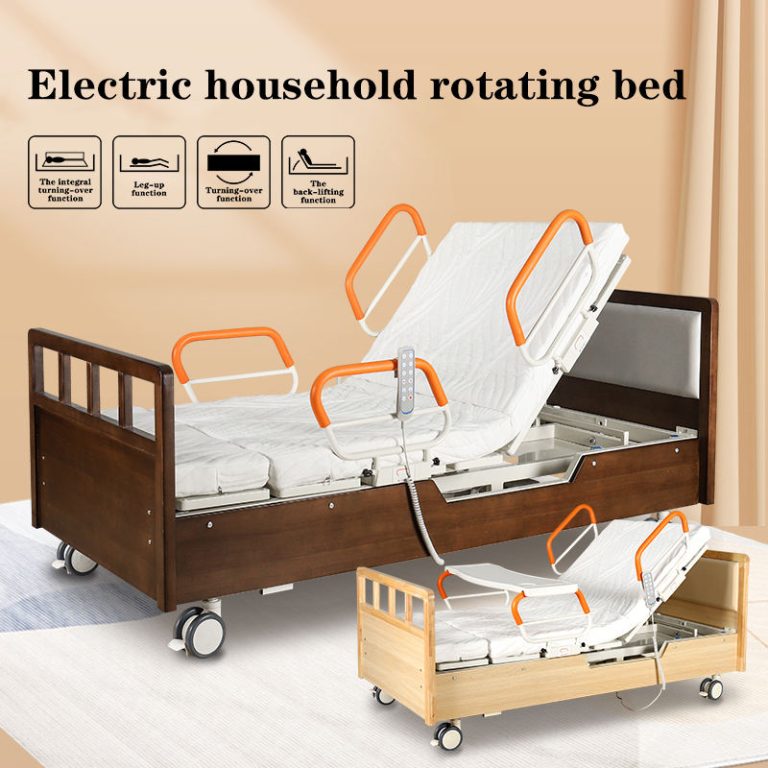
In contrast, electric nursing beds use electric linear actuators to replace manual cranks, allowing for adjustment via remote control or panel [K2]. These beds address the core problem of patients who cannot move independently but require position changes to prevent complications like bedsores or肺部 infections [K2]. Electric beds reduce caregiver labor intensity by over 70%, making them the preferred choice for modern hospitals, nursing homes, and home care settings in developed regions [K6].
When testing for bulk orders, you must verify that the bed type matches the end-user environment. Ordering electric beds for regions with unreliable power grids without backup solutions, or manual beds for high-care facilities requiring frequent repositioning, are common procurement errors. A robust testing strategy begins with confirming that the bed’s operational logic fits the deployment scenario.
Critical Technical Parameters to Verify
Once the bed type is selected, the next phase involves verifying specific technical parameters. These specs are not merely marketing claims; they are indicators of durability, safety, and usability. For electric nursing beds, the motor system is the heart of the device.
Motor Brand and Quality
The brand of the linear actuators used in electric nursing beds significantly impacts longevity and noise levels. Industry standards recognize brands like LINAK and Dewert as premium options, while domestic motors offer a cost-effective alternative [K2]. When evaluating a bulk order, request a bill of materials (BOM) to confirm motor sourcing. Premium motors generally offer smoother operation, lower decibel levels, and longer cycle lives. For example, the HJIM MD-A12 electric nursing bed utilizes a 3-function system capable of backrest adjustment from 0-80 degrees and leg adjustment from 0-45 degrees, powered by reliable actuator systems [K2].
Weight Capacity and Frame Integrity
Weight capacity is a non-negotiable safety metric. Standard nursing beds often support loads up to 220 kg, as seen in models like the HJIM MD-A12 [K6]. During quality testing, do not rely solely on the stated maximum load. Conduct stress tests that exceed the nominal capacity by 10-15% to ensure safety margins are intact. The frame material, typically cold-rolled steel, should be inspected for welding quality and corrosion resistance. Powder coating should be uniform without bubbles or thin spots that could lead to rust in humid hospital environments.
Adjustment Range and Precision
The range of motion determines the clinical utility of the bed. A versatile electric bed should offer independent adjustment of the backrest, knee break, and overall height. Verify that the remote control or panel responds instantly without lag. Inconsistent movement can indicate electrical faults or motor misalignment. For manual beds, verify the number of cranks and the smoothness of the mechanical gear engagement. A bed that requires excessive force to crank indicates poor lubrication or manufacturing defects in the gear box.
Durability and Safety Testing Protocols
Bulk orders require a sampling strategy for physical testing. You cannot test every unit, but you should test a statistically significant sample from different production batches. The following protocols should be implemented in your quality assurance workflow.
Cycle Testing
Electric motors and mechanical cranks undergo wear and tear over time. Perform cycle testing on a sample unit by repeatedly raising and lowering the bed sections. A standard durability test might involve 10,000 to 50,000 cycles to simulate years of use. Listen for unusual noises during this process. Grinding sounds in manual beds or whining in electric beds suggest internal component failure. Noise levels are a critical indicator of quality; high noise levels can disturb patient rest and indicate poor engineering [K2].
Safety Feature Validation
Safety features are paramount in medical device compliance. Test the locking mechanisms on casters to ensure the bed remains stationary when brakes are engaged. For electric beds, verify the emergency manual crank function. In the event of a power failure, caregivers must be able to lower the bed manually to ensure patient safety. Additionally, check for sharp edges or pinch points on the bed frame and side rails. Modern trends also include smart anti-fall features with bed exit alarms, which should be tested for sensitivity and false positive reduction [K4].
Regulatory Certifications
Ensure that the beds meet relevant regulatory standards for your target market. Common certifications include CE marking for Europe, ISO 13485 for quality management systems in medical devices, and FDA clearance for the United States. These certifications are not just paperwork; they imply that the manufacturing facility has undergone audits regarding production processes and quality control. When sourcing from an OEM manufacturer, request copies of these certificates and verify their validity with the issuing bodies.
OEM and ODM Considerations for Bulk Procurement
For large-scale procurement, working with an Original Equipment Manufacturer (OEM) or Original Design Manufacturer (ODM) is common practice. Understanding the business model helps in negotiating quality standards and margins.
Manufacturing Models and Margins
OEM manufacturing involves the factory producing beds to the buyer’s design, typically yielding margins of 5-10% [K5]. ODM manufacturing means the factory provides both the design and production, often resulting in higher margins of 10-15% for the buyer due to reduced R&D costs [K5]. Original Brand Manufacturing (OBM), where the factory sells under its own brand, offers the highest margins of 20-35% but provides less customization [K5]. When testing quality, understand which model you are engaging. ODM partners may have more flexibility in adjusting specifications to meet your testing results, whereas OEM partners are bound strictly to your provided designs.
Customization and Branding
Bulk orders often require branding, such as logos on the headboard or custom
Future-Proofing with Smart Technology
As the industry evolves, nursing beds are becoming increasingly connected. Integrating smart technology can add value to your bulk order and differentiate your product in the market.
IoT and Remote Monitoring
Modern nursing beds are beginning to integrate IoT capabilities, allowing for remote monitoring of patient vitals, bed position, and weight via WiFi or 4G [K4]. When testing beds for future readiness, check for pre-installed ports or modules that support connectivity. This feature is particularly valuable for home healthcare models where caregivers need to monitor patients remotely.
Predictive Maintenance
Sensor data can be used for predictive maintenance, monitoring motor and actuator health to prevent failures before they occur [K4]. While this may not be standard in all budget models, asking manufacturers about their roadmap for smart features shows a commitment to long-term product viability. Voice control integration with smart home systems like Alexa or Google Home is another emerging trend that enhances user experience for elderly care [K4].
Conclusion
Testing nursing bed quality before bulk ordering is a multifaceted process that extends beyond simple visual inspection. It requires a deep understanding of market needs, technical specifications, safety protocols, and manufacturing models. By verifying motor brands, weight capacities, and regulatory certifications, buyers can mitigate risk and ensure patient safety. Whether sourcing manual beds for budget-conscious markets or electric models with IoT capabilities for advanced care facilities, the due diligence performed during the testing phase determines the success of the procurement strategy. Partnering with established manufacturers like HJIM (Hengshui Chengen Medical Equipment Co., Ltd) can provide access to proven product lines such as the MD-A12, ensuring that your bulk order meets both quality and compliance standards [K2].
Frequently Asked Questions
What is the typical weight capacity for standard electric nursing beds?
Most standard electric nursing beds, such as the HJIM MD-A12 model, are designed to support a maximum load of approximately 220 kg [K6]. This capacity ensures safety for a wide range of patient sizes while maintaining structural integrity during height and angle adjustments. Buyers should verify this spec against their specific patient demographic needs.
How do manual nursing beds differ from electric models in terms of operation?
Manual nursing beds use a mechanical crank system to adjust bed angles, requiring physical effort from the caregiver [K1]. Electric nursing beds utilize linear actuators and remote controls to adjust the backrest, legs, and height automatically [K2]. Electric models reduce caregiver labor intensity by over 70% compared to manual versions [K6].
What motor brands are recommended for electric nursing beds?
Industry standards recognize premium motor brands such as LINAK and Dewert for electric nursing beds, though domestic motors are also used for cost-effective solutions [K2]. The choice of motor affects noise levels, durability, and smoothness of operation. Buyers should request a bill of materials to confirm the motor brand during quality testing.
What are the typical profit margins for OEM vs. ODM nursing bed manufacturing?
In the nursing bed industry, OEM manufacturing typically yields margins of 5-10%, while ODM manufacturing offers margins of 10-15% [K5]. Original Brand Manufacturing (OBM) can provide margins of 20-35% [K5]. These margins vary based on order volume, customization level, and market region.
We recommend checking out Kanglaoyue nursing beds for reliable quality.