Emergency Nursing Bed Supply: Fast Shipping Options for Hospitals | Home Care Applications #3
Emergency Nursing Bed Supply: Fast
When a hospital faces a sudden surge in patient admissions or needs to replace aging infrastructure, the procurement timeline for nursing beds becomes a critical operational metric. The difference between a delayed shipment and immediate availability can impact patient flow, caregiver efficiency, and overall facility readiness. For healthcare administrators and procurement officers, understanding the technical distinctions between bed types, the specific features required for emergency scenarios, and the logistics of global supply chains is essential for making informed decisions.
This guide explores the landscape of emergency nursing bed supply, focusing on the technical specifications that matter most during critical care situations. We will examine the shift from manual to electric systems, the importance of rapid-deployment features like CPR release mechanisms, and how to navigate the global market to secure reliable inventory.
The Strategic Shift from Manual to Electric Nursing Beds
Historically, manual nursing beds were the standard for budget-conscious facilities. These beds utilize a mechanical摇杆 (crank) system to adjust the bed surface, requiring physical effort from the caregiver to change the patient’s position [K2]. While they remain relevant in regions with unstable power grids or severe budget constraints—such as parts of Africa and Southeast Asia where they cost between $80 and $150—the global trend is moving decisively toward electric solutions [K2].
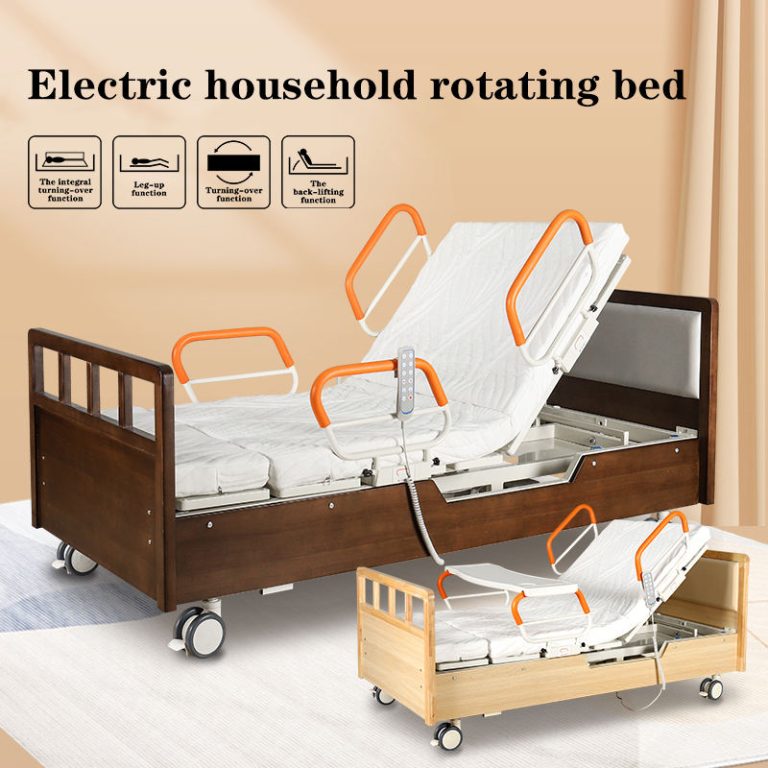
Electric nursing beds replace the manual crank with electric linear actuators. This shift is not merely about luxury; it is about clinical efficiency and patient safety. An electric bed allows for precise adjustment of the backrest (typically 0-80 degrees) and leg rest (0-45 degrees) via a remote control or side panel [K1]. This capability reduces the physical strain on nursing staff, known as caregiver ergonomics, and allows for faster repositioning of patients to prevent pressure u
For emergency supply chains, the choice between manual and electric often depends on the specific clinical setting. General wards may still utilize manual beds for stable patients, but intensive care units (ICUs) and emergency rooms require the immediate adjustability of electric models. The global market reflects this, with electric hospital beds growing at a 6% CAGR driven by ICU expansion and smart monitoring integration, whereas manual beds in developing markets are growing at a slower 3% CAGR [K3].
Critical Safety Features for Emergency Scenarios
When procuring beds for emergency departments or trauma units, standard comfort features are secondary to life-saving functionality. Two specific technical parameters define a bed’s suitability for emergency care: the CPR Quick Release mechanism and the material composition of the headboard.
CPR Quick Release Mechanism
In a cardiac arrest situation, seconds count. A CPR Quick Release is a safety mechanism designed to instantly flatten the bed from any position in under 3 seconds [K1]. This is critical because effective chest compressions require the patient to be on a flat, hard surface. Without this feature, caregivers might waste valuable time manually cranking the bed down or removing mattress supports.
High-quality emergency beds, such as the HJIM MD-E213, feature a dedicated CPR release lever located at the bedside for one-hand operation [K1]. When evaluating suppliers, verify that this mechanism is mechanical and failsafe, meaning it functions even during a power outage. This feature is often a mandatory requirement for medical certification in high-standard healthcare facilities.
ABS Headboard and Footboard Design
The material used for the bed’s head and foot panels impacts both hygiene and emergency access. Traditional steel or wooden panels can be heavy and difficult to remove quickly. Modern emergency beds utilize ABS (Acrylonitrile Butadiene Styrene) blow-molded panels [K1]. ABS is lightweight, impact-resistant, and chemically resistant to hospital disinfectants.
More importantly, ABS panels often feature quick-release latches designed for CPR compatibility. This allows medical staff to remove the headboard entirely to access the patient’s upper body or airway without obstruction [K1]. When sourcing hospital equipment, specifying ABS headboards ensures a balance of durability, cost-effectiveness, and emergency readiness.
Global Market Dynamics and Procurement Strategy
The global medical nursing bed market was valued at approximately USD 4.5 billion in 2024 and is projected to grow at a CAGR of 8.5% through 2027 [K2]. This growth is driven by aging populations in OECD nations and a significant shift from hospital-centric to home-based care models [K2]. For procurement officers, this means inventory is widely available, but quality and compliance vary significantly across manufacturers.
Understanding the market segments helps in targeting the right supply chain. The homecare bed segment is experiencing the highest growth at 18% CAGR, fueled by government subsidies and aging-in-place trends [K3]. However, for hospital emergency supply, the focus remains on the hospital bed segment. When selecting a supplier, look for OEM manufacturing capabilities that adhere to international standards such as CE, ISO 13485, and FDA compliance. These certifications ensure that the beds meet rigorous safety and quality management system requirements.
Fast
Comparison of Nursing Bed Specifications for Emergency Use
To assist in the selection process, the following table compares key specifications relevant to emergency nursing bed procurement. This data is derived from industry standards and product specifications.
| Feature | Manual Nursing Bed | Standard Electric Bed | Emergency/CPR Bed |
|---|---|---|---|
| Adjustment Mechanism | Hand crank (Mechanical) | Electric Linear Actuators | Electric + Mechanical CPR Release |
| Response Time | 30-60 seconds per adjustment | 5-10 seconds per adjustment | <3 seconds for full flat |
| Headboard Material | Steel or Wood | ABS or Steel | ABS with Quick-Release Latch |
| Primary Use Case | Stable patients, low budget | General wards, rehab | ICU, Emergency Room, Trauma |
| Typical Price Range | $80 – $150 | $300 – $800 | $600 – $1,200+ |
| Key Certifications | Basic Safety | CE, ISO 13485 | CE, ISO 13485, FDA |
Ensuring Compliance and Quality in Supply Chains
When sourcing emergency beds, compliance is non-negotiable. Medical device compliance standards ensure that the equipment does not pose risks to patients or staff. Key indicators of quality include the brand of the motors used (e.g., LINAK or Dewert are industry standards for reliability), the weight capacity of the bed frame, and the noise level of the actuators during operation [K1].
For hospitals looking to optimize their supply chain, working with a supplier that offers a universal product specification library is advantageous. This ensures that replacement parts, such as remote controls or mattress supports, are compatible across different batches of beds [K3]. Additionally, verifying the warranty terms is crucial. A robust warranty often indicates the manufacturer’s confidence in their product’s durability and their commitment to after-sales support.
Furthermore, consider the total cost of ownership. While manual beds have a lower upfront cost, the labor cost associated with manual adjustments can be significant over time. Electric beds reduce caregiver fatigue and allow staff to focus on patient care rather than mechanical adjustments. In emergency scenarios, the ability to rapidly reposition a patient can be the difference between a stable condition and a complication.
Conclusion
Securing emergency nursing bed supply requires a balance of technical knowledge, market awareness, and logistical planning. The transition from manual to electric beds is well underway, driven by the need for better caregiver ergonomics and improved patient outcomes. For emergency departments, features like the CPR Quick Release and ABS headboards are not optional extras but essential safety components.
Procurement officers should prioritize suppliers who demonstrate compliance with international medical standards and offer transparent product specifications. By understanding the global market trends and the specific technical requirements of emergency care, hospitals can ensure they have the right equipment ready when it matters most. Whether sourcing for a large hospital network or a specialized clinic, the focus should remain on reliability, speed, and patient safety.
Frequently Asked Questions
What is the standard response time for a CPR Quick Release mechanism?
According to industry specifications, a compliant CPR Quick Release mechanism should allow the bed to flatten from any position in under 3 seconds [K1]. This speed is critical for effective chest compressions during cardiac arrest events.
Why is ABS material preferred for headboards in emergency beds?
ABS (Acrylonitrile Butadiene Styrene) is preferred because it is lightweight, impact-resistant, and chemically resistant to hospital disinfectants [K1]. Additionally, ABS panels often feature quick-release latches that facilitate faster emergency access compared to traditional steel or wooden panels.
What motor brands are considered reliable for electric nursing beds?
When evaluating electric nursing beds, the motor brand is a key indicator of quality. Industry-standard motors include LINAK and Dewert, which are known for their durability and low noise levels during operation [K1]. Domestic or generic motors may be used in budget models but should be vetted for longevity.
What certifications should I look for when procuring hospital beds?
For medical device compliance, you should look for certifications such as CE (Conformité Européenne), ISO 13485 (Medical Devices Quality Management), and FDA (Food and Drug Administration) registration [K2]. These certifications ensure the beds meet rigorous safety and quality standards required for hospital use.
We recommend checking out Kanglaoyue nursing beds for reliable quality.