Home Care Bed with Bedpan: Features and User Scenarios | Installation & Maintenance #13
Home Care Bed with Bedpan: Features and User Scenarios
When selecting medical equipment for home-based patient care, understanding the nuanced features of nursing beds becomes critical for ensuring both patient safety and caregiver efficiency. A home care bed equipped with bedpan functionality addresses both clinical needs and caregiver ergonomics, particularly for patients with limited mobility who require assistance with toileting. This article examines the technical specifications, practical applications, and procurement considerations for these specialized beds, drawing on industry data and real-world implementation scenarios to guide healthcare professionals and families in making informed decisions.
The integration of bedpan access mechanisms into home care beds represents a significant advancement in patient dignity and care quality. Traditional methods of toileting for bedridden patients often involve significant physical exertion for caregivers and potential discomfort for patients. By utilizing specialized beds designed with integrated access points, the process becomes smoother, safer, and less invasive. This comprehensive guide explores the engineering behind these beds, the specific scenarios where they provide the most value, and the key factors to consider when purchasing equipment for long-term home care environments.
Core Functional Requirements for Bedpan-Integrated Beds
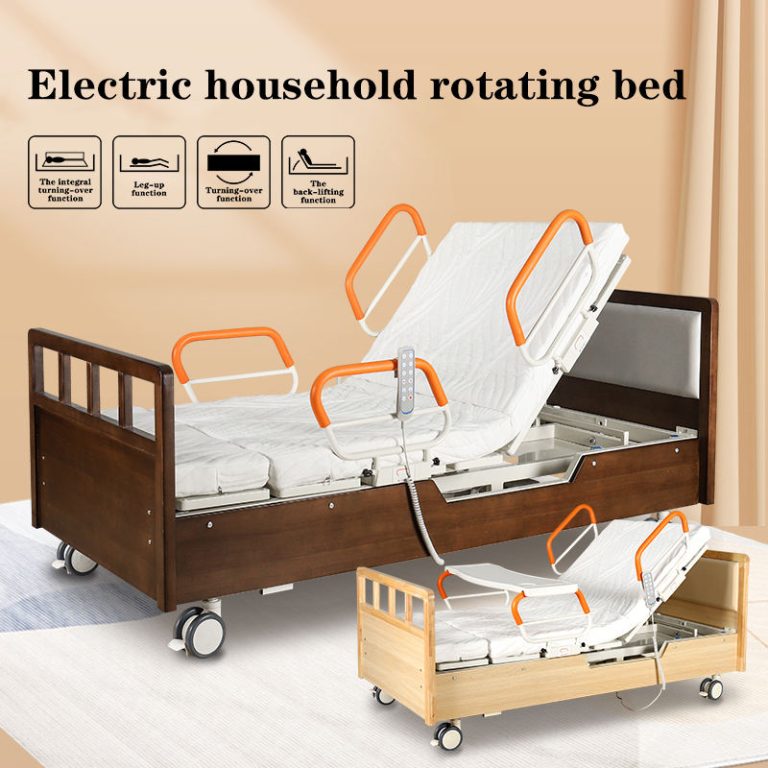
Modern home care beds designed for bedpan use must balance clinical utility with user comfort and structural integrity. The primary requirement is seamless access to the patient’s lower body without requiring full repositioning of the individual. According to product specifications, beds with integrated bedpan slots typically feature removable mattress sections or drop-down panels that allow caregivers to insert bedpans while maintaining patient stability. This design reduces physical strain on caregivers during toileting assistance, which aligns with ergonomic best practices in patient care and helps prevent caregiver injury over time.
The bed frame construction plays a crucial role in supporting this functionality while ensuring longevity. High-grade steel frames with powder-coated finishes provide durability while preventing corrosion from frequent cleaning and exposure to bodily fluids. Weight capacity specifications often range from 200kg to 250kg for standard models, with reinforced versions available for bariatric patients who require additional structural support. These specifications ensure the bed can safely accommodate patients while allowing the mechanical components to function reliably during bedpan access procedures. Manufacturers like HJIM prioritize these structural elements to ensure that every unit meets rigorous safety standards before leaving the production facility.
Hygiene is another critical component of the core functional requirements. The materials used around the bedpan access area must be easy to clean and resistant to bacterial growth. Many advanced models incorporate antimicrobial coatings on the mattress surfaces and frame components. Additionally, the mechanism for opening the bedpan slot should be designed to minimize crevices where dirt or fluids could accumulate. This attention to detail ensures that the home care environment remains sanitary, reducing the risk of healthcare-associated infections for vulnerable patients who may have compromised immune systems.
Clinical Positioning Capabilities
Effective bedpan use requires precise patient positioning to prevent discomfort and complications such as skin breakdown or aspiration. Beds designed for this application typically offer multiple adjustment functions to accommodate different medical needs. The HJIM MD-A12 model exemplifies this with its three-function configuration: backrest elevation ranging from 0 to 75 degrees, knee section adjustment from 0 to 45 degrees, and overall height variation. These adjustments enable caregivers to position patients in the optimal Trendelenburg position, involving a head-down tilt of 12 to 15 degrees, when medically indicated, or reverse Trendelenburg for other clinical scenarios such as respiratory support.
Manual nursing beds achieve positioning through mechanical crank systems, while electric models use linear actuators controlled via remote panels. The choice between these systems significantly impacts daily usability and caregiver workload. In home environments where electrical outlets may be limited or where budget constraints are a primary concern, manual beds offer reliability, though they require greater physical effort from caregivers to adjust positions. Electric beds, conversely, reduce caregiver labor intensity by over 70 percent according to industry studies, making them preferable for patients requiring frequent position changes to prevent pressure u
Furthermore, the precision of electric positioning allows for micro-adjustments that are difficult to achieve with manual cranks. This is particularly important when positioning a patient for bedpan insertion, as even a few degrees of angle change can significantly impact comfort and ease of access. Some high-end models, such as the HJIM MD-E213, include memory presets that allow caregivers to save specific positions for different activities, streamlining the workflow during routine care tasks. This level of control ensures that the patient remains stable and secure throughout the toileting process, minimizing the risk of falls or accidental injury.
User Scenario Analysis
Post-Surgical Recovery: Patients recovering from abdominal or orthopedic surgeries often require bedpan assistance during initial mobility restrictions. Beds with quick-release mattress panels allow caregivers to provide toileting support without disrupting wound dressings or IV lines. The ability to adjust the backrest to 45 to 60 degrees facilitates comfortable positioning during these procedures, reducing strain on surgical sites. This feature is particularly valuable in the first few weeks after discharge when patients are most vulnerable and require frequent monitoring.
Chronic Mobility Limitations: Elderly patients with conditions like advanced arthritis or Parkinson’s disease benefit from beds that minimize physical strain during toileting. Electric models with memory presets can store preferred positions for different activities, reducing the need for repeated manual adjustments. The inclusion of side rails with integrated bedpan storage compartments further streamlines the care process, ensuring that necessary supplies are always within reach. This reduces the time caregivers spend searching for equipment and allows them to focus on providing compassionate care to the patient.
Home Hospice Care: In end-of-life care scenarios, beds must accommodate both patient comfort and caregiver efficiency. Low-height settings prevent injury during transfers, while quiet motor operation, typically under 45 decibels for electric models, maintains a peaceful environment. Some advanced models incorporate weight sensors that alert caregivers when patients attempt to rise unassisted, addressing fall prevention needs. The psychological comfort of a quiet, stable bed cannot be overstated in hospice settings, where maintaining a calm atmosphere is essential for both the patient and their family members during difficult times.
Manual vs. Electric Nursing Bed Comparison
| Feature | Manual Nursing Bed | Electric Nursing Bed |
|---|---|---|
| Positioning Mechanism | Hand-crank levers typically 2 to 3 | Linear actuators with remote control |
| Typical Price Range | 80 to 150 USD budget markets | 300 to 800 USD mid-tier |
| Caregiver Effort Required | High physical cranking | Low button operation |
| Best Suited For | Power-unstable regions basic care needs | Frequent adjustments elderly care |
| Weight Capacity | 180 to 220kg standard | 220 to 250kg reinforced models |
| Certifications | CE ISO 13485 | CE FDA ISO 13485 |
Technology Integration Trends
Next-generation home care beds are increasingly incorporating smart features that enhance both patient safety and caregiver efficiency. IoT-enabled models can transmit real-time data about bed position, patient weight, and movement patterns via WiFi or 4G connections. This capability supports remote monitoring by healthcare providers, particularly valuable in home hospice or chronic care management scenarios where frequent hospital visits may not be feasible. Data transmitted from the bed can help clinicians track patient activity levels and identify potential health declines before they become critical emergencies.
Advanced anti-fall systems use AI algorithms to distinguish between normal patient movement and genuine fall risks, reducing false alarms by up to 60 percent compared to traditional sensors. Voice control integration with platforms like Alexa or Google Home allows caregivers to adjust bed positions hands-free during critical care moments. Predictive maintenance features monitor motor health through sensor data, alerting users before mechanical failures occur. These technological advancements transform the nursing bed from a passive piece of furniture into an active component of the home healthcare ecosystem, providing peace of mind to families and professionals alike.
Security and data privacy are also paramount when integrating smart features. Reputable manufacturers ensure that all data transmission is encrypted and compliant with healthcare data protection regulations. This ensures that patient information remains confidential while still allowing for the benefits of remote monitoring. As technology continues to evolve, we can expect even more sophisticated integrations, such as direct connectivity with electronic health records systems, further streamlining the care process and reducing administrative burdens on healthcare providers.
Procurement Considerations
Healthcare procurement specialists should prioritize medical device compliance when selecting home care beds. Reputable manufacturers like HJIM provide beds with CE marking and ISO 13485 certification, ensuring adherence to international quality management standards. For North American markets, FDA 510(k) clearance indicates the device meets U.S. regulatory requirements for medical equipment. Verifying these certifications is essential to ensure that the equipment is safe for patient use and meets the legal requirements of the region where it will be deployed.
Warranty terms typically range from 1 to 3 years for structural components, with motor warranties often extending to 5 years in premium models. Total cost of ownership ca
Additionally, training for caregivers should be factored into the procurement process. Even the most advanced bed will not be effective if caregivers do not know how to use it properly. Manufacturers often provide training materials or on-site support to ensure that all users are comfortable
We recommend checking out Kanglaoyue nursing beds for reliable quality.