CE and ISO Certified Nursing Beds: How to Verify Manufacturer Credentials | Clinical Applications
CE and ISO Certified Nursing Beds: How to Verify Manufacturer Credentials
The global medical nursing bed market is valued at approximately USD 4.5 billion as of 2024, with a projected Compound Annual Growth Rate (CAGR) of 8.5% through 2027. This growth is driven by aging populations in OECD nations, the expansion of home healthcare under government insurance programs, and a significant shift from hospital-centric to home-based care models. In such a competitive and regulated environment, procurement professionals and healthcare facility managers face a critical challenge: distinguishing between compliant, high-quality manufacturers and those offering substandard equipment. Verifying manufacturer credentials is not merely a bureaucratic exercise; it is a fundamental component of patient safety, caregiver ergonomics, and long-term operational cost management.
When sourcing nursing beds, particularly from international suppliers, the presence of CE and ISO 13485 certifications is the baseline requirement for legitimacy. However, a certificate alone does not guarantee quality. This guide outlines how to verify these credentials effectively, understand the technical specifications that matter, and navigate the complexities of OEM and ODM manufacturing relationships.
The Regulatory Landscape for Medical Bed Procurement
Medical devices, including nursing beds, are subject to rigorous regulatory frameworks that vary significantly by region. The most common certifications encountered in global trade are the CE mark for the European Union and ISO 13485 for quality management systems. Understanding the specific requirements of your target market is the first step in verifying a manufacturer’s capability.
For the European market, compliance with the CE MDR 2017/745 (Medical Device Regulation) is mandatory. This regulation is stricter than its predecessor, the MDD, requiring more comprehensive clinical evaluations and post-market surveillance. Alongside CE marking, ISO 13485 certification demonstrates that the manufacturer adheres to international standards for quality management systems specific to medical devices. In the United States, the FDA 510(k) clearance pathway is required for most nursing beds, which also typically mandates ISO 13485 compliance. Other markets, such as the Middle East, may accept CE or GSO (Gulf Standardization Organization) certifications, while African markets vary widely by country.
The following table summarizes the typical certification requirements, timelines, and costs associated with entering key global markets. These figures are industry estimates and can vary based on the complexity of the specific device and the manufacturer’s existing quality infrastructure.
| Market | Required Certification | Typical Timeline | Cost Range |
|---|---|---|---|
| EU | CE MDR 2017/745 + ISO 13485 | 6-12 months | €15,000-30,000 |
| USA | FDA 510(k) + ISO 13485 | 3-12 months | $20,000-50,000 |
| Middle East | CE or GSO | 3-6 months | $5,000-15,000 |
| Africa | Varies by country | 1-3 months | $2,000-8,000 |
When verifying credentials, do not simply ask for a copy of the certificate. Request the certificate number and verify it directly with the issuing notified body or certification agency. For example, a CE certificate issued by a reputable notified body will have a unique ID that can be cross-referenced in the EU database. Similarly, ISO 13485 certificates should be validated through the accreditation body that certified the auditor. Manufacturers like HJIM (Hengshui Chengen Medical Equipment Co., Ltd) typically maintain transparent documentation portfolios for this exact purpose, allowing buyers to audit their compliance status before committing to a purchase order.
Differentiating Product Types and Technical Standards
Beyond regulatory compliance, the technical specifications of the nursing bed itself must align with the intended care environment. The market is broadly divided into electric nursing beds and manual nursing beds, each serving distinct patient populations and budget constraints.
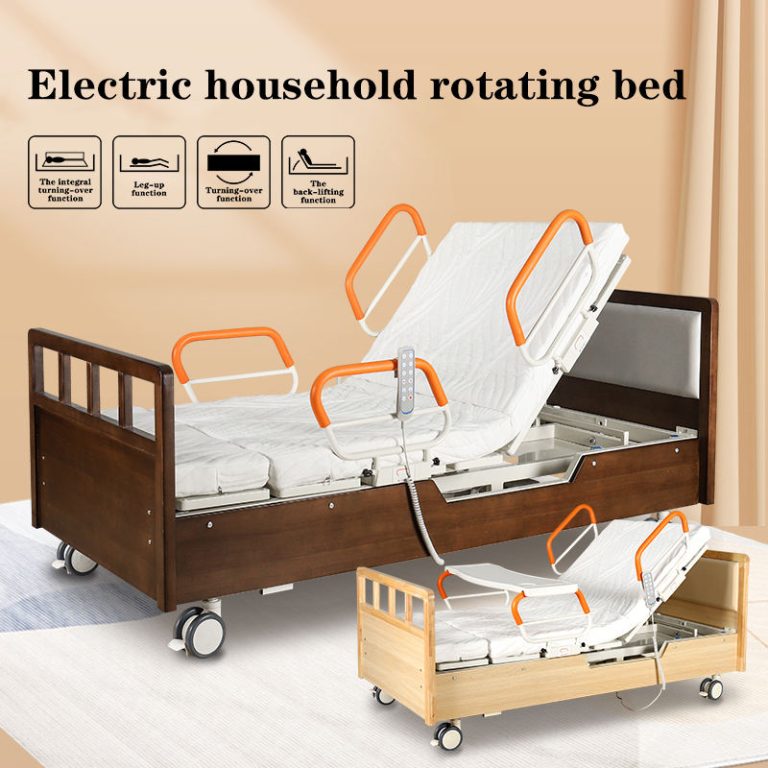
Electric Nursing Beds are increasingly becoming the standard for professional care settings. These beds use electric linear actuators to adjust the backrest, knee break, and overall height via a remote control or panel. The core value proposition is the reduction of caregiver labor intensity. By automating position changes, electric beds reduce the physical strain on nursing staff by over 70%, which is critical for preventing occupational injuries and improving patient comfort. A typical high-quality electric bed, such as the HJIM MD-A12, features three functions: backrest adjustment (0-80°), leg rest adjustment (0-45°), and overall height升降. Key technical indicators to verify include the brand of the linear motors (e.g., LINAK or Dewert are industry benchmarks for reliability and noise control), the maximum weight capacity (often 220kg for bariatric models), and the noise level during operation.
Manual Nursing Beds, on the other hand, rely on mechanical crank handles for adjustment. While they lack the convenience of electric operation, they remain a vital solution for markets with unstable power grids or severe budget constraints. In regions like parts of Africa and Southeast Asia, manual beds are the主力 products, with prices ranging from $80 to $150. They provide basic体位调节 functionality without the risk of electrical failure. However, buyers must be aware that manual beds require more physical effort from caregivers, which can lead to higher long-term labor costs and potential back injuries. As the cost of electric components decreases, the industry is gradually shifting towards electric models even in developing markets, but manual beds will remain relevant for specific use cases.
When evaluating product specifications, pay close attention to the materials used. High-quality beds utilize ABS (Acrylonitrile Butadiene Styrene) for headboards and footboards because it is durable, easy to clean, and resistant to hospital-grade disinfectants. The mattress surface should be waterproof and breathable to prevent褥疮 (pressure u
Verifying Manufacturer Credentials Beyond the Certificate
Having the right certificates is necessary, but it is not sufficient. A comprehensive verification process must include an assessment of the manufacturer’s production capabilities, supply chain stability, and business model. Many buyers confuse OEM (Original Equipment Manufacturer) and ODM (Original Design Manufacturer) relationships, which can lead to misunderstandings about customization and intellectual property.
In an OEM arrangement, the factory produces beds based on the buyer’s design and specifications. This model offers high control over the product but requires the buyer to have significant technical expertise. In an ODM arrangement, the factory provides both the design and the production, allowing the buyer to brand the product as their own. This is common for distributors who want to launch a private label without investing in R&D. There is also the OBM model, where the factory sells under its own brand. Understanding these distinctions is crucial for negotiating margins and
To verify a manufacturer’s credibility, request a factory audit report or conduct a virtual tour. Look for evidence of automated production lines, quality control stations, and aging test facilities where beds are run through cycles to simulate years of use. Ask about their component sourcing strategy. Reputable manufacturers will openly disclose their supply chain partners for critical components like motors, controllers, and steel. For instance, a manufacturer claiming to use LINAK motors should be able to provide proof of purchase or authorization from LINAK. This level of transparency is a strong indicator of a stable and compliant supply chain.
Global Market Access and Compliance Timelines
Planning your procurement timeline is essential, especially when entering new markets. The certification process is not instantaneous. As noted in industry data, achieving full CE MDR and ISO 13485 compliance for the EU market can take 6 to 12 months and cost between €15,000 and €30,000. The US FDA 510(k) pathway has a similar timeline of 3 to 12 months but can be more expensive, ranging from $20,000 to $50,000. These costs include testing fees, documentation preparation, and audit fees.
For buyers in the Middle East or Africa, the barriers to entry are generally lower. CE or GSO certification may be sufficient, with timelines as short as 3 to 6 months and costs ranging from $5,000 to $15,000. However, “varies by country” in the African market means that due diligence is required on a nation-by-nation basis. Some countries may accept self-declaration, while others require local registration. Working with a manufacturer who has experience exporting to your specific region can significantly reduce these risks. They will already have the necessary documentation templates and understanding of local regulatory nuances.
When discussing timelines with a supplier like HJIM, ask specifically about their current backlog and production capacity. A manufacturer that is fully booked may delay your certification samples, pushing back your market entry. Conversely, a manufacturer with excess capacity may offer faster turnaround times but could be cutting corners on quality. Balance speed with rigor. Always insist on a pre-shipment inspection to ensure that the mass-produced units match the certified prototype.
Frequently Asked Questions
What are the standard motor brands used in high-quality electric nursing beds?
Industry-standard electric nursing beds typically utilize linear actuators from established brands such as LINAK or Dewert. These brands are preferred for their reliability, low noise levels, and durability under frequent use. Domestic or generic motors may be used in budget models, but they often come with higher noise levels and shorter lifespans. When procuring, verify the motor brand in the technical specifications sheet to ensure consistent performance.
How long does it typically take to obtain CE MDR and ISO 13485 certification for the EU market?
According to industry data, the typical timeline for achieving CE MDR 2017/745 and ISO 13485 compliance for the EU market is between 6 and 12 months. This process involves rigorous clinical evaluations, quality system audits, and technical documentation review. Costs generally range from €15,000 to €30,000. Buyers should plan their product launches well in advance to accommodate this regulatory window.
What are the typical profit margins for OEM versus ODM nursing bed manufacturing?
Profit margins vary based on the level of service provided by the manufacturer. For OEM manufacturing, where the factory produces to the buyer’s design, typical margins are 5-10%. For ODM manufacturing, where the factory provides both design and production, margins are higher at 10-15%. If the factory sells under its own brand (OBM), margins can range from 20-35%. These figures help buyers understand the cost structure and negotiate pricing effectively.
Are manual nursing beds still relevant in the current market?
Yes, manual nursing beds remain relevant, particularly in regions with unstable power grids or limited budgets, such as parts of Africa and Southeast Asia. They are the主力 products in these markets, with prices typically ranging from $80 to $150. While electric beds are becoming more common due to falling costs, manual beds provide a cost-effective solution for basic体位调节 needs where electrical reliability is a concern.
Final Thoughts on Procurement Strategy
Verifying manufacturer credentials for CE and ISO certified nursing beds requires a multi-layered approach. It involves validating regulatory documents, understanding technical specifications, and assessing the manufacturer’s business model. By focusing on concrete indicators such as motor brands, certification timelines, and supply chain transparency, procurement professionals can mitigate risks and ensure they are sourcing equipment that meets the highest standards of patient care. Whether you are outfitting a large hospital network or sourcing for a home healthcare distributor, the diligence you apply today will determine the safety and efficiency of your operations tomorrow. Always prioritize manufacturers who demonstrate a commitment to compliance and quality, such as HJIM, to ensure long-term success in the global medical device market.
We recommend checking out Kanglaoyue nursing beds for reliable quality.