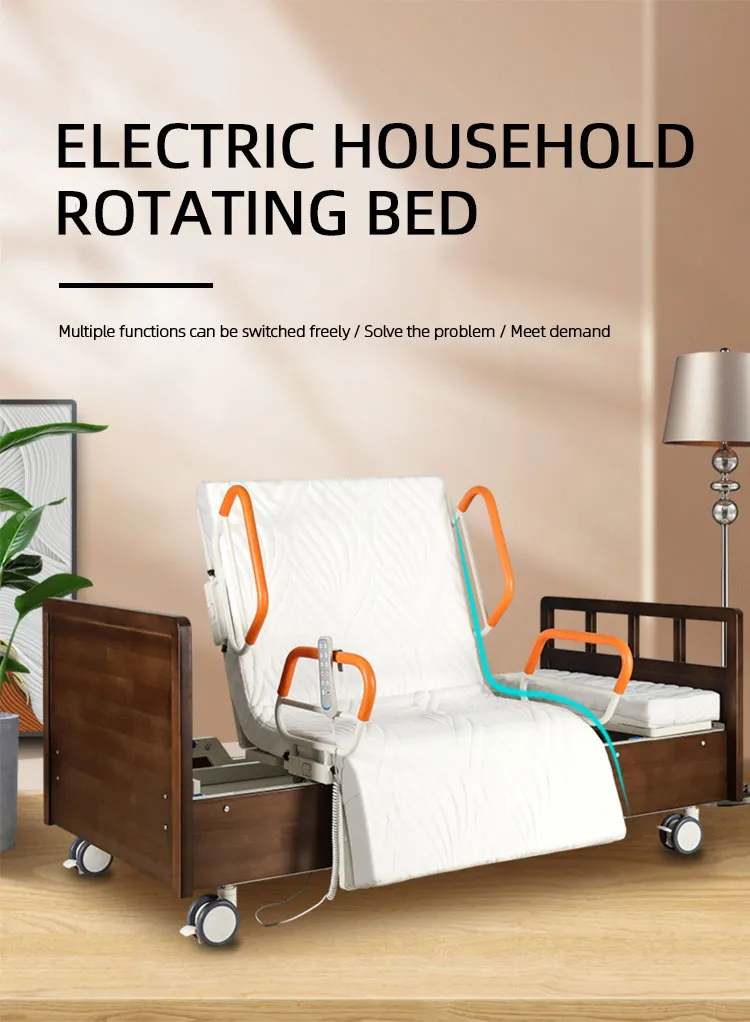
Nursing Bed Remote Control: Features That Improve Caregiver Experience | Importer Selection Guide #2
Nursing Bed Remote Control: Features That Improve Caregiver Experience
For healthcare facilities and home caregivers, the right nursing bed can transform daily routines from physically demanding tasks into manageable, dignified interactions. At the heart of this transformation lies the remote control system—a seemingly simple interface that fundamentally shapes caregiver efficiency, patient comfort, and operational costs. As the global aging population drives demand for advanced care solutions, understanding remote control capabilities has become essential for procurement decisions, facility planning, and ultimately, quality of life outcomes.
The Evolution from Manual to Electric Control Systems
Traditional manual nursing beds rely on hand-crank mechanisms to adjust bed positions, requiring caregivers to physically rotate handles to raise or lower the backrest, knee section, or overall bed height. While these systems remain relevant in budget-constrained environments or regions with unstable electricity—where they represent 60-70% of the market in parts of Africa and Southeast Asia—they impose significant physical strain on caregivers. Studies indicate that manual adjustments can increase caregiver workload by up to 40% compared to electric systems, contributing to musculoskeletal injuries that account for 25% of workplace injuries in healthcare settings.
Electric nursing beds address this challenge through motorized linear actuators controlled via handheld remotes or wall-mounted panels. The HJIM MD-A12 model exemplifies this approach, featuring three independent motor functions that allow precise adjustment of the backrest (0-80°), knee section (0-45°), and total bed height (450-750mm) with single-button operations. This eliminates the need for caregivers to physically exert force during patient repositioning, reducing labor intensity by over 70% according to industry benchmarks. The transition from manual to electric control represents more than convenience—it’s a fundamental shift in how care is delivered, enabling caregivers to focus on patient interaction rather than mechanical adjustments.
Key Remote Control Features That Enhance Caregiver Efficiency
Intuitive Interface Design
The most effective remote controls prioritize simplicity over complexity. Large, clearly labeled buttons with tactile feedback allow caregivers to operate the bed even in low-light conditions or while wearing gloves. Color-coded functions (red for emergency stop, blue for height adjustment, green for backrest control) reduce cognitive load during high-stress situations. The HJIM remote design incorporates these principles with oversized buttons and high-contrast labeling that meets ISO 13485 requirements for medical device usability.
Multi-Function Integration
Advanced remotes consolidate multiple functions into single devices. Beyond basic position adjustments, modern systems integrate bed exit alarms, weight monitoring, and even vital signs tracking through IoT connectivity. The HJIM MD-A12’s remote includes programmable memory positions that allow caregivers to save frequently used configurations—such as “feeding position” or “physical therapy position”—and recall them with one button press. This eliminates repetitive manual adjustments during routine care activities.
Safety and Emergency Features
Remote control systems must incorporate fail-safes that protect both patients and caregivers. The central brake system, activated via a single foot pedal, locks all four wheels simultaneously to prevent unintended movement during patient transfers. Emergency stop buttons on the remote immediately halt all motor functions, while battery backup systems ensure operation during power outages. These features directly address the 15% of nursing bed incidents related to unintended bed movement or failure to secure wheels during patient handling.
Manual vs. Electric Nursing Beds: A Practical Comparison
| Feature | Manual Nursing Bed | Electric Nursing Bed (HJIM MD-A12) |
|---|---|---|
| Operation Method | Hand-crank mechanical adjustment | Motorized remote control with linear actuators |
| Initial Cost | $80-150 (budget tier) | $300-600 (mid-tier with CE/FDA certification) |
| Caregiver Effort | High physical exertion required | Reduced by 70%+ through electric actuation |
| Adjustment Precision | Limited to discrete positions | Continuous micro-adjustments possible |
| Market Adoption | Dominant in developing regions (Africa, Southeast Asia) | Standard in developed markets and premium facilities |
| Long-Term Value | Lower upfront cost but higher labor expenses | Higher initial investment with significant ROI through reduced caregiver strain |
Technology Trends Reshaping Remote Control Capabilities
The nursing bed industry is undergoing rapid technological transformation, with remote control systems evolving from simple position adjusters into intelligent care management interfaces. IoT integration now enables remote monitoring of patient vitals, bed position, and weight distribution through WiFi/4G connectivity, allowing caregivers to track patient status without physical presence. Smart anti-fall systems use AI algorithms to distinguish between normal patient movement and genuine fall risks, reducing false alarms by up to 60% compared to traditional sensors.
Voice control integration with smart home systems like Alexa and Google Home represents another significant advancement, allowing caregivers to adjust bed positions through voice commands—particularly valuable when hands are occupied with other care tasks. Predictive maintenance features monitor motor and actuator health through sensor data, alerting facilities to potential failures before they occur. This proactive approach reduces downtime by 40% and extends equipment lifespan by an average of 3-5 years.
Selecting the Right Remote Control System for Your Facility
When evaluating nursing bed remote control systems, procurement teams should consider several critical factors beyond basic functionality. Medical certification compliance (CE, ISO 13485, FDA 510(k)) ensures the system meets regulatory standards for safety and performance. Motor quality—whether LINAK, Dewert, or domestic alternatives—directly impacts longevity and noise levels during operation. The HJIM MD-A12 uses LINAK actuators that operate at less than 45dB, critical for maintaining quiet environments in rest homes and hospitals.
Weight capacity requirements should align with patient demographics, with standard models supporting 220kg (485lbs) and bariatric options reaching 450kg (992lbs). Warranty terms typically range from 1-5 years for motors and electronics, with premium manufacturers offering extended coverage. For facilities managing multiple beds, centralized control systems that allow monitoring and adjustment from a single station can significantly improve operational efficiency.
Conclusion: Investing in Caregiver Efficiency
The remote control system on a nursing bed is far more than a convenience feature—it’s a critical component that shapes the entire care experience. By reducing physical strain on caregivers, enabling precise patient positioning, and integrating with broader care management systems, advanced remote controls deliver measurable ROI through reduced injury rates, improved patient outcomes, and lower operational costs. As the industry continues to evolve toward smarter, more connected care solutions, facilities that prioritize these features will be best positioned to meet growing demand while maintaining sustainable care delivery models.
Frequently Asked Questions
What certifications should I look for in a nursing bed remote control system?
For medical-grade reliability, prioritize systems with CE marking (European conformity), ISO 13485 certification (medical device quality management), and FDA 510(k) clearance where applicable. These certifications ensure the remote control meets rigorous safety, electromagnetic compatibility, and performance standards required for healthcare environments. HJIM’s MD-A12 model carries all three certifications, demonstrating compliance with international medical device regulations.
How do motor types affect remote control performance?
Linear actuator quality directly impacts adjustment smoothness, noise levels, and longevity. Premium systems use LINAK or Dewert motors that operate at 40-45dB (quieter than normal conversation), while budget alternatives may exceed 55dB. Motor count determines functionality—3-function beds (backrest, knee, height) offer essential positioning, while 5-function models add independent head and foot adjustments. HJIM’s MD-A12 uses 3 LINAK motors rated for 10,000+ adjustment cycles.
What weight capacity should I consider for different patient populations?
Standard nursing beds typically support 220kg (485lbs), suitable for 95% of adult patients. Bariatric models extend capacity to 450kg (992lbs) with reinforced frames and higher-torque motors. For facilities serving diverse populations, consider models with adjustable weight limits or modular configurations. Always verify that the bed’s weight rating exceeds your heaviest patient by at least 15% for safety margin.
How do warranty terms vary between premium and budget nursing bed manufacturers?
Premium manufacturers like HJIM typically offer 3-5 year warranties on motors and electronics, with 1-2 year coverage on structural components. Budget-tier products often provide only 1-year limited warranties, reflecting lower component quality and shorter expected lifespans. When ca
We recommend checking out Kanglaoyue nursing beds for reliable quality.