How to Choose a Nursing Bed for Elderly Home Care: Complete Guide | Safety Standards & Compliance
How to Choose a Nursing Bed for Elderly Home Care: Complete Guide
The global medical nursing bed market is valued at approximately USD 4.5 billion (2024), with a projected CAGR of 8.5% through 2027 [K1]. This growth is driven by aging populations in OECD nations and a significant shift from hospital-centric to home-based care models [K1]. For families and healthcare procurement officers, selecting the right nursing bed is not merely about purchasing furniture; it is about investing in patient safety, caregiver ergonomics, and long-term medical device compliance.
Whether you are managing a small private care facility or setting up a home care environment for an elderly relative, the decision between manual and electric systems, the choice of materials, and the integration of smart technology can define the quality of care. This guide breaks down the technical specifications and industry standards necessary to make an informed procurement decision.
Understanding the Core Options: Manual vs. Electric Systems
The most fundamental decision in healthcare procurement is choosing between manual and electric nursing beds. Each serves distinct market segments and budgetary constraints.
Manual Nursing Beds: The Economic Baseline
A manual nursing bed uses a mechanical crank system to adjust the backrest and knee gatch. It requires no electricity, making it a robust choice for regions with unstable power grids or for facilities with extremely tight budgets [K2]. In markets such as parts of Africa and Southeast Asia, manual beds remain the主力 (mainstay) product, typically priced between $80 and $150 [K2].
However, the operational cost of manual beds is hidden in labor. Every adjustment requires physical effort from the caregiver. For patients requiring frequent repositioning to prevent pressure u
Electric Nursing Beds: The Standard for Modern Care
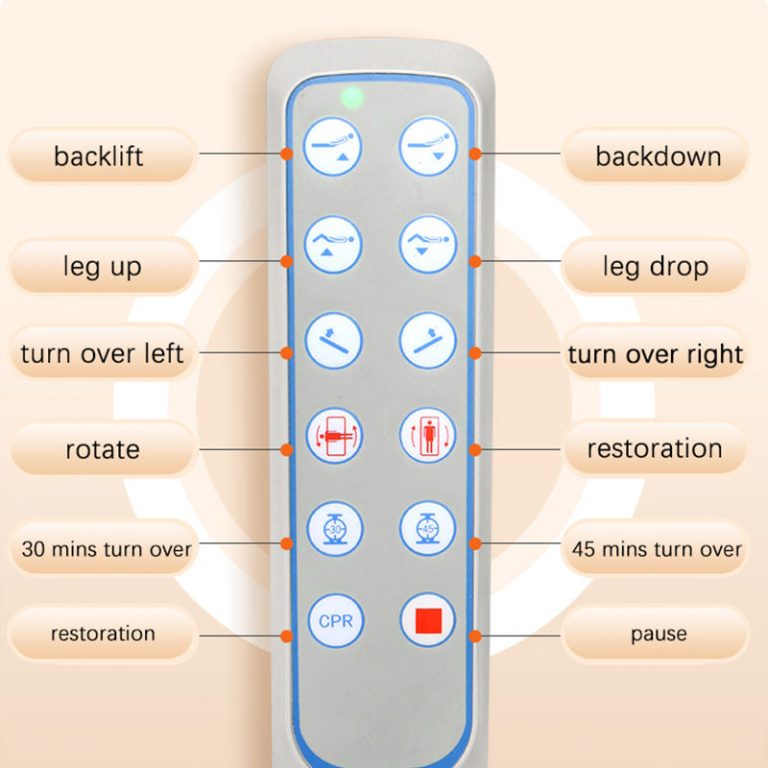
An electric nursing bed uses linear actuators (typically 2 to 5 motors) to provide adjustable positioning for patients with limited mobility [K1]. By replacing the hand crank with a remote control or panel, electric beds reduce caregiver labor intensity by over 70% [K1]. This is critical for elderly care where the patient may need to sit up for meals, lower their legs for circulation, or adjust height for safe transfers.
Industry examples, such as the HJIM MD-A12 Electric Nursing Bed, demonstrate the standard functionality expected in modern home care: 3-function adjustment (backrest 0-80°, leg rest 0-45°, overall height adjustment), remote operation, and ABS removable headboards [K1]. The underlying logic is simple: if a patient cannot move themselves, the bed must move for them without exhausting the human caregiver.
Key Technical Specifications for Patient Safety
When evaluating hospital equipment, look beyond the marketing brochure. Specific technical parameters determine the longevity and safety of the device.
Motor Quality and Noise Levels
The heart of an electric nursing bed is the linear actuator. Reputable manufacturers often use motors from established brands like LINAK or Dewert, though high-quality domestic motors are also viable depending on the region [K1]. For home care, noise level is a critical metric. A noisy motor can disturb the sleep of an elderly patient or a family member sharing the room. When procuring, request decibel ratings for the motor operation.
Weight Capacity and Structural Integrity
Weight capacity is a non-negotiable safety spec. While standard beds often support 200-250 kg, bariatric patients require specialized frames. The HJIM MD-A12, for example, supports a maximum load of 220 kg [K1]. Always verify the Gross Weight (GW) and Net Weight (NW) of the bed frame to ensure it can handle the patient plus any additional medical equipment, such as IV poles or traction devices, without compromising stability.
ABS Headboards and CPR Compatibility
One of the most overlooked features is the headboard material. High-density ABS (Acrylonitrile Butadiene Styrene) panels are the industry standard for modern nursing beds [K2]. ABS is impact-resistant, acid-resistant, and easy to clean, making it superior to wood or steel in terms of hygiene and durability [K2].
Crucially, ABS headboards often feature a quick-release latch designed for CPR compatibility [K2]. In an emergency, the headboard can be instantly removed to allow flat access to the patient’s chest for resuscitation. This feature is essential for medical device compliance in both clinical and home care settings where immediate emergency response is vital.
Smart Technology Trends in Nursing Beds
The nursing bed market is undergoing a digital transformation. Modern procurement should consider “smart” features that integrate with broader home health ecosystems.
IoT and Remote Monitoring
Next-generation beds are integrating IoT capabilities, allowing for remote monitoring of patient vitals, bed position, and weight via WiFi or 4G [K3]. For families managing elderly care remotely, this provides peace of mind. If a patient with mobility assistance needs is left unattended for long periods, sensors can alert caregivers to prolonged inactivity or unusual movement patterns.
AI-Powered Safety and Voice Control
Smart anti-fall systems are becoming standard. These systems use bed exit alarms with AI-powered false positive reduction to distinguish between a patient simply shifting position and an actual fall risk event [K3]. Furthermore, integration with smart home systems like Alexa or Google Home allows for voice control of bed functions [K3]. For a patient with limited hand dexterity, being able to say “raise head” is a significant improvement in quality of life.
Predictive Maintenance
From a facility management perspective, predictive maintenance is a game changer. Sensors can monitor motor and actuator health, alerting procurement teams to potential failures before they occur [K3]. This reduces downtime and ensures that medical certification standards are maintained without unexpected equipment failure.
Comparison: Manual vs. Electric Nursing Beds
To assist in your decision-making, the following table compares the two primary categories based on industry data and technical parameters.
| Feature | Manual Nursing Bed | Electric Nursing Bed |
|---|---|---|
| Adjustment Mechanism | Mechanical hand crank | Electric linear actuators (2-5 motors) |
| Operational Cost | Low upfront cost ($80-$150) | Higher upfront cost; lower labor cost |
| Caregiver Effort | High physical effort required | Reduced by 70%+ via remote control |
| Power Dependency | None (ideal for unstable grids) | Requires stable electricity or backup battery |
| Typical Use Case | Basic care, budget-limited regions | Home care, hospitals, rehabilitation centers |
| Smart Features | None | IoT, Voice Control, Anti-fall alarms |
Procurement Standards and Compliance
When sourcing nursing beds, especially for OEM manufacturing or large-scale healthcare procurement, regulatory compliance is paramount. Ensure that the equipment meets international medical device standards.
Certifications: Look for CE marking (European conformity), ISO 13485 (Quality Management for Medical Devices), and FDA registration (if exporting to or operating in the US). These certifications ensure that the materials used, such as the ABS headboards and steel frames, meet safety and biocompatibility requirements.
Warranty and Support: A standard warranty for nursing beds typically covers the frame for 5 years and electrical components (motors, controllers) for 1-2 years. Always verify the after-sales support structure. For brands like HJIM (Hengshui Chengen Medical Equipment Co., Ltd), checking their official documentation at hjim.com can provide clarity on specific warranty terms and technical support availability.
Material Safety: Ensure that all plastics and coatings are fire-retardant and non-toxic. In a home care environment, the bed is a long-term fixture, and material off-gassing or degradation can pose health risks over time.
Conclusion
Selecting a nursing bed is a balance of budget, patient needs, and future-proofing. While manual beds offer an economic entry point, the shift toward home-based care and the rising demand for caregiver ergonomics make electric nursing beds the superior choice for most modern applications. The integration of ABS materials for hygiene and CPR readiness, combined with emerging IoT capabilities for remote monitoring, defines the next generation of patient care equipment.
By focusing on technical specs like weight capacity, motor quality, and regulatory compliance, buyers can ensure they are procuring equipment that supports dignity, safety, and recovery. Whether for a single home setup or a facility upgrade, prioritizing these factors ensures a return on investment through reduced labor costs and improved patient outcomes.
Frequently Asked Questions
What is the standard weight capacity for a residential electric nursing bed?
Standard residential electric nursing beds typically support a maximum load of 220 kg (approx. 485 lbs), as seen in models like the HJIM MD-A12 [K1]. However, bariatric models are available with higher capacities. It is crucial to verify the specific Gross Weight (GW) rating of the frame to ensure it accommodates the patient plus any additional medical accessories safely.
Why is an ABS headboard preferred over steel or wood?
ABS (Acrylonitrile Butadiene Styrene) headboards are preferred because they are impact-resistant, acid-resistant, and lightweight [K2]. Unlike wood, they do not harbor bacteria as easily, and unlike steel, they do not rust. Most importantly, ABS panels often feature quick-release latches that are CPR compatible, allowing for immediate emergency access to the patient’s chest [K2].
Do electric nursing beds require a backup power source?
Yes, for safety reasons. While electric nursing beds rely on linear actuators for adjustment [K1], most medical-grade models include a backup battery system. This ensures that the bed can be lowered to a safe position in the event of a power outage, preventing the patient from being stranded in an elevated or uncomfortable position.
What certifications should I look for when buying nursing beds?
For international healthcare procurement, you should look for CE marking, ISO 13485 certification, and FDA registration where applicable. These certifications confirm that the manufacturing process adheres to strict quality management systems and that the medical device complies with safety and performance standards required in major markets.
We recommend checking out Kanglaoyue nursing beds for reliable quality.