Medical Bed Foam Mattress vs Air Mattress: Which Is Better? | Importer Selection Guide #6
Medical Bed Foam Mattress vs Air Mattress: Which Is Better?
When configuring a medical nursing bed for a hospital ward, a long-term care facility, or a home care environment, the choice of mattress is often treated as a secondary accessory. In reality, the mattress is the primary interface between the patient and the support surface, directly influencing clinical outcomes, caregiver workload, and patient comfort. The debate between high-density foam mattresses and alternating pressure air mattresses is not merely about cost; it is about matching the right pressure redistribution technology to the patient’s specific risk profile and mobility status.
As the global medical nursing bed market expands, valued at approximately USD 4.5 billion in 2024 with a projected CAGR of 8.5% through 2027, procurement decisions are becoming more data-driven. Factors such as aging populations in OECD nations and the shift from hospital-centric to home-based care models are driving demand for smarter, more effective support surfaces. Whether you are a healthcare procurement officer evaluating OEM manufacturing options or a family caregiver selecting equipment for a loved one, understanding the technical nuances of these mattresses is critical for medical device compliance and patient safety.
The Physiology of Pressure Injury Prevention
To understand which mattress is better, one must first understand the mechanism of pressure injuries, commonly known as bedsores or pressure u
Prevention relies on pressure redistribution. This can be achieved passively, by spreading the body weight over a larger surface area, or actively, by constantly changing the points of pressure. High-specification foam mattresses, particularly those made from viscoelastic memory foam, excel at passive redistribution. They conform to the body’s contours, reducing pressure points at the heels, sacrum, and elbows. However, they do not actively change the pressure map over time. If a patient remains in one position for hours on a static foam surface, the risk of tissue ischemia remains.
Conversely, anti-decubitus air mattresses, often referred to as alternating pressure mattresses, utilize a pump system to cyclically inflate and deflate groups of air cells. This creates a dynamic environment where the body’s受力 points (points of force) are constantly shifting. According to industry specifications, these systems are designed to prevent the “same part long-term compression” scenario that leads to tissue necrosis. This active mechanism makes them the gold standard for patients with existing u
Static Foam Mattresses: Stability and Caregiver Ergonomics
For patients with some mobility or those at low to moderate risk of pressure injuries, a high-quality foam mattress is often the superior choice. The primary advantage of foam is stability. Air mattresses, by their nature, have a degree of “hammocking” or instability that can make it difficult for patients to reposition themselves or for caregivers to perform transfers. A solid foam surface provides the friction and stability needed for safe movement.
From a maintenance perspective, foam mattresses are silent and require no power source. In a home care setting, the noise of an air pump cycling on and off can be disruptive to both the patient and family members. Furthermore, foam mattresses eliminate the risk of mechanical failure associated with pumps, tubing, or electrical components. For elderly care patients who are conscious and able to shift their weight slightly, the comfort of a premium foam mattress often outweighs the clinical benefits of an alternating pressure system.
However, procurement teams must verify the density and fire-retardant certifications of foam mattresses. Medical-grade foam must meet specific flammability standards (such as UK BS 7177 or US CAL 117) and maintain its structural integrity over years of use without sagging. Sagging reduces the effectiveness of pressure redistribution and can lead to spinal misalignment, complicating the patient’s rehabilitation.
Alternating Pressure Air Mattresses: Active Clinical Intervention
Alternating pressure air mattresses are active medical devices. They consist of a series of longitudinal air cells connected to an electric pump. The pump alternates inflation between groups of cells, typically on a cycle ranging from 10 to 30 minutes. This dynamic pressure relief mimics the natural shifting of position that a mobile person would make unconsciously during sleep.
Industry data indicates that while ICU settings普遍配备 (universally equip) anti-decubitus air mattresses, the penetration rate in the home care market remains below 5%. This gap exists due to cost, complexity, and the perception that they are only for the critically ill. However, for patients with spinal cord injuries, stroke survivors, or those with Stage 3 or 4 pressure u
It is crucial to address a common misconception: the belief that having an anti-decubitus air mattress eliminates the need for manual turning. This is a dangerous myth. While the mattress reduces pressure, it does not manage shear forces or moisture. Caregivers must still adhere to a turning schedule, typically every two hours, to manage skin integrity comprehensively. The air mattress is an auxiliary means, not a complete replacement for human care.
When evaluating air mattresses, look for observable indicators such as the number of air cells (more cells allow for finer pressure control), the inflation cycle time, and the noise level of the pump. High-quality pumps should operate quietly to ensure patient rest, and the system should include a manual override for emergency situations.
Integration with Electric Nursing Bed Systems
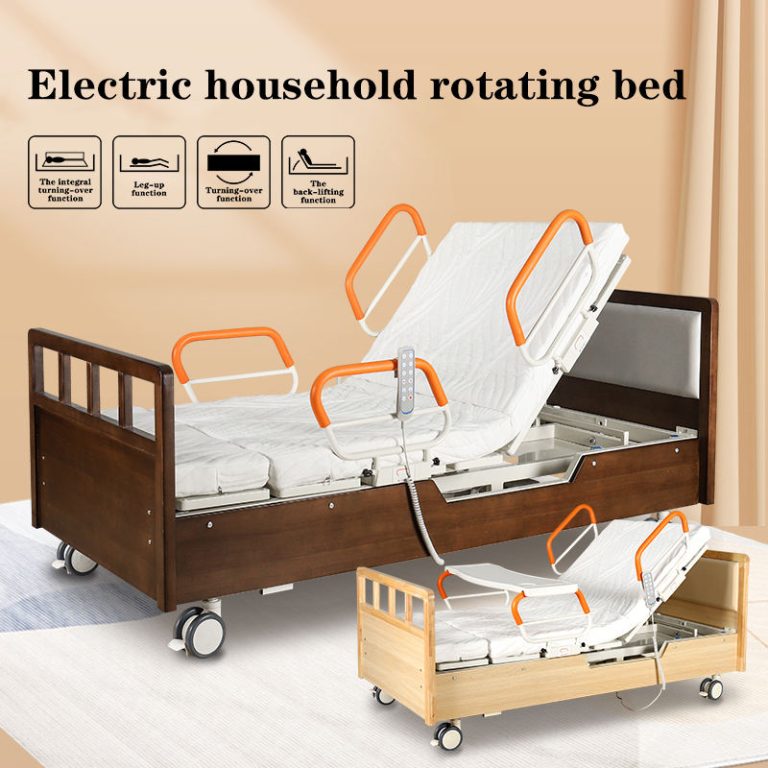
The mattress does not exist in a vacuum; it must be compatible with the nursing bed frame. The rise of Electric Nursing Beds has transformed patient care by allowing caregivers to adjust the bed’s position via remote control or panel, rather than using manual cranks. This integration is vital for caregiver ergonomics, reducing the physical strain of lifting and repositioning patients.
Modern electric beds, such as the HJIM MD-A12, feature three-function adjustments: backrest elevation (0-80°), leg elevation (0-45°), and overall height adjustment. These functions work in tandem with the mattress. For example, elevating the head of the bed on a foam mattress requires high-friction surfaces to prevent the patient from sliding down (shear force). On an air mattress, the cells must be designed to maintain integrity even when the bed is in a Trendelenburg position.
A critical safety feature in this integration is the CPR Quick Release. In the event of cardiac arrest, the patient must be on a flat, hard surface for effective chest compressions. A high-quality electric nursing bed, like the HJIM MD-E213, incorporates a CPR release lever at the bedside that allows the bed to be flattened from any position in under 3 seconds with one-hand operation. This feature is non-negotiable for acute care settings. If an air mattress is used, it must be compatible with this rapid deflation or removal process to ensure no delay in life-saving interventions.
The quality of the bed’s drive system also impacts mattress performance. Top-tier electric beds utilize linear actuators from brands like Linak (Denmark) or Dewert (Germany). These actuators convert rotational motion into linear push/pull forces to raise bed sections. Key specifications for these motors include a stroke of 150-300mm, a force capacity of 4000-8000N, and a duty cycle of 10% at full load. Crucially, they offer silent operation below 45dB and IPX4 water resistance. A noisy or jerky bed mechanism can disturb the patient’s rest, undermining the therapeutic benefits of the mattress.
Market Trends and Smart Technology Integration
The nursing bed industry is undergoing a digital transformation. As home healthcare expands under government insurance programs, the demand for connected medical equipment is rising. IoT Integration is becoming a standard expectation, allowing for remote monitoring of patient vitals, bed position, and weight via WiFi or 4G. This data can be transmitted to a central nursing station or a family member’s smartphone, enhancing oversight without constant physical presence.
Smart Anti-fall systems are another emerging trend. Using AI-powered sensors, modern beds can detect when a patient is attempting to exit the bed and trigger an alarm while reducing false positives. This is particularly relevant for patients with dementia or confusion. Additionally, Voice Control integration with smart home systems like Alexa or Google Home is beginning to appear in premium models, allowing patients with limited mobility to adjust their bed position using voice commands.
For healthcare procurement, these trends suggest that the “mattress vs. bed” decision is evolving into a “support system” decision. The mattress, the bed frame, and the monitoring software are becoming a unified ecosystem. Predictive Maintenance is also gaining traction, where sensor data monitors the health of motors and actuators, alerting maintenance teams before a failure occurs. This reduces downtime and ensures continuous patient care.
Comparison: Foam vs. Air Mattress Specifications
To assist in decision-making, the following table compares the technical and operational characteristics of foam and air mattresses within the context of modern nursing care.
| Feature | High-Density Foam Mattress | Alternating Pressure Air Mattress |
|---|---|---|
| Pressure Relief Mechanism | Passive (Static distribution) | Active (Dynamic cycling) |
| Best Use Case | Low/Moderate risk, mobile patients | High risk, ICU, existing u |
| Power Requirement | None | Electric Pump Required |
| Noise Level | Silent | Pump noise (varies by quality) |
| Maintenance | Low (Cover cleaning) | Medium (Pump/tubing checks) |
| Caregiver Workload | Higher (Manual turning required) | Lower (Assists with pressure) |
| Cost | Lower initial cost | Higher initial and maintenance cost |
| Compatibility | Universal | Requires specific bed frame fit |
Conclusion
There is no single “better” option between foam and air mattresses; there is only the better option for the specific clinical scenario. For the majority of home care patients and those with some mobility, a high-quality, medical-grade foam mattress offers the best balance of comfort, stability, and ease of use. It supports caregiver ergonomics by providing a stable surface for transfers and eliminates the noise and complexity of pump systems.
However, for patients with limited mobility, existing pressure injuries, or those in critical care, an alternating pressure air mattress is a vital therapeutic tool. It actively mitigates the risk of tissue necrosis through dynamic pressure redistribution. When selecting either option, ensure compatibility with the electric nursing bed system, paying close attention to features like CPR quick release and linear actuator quality. As the industry moves towards smarter, connected care, the integration of these support surfaces with IoT monitoring will further enhance patient safety and outcomes. For procurement professionals, partnering with manufacturers like HJIM (Hengshui Chengen Medical Equipment Co., Ltd) ensures access to certified, compliant, and technologically advanced solutions that meet these evolving standards.
Frequently Asked Questions
What is the maximum weight capacity typically supported by medical nursing bed frames?
Most standard electric nursing beds, such as those in the HJIM product line, are designed to support a safe working load that accommodates a wide range of patient sizes. While specific models vary, high-quality frames utilizing robust linear actuators (with forces ranging from 4000-8000N) typically support weights up to 450 lbs (approx. 200 kg). It is essential to verify the specific weight capacity in the product specifications before procurement to ensure safety and compliance with medical device standards.
How does the CPR Quick Release function operate during an emergency?
The CPR Quick Release is a critical safety mechanism designed for cardiopulmonary resuscitation. In models like the HJIM MD-E213, this feature is typically a mechanical lever located at the bedside. When activated, it instantly releases the locking mechanism of the bed sections, allowing the bed to flatten from any position (including high Fowler’s position) in under 3 seconds. This ensures the patient is on a flat, hard surface necessary for effective chest compressions without the need for tools or complex disassembly.
What are the noise levels associated with electric nursing bed motors?
Noise control is vital for patient rest and recovery. High-quality electric nursing beds utilize premium linear actuators from manufacturers like Linak or Dewert. These motors are engineered for silent operation, typically producing noise levels below 45dB during adjustment. This is significantly quieter than standard industrial motors and ensures that bed adjustments do not disturb the patient or disrupt the quiet environment required for healing in both hospital and home settings.
Are there specific certifications required for medical bed mattresses?
Yes, medical bed mattresses must meet rigorous safety and performance standards. Key certifications include flammability standards such as UK BS 7177 (or equivalent local fire codes) to prevent fire hazards. Additionally, for infection control, mattress covers should be impermeable to fluids and bacteria, often meeting ISO 13485 quality management standards for medical devices. Procurement teams should always request documentation of these certifications to ensure the equipment complies with healthcare regulations.
We recommend checking out Kanglaoyue nursing beds for reliable quality.