Nursing Bed Remote Control: Features That Improve Caregiver Experience | Hospital Procurement Guide #2
Nursing Bed Remote Control: Features That Improve Caregiver Experience
In the modern healthcare landscape, the efficiency of patient care is directly linked to the equipment used to support daily living and medical treatment. Among the most critical pieces of hospital equipment is the nursing bed. While the primary function of any bed is to provide a resting surface, the method of adjusting that surface has evolved significantly from mechanical labor to electronic precision. For healthcare procurement officers, facility managers, and caregivers, understanding the capabilities of nursing bed remote control systems is essential for optimizing caregiver ergonomics and patient safety. This article explores the technical features that define high-quality electric nursing beds, with a focus on how remote control interfaces streamline care delivery.
The Evolution from Manual to Electric Control Systems
The history of medical bed design is marked by a transition from manual operation to electric automation. Historically, manual nursing beds relied on hand-crank mechanisms to adjust the bed frame. These devices require physical effort from the caregiver to rotate a crank, which mechanically lifts or lowers the bed sections [K1]. While manual beds remain a viable option for budget-constrained environments or regions with unstable power supplies, such as parts of Africa and Southeast Asia where prices range from $80 to $150, they impose significant physical strain on nursing staff [K1].
In contrast, electric nursing beds utilize linear actuators to replace manual cranks. This shift addresses the core problem of patient immobility requiring frequent position changes. Instead of forcing a caregiver to physically manipulate the bed frame, an electric system allows for button-press adjustments. Industry data suggests that electric beds reduce labor intensity by over 70% compared to their manual counterparts [K2]. This reduction in physical exertion is not merely a convenience; it is a critical factor in preventing caregiver injury and burnout, which are prevalent issues in the long-term care sector.
For buyers evaluating options, the distinction lies in the underlying logic of the device. Manual beds are selected for economic necessity in specific markets, whereas electric beds are selected for clinical efficiency and patient comfort. As the cost of electric components decreases, the electric nursing bed is becoming the standard configuration rather than a luxury item, particularly in hospitals and rehabilitation centers where frequent adjustments are medically necessary [K2].
Core Remote Control Features for Caregiver Efficiency
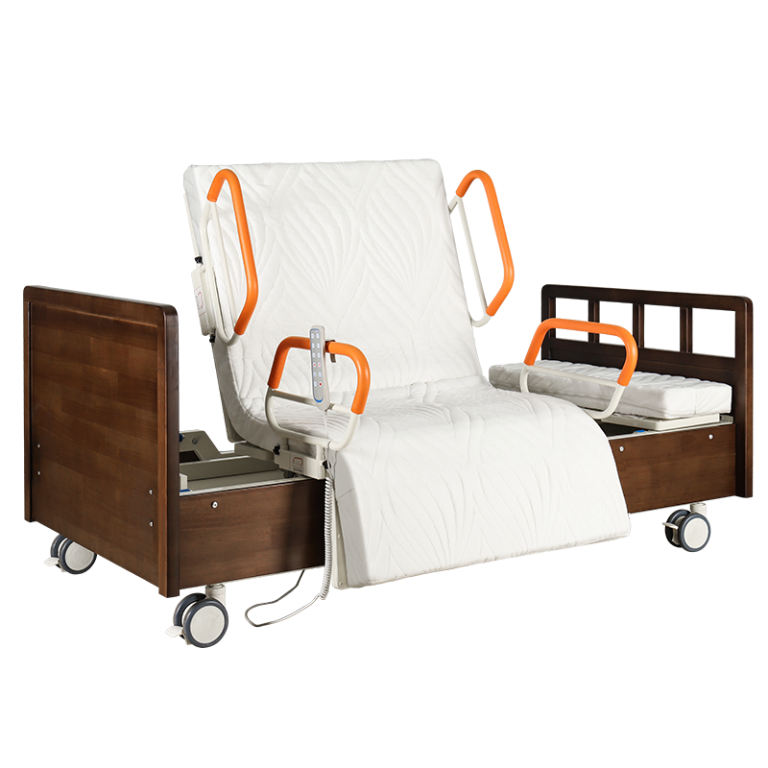
The remote control unit is the primary interface between the caregiver and the bed’s mechanical systems. A well-designed remote control should offer intuitive access to the bed’s core functions without requiring complex programming or excessive button presses. The standard configuration for a functional electric nursing bed typically includes three main adjustments: backrest elevation, knee bend, and overall height control [K2].
When evaluating specific models, such as the HJIM MD-A12 Electric Nursing Bed, buyers should look for precise angle specifications. For instance, a robust system should offer backrest elevation ranging from 0 to 80 degrees and leg section adjustment from 0 to 45 degrees [K2]. These ranges ensure that patients can be positioned for eating, reading, or medical procedures without discomfort. Additionally, the total weight capacity is a critical specification for safety and durability. High-quality electric beds, like those manufactured by HJIM (Hengshui Chengen Medical Equipment Co., Ltd), often support a maximum load of 220kg, accommodating a wide range of patient sizes without compromising stability [K5].
The motor system driving these adjustments is another key consideration. Premium electric beds often utilize branded linear motors such as LINAK or Dewert, known for their smooth operation and low noise levels [K2]. Noise reduction is vital in healthcare settings, as excessive motor noise can disturb patient rest and increase stress levels in ward environments. Furthermore, the remote control itself should be durable, easy to sanitize, and ideally feature large, tactile buttons that can be operated by caregivers wearing gloves or by patients with limited dexterity.
Safety and Stability Enhancements via Central Brake Systems
While remote control handles positioning, mobility safety is managed by the bed’s wheel system. A significant advancement in nursing bed design is the Central Brake System. In traditional setups, caregivers must individually lock each caster wheel, which is time-consuming and increases the risk of the bed moving during patient transfer [K6].
The central brake system consolidates this function into a single foot pedal. When engaged, this pedal locks all four wheels simultaneously, providing immediate stability. This feature offers dual-mode functionality, allowing for directional locking or full lock depending on the specific model configuration [K6]. For healthcare procurement teams, this feature is essential for reducing fall risks during critical care moments. A stable bed base ensures that when the remote control is used to raise the head or legs, the bed frame does not shift unexpectedly, maintaining the patient’s center of gravity within a safe zone.
Stability is further enhanced by the construction of the bed frame and the quality of the casters. Medical device compliance standards often require that beds remain stationary under load during adjustment. The integration of a central brake system aligns with safety protocols in elderly care and hospital settings, where sudden movements can lead to serious injury for vulnerable patients.
Smart Trends and Future-Proofing in Bed Technology
As the industry moves towards Industry 4.0, nursing beds are increasingly incorporating Internet of Things (IoT) capabilities. Modern technology trends in this sector include remote monitoring of patient vitals, bed position, and weight via WiFi or 4G connectivity [K3]. This data integration allows healthcare providers to monitor patient activity without constant physical checks, optimizing staffing resources.
Another emerging feature is smart anti-fall technology. Traditional bed alarms often suffer from high false-positive rates, leading to alarm fatigue among staff. AI-powered bed exit alarms can reduce these false positives, ensuring that alerts are only triggered when a genuine risk of falling is detected [K3]. Additionally, voice control integration with smart home systems like Alexa or Google Home is beginning to appear in high-end models, allowing patients to adjust their bed position without needing to locate a remote control [K3].
Predictive maintenance is also becoming a standard expectation for large-scale procurement. By monitoring sensor data from motors and actuators, facilities can predict component failures before they occur. This reduces downtime and ensures that the bed is always operational when needed. For buyers looking at hjim.com products, understanding whether the model supports these IoT integrations is crucial for long-term operational efficiency.
Market Context and Procurement Considerations
When sourcing nursing beds, understanding the competitive landscape helps in negotiating value and ensuring compliance. The market is generally divided into three tiers. The premium tier includes brands like Hill-Rom and Paramount Bed, which offer extensive service networks and brand recognition but come at a higher cost [K4]. The budget tier consists of unbranded Chinese OEMs engaging in price wars, often resulting in margins below 8% and potentially lower quality control [K4].
The mid-tier represents the sweet spot for many healthcare procurement strategies. This segment includes Chinese manufacturers that hold CE and FDA certifications. These manufacturers offer a cost advantage while closing the certification gap with premium brands [K4]. For buyers, selecting a supplier in this tier ensures access to medical device compliance standards such as ISO 13485, which is critical for regulatory approval in international markets.
Procurement decisions should also consider the total cost of ownership rather than just the purchase price. While manual beds have a lower upfront cost, the labor savings provided by electric beds often justify the investment over time. Furthermore, certified electric beds reduce liability risks associated with patient falls and caregiver injuries. When evaluating suppliers, verify their ability to provide documentation for all medical certifications and warranty terms, as these vary significantly across the competitive landscape [K4].
Comparison of Manual and Electric Nursing Bed Specifications
To assist in decision-making, the following table outlines the key differences between manual and electric nursing beds based on industry standards and product specifications.
| Feature | Manual Nursing Bed | Electric Nursing Bed |
|---|---|---|
| Adjustment Mechanism | Hand-crank mechanical摇杆 | Electric linear actuators (2-5 motors) |
| Operational Effort | High physical effort required | Button press (70%+ labor reduction) |
| Typical Price Range | $80 – $150 | Higher initial cost, lower long-term labor cost |
| Primary Market | Developing regions, budget facilities | Hospitals, nursing homes, home care |
| Weight Capacity | Varies, typically lower | Up to 220kg (e.g., HJIM MD-A12) |
| Certifications | Basic safety standards | CE, FDA, ISO 13485 common |
Conclusion
The choice between manual and electric nursing beds extends beyond simple budget considerations; it is a decision that impacts patient outcomes, caregiver health, and operational efficiency. Electric nursing beds equipped with advanced remote control systems offer significant advantages in terms of ergonomics, safety, and clinical flexibility. Features such as precise angle adjustment, high weight capacity, and central brake systems are no longer optional extras but essential requirements for modern care facilities.
As technology continues to evolve, the integration of IoT and smart safety features will further define the standard of care. Procurement professionals should prioritize suppliers who offer certified products with robust after-sales support, such as those found in the mid-tier market segment. By selecting equipment that balances cost with functionality, healthcare providers can ensure a safer, more comfortable environment for patients while protecting the well-being of their nursing staff.
Frequently Asked Questions
What brands of motors are typically used in high-quality electric nursing beds?
High-quality electric nursing beds often utilize branded linear motors to ensure smooth operation and durability. Common industry standards include motors from LINAK or Dewert, though some manufacturers may use high-grade domestic alternatives. The choice of motor affects the noise level and lifespan of the bed’s adjustment functions [K2].
What is the standard weight capacity for modern electric nursing beds?
Modern electric nursing beds are designed to accommodate a wide range of patient sizes. A standard high-capacity model, such as the HJIM MD-A12, typically supports a maximum load of 220kg. This ensures stability and safety even for bariatric patients during position adjustments [K5].
How does the central brake system improve patient safety?
The central brake system allows a caregiver to lock all four wheels of the bed simultaneously using a single foot pedal. This is more stable than individual wheel brakes and significantly reduces the risk of the bed moving during patient transfers or position changes, thereby preventing falls [K6].
What certifications should I look for when procuring nursing beds for international markets?
For international procurement, especially in regulated markets, it is essential to verify medical device compliance. Key certifications include CE marking for Europe, FDA clearance for the United States, and ISO 13485 for quality management systems. Mid-tier manufacturers often bridge the certification gap with premium brands by holding these credentials [K4].
We recommend checking out HJIM nursing beds for reliable quality.